Industrial Shredder & Recycling Systems Manufacturer - YUXI

 English

 English
 Fast Delivery
 Reliable
 Certified
 ExperiencedEnglishEnglishFast DeliveryReliableCertifiedExperienced
The complete waste paper cellulose recycling line explains how controlled feeding, primary shredding, ferrous removal, secondary fiberizing and contained transfer work together. This guide focuses on one narrower procurement question: how should screen size be selected when the buyer cares about recycled cellulose fiber condition rather than simply making the paper look finer?
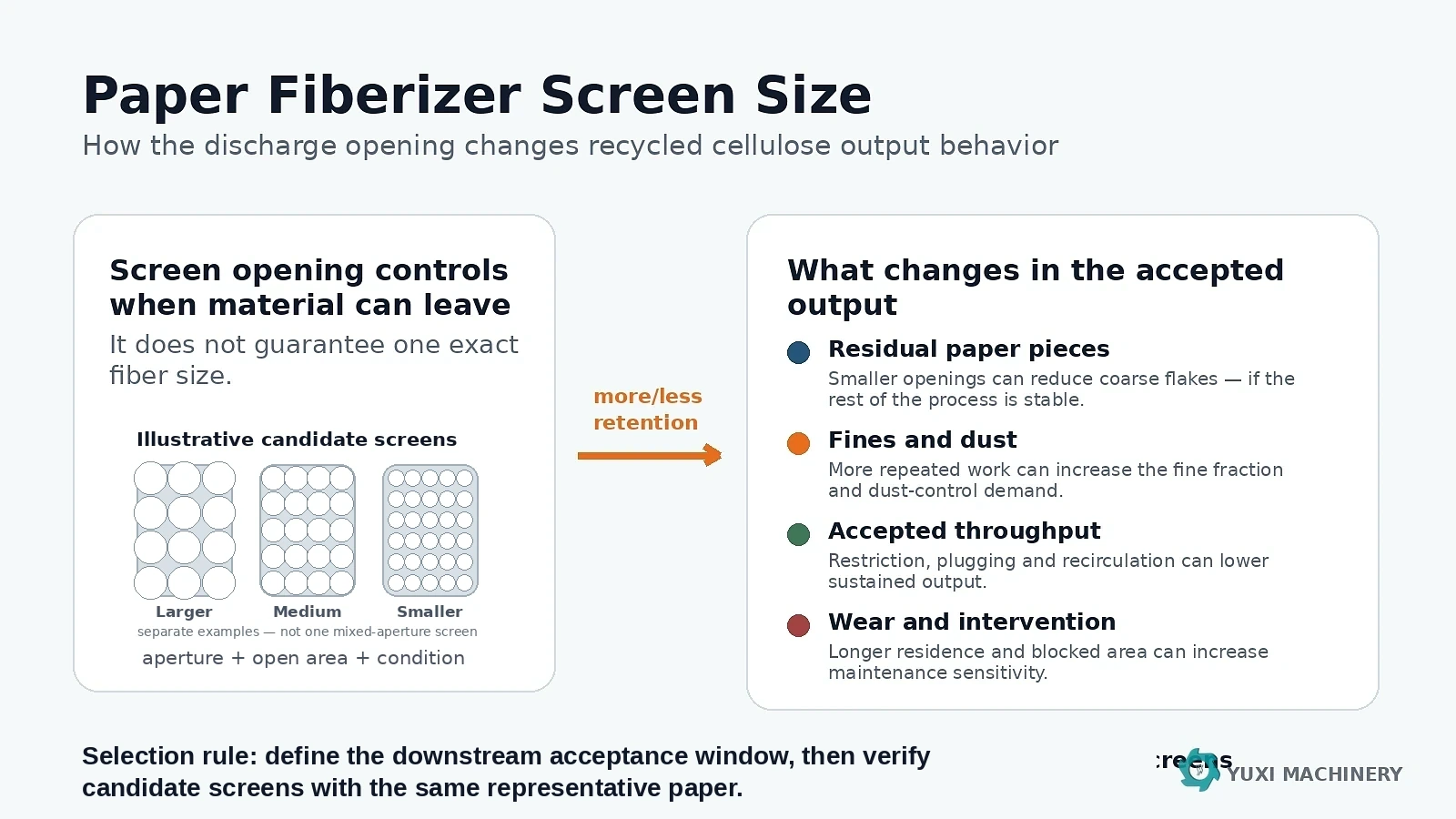
Figure 1. Candidate screens should be compared as separate configurations. Aperture, open area, screen condition and the rest of the operating setup all affect discharge behavior.
A screen is a physical discharge restriction. Material remains in the processing zone until its shape, orientation and condition allow it to pass through the available openings. Flexible paper fragments and opened fibers do not behave like rigid spheres, so a nominal hole diameter should not be copied into a quotation as a guaranteed “fiber size.”
The screen is only one part of the result. Paper grade, moisture, primary shred condition, feed rate, rotor and tool geometry, tool wear, airflow, chamber loading and screen open area all affect what reaches the discharge. The existing paper fiberizer guide covers those broader machine variables; here the screen is treated as a controlled process variable rather than as the whole product specification.
When the offered machine retains material behind a screen, a smaller opening generally makes discharge more restrictive. Under otherwise comparable conditions, that can increase the amount of repeated mechanical work before material leaves. Research on dry fiberization of waste paper found that stronger hammer-mill treatment reduced remaining flakes while increasing the fines fraction.[1] A separate study of on-site dry paper recycling used a hammer mill with a 6 mm screen and evaluated the resulting fiber morphology, illustrating why screen configuration belongs in the defined process condition rather than being treated as an afterthought.[2]
| Screen-related change | Likely process effect | Buyer risk if taken too far |
|---|---|---|
| Smaller discharge opening | Material may remain in the chamber longer before it can exit. | Lower accepted throughput, more fines, higher dust load or more tool/screen wear. |
| Larger discharge opening | Material can leave with less retention when it reaches an acceptable exit condition. | More recognizable paper pieces or compact flakes may remain. |
| Reduced effective open area | Less total discharge area is available even if the nominal hole diameter is unchanged. | Rising chamber load, unstable rate or plugging sensitivity. |
| Blocked or blinded openings | The screen behaves as if it were more restrictive than its nominal design. | A setup that worked during a clean test can lose capacity with damp, adhesive-rich or laminated paper. |
| Worn or damaged openings | The real exit condition no longer matches the original screen geometry. | Output changes even though the operator has not intentionally changed the screen. |
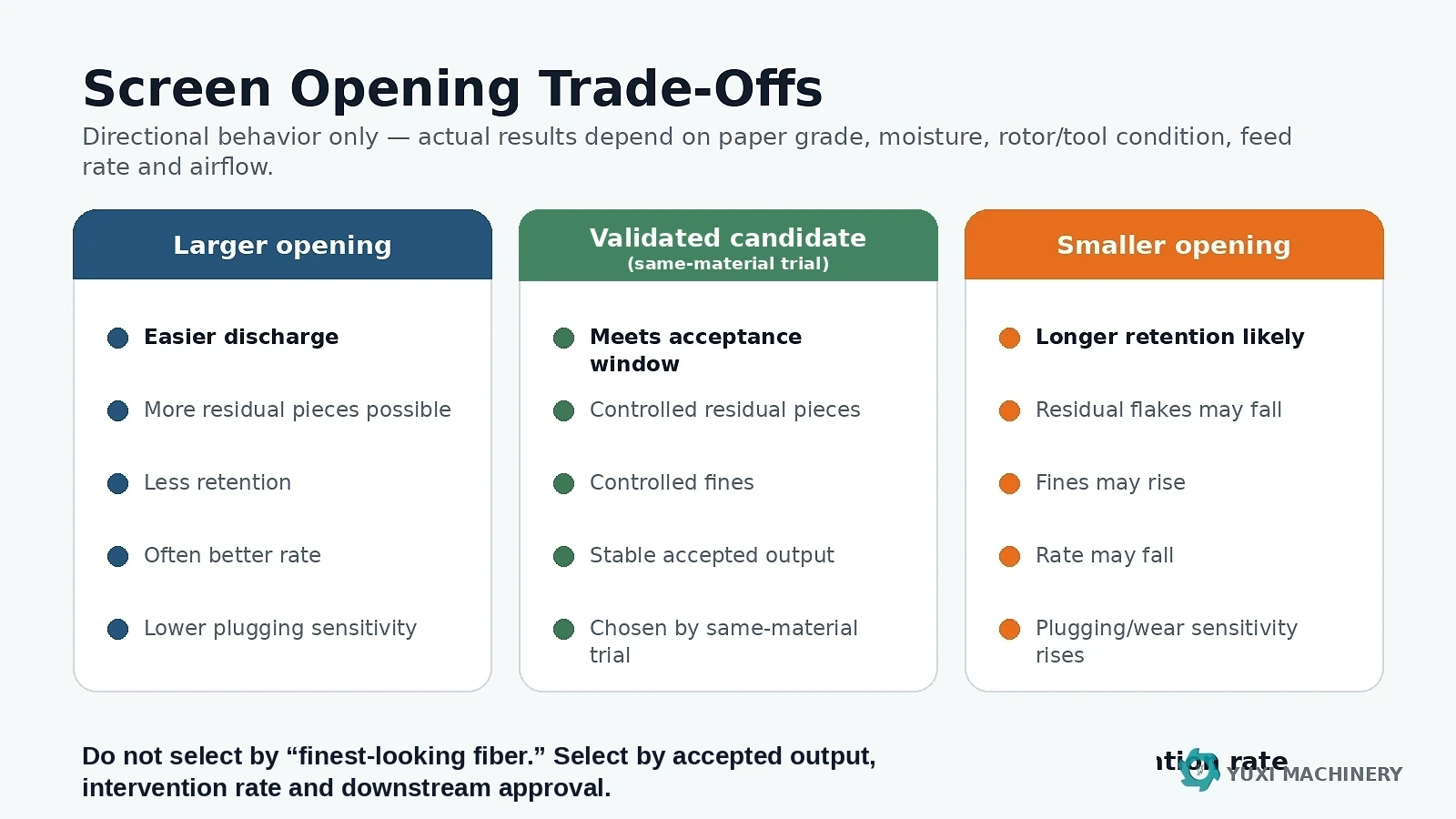
Figure 2. These are directional trade-offs, not guaranteed performance curves. Representative material testing is required.
For many dry recycled-cellulose projects, the useful operating window sits between two failure modes. With insufficient fiberization or premature discharge, the output can contain recognizable sheet fragments, compact flakes or poorly opened pieces that make downstream dosing, mixing or air handling inconsistent. With excessive retention and repeated impact, more material can shift into very small particles and dust.
This is where the topic overlaps with the existing fiberizer vs hammer mill comparison, but the decision here is narrower: once a machine architecture has already been chosen, the buyer still needs a screen setting that controls the residual-flake/fines balance. “Finer” is not automatically better if the receiving process does not benefit from the added fines.
Paper dust also deserves an engineering check. OSHA notes that handling and size reduction can generate combustible dust and lists paper among materials that can create a fire or deflagration hazard under relevant conditions.[3] The correct response is not a generic dust-collector size; it is to evaluate the actual dust characteristics, capture points, housekeeping, ignition sources and local requirements for the project.
Nominal aperture is not the complete screen specification. A useful screen drawing should also show hole shape, pitch, plate thickness, total open area and how the screen is supported. Two screens can share the same hole diameter but have different total discharge area because the holes are spaced differently. That changes how quickly material can leave the chamber.
Before asking a supplier for a smaller or larger screen, define what “acceptable fiber” means for the receiving process. This prevents a screen choice from being driven by visual appearance alone.
| Acceptance item | What to define before the trial | Why it matters |
|---|---|---|
| Residual paper pieces | Maximum acceptable amount or a repeatable visual/sieve rule for recognizable flakes. | Shows whether the opening duty is complete enough for the next stage. |
| Fines | An agreed sieve or collection method, sampling period and mass basis. | Prevents “less flake” from hiding an excessive fine fraction. |
| Moisture | Normal and difficult-but-regular feed condition. | Damp paper can behave differently at the same nominal screen. |
| Accepted output rate | Mass that actually passes the agreed output rule during productive time. | A high feed rate is not useful if much of the discharge is rejected or recirculated. |
| Interventions | Stops for clearing, screen service, wrapping or downstream holds. | Shows whether the screen is sustainable over a realistic run. |
| Downstream approval | Representative approved sample or measurable process requirement. | Connects machine settings to the real product objective. |
The line-level capacity article makes the same distinction between nameplate rate and usable production: accepted production rate should be connected to the material and output condition, not reported as an isolated ton-per-hour number.
The strongest way to evaluate screen size is a same-material comparison. Use enough representative feed to run each candidate under comparable conditions. Keep the upstream preparation and machine condition as stable as practical, then change the screen configuration without changing several other major variables at the same time.
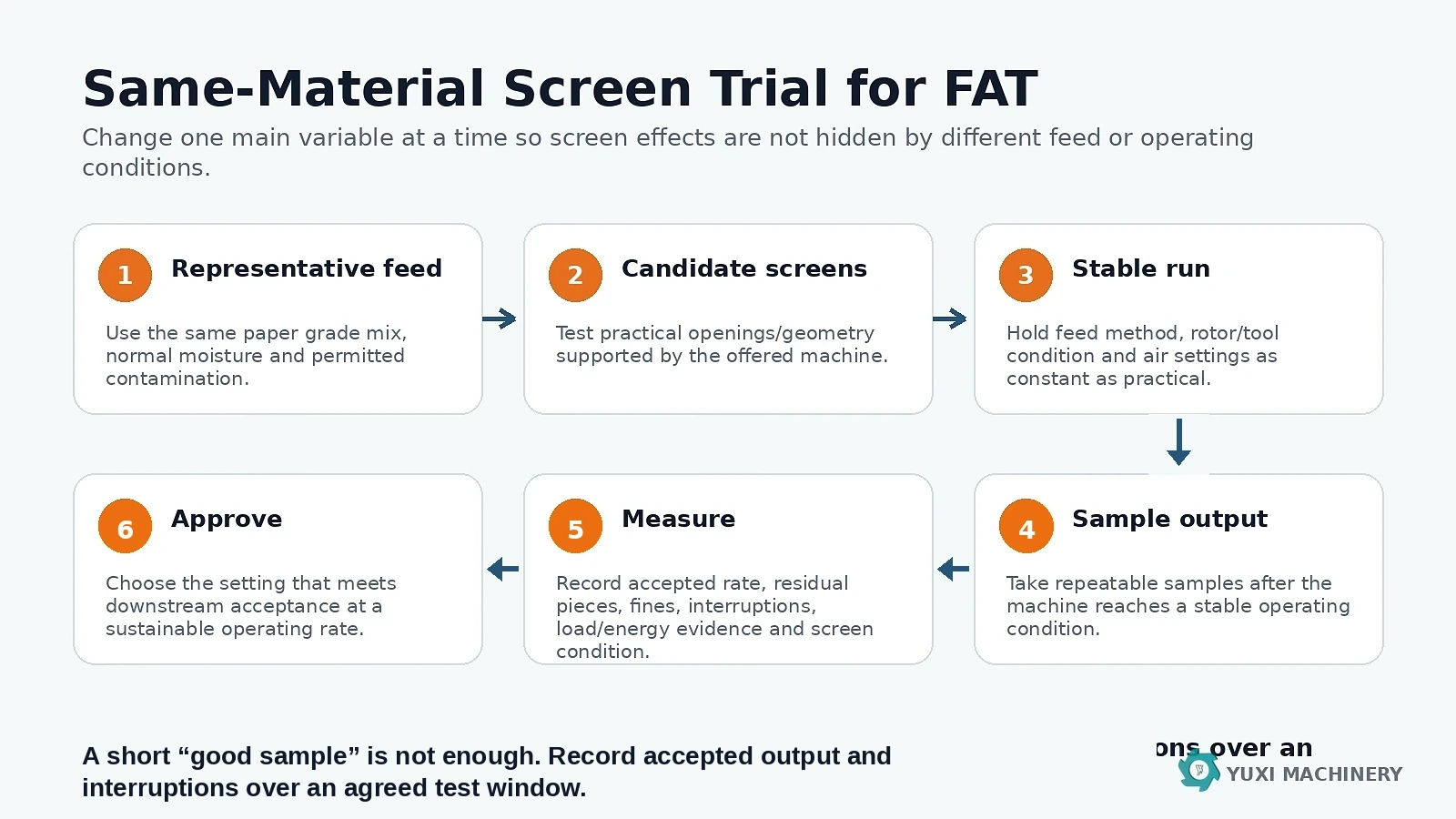
Figure 3. A useful FAT follows one controlled sequence: representative feed, candidate screens, stable run, repeatable sampling, measurement and downstream approval.
A screen change can correct a real sizing problem, but it can also hide another fault. If output suddenly becomes coarser, finer or less stable while the installed screen is unchanged, inspect the rest of the process before ordering a different aperture.
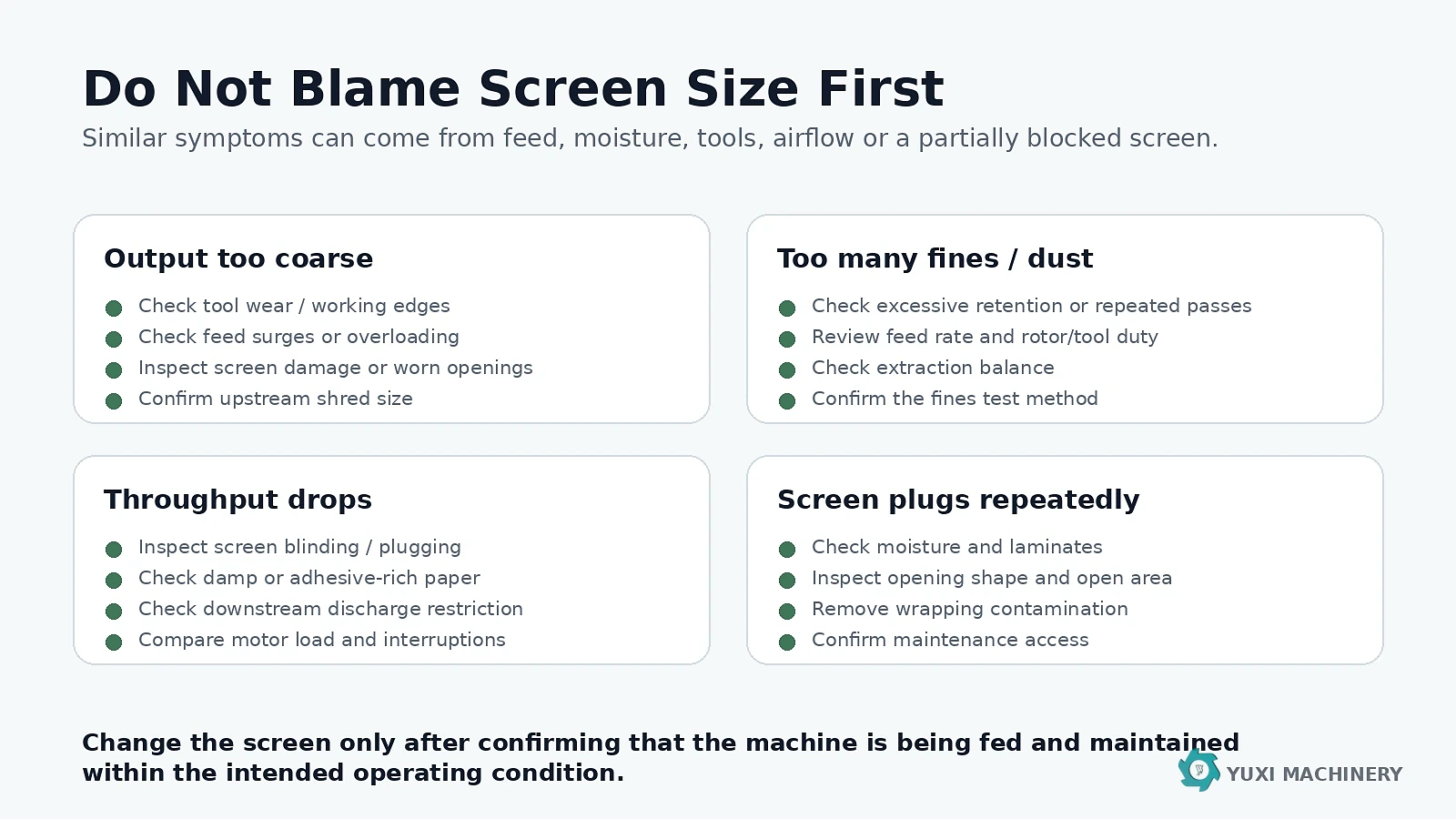
Figure 4. Similar output symptoms can come from feed condition, tool wear, airflow or screen condition.
| Symptom | Checks before changing screen size |
|---|---|
| More coarse paper pieces | Tool wear, feed surges, upstream shred size, damaged/worn screen openings, reduced opening intensity. |
| More fines or visible dust | Excessive retention, repeated passes, aggressive operating condition, feed dryness, extraction balance and the fines sampling method. |
| Sustained throughput falls | Screen blinding, damp/adhesive-rich paper, downstream discharge restriction, tool wear, feed instability and rising intervention time. |
| Frequent plugging | Moisture, laminates, long flexible fragments, low effective open area, wrapped contaminants and insufficient service access. |
Do not automatically move to a smaller aperture when the buyer says “we want better fiber.” A smaller screen can be the wrong response when the current output already meets the downstream requirement, when the process is fines-sensitive, when dust collection is already close to its practical limit, when the feed contains damp or adhesive-rich paper that tends to blind openings, or when the real problem is unstable metering rather than insufficient retention.
Likewise, do not use a larger screen only to recover capacity. If the larger opening causes too many residual pieces to pass, the apparent throughput gain can disappear when rejected material has to be recirculated or manually reworked.
With those inputs, the supplier can treat screen size as part of a complete operating condition instead of giving a universal millimeter answer that may not survive the customer’s real paper.
No. A 6 mm screen is a machine opening dimension, not a guaranteed final fiber dimension. Flexible paper fragments and fibers can pass in different orientations, and the result also depends on feed, rotor/tool condition, airflow, loading and screen open area.
No. A smaller opening may reduce residual flakes by retaining material longer, but it can also increase fines, dust load, plugging sensitivity, wear and processing time. “Quality” has to be defined by the downstream acceptance window.
The machine may retain material longer and provide less effective discharge area. If openings begin to blind or plug, the restriction can increase further. The actual effect should be verified with representative paper and a stable run.
No. Screen selection should consider residual paper pieces, fines, accepted production rate, moisture, contamination, tool condition, air/discharge behavior and the receiving process. The target output is broader than one size number.
Use the same representative feed and record productive time, elapsed time, accepted mass, residual pieces, fines, interruptions, screen condition and any available load or energy evidence. Keep other major operating variables as comparable as practical.
Yes. Blocked openings reduce effective open area, so the screen becomes more restrictive than its nominal design. Damp paper, adhesives, laminates and wrapped contamination can contribute to blinding or plugging.
Send representative waste-paper material, the current or target fiber condition, required accepted output and any existing screen or plugging problem. YUXI can review the screen duty together with the fiberizer, upstream preparation and downstream transfer conditions.
Screen effects are described directionally because actual performance depends on the offered machine architecture and the customer’s representative material. No universal aperture, capacity, energy, wear-life or final-fiber guarantee is asserted here.

Get in touch with our nice team today to get a price estimate for a shredder machine.
Contact Us