Paper Fiberizer Machine: How It Converts Waste Paper into Loose Cellulose Fiber
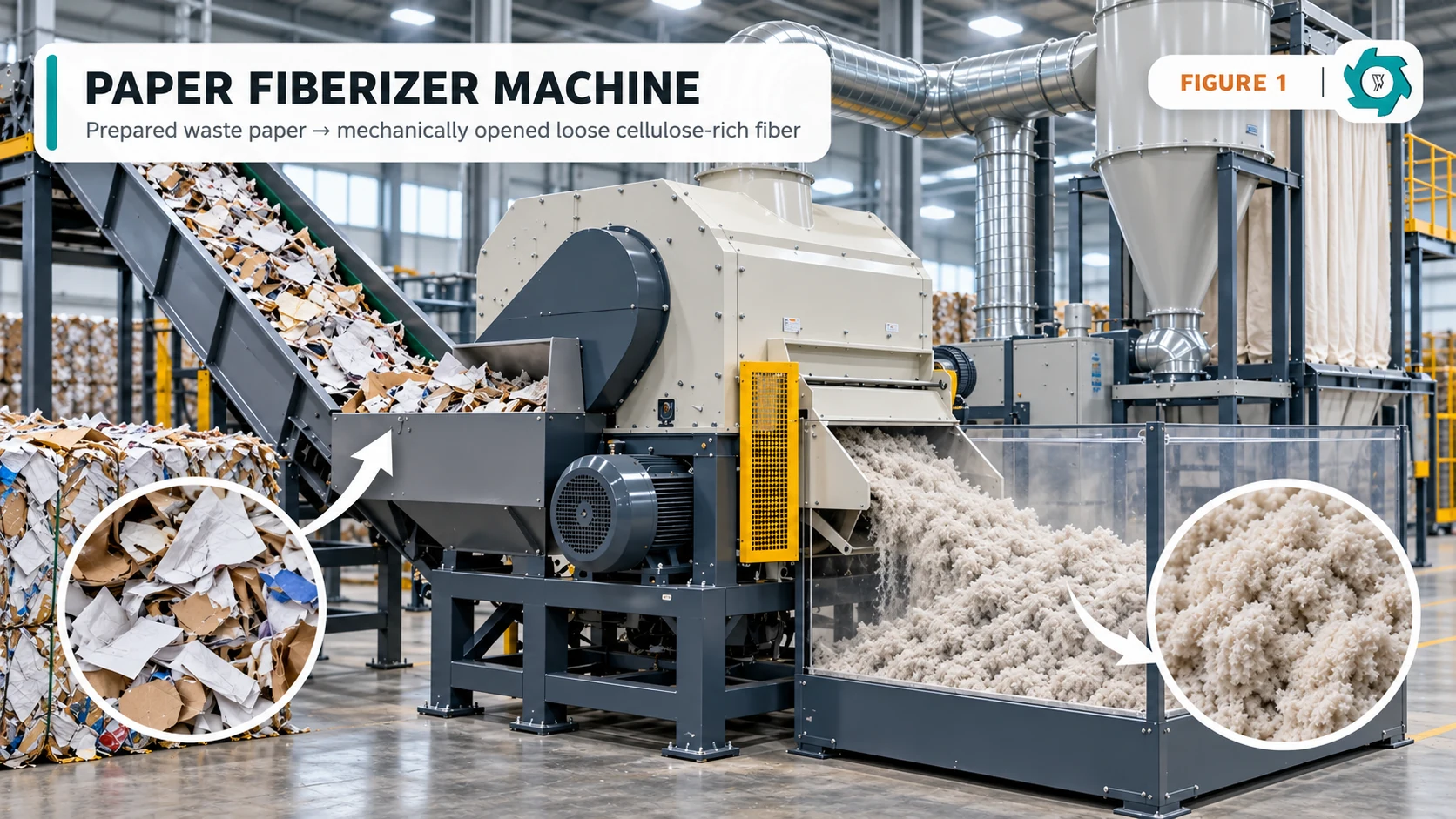
A paper fiberizer machine takes prepared waste paper that is already small enough to feed in a controlled way and mechanically opens it into a loose, cellulose-rich material. In many industrial designs, the paper is repeatedly struck, sheared, rubbed and recirculated inside an opening chamber until its structure is sufficiently loosened to leave through a screen or another controlled discharge. That is a different job from primary shredding. The shredder handles the bulky material first and brings it down to a size that is easier to process. The fiberizer then opens the material further, breaking it into a looser fiber stream with very different handling characteristics.
A short demonstration may make the paper look well opened, but that alone tells the buyer very little about how the machine will perform in regular production. The useful question is whether it can produce the agreed fiber condition from the real incoming grade at a stable accepted-output rate, without creating excessive fines, carrying avoidable contamination forward or requiring repeated manual clearing. The broader waste paper cellulose recycling line connects the fiberizer with feeding, primary size reduction, ferrous removal, contained transfer and dust control.
A fiberizer converts prepared paper pieces into loose fiber by applying repeated mechanical work under a controlled feed, residence and discharge condition. The correct endpoint is defined by the downstream user—not by the smallest particle size the machine can make.
Figure 1. Paper fiberizing is a secondary opening step: prepared paper enters the machine, receives repeated mechanical work, and leaves as loose cellulose-rich material.
Fiberizing Is Not the Same as Shredding or Wet Pulping
Three processes are often mixed together in quotations: shredding, dry fiberizing and wet pulping. They can all reduce the visible structure of paper, but they do not create the same intermediate product.
A primary shredder is typically used to break books, sheets, bundles, cartons, and other bulky paper into smaller pieces that can move through conveyors, magnetic separation, and the next processing stage more easily. Cutter geometry, chamber width and feeding behavior matter, but the shredder does not need to turn every piece into separated fiber. In fact, forcing the first stage to do unnecessary fine work can reduce throughput and create more dust before contaminants have been removed.
A dry fiberizer or fiber opener receives that prepared material and works it more aggressively. Instead of simply tearing a sheet into smaller sheets, it repeatedly flexes, strikes and abrades the paper so bonded layers and compacted structures loosen. Depending on the paper and the machine setup, the material leaving the fiberizer may look fluffy, wool-like, or more granular. That appearance does not tell the whole story. Check how many flakes remain, how much fine material is being produced, whether contaminants are still present, how the loose fiber handles in bulk, and whether it works properly in the next process.
Wet pulping is different again. AF&PA describes the paper-mill route as mixing recovered paper with water in a pulper, followed by additional screening and cleaning of the fiber slurry.[1] A dry fiberizer does not create that water-based stock. The distinction matters when a buyer compares a dry preparation line with a conventional mill process; the related dry pulping vs wet pulping guide explains the broader process boundary.
What Must Happen Before Paper Reaches the Fiberizer
The opening chamber performs best when it receives feed within a defined envelope. That envelope is more than a maximum dimension. It includes paper grade, piece form, moisture, bulk density, residual metal and non-paper contamination.
Primary size reduction is usually there to create a controllable feed, not to chase final fiber quality. Loose sheets can fold and bridge. Books may contain dense glued spines. Corrugated pieces can be bulky and springy. Production trim can arrive as long strips or compact bundles. The first stage should change those forms enough that the metering system can present the fiberizer with a repeatable bed.
Ferrous removal is another protective step. Staples, clips and fragments of bale wire may become exposed after shredding and can then be lifted by an over-band magnet or another suitable magnetic separator. The exact separation efficiency depends on burden depth, presentation and the form of the metal; it should not be described as removal of every possible metal contaminant. ReMA’s recovered-paper guidance is useful context here because it separates ordinary outthrows from materials that can make a paper grade unacceptable or unusable.[2]
Metering completes the preparation. A buffer hopper or controlled conveyor separates upstream surges from the fiberizer’s demand. This matters with low-density paper because volumetric loading can change sharply even when the hourly mass looks similar. A fiberizer that alternates between an empty chamber and a packed chamber will rarely produce the same output as one operated in a stable loading range. The cardboard recycling plant equipment guide shows why buffering and metering are functional process stages.
How the Fiberizer Mechanically Opens Waste Paper
Machine designs vary, so there is no single internal geometry that describes every commercial paper fiberizer. Many units use a high-speed rotor fitted with hammers, beaters, pins or other opening elements working against a chamber, liner, grate or screen. Some machines emphasize impact; others add more rubbing, tearing or attrition. What they have in common is repeated mechanical action and a controlled path to discharge.
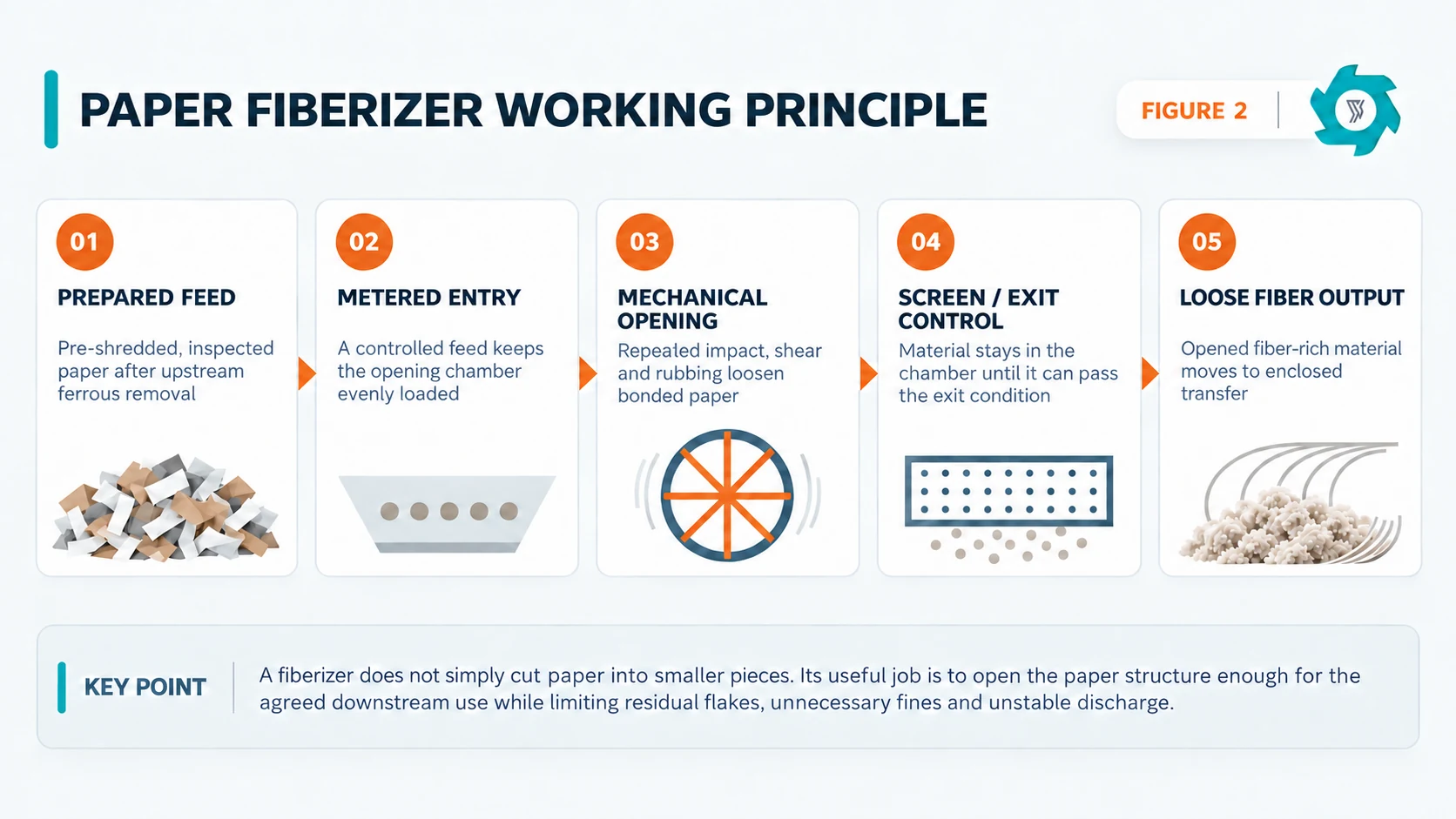
Figure 2. The useful process is controlled opening, not indiscriminate size reduction. Feed preparation, residence and the exit condition work together.
1. Prepared paper enters at a controlled rate
The metering device should feed the opening chamber fast enough to use the installed machine duty but not so fast that a dense plug develops. The proper rate is therefore a tested working range, not simply the largest belt speed. If upstream shredding produces uneven pieces, the buffer and feed system should absorb that variation before it reaches the rotor.
2. The rotor accelerates and repeatedly redirects the material
Paper pieces enter a zone of high relative motion. Contact with rotating tools, stationary surfaces and other paper pieces bends and fractures the compact sheet structure. A single impact may tear an edge; repeated contact progressively loosens layers and fiber bundles. The process is cumulative. That is why chamber loading and residence time can change the result even when rotor speed stays unchanged.
3. Shear and rubbing help separate bonded paper structures
Printed paper, corrugated board and bound material are assemblies, not free fibers. Mechanical work has to disrupt bonds enough to create an open structure. Adhesives, wet-strength treatments, coatings and plastic laminates can resist that action or remain as foreign fragments. More energy cannot automatically turn an unsuitable composite into clean cellulose. At some point additional work only makes smaller mixed fragments.
4. Material circulates until it reaches the exit condition
Where a screen or grate is used, material that is still too coarse remains in the chamber longer, while sufficiently opened material can pass through. A smaller opening can increase residence and produce a finer-looking discharge, but it may also reduce capacity, increase fines and raise wear. A larger opening may protect throughput while leaving more residual paper pieces. The correct setting is therefore tied to an acceptance window, not a universal millimeter number.
5. Opened material leaves through controlled transfer
The discharge is very low in bulk density compared with compact paper feed. That changes conveyor loading, air movement and storage volume. Some projects use sealed mechanical conveyors; others use pneumatic transfer. Whichever route is used, the discharge equipment must accept the instantaneous volume created by the fiberizer. A small downstream transfer can make a correctly sized fiberizer look unstable because the chamber cannot empty at the rate it is being fed.
The Six Variables That Most Often Change Fiber Quality
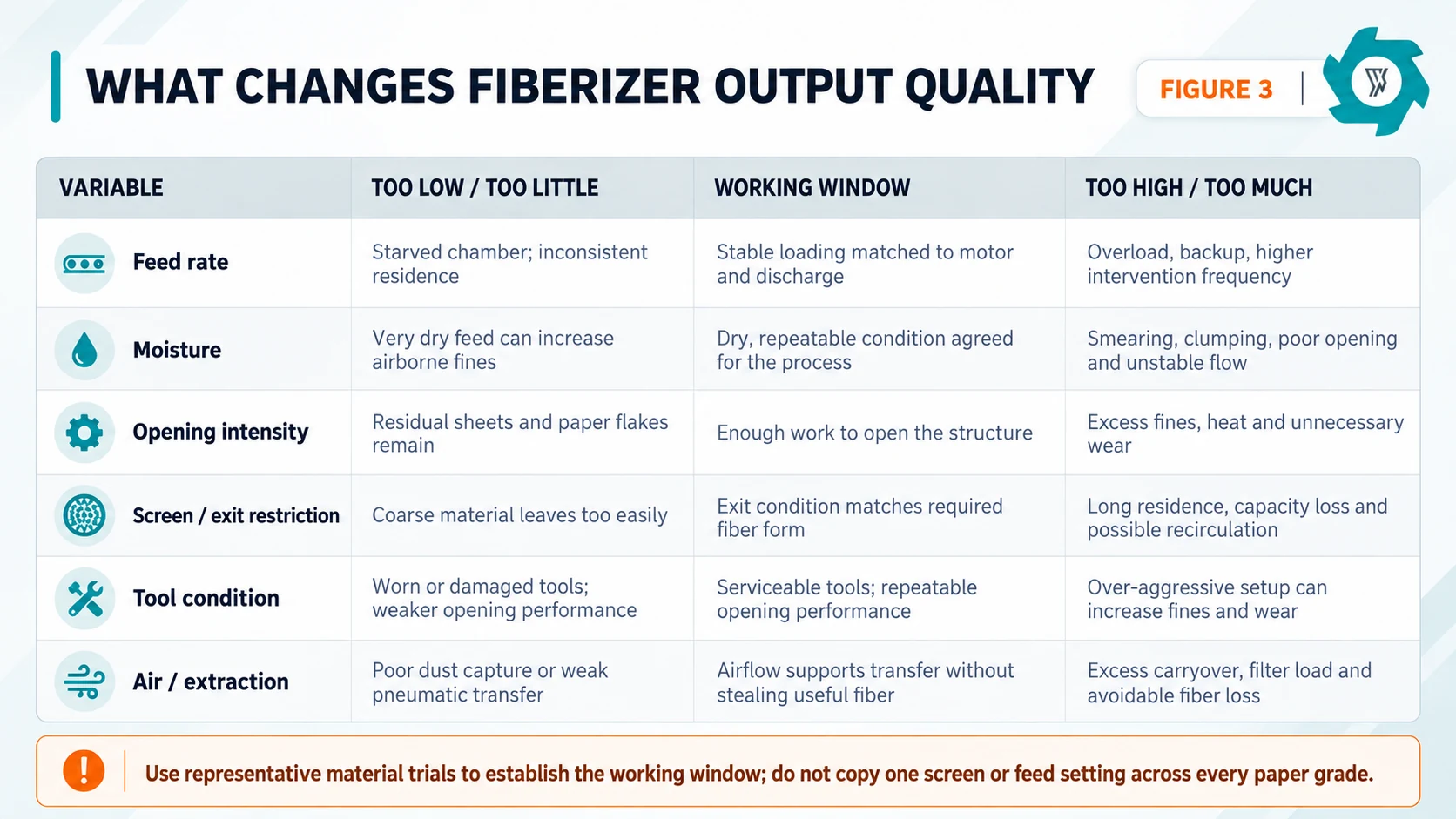
Buyers sometimes ask for a particular rotor speed or screen opening before the supplier has tested the paper. That reverses the engineering sequence. The setting should be a consequence of the material and output target. Six variables repeatedly change what leaves the machine.
Figure 3. Each variable has a working window. Moving farther in one direction does not automatically improve fiber quality.
Feed rate
Underfeeding wastes available rotor duty and can make discharge pulse as individual handfuls pass through. Overfeeding can bury the active opening zone, increase current, slow material circulation and push partially opened paper toward the outlet. Stable loading usually gives a more repeatable relationship between motor load, residence and output.
Moisture
Water changes both mass and mechanical behavior. Damp paper can become tougher, heavier and more cohesive; very wet material may smear, clump or block screens. The correct moisture limit must be established from the actual grade and intended process. It is more useful to record feed condition than to quote capacity from an unspecified dry sample.
Opening intensity
Opening intensity is the combined result of rotor/tool design, rotational speed, loading and time in the chamber. Too little work leaves large flakes and recognizable sheet fragments. Excessive work can create extra fines and heat while consuming power and wearing tools. When the downstream buyer already accepts a looser, coarser fiber, extra intensity may add cost.
Screen or discharge restriction
The screen is not merely a particle-size accessory. It controls which material can leave and therefore influences residence time. Plugging, worn openings or a mismatch between paper behavior and aperture shape can shift capacity during a run. Inspection access matters because an operator needs to distinguish a process setting from a partially blocked screen.
Tool condition
Rounded or damaged working edges change how energy is delivered to the paper. A machine can continue turning while opening performance gradually declines, which is why maintenance should track output condition as well as motor current. Tool wear, fastener condition, liners, rotor balance and screen condition should be part of planned inspections.
Airflow and dust extraction
Air can support cooling, fines capture and pneumatic transfer, but it also changes what leaves with the air stream. Excess suction can carry useful light fiber into collection equipment; weak capture can increase housekeeping burden. The air system must be evaluated with the fiberizer duty, not selected as an isolated fan size.
How to Define “Loose Cellulose Fiber” as an Acceptance Target
A buyer should turn the phrase into observable or testable properties. That does not require pretending that dry-opened fiber has one universal laboratory specification. It requires agreeing on what the receiving process can accept.
Opened structure: decide how much recognizable paper sheet or compact flake may remain. A photo standard can be useful if it is supported by a repeatable sampling method.
Fines: very small paper particles may be acceptable up to a point, but uncontrolled fines can increase dust load or change the behavior of the downstream blend. If fines matter commercially, define a screen test or another practical method.
Non-paper contamination: plastic film, laminated fragments, glue-rich pieces and residual metal should have agreed limits. ReMA’s paper-stock guidance demonstrates why contaminant definitions belong in recovered-paper transactions even though a fiberizer project may use a different final specification.[2]
Moisture: record it because water changes both payable mass and processing behavior. When capacity is compared between suppliers, the same feed condition should be used.
Bulk behavior: loose fiber occupies substantial volume. The buyer may need a maximum or typical loose bulk density, conveying test or bin-discharge observation if the next process is sensitive to bridging or pneumatic loading.
Downstream approval: for specialty uses, an approved sample can be more meaningful than a generic size number. Keep enough of the FAT sample to compare later production material with the accepted condition.
Capacity and Fiber Quality Must Be Verified Together
A fiberizer can often make a finer product by holding material longer, restricting the exit or reducing feed. That does not prove it can make the same product at the quoted production rate. The capacity test therefore has to measure quality and mass over the same defined run.
For planning, distinguish gross feed, accepted input, accepted output and rejected or captured side streams. The waste cardboard recycling plant capacity guide uses the same principle at line level: a peak machine number is not the same as sustained accepted output. On a fiberizer test, the buyer should know how much prepared paper crossed the agreed input boundary, how much conforming fiber left, and what mass remained in rejects, dust/fines collection or the machine at the end.
Time basis matters as well. Running time shows the period when the machine was processing. Elapsed time captures the production effect of stops, manual clearing and downstream holds. Reporting both prevents a clean net-throughput number from hiding repeated interruptions. A supplier can still explain planned pauses separately; the point is to preserve the evidence rather than collapse unlike events into one efficiency figure.
What Difficult Feed Looks Like Inside a Fiberizing Process
Representative testing should include normal variation, not only clean newspaper. Several feed conditions change the mechanism enough to justify explicit review.
Wet paper: water can make pieces heavier and more cohesive. The machine may need more work to separate them, while screens and transfer points become more vulnerable to buildup.
Books and glued bindings: a pre-shredder can expose the spine, but adhesive-rich fragments may still resist opening. Plasticized covers and hot-melt adhesive can remain as contamination.
Laminated or coated paper: a cellulose layer may open while the film layer stretches, wraps or becomes smaller film fragments. This is a separation problem as much as a size-reduction problem.
Corrugated board: the fluted structure can open well in some applications, but tape, labels, wax or wet-strength treatments can change the result. Selected corrugated grades can be tested, but they should not automatically be treated as equivalent to newsprint or production trim.
Metal hidden in dense pieces: a magnet can only capture ferrous material that is presented effectively. Inspection and primary size reduction help expose it; the fiberizer should still have appropriate protection and a defined response to abnormal hard objects.
This is also why the buyer should not send only a hand-picked clean sample to the machine supplier. “Difficult-but-normal” material within the intended feed boundary provides better evidence about real operating stability than an abnormal torture test or an unrealistically clean demonstration.
Dust Control Is Part of the Fiberizer Interface
Dry fiberizing intentionally creates more exposed surface area and can generate fine paper particles. OSHA notes that finely divided paper can become a combustible-dust hazard when it is dispersed under suitable conditions.[3] This does not mean every fiberizer creates an explosive atmosphere. The actual risk depends on the process and site, so dust collection, housekeeping, ignition control, and any required protective measures should be based on a proper site-specific assessment.
From the machine-selection side, the practical requirement is to define pickup points and air-handling interfaces before the final layout. The fiberizer inlet, outlet, transfer chutes and any pneumatic line can all affect air balance. Collector location, duct routes and service access consume real space, which is why the cardboard recycling plant layout guide treats dust control as part of the building arrangement.
Do not specify a machine as “dust free.” Specify what is enclosed, where air is extracted, what the expected operating condition is, and who is responsible for the final dust-hazard and fire-protection design at the installation site.
How to Write a Fiberizer RFQ That Produces Comparable Quotations
A useful request for quotation gives suppliers the same process boundary. Start with the material: paper grades, photos, feed form, representative piece dimensions, moisture range and expected contamination. State whether the material is already shredded and what the upstream shredder is expected to deliver. If a magnet is included, identify where it sits and what ferrous burden is expected.
Then define the output in terms the downstream user can evaluate. Include residual paper pieces, fines method if required, contamination limit, moisture condition and whether the material will be conveyed loose, pneumatically transferred or baled. If the receiving plant has an approved sample, provide it.
Ask for accepted-input and accepted-output rates under the same test condition. Also request installed power, normal operating load information, screen options, wear-part description, access method, change time for screens or tools, bearing arrangement, rotor protection, vibration monitoring if offered, and the required extraction or conveying airflow interfaces.
Finally, make exclusions explicit. A dry fiberizer does not automatically include paper grading, complete contaminant removal, chemical treatment, finished-product certification, fire-protection engineering or a paper-mill wet stock-preparation system. Clear exclusions make quotations easier to compare and reduce the chance that two suppliers are pricing different equipment packages or responsibilities.
FAT: Prove the Machine With Mass, Time, Events and Samples
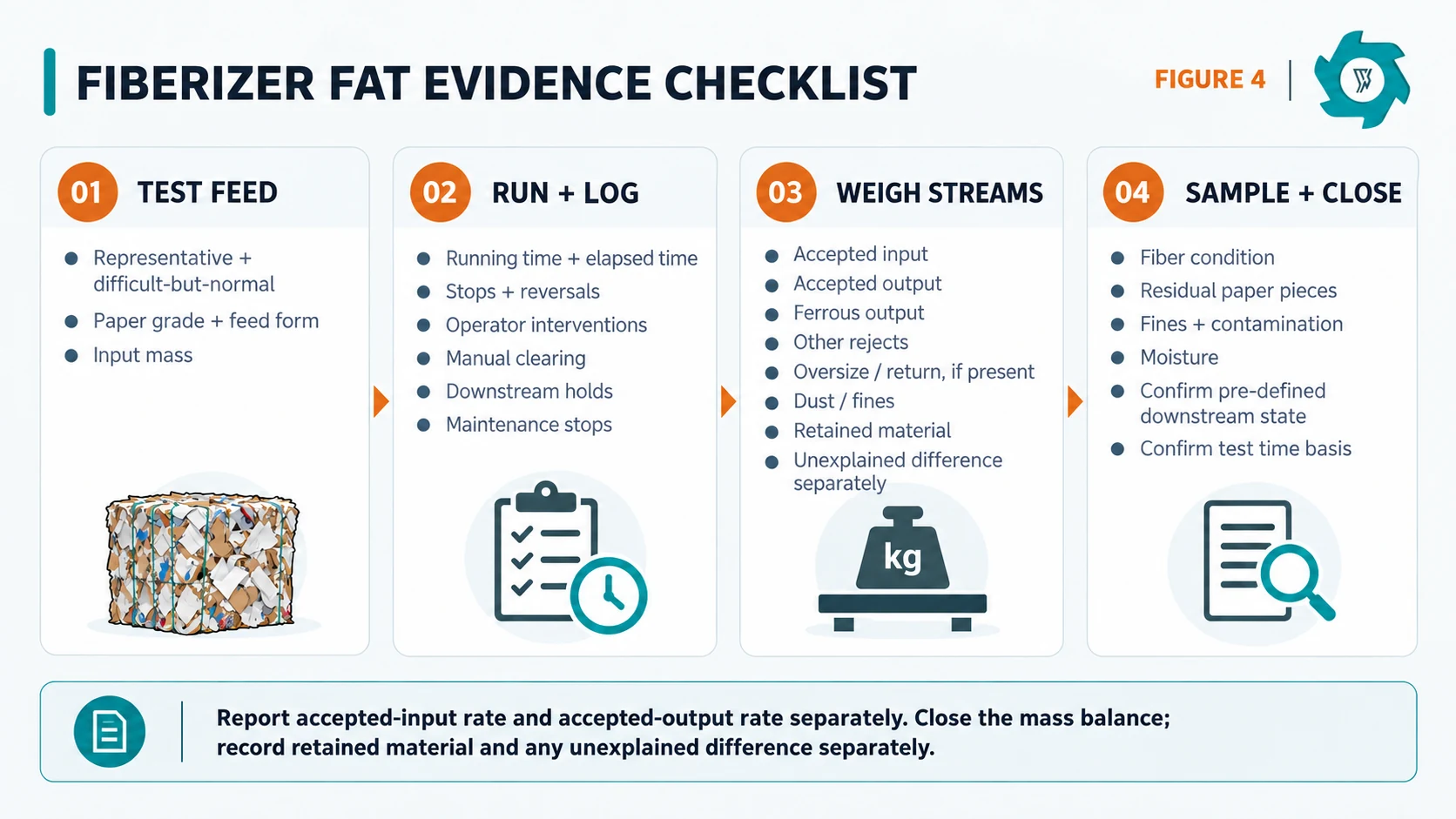
Figure 4. A useful FAT connects the representative test feed, time and event log, separately weighed streams and sampled fiber condition.
Test feed: identify paper grade, feed form and input mass. Include representative and difficult-but-normal material inside the approved boundary. Record moisture when it materially affects the comparison.
Run and event log: record running time and elapsed time. Log stops, reversals, operator interventions, manual clearing, downstream holds and maintenance stops. These categories should stay separate so a buyer can understand whether a lost minute came from the fiberizer, the feed interface or the receiving equipment.
Weigh streams: weigh accepted input and accepted output separately. Where present, weigh ferrous output, other rejects, oversize or return material, and dust/fines. Record retained material separately and state any unexplained difference rather than hiding it inside another category. This closes the mass balance and keeps accepted-output rate tied to material that actually met the agreed condition.
Sample and close: collect output samples across the run. Evaluate the agreed fiber condition, residual pieces, fines, contamination and moisture. Confirm the pre-defined downstream state and test time basis before deciding whether the result passes, needs a conditional action or requires a retest.
Maintenance Points That Directly Affect Fiber Quality
A fiberizer is a wear machine. The maintenance program should therefore connect inspection to process performance instead of waiting for a catastrophic failure.
Inspect opening tools for uneven wear, damaged edges, looseness and material buildup. Check the screen or grate for plugged openings, distortion and local wear that can change the effective discharge condition. Review liners and chamber surfaces for damage. Bearings, lubrication points, drive components and fasteners need the intervals specified by the equipment manufacturer.
Housekeeping around the inlet, outlet and dust pickup points also affects performance. Accumulated light fiber can obstruct sensors, restrict access or conceal small leaks. Planned cleaning should be treated as part of normal production time rather than an unexpected failure.
The best spare-parts list is tied to the real paper duty. Abrasive fillers, hidden metal, adhesive-rich material and long operating hours can change wear patterns. After commissioning, record the reason for each replacement—normal wear, impact damage, buildup, imbalance or another cause—so the plant can separate consumable cost from a correctable process problem.
Where the Fiberizer’s Responsibility Ends
Mechanically opened recycled paper can be a feedstock for several downstream products, but the fiberizer does not certify those products. This is particularly important for cellulose insulation. The U.S. Department of Energy describes cellulose insulation as recycled newsprint that is finely shredded and chemically treated, while the ASTM standard for loose-fill cellulose insulation covers composition and physical requirements for chemically treated recycled cellulosic fiber loose-fill insulation.[4][5] A fiberizer can prepare the paper portion; formulation, chemical treatment, product testing and code compliance remain downstream responsibilities.
The same principle applies to construction fillers, asphalt fiber or specialty absorbent applications. The machine can create a defined fiber-rich material, but the receiving process has to approve that material for its own recipe and performance requirements. Keeping that boundary explicit protects both the buyer and the equipment supplier from turning a mechanical process claim into an unsupported finished-product claim.
Practical Selection Rule
Choose the fiberizer backward from the required output. First define the feed that will actually reach it. Then define what the downstream process will accept. Only after those two boundaries are clear should the supplier select the opening geometry, motor duty, screen or discharge condition, feed system and air-handling interface.
Paper Fiberizer Machine FAQs
What does a paper fiberizer machine actually do?
A paper fiberizer mechanically opens prepared waste paper into a loose, fiber-rich material. Depending on the design, repeated impact, shear, rubbing and controlled residence inside the chamber separate and loosen the paper structure. What matters is whether the material leaves the machine in the fiber condition needed for the next process, not just whether it has been reduced to smaller pieces.
Does a dry paper fiberizer make paper-mill pulp?
A dry fiberizer produces mechanically opened, cellulose-rich material without a conventional water-based pulping loop. Paper mills normally mix recovered paper with water and then screen and clean the resulting slurry. Dry fiberized material should therefore be specified as a prepared fiber feedstock, not as finished wet pulp.
Which waste paper works best in a fiberizer?
Relatively dry, fiber-rich paper with controlled contamination is usually easier to process consistently. Newspapers, printed paper, production trim, selected books and some paperboard grades may be suitable after testing. Wet, waxed, heavily laminated or plastic-rich feed can change opening behavior, increase wrapping or leave unacceptable non-paper material.
What controls the final fiber condition?
Important variables include incoming paper grade, primary shred size, moisture, feed rate, rotor or tool condition, mechanical opening intensity, screen or exit configuration and the air or dust-control system. These variables should be set from representative material trials and the downstream acceptance requirement.
How should a buyer verify a fiberizer during FAT?
Use representative and difficult-but-normal feed. Record input mass, running time and elapsed time, stops, reversals, operator interventions, manual clearing, downstream holds and maintenance stops. Weigh accepted input and accepted output separately, then weigh ferrous output, other rejects, oversize or return material if present, dust or fines and retained material, and state any unexplained difference separately. Sample the finished fiber against the agreed acceptance criteria.
Define the Feed and Fiber Target Before You Compare Machines
Send representative waste-paper photos or samples, the prepared feed size, moisture and contamination range, required sustained accepted-output rate, target fiber condition and downstream handling method. A useful proposal should connect those inputs to the fiberizer, feed control, screen or discharge setup and dust-control interfaces.
David focuses on industrial shredding and recycling equipment,including material evaluation,shredder selection,process configuration,and recycling line planning.
Speak To Our Shredder Machine Expert
Get in touch with our nice team today to get a price estimate for a shredder machine.