What Is a Hydraulic Shredder?
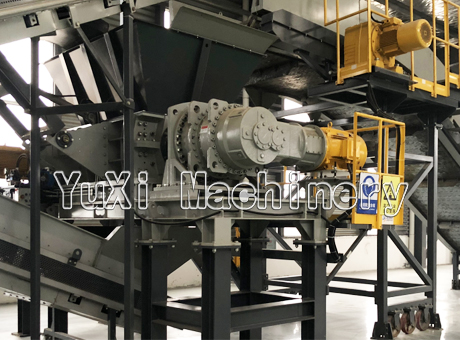
YUXI hydraulic shredder machines are available in single-shaft and double-shaft configurations. These are not the same cutting structure. The single-shaft configuration uses one rotor, fixed counter knives, a hydraulic pusher and a discharge screen for more controlled sizing. The hydraulic double-shaft configuration uses hydraulic motors and planetary reduction units to drive two counter-rotating cutter shafts for high-torque primary shredding.
The term hydraulic shredder should therefore be read together with the machine structure. On a single-shaft model, the hydraulic system may operate the material pusher, the rotor drive, or both, depending on the selected design. On the YUXI hydraulic double-shaft model, pressurized oil drives the hydraulic motors that transmit power to the two cutter shafts.
Hydraulic configurations are normally considered when feed material is bulky, uneven, shock-loaded or likely to cause frequent overloads. Typical projects include prepared appliance shells, steel drums, large plastic containers, tires, industrial waste, wood and paper-mill rejects.
Project note: Hydraulic drive is not automatically the best choice for every recycling line. Clean, uniform material may be handled more economically by a conventional electric-drive machine. The selection should be based on feed variation, shock load, output requirement, maintenance conditions and downstream equipment.
How Does a Hydraulic Shredder Work?
The working process depends on whether the machine uses a single-shaft or double-shaft cutting system. Both configurations operate at controlled speed, but they feed, cut and discharge material differently.
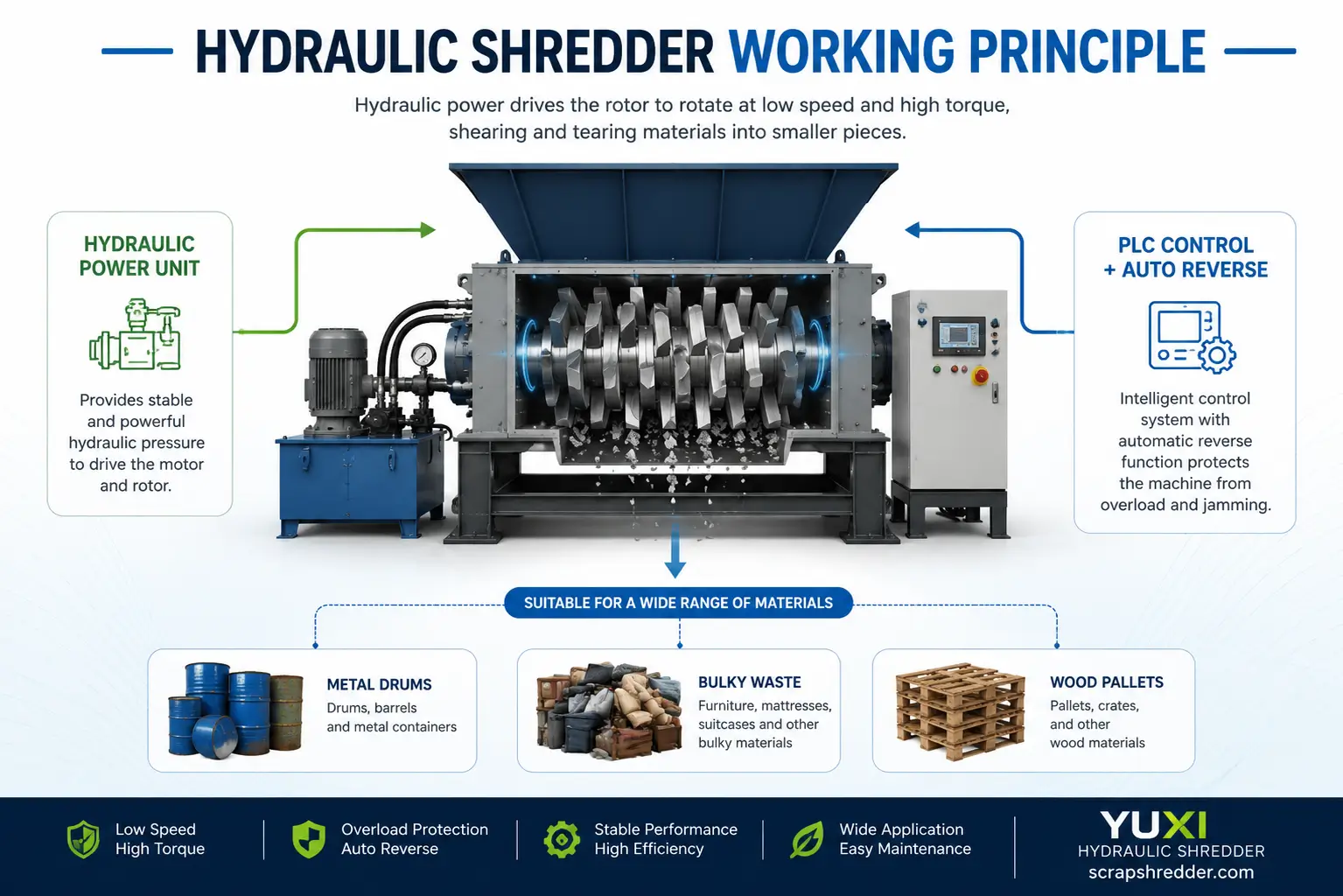
The hydraulic system may control material feeding, cutter-shaft drive or both. The final arrangement must be confirmed for the selected machine model.
Hydraulic Single-Shaft Shredder Working Principle
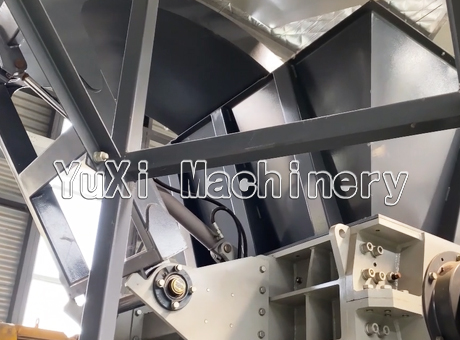
A hydraulic pusher moves material toward one cutting rotor. Moving knives mounted on the rotor work against fixed counter knives attached to the chamber. Material remains in the cutting area until it is small enough to pass through the selected screen.
Hydraulic pusher → single cutting rotor → moving and fixed knives → discharge screen
Controlled FeedingThe hydraulic pusher applies adjustable pressure to light, hollow, bulky or bridging material and keeps it in contact with the rotor.
Moving and Fixed KnivesRotor knives cut against fixed counter knives. Cutter geometry and knife clearance affect gripping, cutting efficiency and wear.
Screen-Controlled OutputThe screen retains oversized pieces for repeated cutting, giving more controlled output than an open-discharge primary shredder.
Model-Specific Rotor DriveDepending on the model, the rotor may be driven hydraulically or through another drive arrangement. This must be stated in the technical specification.
Hydraulic Double-Shaft Shredder Working Principle
An electric motor powers the hydraulic pump. Pressurized oil flows through the control circuit to the hydraulic motors, which transmit torque through planetary reduction units to two counter-rotating cutter shafts. Staggered cutter discs grip the feed and reduce it through shearing, tearing and compression.
Electric motor → hydraulic pump and valves → hydraulic motors → planetary reduction units → two cutter shafts
Twin-Shaft ShearingTwo counter-rotating shafts actively pull bulky material into the chamber. Cutter thickness, hook profile and shaft spacing determine the cutting behavior.
Hydraulic Torque ControlSystem pressure and oil flow influence available torque and shaft-speed response as material resistance changes.
Comb Plates or Cleaning FingersReplaceable comb components can help clear material from between the cutters and create additional shearing points.
Overload ResponsePressure-relief protection limits excessive hydraulic load, while the PLC can stop, reverse and restart the shafts when a stall is detected.
Discharge note: A single-shaft machine normally uses a sizing screen. A double-shaft primary shredder usually relies on cutter width, tooth arrangement and repeated gripping to determine the rough output. If a grate or screen is required on a double-shaft model, it should be confirmed as a model-specific option.
Hydraulic Shredder Video
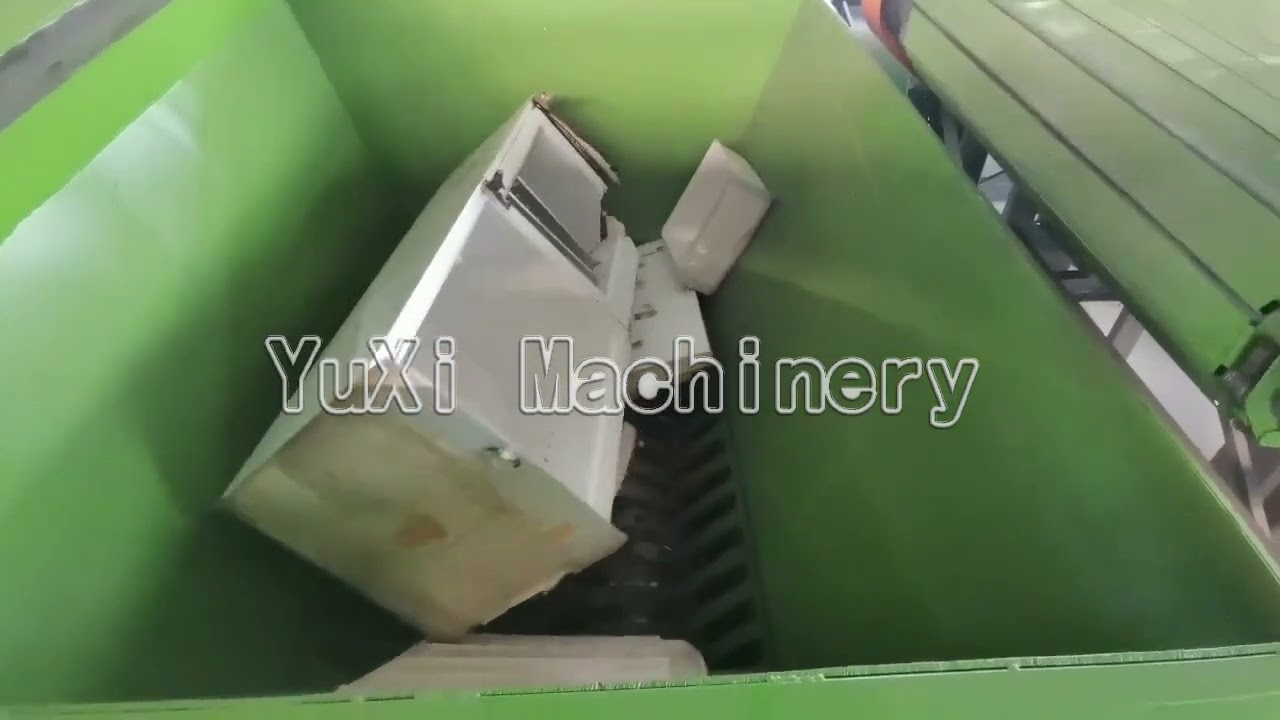
The video below shows YUXI equipment processing household-appliance and refrigerator material. Buyers should confirm whether the machine shown is the same single-shaft or double-shaft configuration proposed for their project.
Safety note: Refrigerators and other regulated appliances should be depolluted before shredding. Refrigerant, compressor oil, batteries, capacitors and other controlled components may require removal under the applicable local process.
Hydraulic Drive vs Electric Drive Shredder
The drive system should be selected according to feed variation, starting load, shock frequency, duty cycle, maintenance capability and operating cost. Hydraulic drive offers flexible low-speed torque control and rapid load response, while electric drive can be simpler and efficient for stable continuous operation.
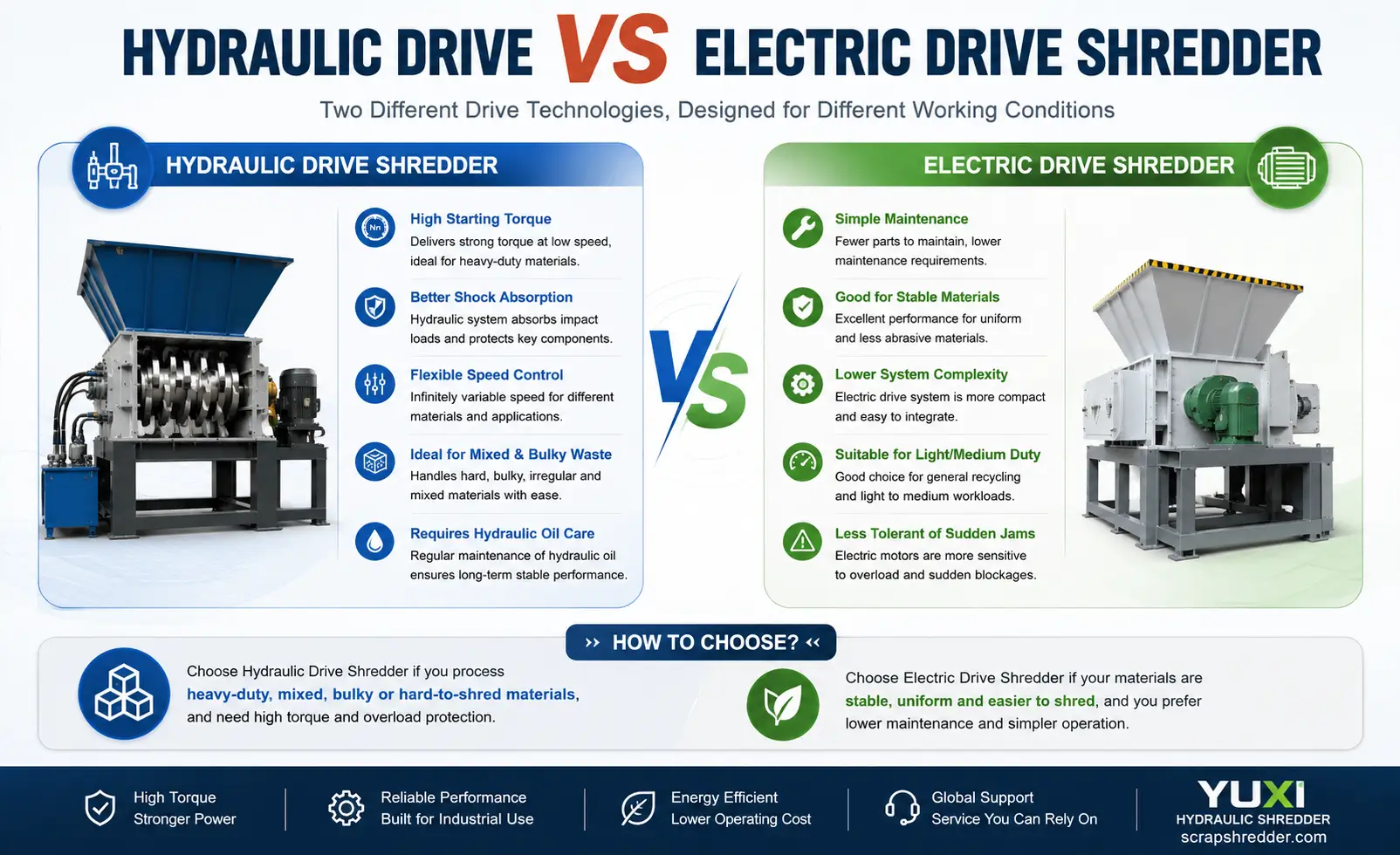
| Selection Point | Hydraulic Drive | Electric Drive |
|---|
| Low-speed torque response | Pressure and flow can be controlled to respond to changing resistance | Depends on motor, reducer, inverter and control strategy |
| Overload response | Pressure relief and hydraulic control can work with PLC reversing | Motor current, torque monitoring and PLC reversing protect the drive |
| Feed variation | Often selected for shock-loaded, irregular or frequently jamming feed | Often suitable for cleaner and more stable material streams |
| Maintenance focus | Oil condition, filters, hoses, seals, valves, pumps, motors and cooling | Motor, reducer, coupling, inverter and electrical components |
| Efficiency consideration | Hydraulic losses and oil cooling must be included in operating-cost calculations | Can offer a simpler energy path in stable stationary applications |
Selection note: Hydraulic drive should not be described as universally stronger or more energy-efficient. The correct comparison requires actual torque curves, duty cycle, material tests and maintenance conditions.
Key Features of YUXI Hydraulic Shredder Machine
Low-Speed, High-Torque Cutting
The cutting system reduces material by controlled shearing and tearing rather than high-speed impact. This is useful for bulky, resistant or irregular feed that must be gripped before it can be reduced.
Hydraulic Load Control and Overload Protection
On the hydraulic double-shaft configuration, pump flow, pressure control and hydraulic motors determine shaft response. Pressure-relief protection limits excessive hydraulic load, while the PLC can execute a programmed stop-and-reverse sequence.
PLC and Touch-Screen Operation
The control system can provide start, stop, forward and reverse functions. Depending on the selected control package, pressure thresholds, reversal time, restart sequence, alarms and operating status can be configured for different materials.
Application-Specific Cutter Design
Cutter thickness, hook profile, blade arrangement, alloy grade and heat treatment should be selected according to the feed material. A tire, metal-drum or paper-mill-waste project may require a different cutter arrangement from a plastic-container application.
Hydraulic Cooling and Filtration
Oil cleanliness and temperature directly affect hydraulic reliability. The power unit should include correctly sized filtration, oil storage, pressure control and cooling for the expected ambient temperature and duty cycle.
Recycling Line Integration
The shredder can be integrated with feeding and discharge conveyors, magnetic separation, screening, dust control, secondary shredding, baling or other sorting equipment. The complete process should be designed around the required final product rather than the shredder alone.
What Materials Can a Hydraulic Shredder Process?
A hydraulic shredder can be configured for bulky, mixed, resistant or difficult-to-feed material. Suitability depends on the single-shaft or double-shaft structure, cutter design, feed size, contaminants, required throughput and downstream process.
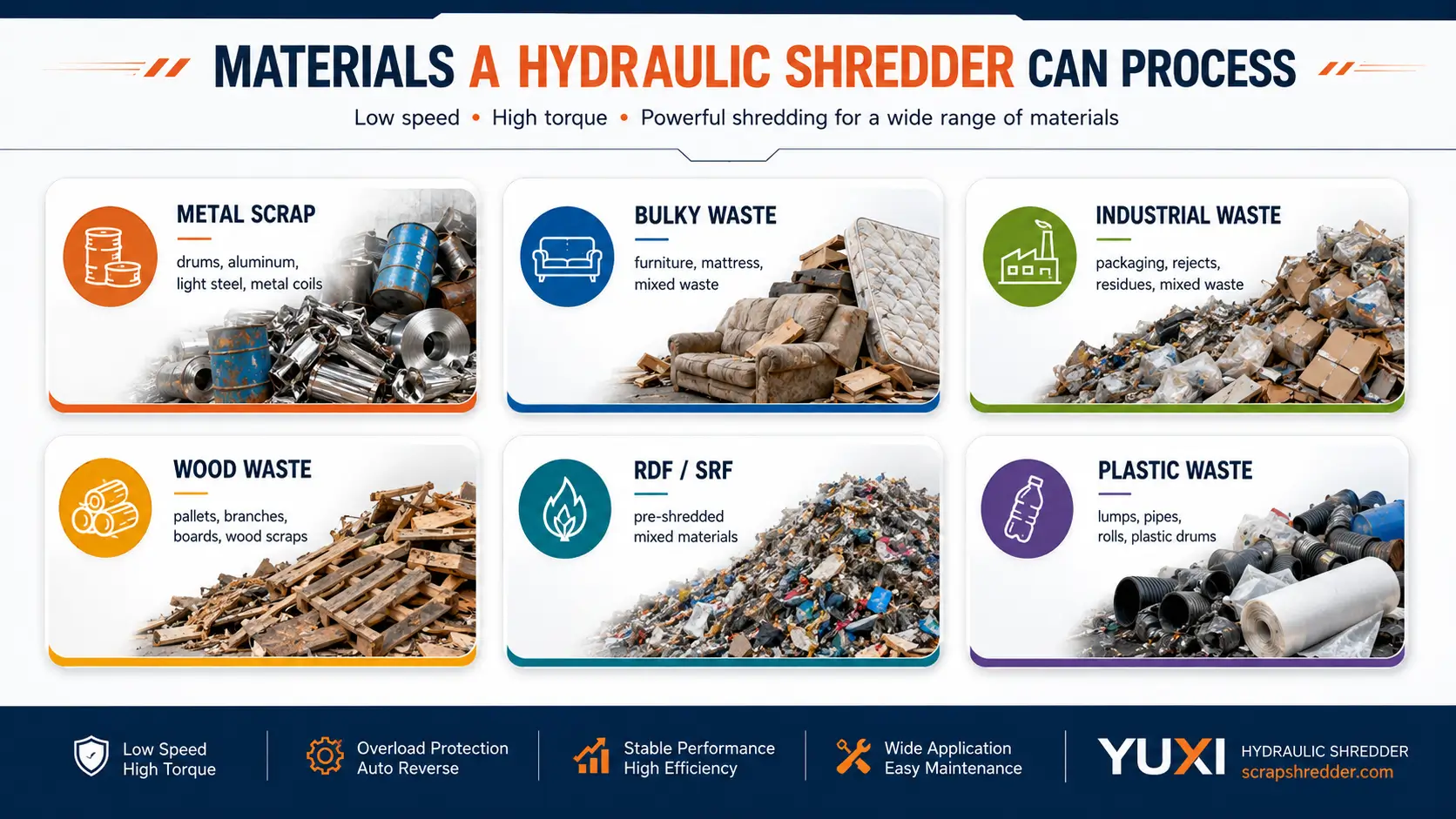
Metal Scrap and Prepared Vehicle Material
Typical feeds include steel drums, paint cans, appliance shells, aluminum profiles and prepared light sheet metal. Depolluted and pre-dismantled vehicle body panels may also be evaluated. Solid heavy steel, engine blocks, axles and oversized components require separate engineering confirmation.
Waste Appliances
Prepared washing-machine shells, appliance housings and dismantled refrigerator cabinets can be opened before downstream magnetic, eddy-current or density separation. Refrigerants, oils, batteries, capacitors and other regulated components must be handled through an appropriate depollution process.
Waste Tires and Rubber
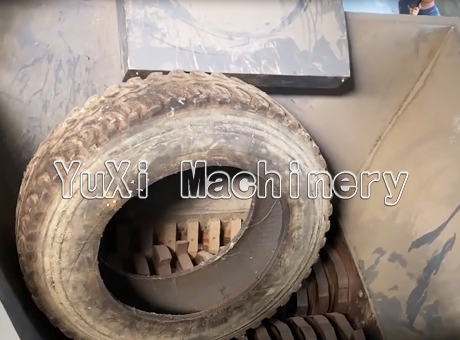
Selected hydraulic double-shaft models can process passenger-car and truck tires. Large construction or off-the-road tires may require bead removal, pre-cutting or a larger cutter chamber. Maximum tire diameter, width and construction should be confirmed before quotation.
Large Plastic Products
Applications can include HDPE drums, IBC inner tanks, large containers, thick-wall plastic pipes, plastic lumps and rejected molded parts. A single-shaft screen configuration is useful when output control is important; a double-shaft machine is often used when the main goal is opening and volume reduction.
Industrial and Packaging Waste
Mixed factory rejects, packaging waste, textiles, rubber pieces and contaminated production scrap can vary widely from batch to batch. Material inspection is required to identify hard inclusions, sealed containers, liquids and wrapping risks.
Wood and Paper-Mill Waste
Wood pallets, boards, branches, pulper ropes and mixed paper-mill rejects can be processed with a suitable cutter arrangement. Nails, wires, moisture and long wrapping material must be considered when selecting the machine and downstream separator.
RDF and SRF Feedstock
The shredder can perform primary opening and size reduction before screening, magnetic separation, air separation, drying or secondary shredding. Shredding alone does not guarantee a final RDF or SRF specification.
Regulated and hazardous waste: A shredder does not by itself make a hazardous-waste process compliant. Flammable material, pressurized containers, liquids, reactive chemicals, medical waste and other regulated streams require a purpose-designed treatment system, risk assessment and local permits.
Hydraulic Shredder Applications
Metal Recycling Plants
Primary reduction of drums, appliance shells, aluminum profiles and prepared light sheet metal before separation or further crushing.
Tire Recycling Facilities
Opening passenger-car and truck tires before secondary shredding, steel separation and rubber processing. Larger tires require model-specific evaluation.
Waste Appliance Recycling
Reducing depolluted appliance housings and refrigerator cabinets before magnetic, non-ferrous and plastic separation.
Industrial Waste Treatment
Handling packaging rejects, large plastics, rubber pieces, textiles, wood and mixed factory residues.
Paper-Mill Reject Processing
Opening pulper ropes and mixed rejects containing wet paper, plastics, textiles and wire before recovery or fuel preparation.
RDF Production Lines
Primary shredding before screening, separation, drying and secondary size reduction.
For general recycling and worker-safety context, buyers can also refer to the U.S. EPA recycling guidance and OSHA recycling safety information.
Hydraulic Single-Shaft vs Double-Shaft Shredder
The two configurations solve different problems. Selecting by material name alone is not enough; buyers should also consider feeding behavior, target output and the next process step.
| Selection Point | Hydraulic Single-Shaft Configuration | Hydraulic Double-Shaft Configuration |
|---|
| Cutting structure | One rotor with moving knives and fixed counter knives | Two counter-rotating shafts with staggered cutter discs |
| Material feeding | Hydraulic pusher presses material toward the rotor | Cutter hooks actively grip and pull material into the chamber |
| Rotor or shaft drive | Model-specific; the hydraulic system may operate the pusher, rotor or both | Hydraulic motors drive the cutter shafts through reduction units |
| Output control | Screen retains oversized material for repeated cutting | Output is mainly influenced by cutter width, tooth profile, spacing and repeated gripping |
| Typical objective | More controlled size reduction | Primary opening, coarse reduction and volume reduction |
| Typical materials | Large plastics, wood, paper-mill waste and selected industrial waste | Metal drums, appliances, tires, bulky waste and shock-loaded industrial waste |
| Main selection risk | Screen restriction, wrapping, pusher setting and rotor wear | Hidden hard objects, cutter loading, shock load and rough output variation |
YUXI can also integrate either configuration with conveyors, magnetic separators, screening, secondary shredders and other recycling-line equipment.
Key Hydraulic Shredder Selection Parameters
The final machine specification should be confirmed after reviewing material photos or video, maximum feed size, bulk density, contaminants, required capacity, target output and downstream process. The table below lists the project information needed before a model is recommended.
| Selection Parameter | What to Confirm | Why It Matters |
|---|
| Machine structure | Single-shaft with hydraulic pusher or hydraulic double-shaft rotary shear | Determines feeding method, output control and suitable applications |
| Cutting chamber | Opening size, usable length and maximum accepted feed dimensions | Determines whether drums, tires, pipes, pallets or appliance shells can enter safely |
| Cutter configuration | Cutter thickness, hook profile, knife arrangement, material and heat treatment | Affects gripping, output condition, torque demand and wear life |
| Hydraulic system | Pump and motor arrangement, working pressure, oil flow, reservoir, filters and cooler | Controls torque response, operating temperature and overload behavior |
| Single-shaft feeding system | Pusher stroke, pressure, speed and PLC load feedback | Affects bridging, rotor loading, reversal frequency and throughput |
| Shaft or rotor speed | Normal operating range under the specified material load | Influences gripping, cutting behavior, heat generation and throughput |
| Discharge control | Single-shaft screen size or double-shaft cutter-based rough output | Must match conveyors, separators, balers or secondary shredders |
| Reference capacity | Throughput tested with a defined material, feed size and operating method | Capacity cannot be compared accurately without material-specific test conditions |
Specification note: This is a selection-data table, not a model specification sheet. Verified model dimensions, installed power, hydraulic data, machine weight and material-specific capacities should be added when the factory model list is available.
How to Choose the Right Hydraulic Shredder
The right hydraulic shredder is not selected by installed power alone. The first decision is whether the project needs screen-controlled single-shaft cutting or high-torque double-shaft primary reduction.
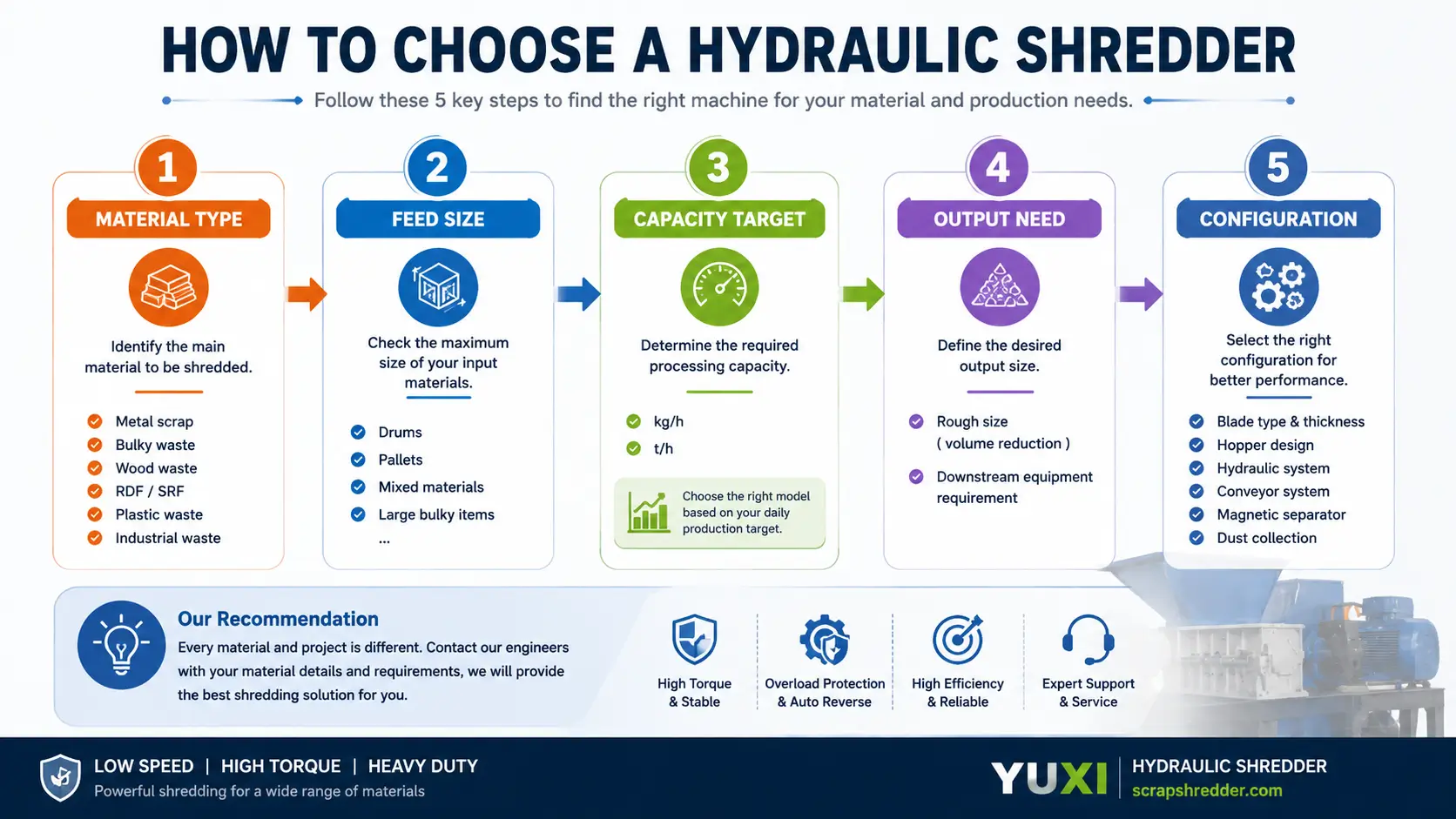
1. Define the Material and Exclusions
Provide material photos or video, normal and maximum dimensions, bulk density, moisture, metal content, wrapping behavior and any sealed or hazardous items that must be removed.
2. Choose Single-Shaft or Double-Shaft Cutting
Select a single-shaft configuration when controlled output and screen sizing are important. Select a double-shaft configuration when the first priority is gripping, opening and reducing bulky or resistant feed.
3. Confirm Feed Size and Feeding Method
Long, hollow and irregular material may require a larger hopper, conveyor, grab loader or controlled batch feeding. The feeding system should prevent sudden surges and chamber overfilling.
4. Define Capacity Under Real Conditions
Capacity should be discussed together with bulk density, cutter arrangement, target output, loading method and planned operating hours. The same machine can show very different throughput on loose bulky waste and dense metal scrap.
5. Match the Downstream Process
Discharge size and conveyor design must match magnetic separation, sorting, baling, granulation, RDF preparation or secondary shredding. A complete process check prevents bottlenecks after installation.
See the detailed hydraulic shredder selection guide for the full buyer checklist.
Hydraulic Shredder Price Factors
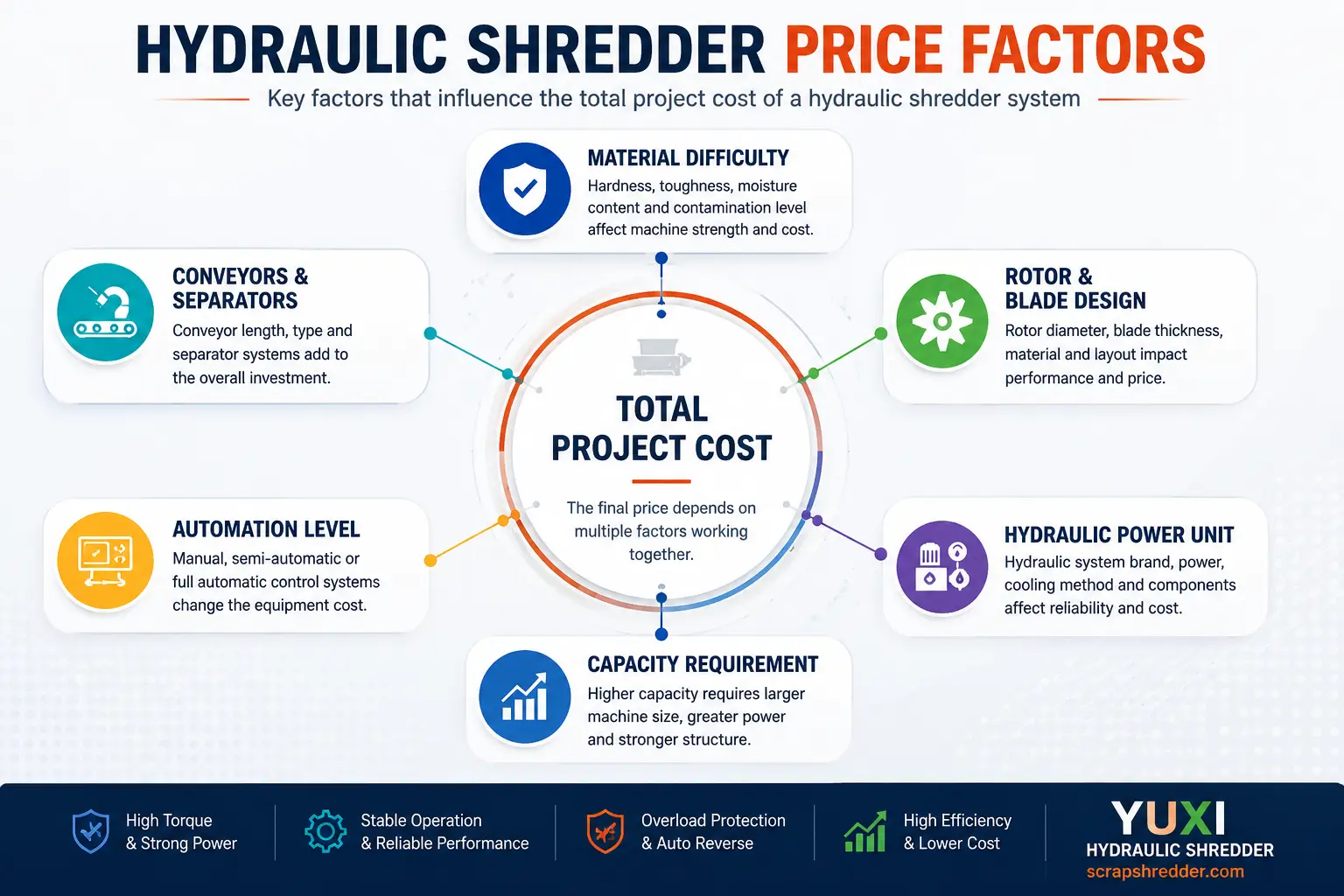
Hydraulic shredder price depends on machine structure, material difficulty, cutting chamber, hydraulic power unit, cutter configuration, controls, cooling and optional recycling-line equipment. A larger installed power rating does not automatically mean a better machine for the project.
| Cost Factor | Impact on Quotation |
|---|
| Single-shaft or double-shaft structure | Changes the cutting chamber, shafts, feeding system, discharge control and drive arrangement. |
| Material difficulty | Dense, abrasive, contaminated or shock-loaded feed may require stronger shafts, cutters and protection systems. |
| Capacity and duty cycle | Higher continuous throughput can require a larger chamber, hydraulic power unit, oil cooler and heavier frame. |
| Cutter configuration | Cutter material, thickness, hook profile, heat treatment and replaceable wear parts affect price and maintenance cost. |
| Hydraulic components | Pumps, motors, valves, reservoir, filtration, oil cooling and monitoring influence reliability and total cost. |
| Control and automation | PLC logic, touch-screen HMI, alarms, pressure monitoring, remote support and sensors change the control package. |
| Complete line equipment | Conveyors, separators, screening, dust control, secondary shredding and baling can exceed the cost of the standalone shredder. |
Why Choose YUXI Hydraulic Shredder?
YUXI supplies hydraulic single-shaft and hydraulic double-shaft shredder configurations for overseas recycling projects. Machine selection is based on the actual feed material, required output and downstream process rather than a generic model recommendation.
- Single-shaft and double-shaft configuration review
- Material photo and video assessment before quotation
- Application-specific hopper, chamber and cutter design
- Hydraulic power-unit, cooling and control-system configuration
- Integration with conveyors, separation and secondary processing
- Spare-parts planning, installation guidance and operating support
Related equipment: Double Shaft Shredder, Single Shaft Shredder, Four Shaft Shredder, and Plastic Shredder.
Typical Application Scenarios
The following examples explain how the machine may be configured. They are application scenarios rather than published customer case studies.
Metal Drums and Prepared Appliance Shells
A double-shaft hydraulic shredder can open steel drums, prepared refrigerator cabinets and light appliance shells before magnetic and non-ferrous separation. Cutter loading, contaminants and depollution requirements must be reviewed first.
Passenger-Car and Truck Tires
A high-torque double-shaft configuration can perform primary tire opening before secondary shredding and steel separation. Tire diameter, width, bead construction and required output determine whether pretreatment is needed.
Large Plastics and Industrial Waste
A single-shaft configuration can be used when a hydraulic pusher and discharge screen are needed for controlled output. A double-shaft configuration may be selected when fast opening and volume reduction are more important than uniform size.
Paper-Mill Rejects and RDF Pretreatment
The shredder can open wet, mixed and wrapping-prone rejects before screening, magnetic separation or secondary processing. The cutter design and downstream line must account for wire, textiles, moisture and contaminants.
Hydraulic Shredder FAQ
What is a hydraulic shredder?
A hydraulic shredder uses hydraulic power for one or more machine functions. YUXI configurations include a single-shaft machine with hydraulic feeding and screen-controlled sizing, and a hydraulic double-shaft machine in which hydraulic motors drive two counter-rotating cutter shafts for primary shredding.
What is the difference between a hydraulic single-shaft and double-shaft shredder?
A hydraulic single-shaft shredder uses one rotor, fixed counter knives, a hydraulic pusher and a screen for more controlled output. A hydraulic double-shaft shredder uses two counter-rotating cutter shafts to grip and tear bulky or resistant material, usually producing a rougher primary-shredded output.
Is the rotor of every hydraulic single-shaft shredder hydraulically driven?
Not necessarily. Depending on the model, the hydraulic system may operate the pusher, the cutting rotor, or both. The rotor-drive arrangement should be confirmed in the final machine specification.
What is the difference between a hydraulic-drive and electric-drive shredder?
A hydraulic drive offers flexible low-speed torque control and rapid response to changing loads. An electric drive can be simpler and efficient for stable, continuous-duty materials. The correct choice depends on feed variation, shock load, maintenance conditions and operating cost.
Can a hydraulic shredder process metal scrap?
Yes, subject to model selection. Typical feeds include steel drums, paint cans, aluminum profiles, appliance shells and prepared light sheet metal. Solid heavy steel, engine blocks and oversized components require a separate engineering review.
Can a hydraulic shredder process waste tires?
Selected hydraulic double-shaft models can process passenger-car and truck tires. Large construction or off-the-road tires may require bead removal, pre-cutting or a larger machine, so maximum tire diameter, width and construction must be confirmed.
Can it process refrigerators and other appliances?
It can process prepared appliance shells and dismantled refrigerator cabinets. Refrigerants, oils, compressors, batteries, capacitors and other regulated components should be removed through a suitable depollution process before shredding.
Does a hydraulic shredder have automatic reverse?
It can be equipped with PLC-controlled automatic reverse. When pressure, load or shaft speed indicates an overload, the control system can stop, reverse and restart the cutting cycle according to the programmed sequence.
What affects hydraulic shredder price?
Price depends on the single-shaft or double-shaft structure, material difficulty, chamber size, hydraulic power unit, cutter configuration, control system, cooling and filtration, conveyors and downstream separation equipment.
How do I choose the right hydraulic shredder?
Provide material photos or video, maximum feed size, bulk density, contaminants, required throughput, target output and downstream process. These details determine whether a single-shaft or double-shaft configuration is more suitable.
Need a Hydraulic Shredder for Your Recycling Project?
Send material photos or video, maximum feed size, contaminants, capacity target, required output and downstream process. YUXI can compare a hydraulic single-shaft configuration, hydraulic double-shaft configuration or another shredder type for your project.
Contact YUXI