Industrial Shredder & Recycling Systems Manufacturer - YUXI
Service EfficientFast Delivery
Service EfficientReliable
Service EfficientCertified
Service EfficientExperienced
Custom Scrap Aluminum Processing Systems

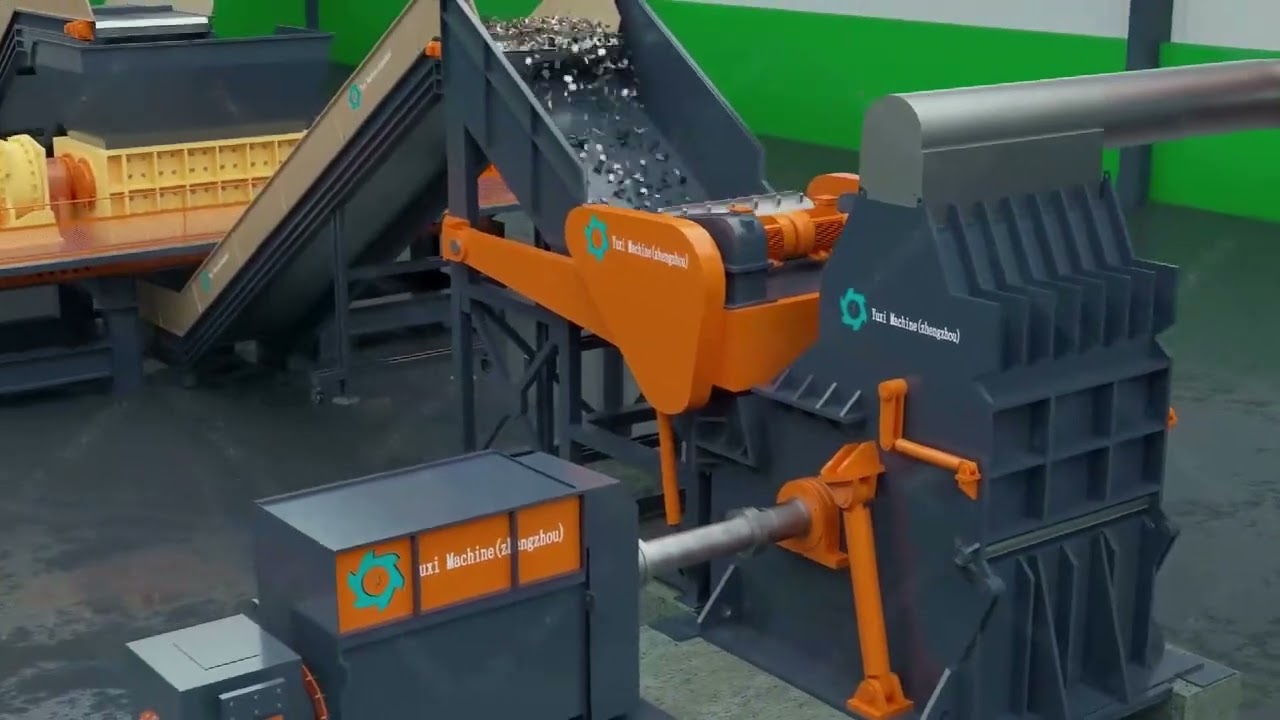
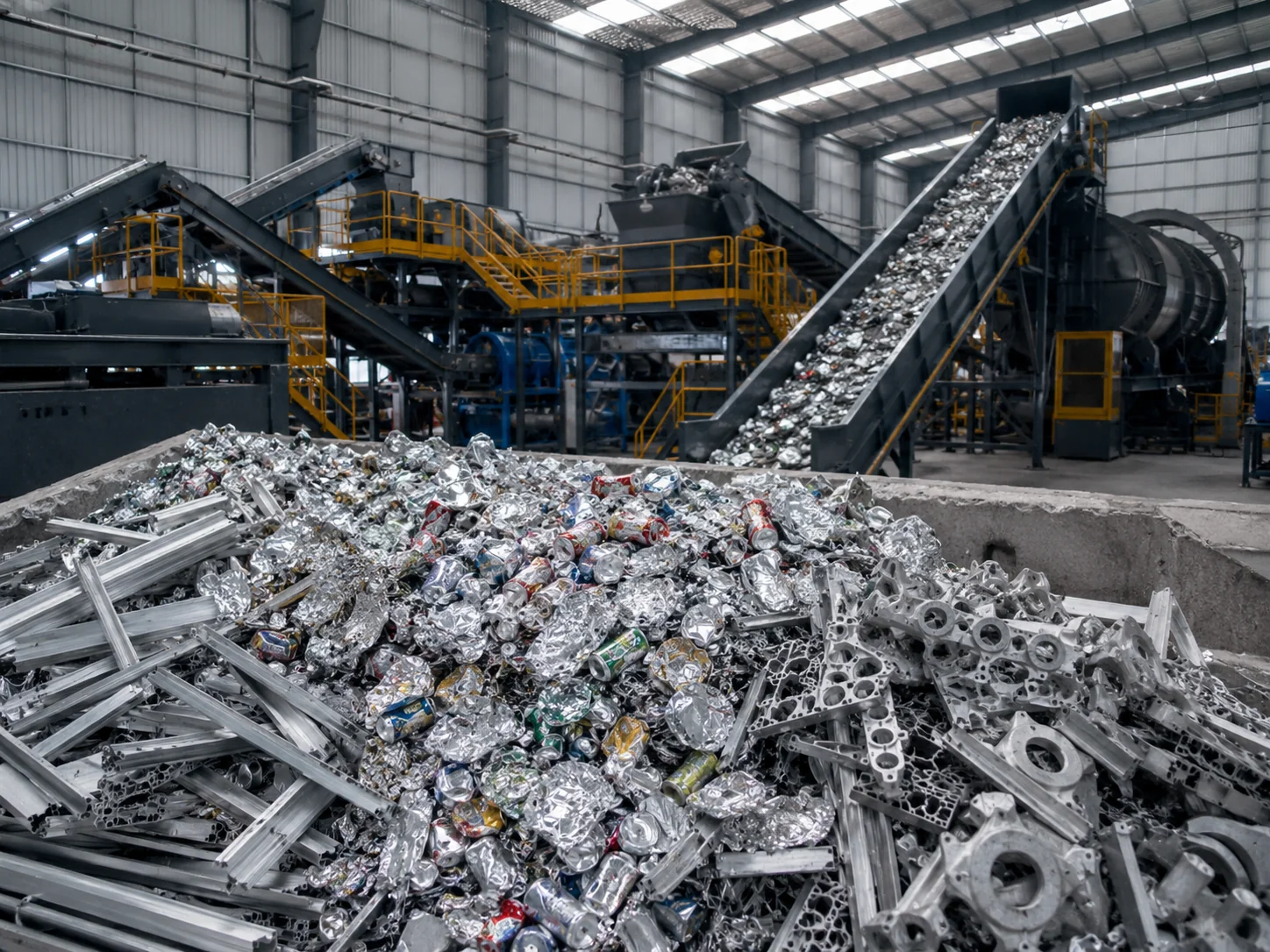
Scrap Aluminum Recycling Line

Practical shredding, crushing and separation systems for aluminum profiles, wheels, castings, sheet scrap and mixed feed. The line is configured around how the material actually behaves in the hopper, cutting chamber and separators—not around a fixed machine package.

Quick answer: Long profiles, dense cast wheels and loose sheet scrap may all be aluminum, but they do not feed or break in the same way. We first look at the dominant scrap, hidden steel, expected shift output and the buyer’s final product. From there, we decide what should be shredded, what should be separated, and just as importantly, which machines can be left out.

What We Need to Size Your Line

1. Material photos and largest feed size
2. Aluminum, steel and non-metal percentages
3. Required throughput in tons per hour
4. Target output size and end use
5. Workshop dimensions and power supply
Flexible FeedstockProfiles, sheets, wheels, castings and mixed scrap
Modular ProcessShredding, crushing, screening and separation as needed
Cleaner OutputRemove ferrous and selected non-metal contaminants
Project-Based DesignConfigured around your real feed and downstream requirement
Product Overview

Start With the Scrap, Not the Equipment List

Scrap aluminum is rarely difficult for only one reason. Long extrusions tend to bridge before they ever reach the cutters. Cast wheels feed more steadily, but their density and steel attachments create much higher shock loads. Mixed demolition aluminum is usually less predictable: one batch may be mostly frames and sheet, while the next contains rubber seals, stainless fittings and heavy foreign parts.

In our experience, the first design decision is usually feeding—not motor power. A larger shredder does not solve a hopper that allows profiles to enter crosswise. Once the feed is stable, we decide whether primary shredding gives enough liberation or whether a second size-reduction stage is justified.

The finished line should make the aluminum easier to handle, price and feed into the next process. Sometimes that means shredding and sorting. For clean factory offcuts, it may mean nothing more than controlled feeding and baling.

Scrap Aluminum Recycling Line Video
Raw Materials

What Scrap Aluminum Can the Line Process?

The same machine cannot process every aluminum feed equally well. Material geometry, bulk density, attachments and contamination determine the actual process.

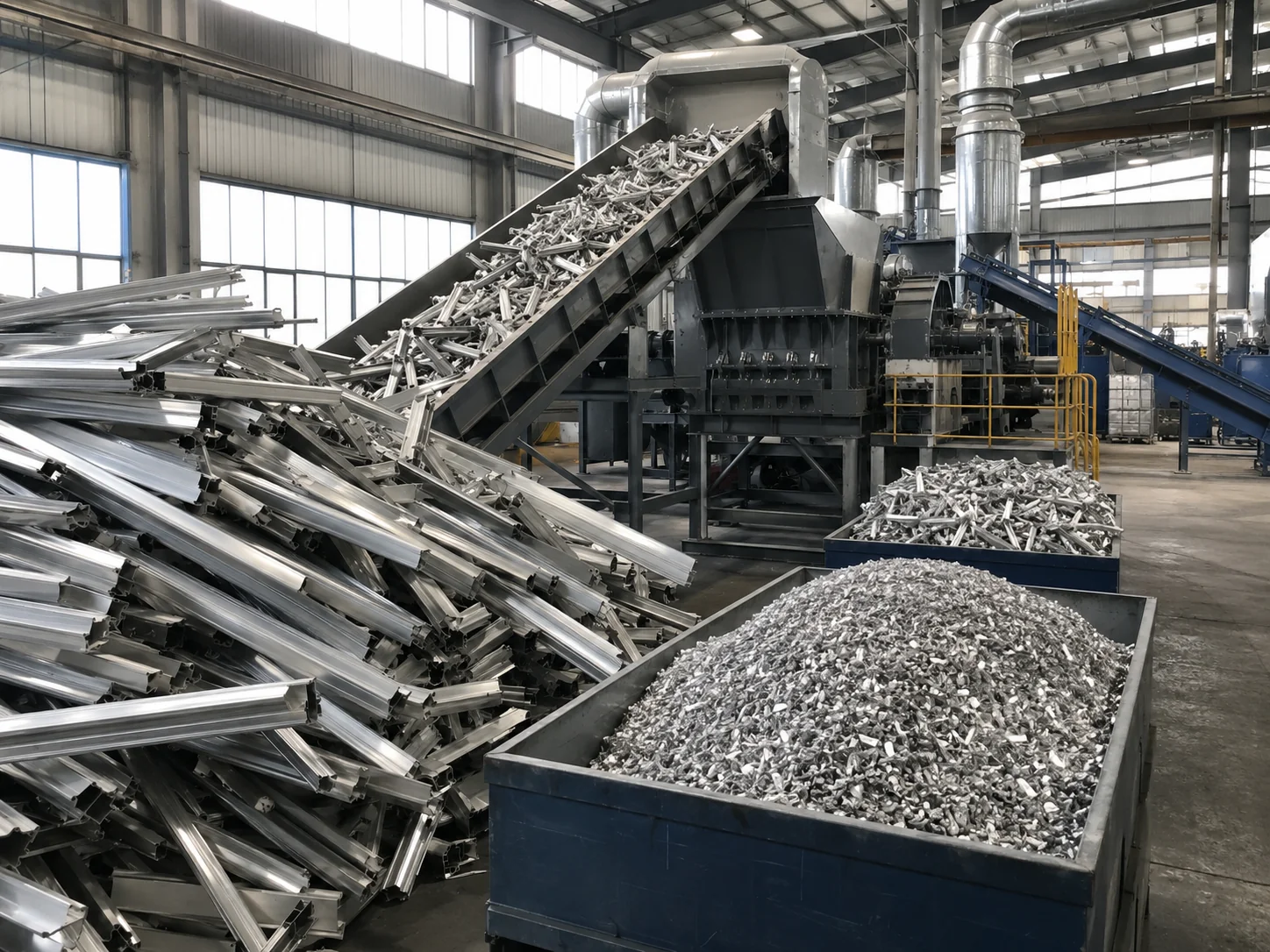
Aluminum profile scrap for recycling

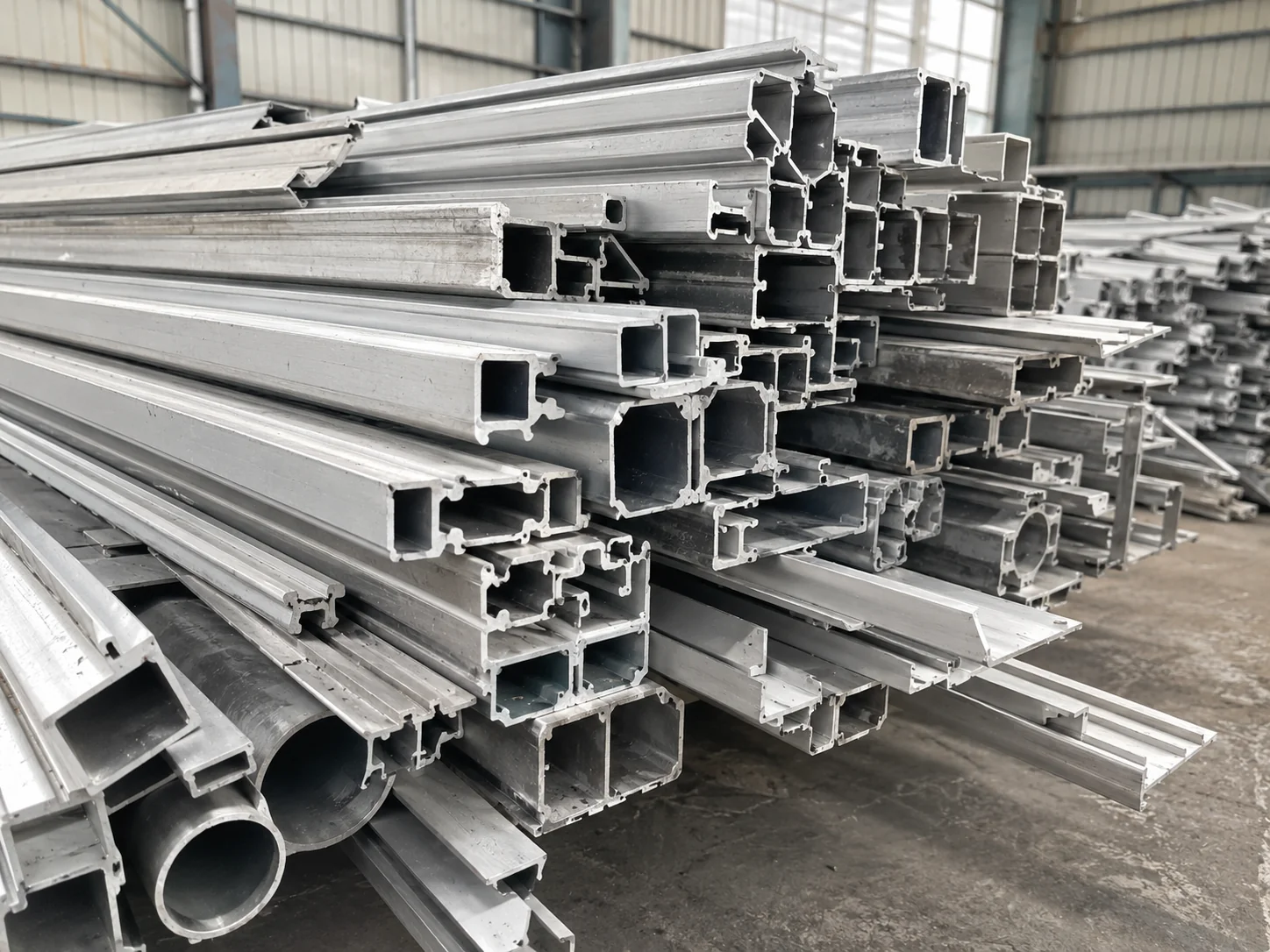
Aluminum Profiles

Long extrusions, fabrication offcuts and industrial profile scrap.

Aluminum door and window frame scrap

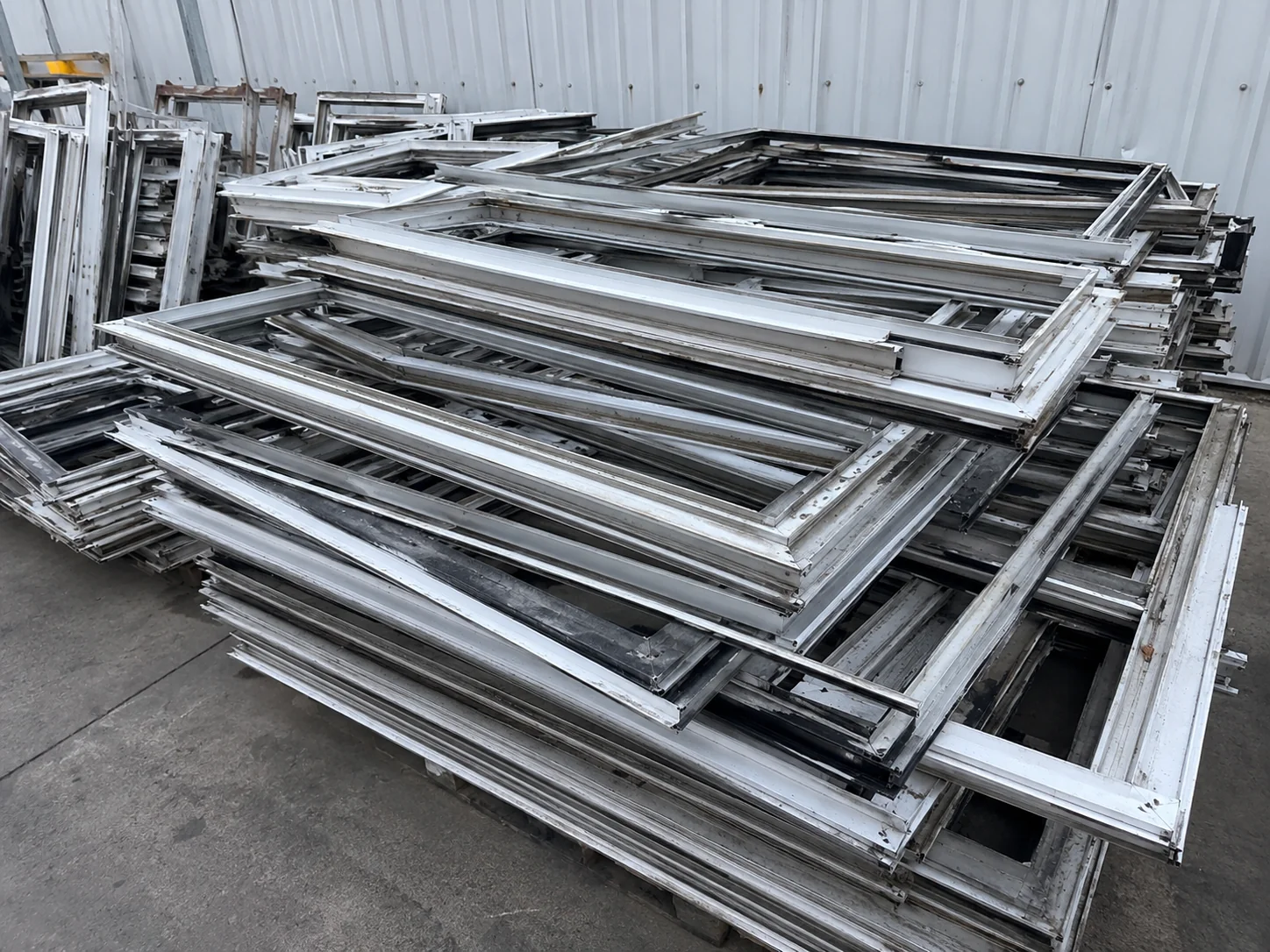
Door & Window Frames

Often contain screws, fittings, seals and thermal-break plastic strips.

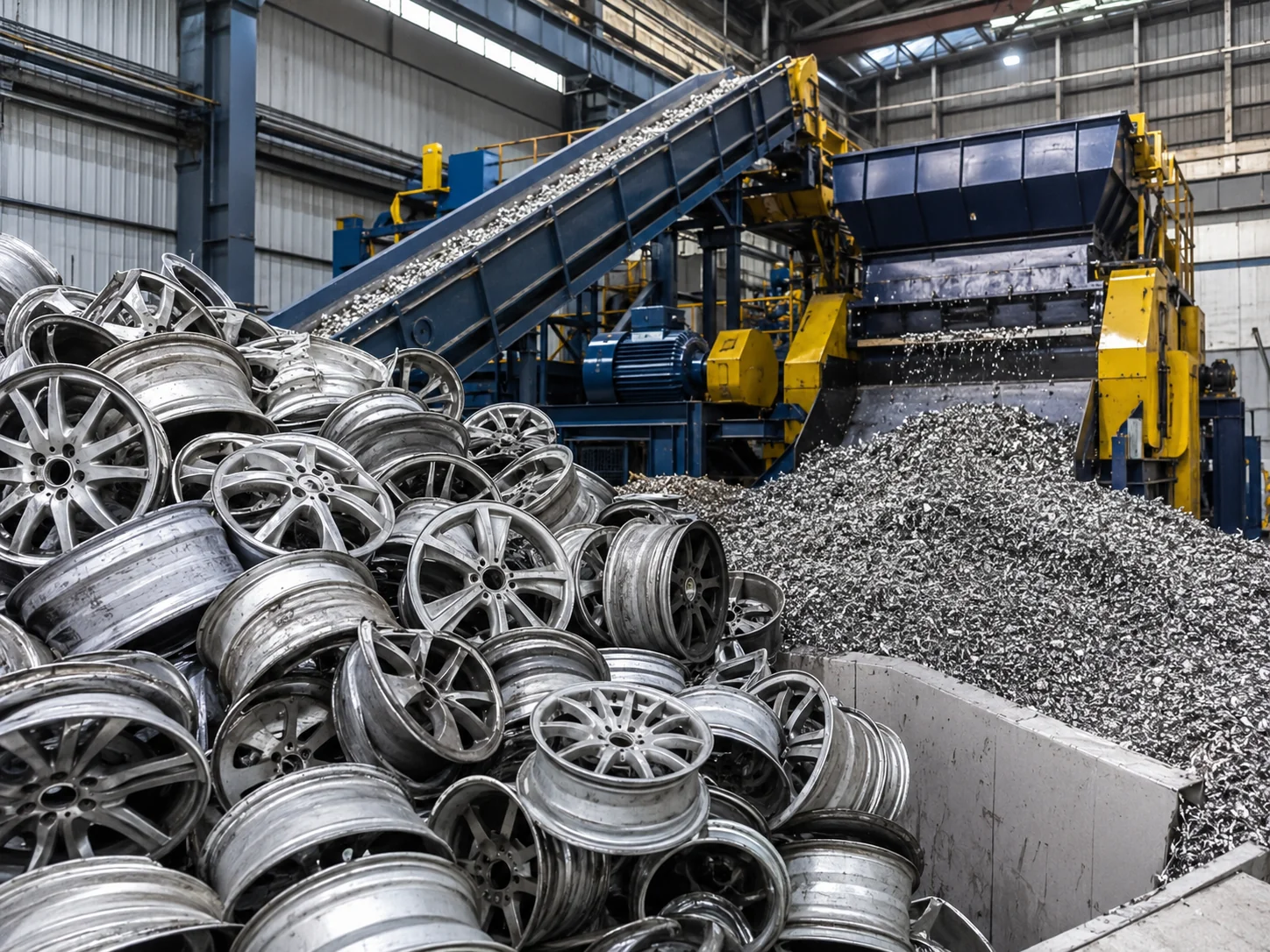
Scrap aluminum wheels

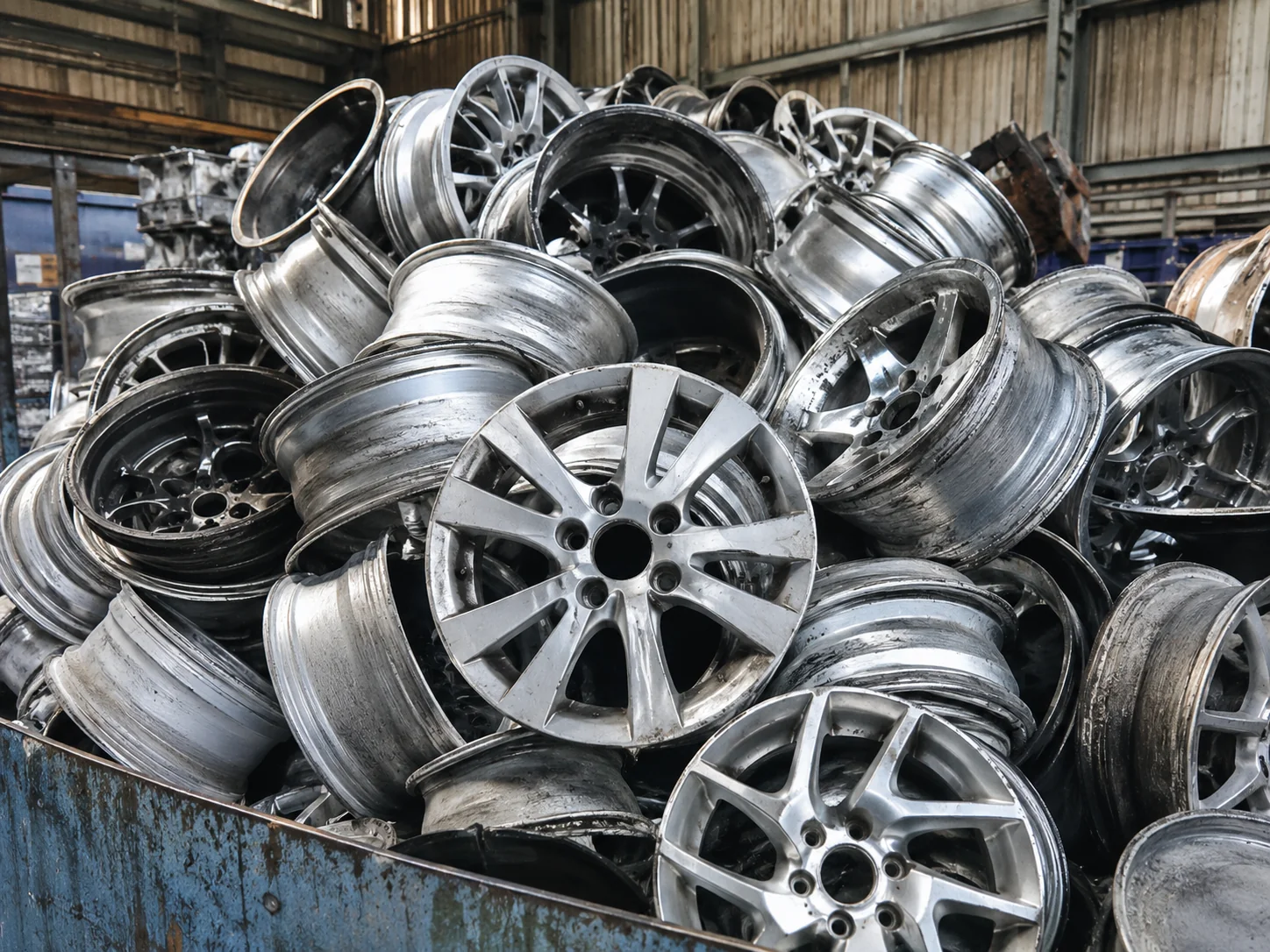
Aluminum Wheels

Dense cast material that may contain steel weights, valves and inserts.

Automotive aluminum parts

Automotive Castings

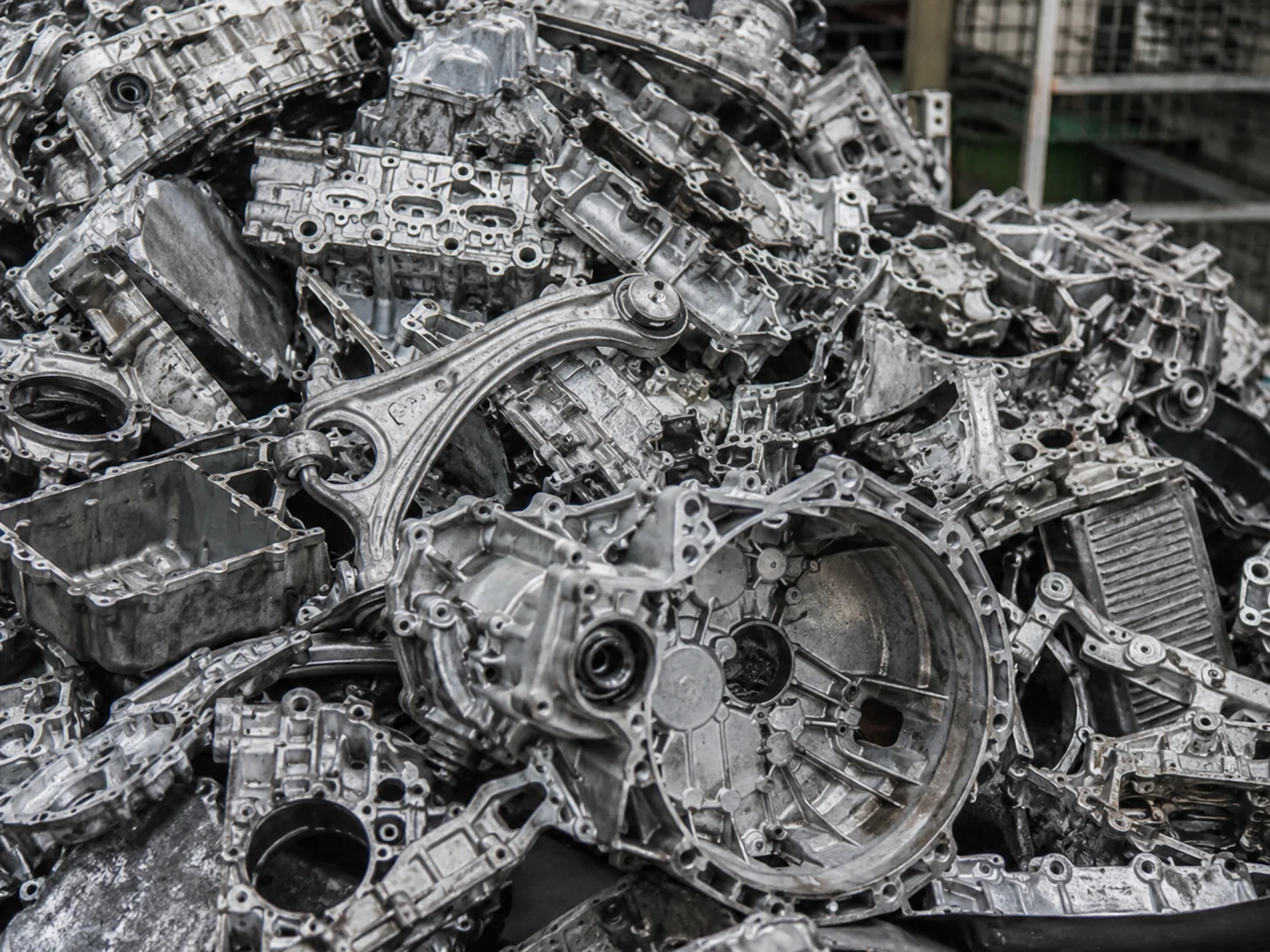
Gearbox housings, engine casings and other dismantled aluminum parts.

Aluminum sheet scrap

Sheets & Stamping Scrap

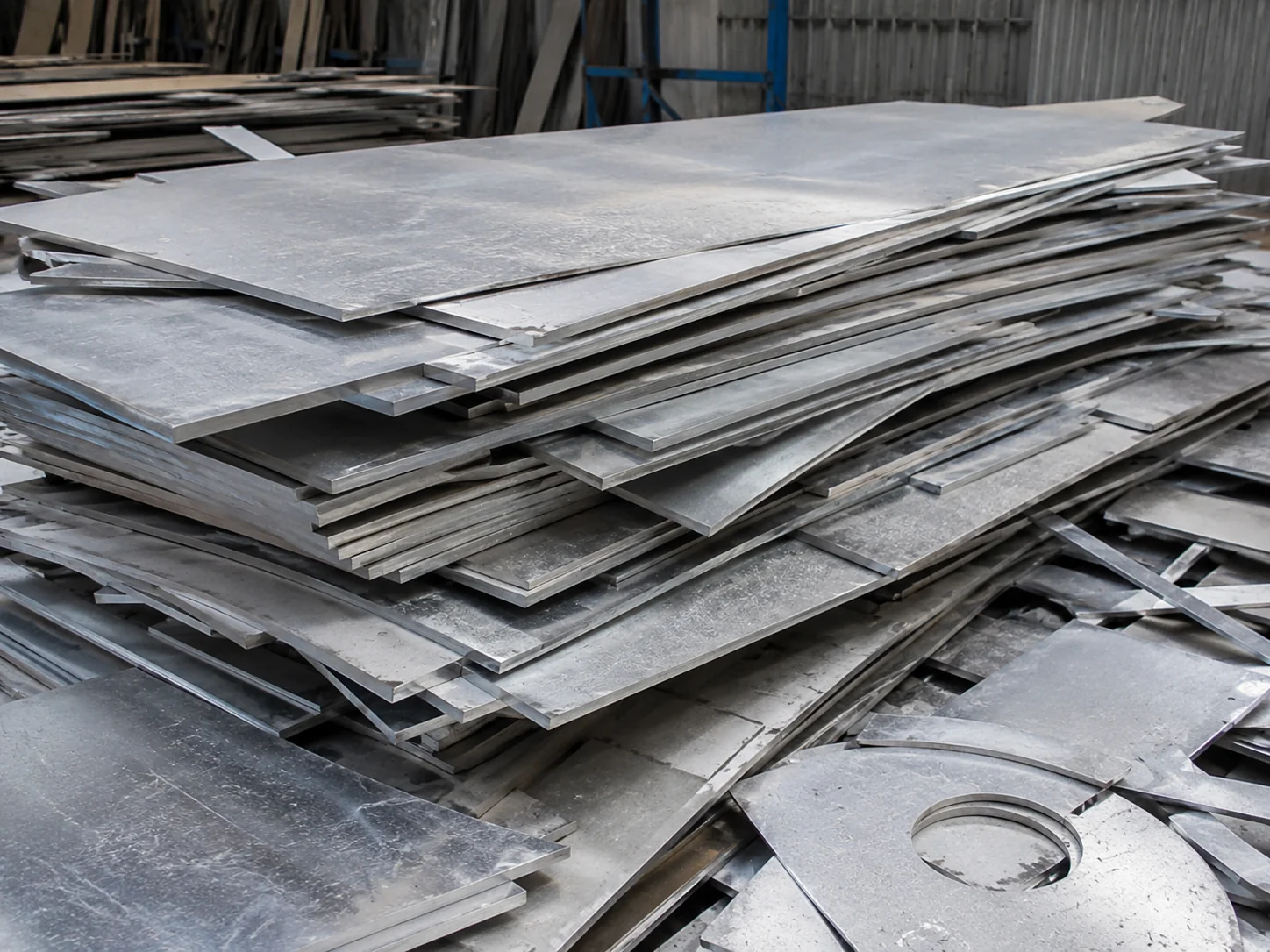
Clean sheet offcuts may need baling rather than a full sorting line.

Mixed scrap aluminum

Mixed Scrap Aluminum

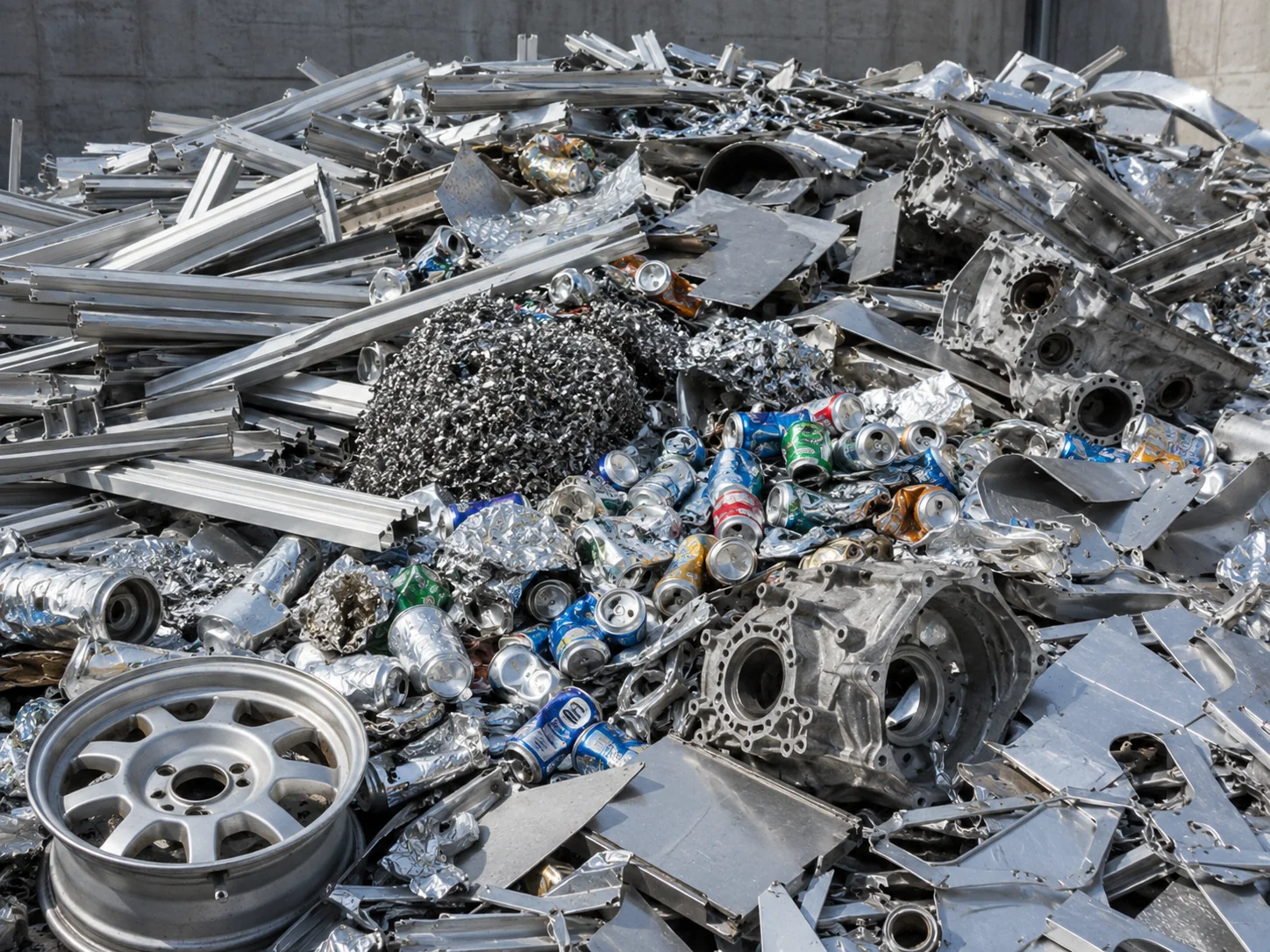
Profiles, castings, cans, sheet and attached non-aluminum materials.

Aluminum foil scrap

Foil & Light-Gauge Scrap

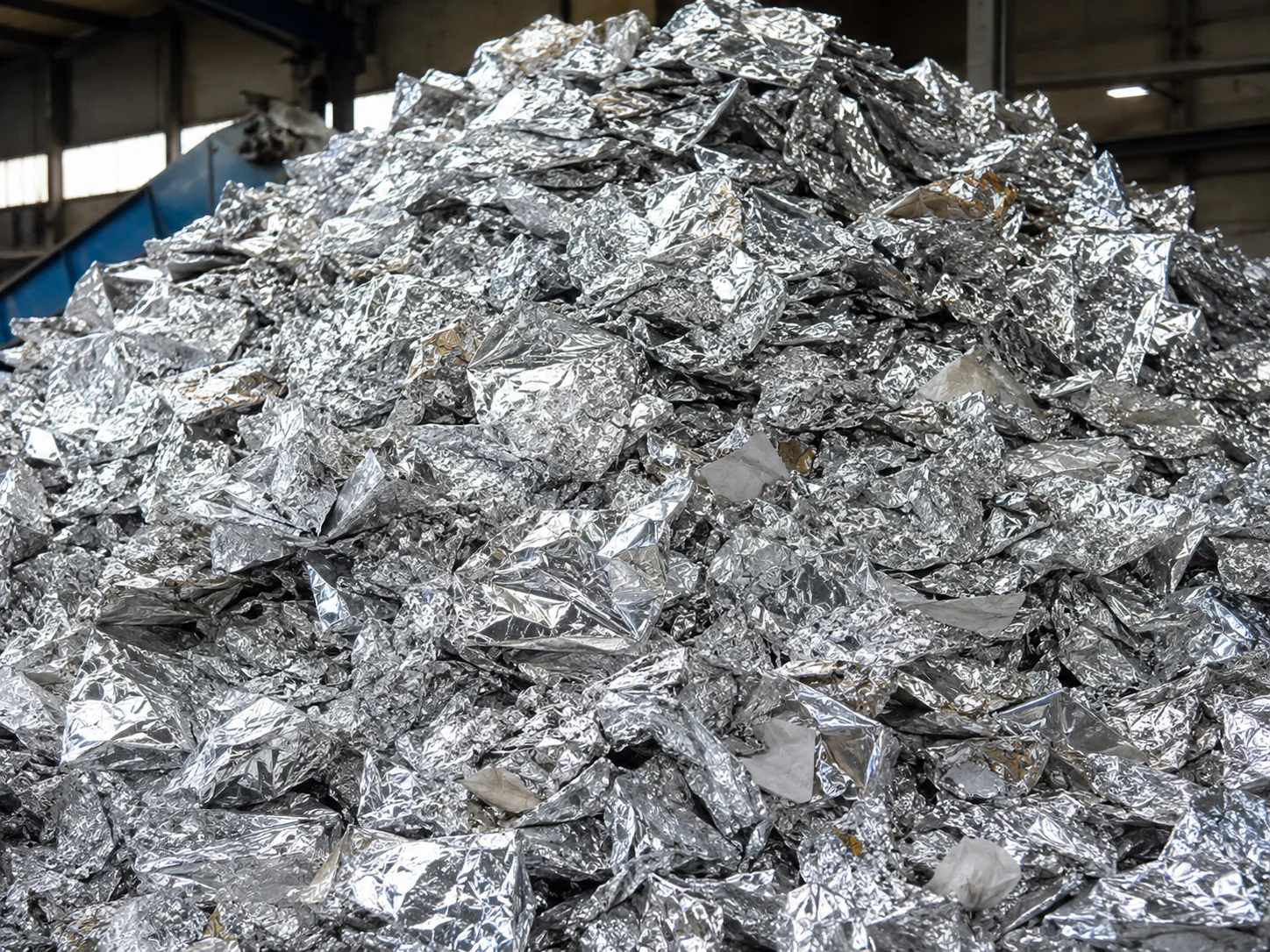
Low-density material requires controlled feeding and dust consideration.

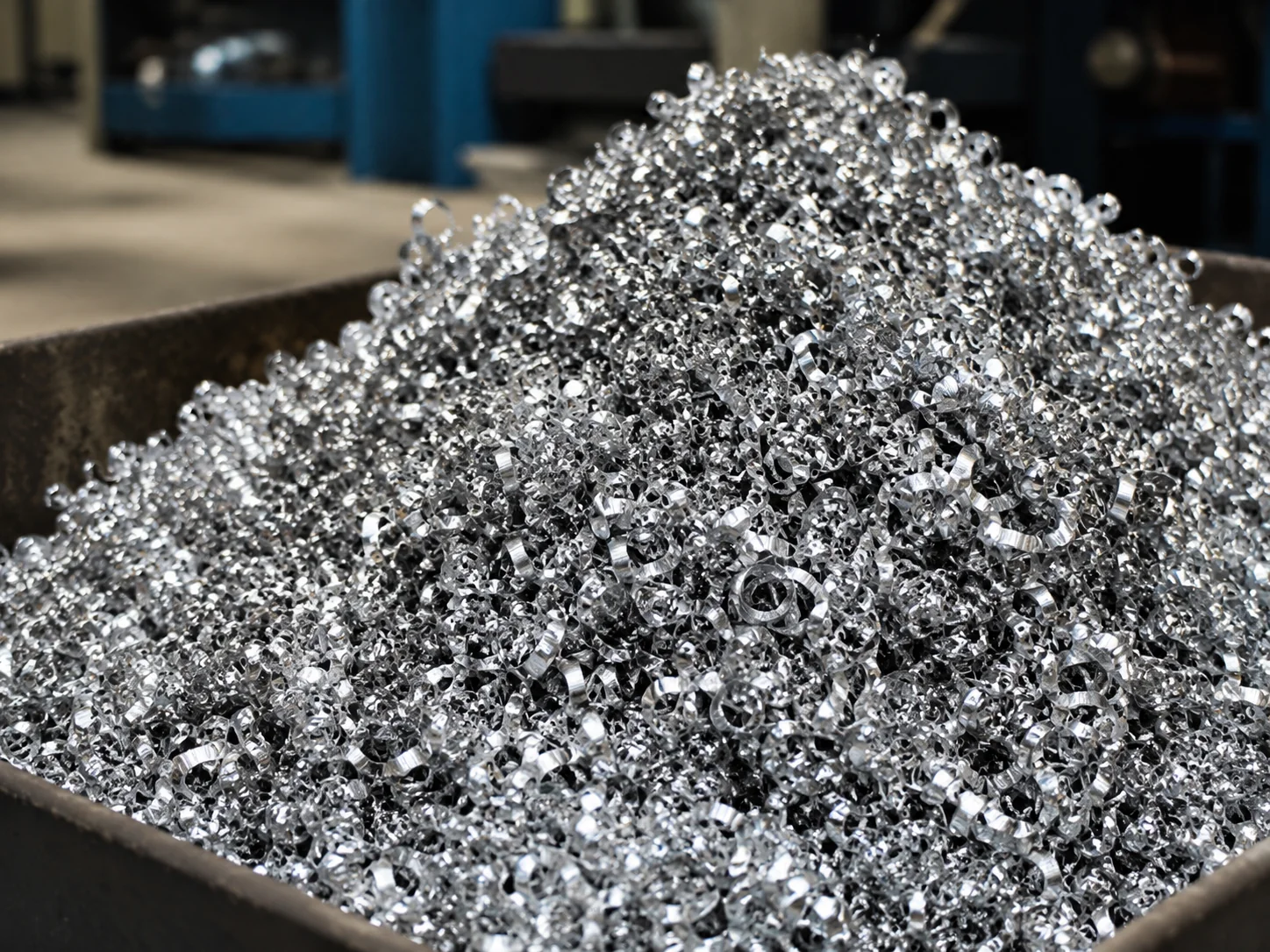
Aluminum chips and turnings

Aluminum Chips

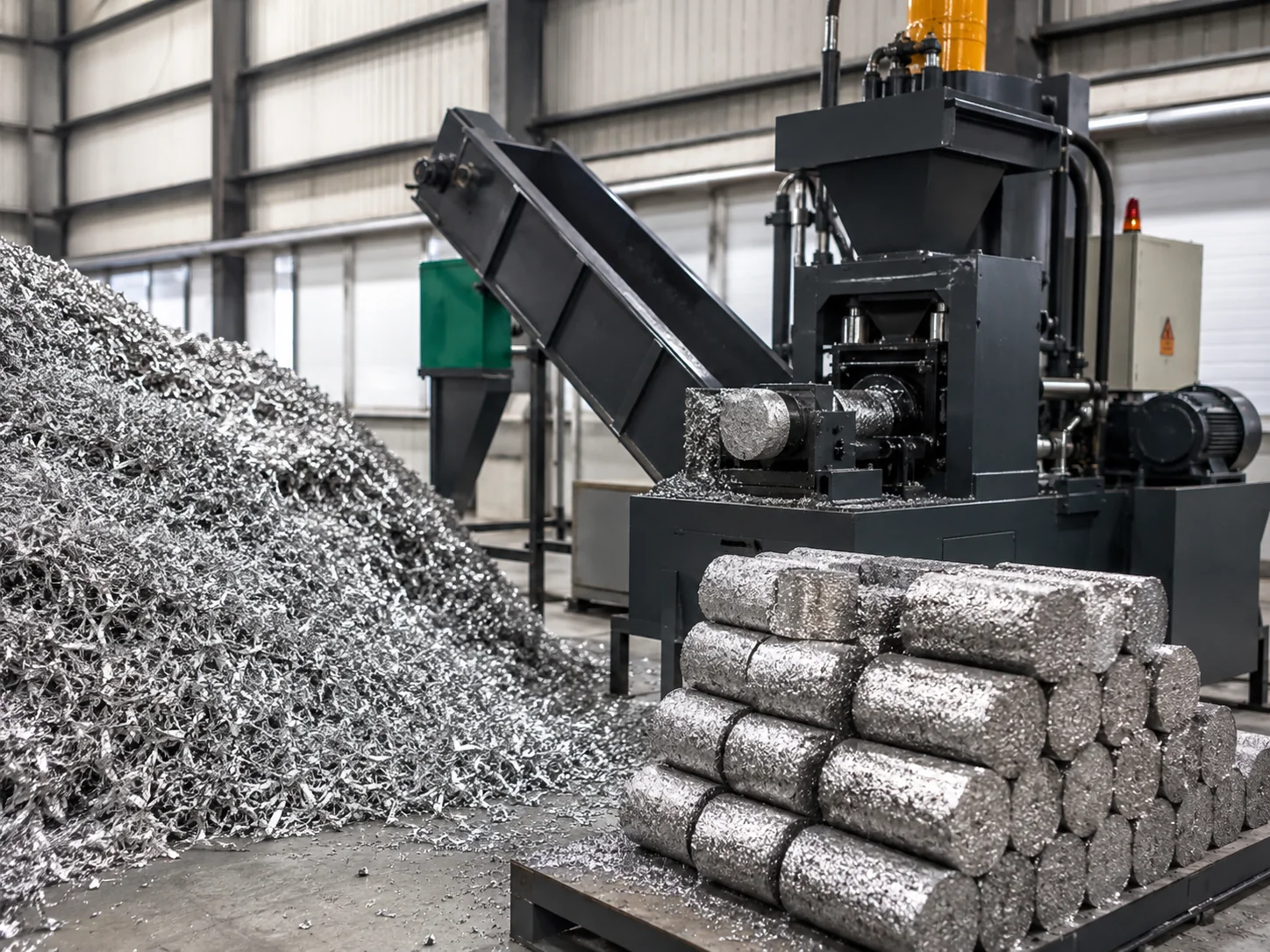
Normally handled through drainage, conveying and briquetting.

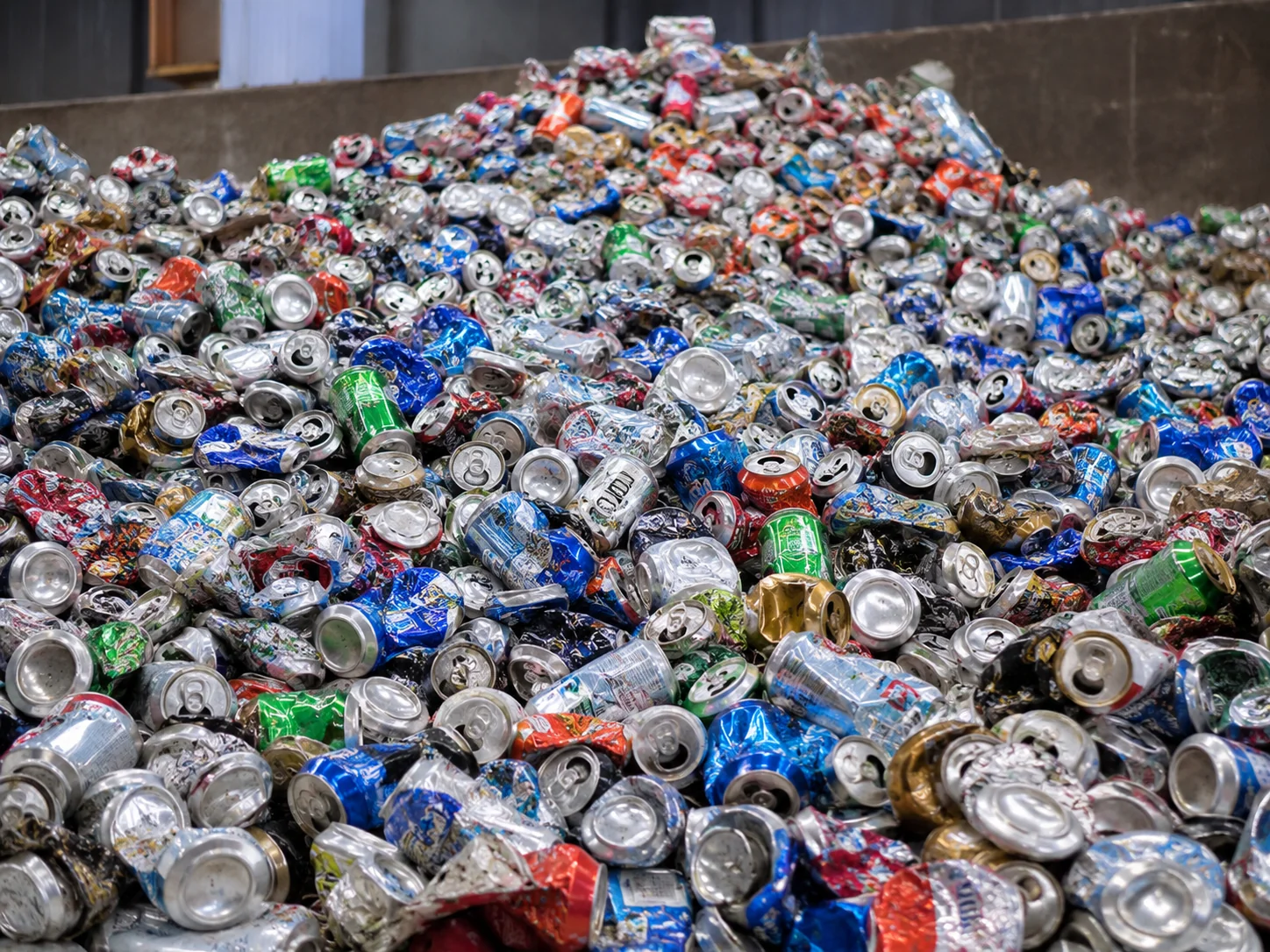
Used beverage cans

UBC Aluminum Cans

A separate light-material route may include sorting, crushing and baling.

Problems We Solve

Common Scrap Aluminum Recycling Problems—and Practical Solutions

The most expensive problems are often visible before the line is built. A bundle of long profiles tells us something about hopper design. Wheel hubs and bearing assemblies tell us something about shock protection. A residue sample containing flat pieces of aluminum tells us the material was not liberated well enough. These details matter more than a brochure throughput figure.

Feeding Problem

Long Profiles Bridge in the Hopper

Extrusions and window frames can overlap, stand upright or form a bridge above the rotor. The shredder then alternates between no-load running and sudden overload.

What usually works: Size the hopper around the longest common profile, not the average piece. A metered conveyor helps, but the operator still needs to avoid feeding a tangled bundle as one lump. Where bridging remains frequent, a hydraulic pressing device is more useful than simply increasing motor power.
Hidden Contamination

Steel Inserts Cause Shock Loads and Lower Product Value

Wheel weights, bearings, bolts, shafts and frame fittings can damage downstream equipment or remain in the recovered aluminum.

What usually works: Remove complete bearing assemblies, shafts and other dense foreign parts before feeding. Automatic reversal protects the shredder from a bad feed event, but it is not a substitute for inspection. The magnet should be placed after the material has opened enough for the steel to separate from the aluminum.
Sorting Problem

Good Aluminum Is Lost in the Residue Stream

When particle size is too wide, the separator is overloaded or aluminum remains attached to plastic and rubber, valuable metal may report to residue.

What we check first: Look at the residue, not only the clean aluminum product. Large aluminum pieces in the residue usually point to poor liberation. Fine aluminum loss is more often connected with over-crushing, excessive air or an unsuitable size range. Screening and steady feeding normally improve the separator before more equipment is added.
Quality Problem

One “Aluminum Fraction” Still Contains Different Alloys

Magnetic and eddy-current separation can remove iron and recover non-ferrous metal, but they do not automatically separate every cast and wrought aluminum grade.

Practical limit: A magnet can remove steel and an eddy-current separator can recover conductive non-ferrous metal from residue, but neither machine identifies every aluminum alloy. Known factory grades should stay separate. Where alloy chemistry affects selling price or furnace control, sensor sorting or disciplined blending is a separate downstream decision.
Capacity Problem

The Line Reaches Nameplate Capacity but Not Daily Output

Frequent jams, manual sorting, magnet cleaning, blade checks and downstream bottlenecks can reduce the actual tons produced per shift.

How we judge capacity: Follow the bottleneck through a full run. It may be the shredder, but it may also be manual picking, a screen that blinds, magnet cleaning or product discharge. A ten-minute test can look impressive and still say little about tons produced over an eight-hour shift.
Wear Problem

Blade and Screen Wear Becomes More Expensive Than Expected

Dense castings, embedded steel, abrasive contamination and unnecessarily fine output increase wear, power demand and maintenance time.

How we control it: Match cutter thickness and material to the dominant scrap, then record wear against processed tonnage. Calendar-based maintenance is misleading when the feed changes. Dense castings with hidden steel can consume wear parts much faster than clean profiles, even at the same hourly rate.
Dust & Fire Risk

Fine Aluminum Dust Accumulates Around Crushing and Conveying

Fine aluminum particles can present a serious combustible-dust hazard. Painted scrap, light foil and aggressive fine crushing may increase dust generation.

Design response: Do not create fines unless the sorting step truly needs them. Enclose transfer points, keep dust from settling on beams and cable trays, and have the extraction and explosion-protection system designed for the actual dust load and local rules. Painted foil and dry light-gauge scrap deserve particular attention.
Wrong Process

A Full Shredding Line Adds Cost Without Adding Value

Clean, segregated sheet offcuts or known-alloy production scrap may already be suitable for direct baling, shearing or furnace preparation.

Better decision: Compare the selling advantage with the extra power, wear, labor and metal loss. Clean sheet offcuts often gain little from fine shredding. In that case, a baler or shear may produce the saleable form with fewer machines and less handling.
Process Flow

How a Scrap Aluminum Recycling Line Works

The flow below is a useful reference, not a compulsory six-machine sequence. Sometimes the right engineering decision is to stop after shredding and magnetic separation. A secondary crusher only earns its place when it improves liberation or produces a size required by the next process. For a closer look at the primary machine, see how a double shaft shredder works.

1

Feed Inspection

Confirm oversize pieces, sealed containers, steel attachments and unsafe items.

2

Primary Shredding

Reduce long, bulky or irregular scrap into a controllable feed size.

3

Secondary Crushing

Improve liberation where aluminum remains attached to iron, plastic or rubber.

4

Magnetic Separation

Remove ferrous screws, steel inserts and other magnetic contamination.

5

Screening & Sorting

Control particle size and separate aluminum from selected non-metal fractions.

6

Product Collection

Collect the separated aluminum fraction for storage, sale or downstream remelting.

Field note: An eddy current separator performs best on a controlled particle range and a stable, thin material bed. If oversized pieces, fines and tangled strips arrive together, separator performance becomes difficult to tune. Clean profile scrap with only minor ferrous fittings may not need this stage at all.
Separate routes: Aluminum baling and chip briquetting are optional, material-specific solutions rather than standard stages in every shredding and sorting line.
Equipment Selection

Which Process Fits Your Aluminum Scrap?

This decision table prevents one of the most common buying mistakes: selecting equipment by capacity alone without considering feed shape, contamination and final product.

FeedstockTypical ProblemRecommended RouteTypical Output
Long profiles and window framesBridging, steel fittings, plastic stripsMetered feeding → shredder → optional crusher → magnet → screening/sortingReduced aluminum fraction plus removed steel and residue
Wheels and cast automotive partsDense parts, thick walls, steel insertsHeavy-duty size reduction → magnetic separation → size controlCast aluminum pieces prepared for sale or remelting
Mixed aluminum scrapVariable shapes and mixed contaminantsPre-sorting → shredding → crushing → magnet → screening → optional sensor sortingAluminum-rich fraction, ferrous fraction and residue
Clean sheet and stamping scrapHigh volume but low contaminationDirect baling, shearing or simple size reductionCompact bales or furnace-sized sheet scrap
Aluminum chips and turningsLow density, coolant, oxidation and transport lossDrainage → controlled feeding → briquettingDense aluminum briquettes and recovered fluid
UBC cansLight bulk, residual liquids, mixed packagingDedicated can sorting/crushing/baling routeSorted cans, shredded can material or bales
Aluminum profile recycling line
Core Equipment

Main Machines in a Scrap Aluminum Recycling Line

Feeding Conveyor

Controls surges and keeps long or low-density material moving toward the shredder.

Double Shaft Shredder

High-torque primary size reduction for profiles, housings and bulky aluminum scrap.

Secondary Size Reduction

The second-stage machine may be a hammer mill, four shaft shredder or another crusher, depending on wall thickness, required liberation and acceptable fines.

Magnetic Separator

Removes ferrous fasteners, steel inserts and other magnetic contamination.

Screen & Eddy Current Separator

Controls size distribution and separates aluminum from selected non-metal streams.

Baler or Briquetter

Optional downstream equipment for light sheet scrap, cans, chips and turnings.

Typical Configurations

Scrap Aluminum Recycling Solutions by Material Type

These routes show how we normally think about the material. They are starting points. The final arrangement changes when the scrap contains more steel, arrives in longer pieces, carries oil or rubber, or must meet a tighter downstream specification.

Aluminum profile recycling system

Profile & Window Frame Line

For long extrusions, frames and fabrication offcuts with screws, fittings or thermal-break strips.

ShreddingMagnetic SeparationOptional Sorting
Aluminum wheel recycling system

Wheel & Cast Aluminum Line

Heavy-duty processing for wheels, housings and dense automotive castings.

Heavy-Duty CrusherSteel RemovalSize Control
Mixed aluminum scrap sorting line

Mixed Scrap Aluminum Line

For mixed profiles, sheet, castings and attached non-metal contamination.

Pre-SortingShreddingOptional Downstream Sorting
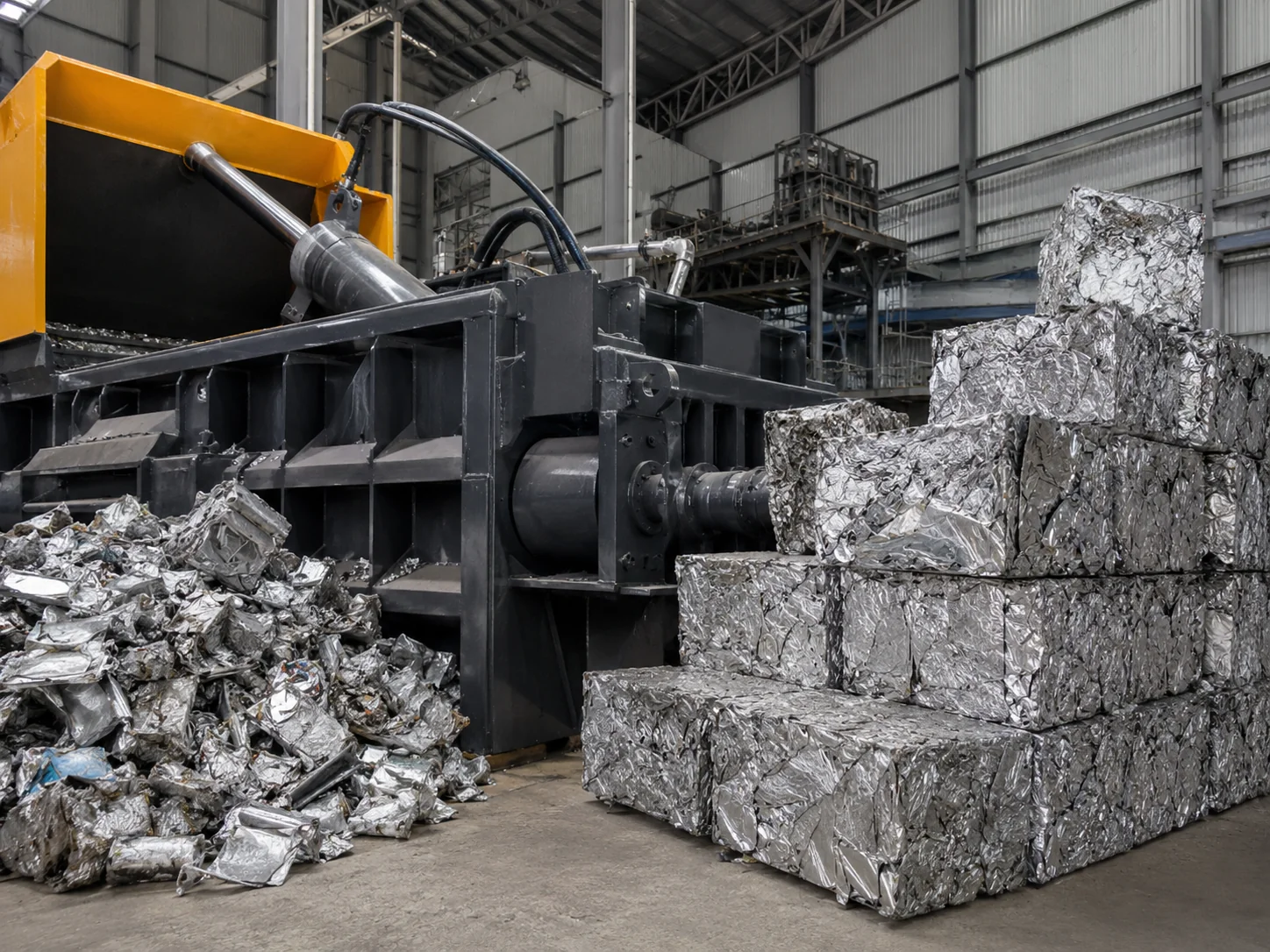
Aluminum scrap baling system

Aluminum Baling System

Volume reduction for light sheet scrap, cans and already-clean aluminum material.

BalingStorageTransport
Aluminum chips briquetting system

Aluminum Chip Briquetting

A separate route for machining chips and turnings where fluid recovery and density matter.

DrainageBriquettingFluid Recovery
Industrial aluminum sheet scrap processing

Sheet & Industrial Offcut Processing

For sheet scrap, stamping skeletons and clean factory offcuts where direct baling, shearing or controlled size reduction may be more economical than a full sorting line.

Baling or ShearingControlled FeedingOptional Shredding
Final Products

Possible Outputs After Processing

The useful output is not simply the cleanest-looking pile. We also check how much aluminum remains in the ferrous and residue streams. A higher headline purity can be achieved by rejecting more material, so product quality and metal recovery have to be judged together.

Shredded aluminum output

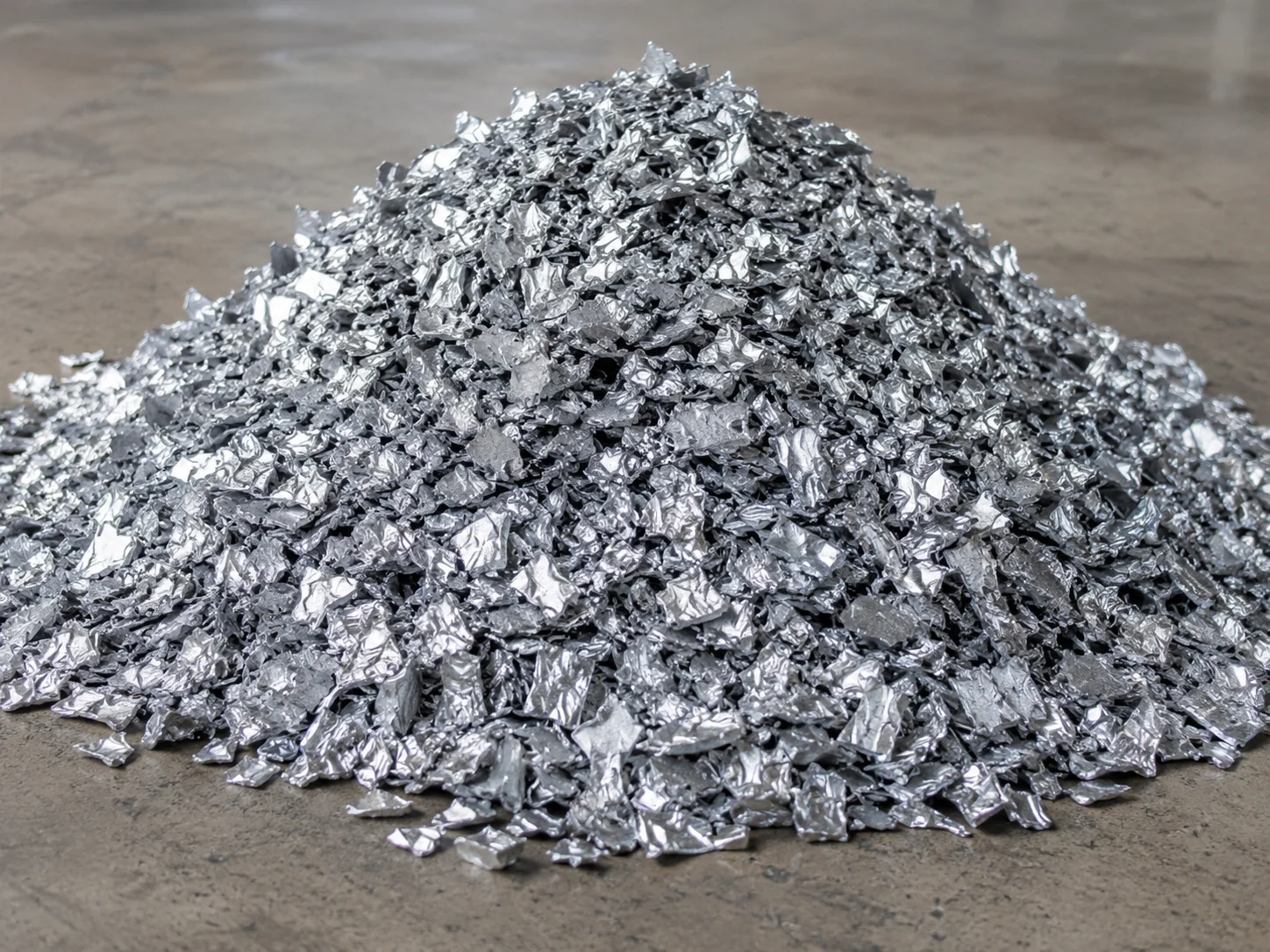
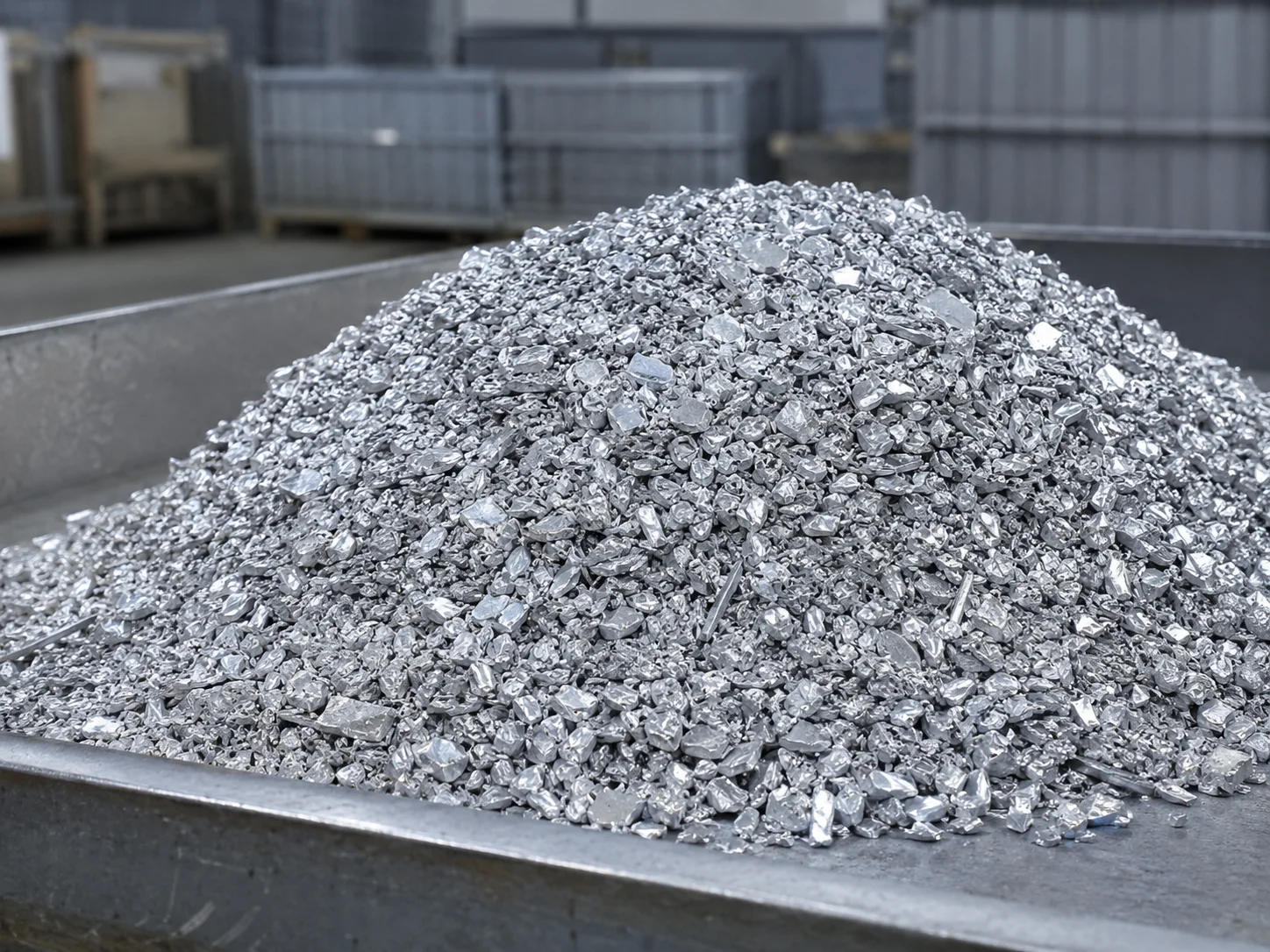
Shredded Aluminum

More consistent feed size for storage, sale or downstream melting.

Clean aluminum fraction

Aluminum-Rich Fraction

Cleaner output after appropriate liberation and separation stages.

Aluminum bales

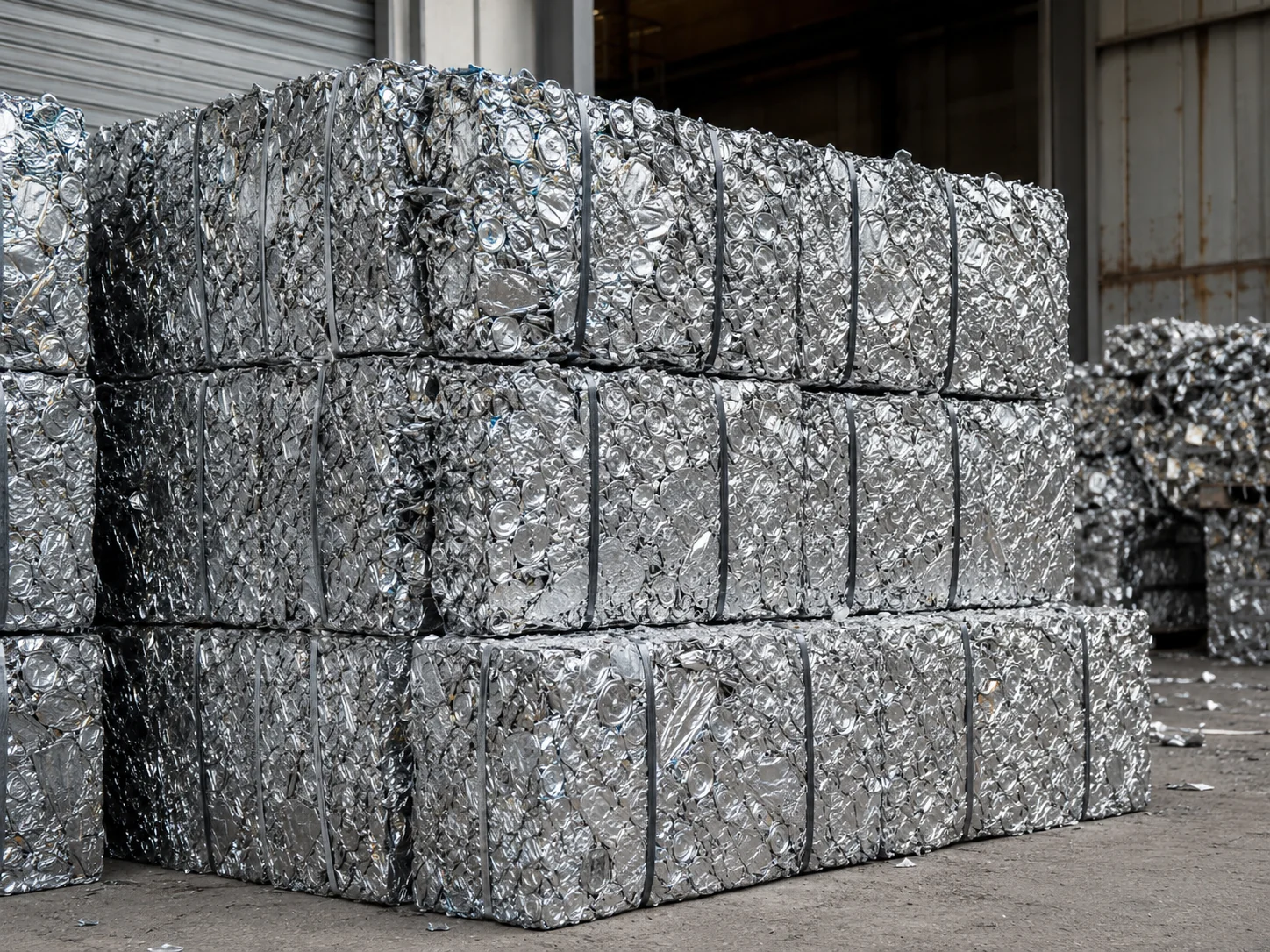
Aluminum Bales

Compact output for low-density sheet scrap, cans and light material.

Aluminum briquettes

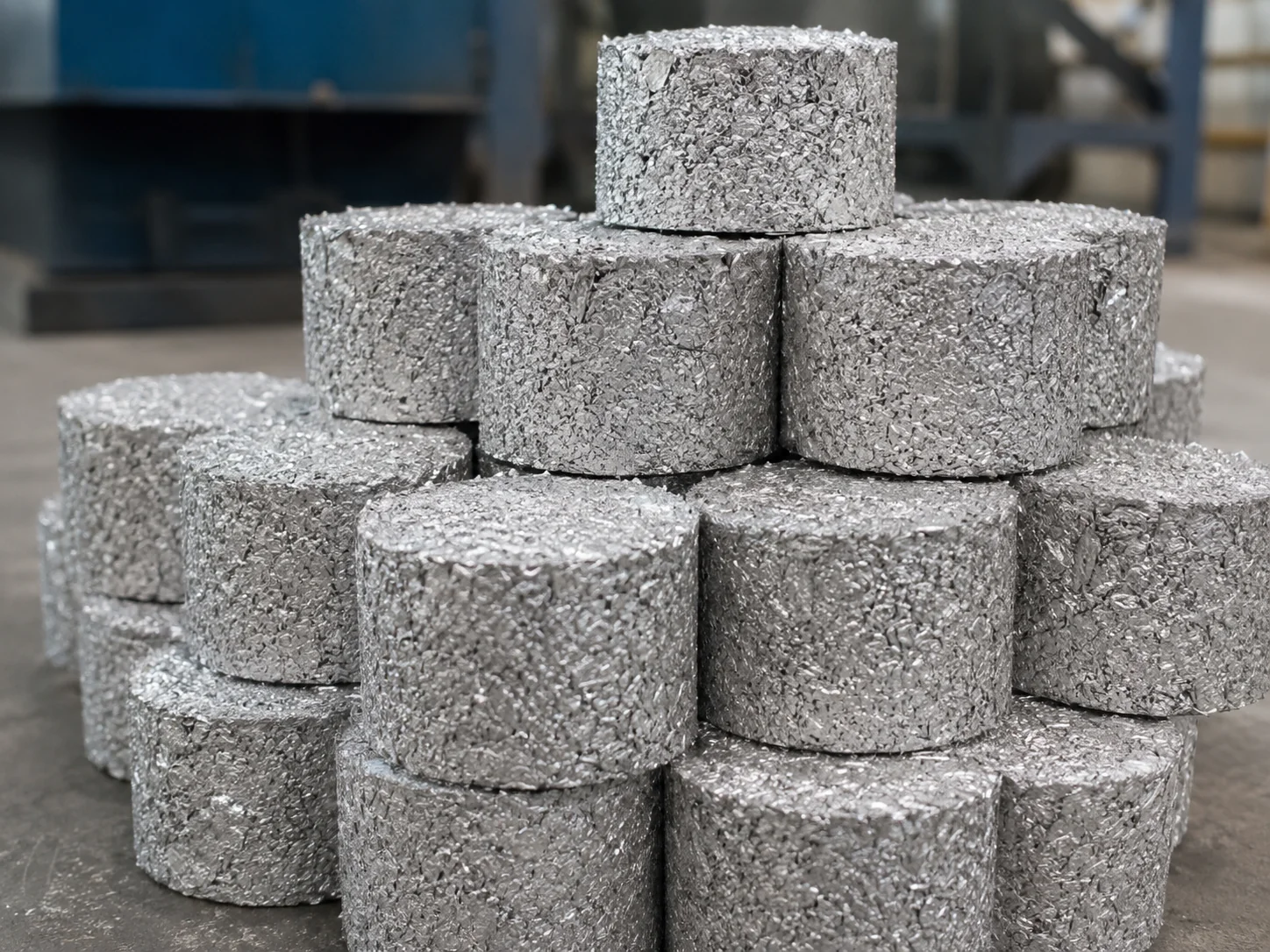
Aluminum Briquettes

Dense compacted chips for easier handling and reduced loose-volume loss.

Ferrous impurities removed from aluminum scrap

Ferrous Fraction

Steel screws, inserts and other magnetic contamination removed from the line.

Non-metal impurities separated from aluminum scrap

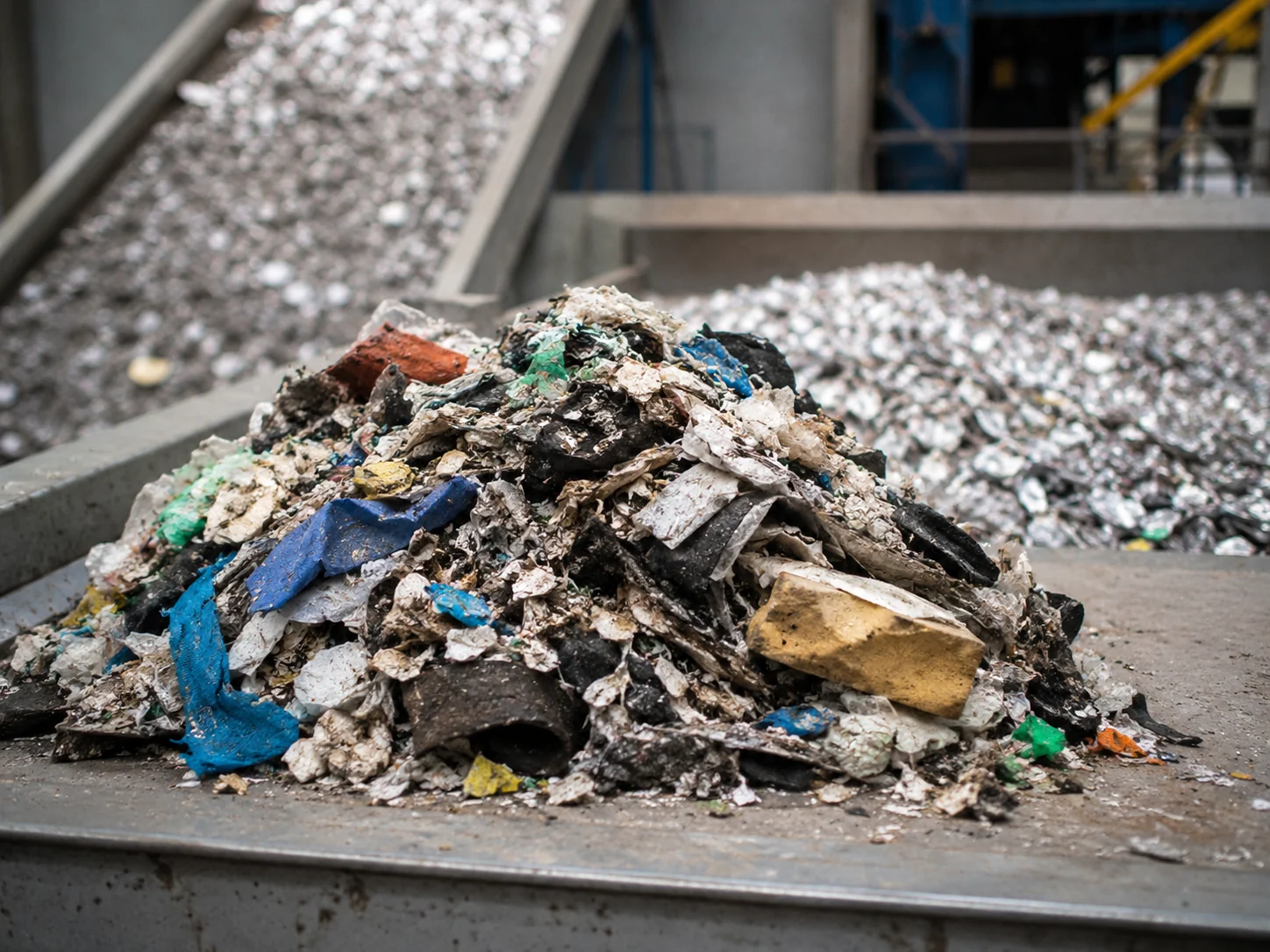
Non-Metal Residue

Plastic, rubber, labels and other separated light contaminants.

Feed Safety

Materials That Require Pre-Treatment or Separate Review

A scrap aluminum line should not accept every item without inspection. Unsafe or unsuitable material can damage the equipment, create fire risk or contaminate the recovered fraction.

Remove Before Feeding

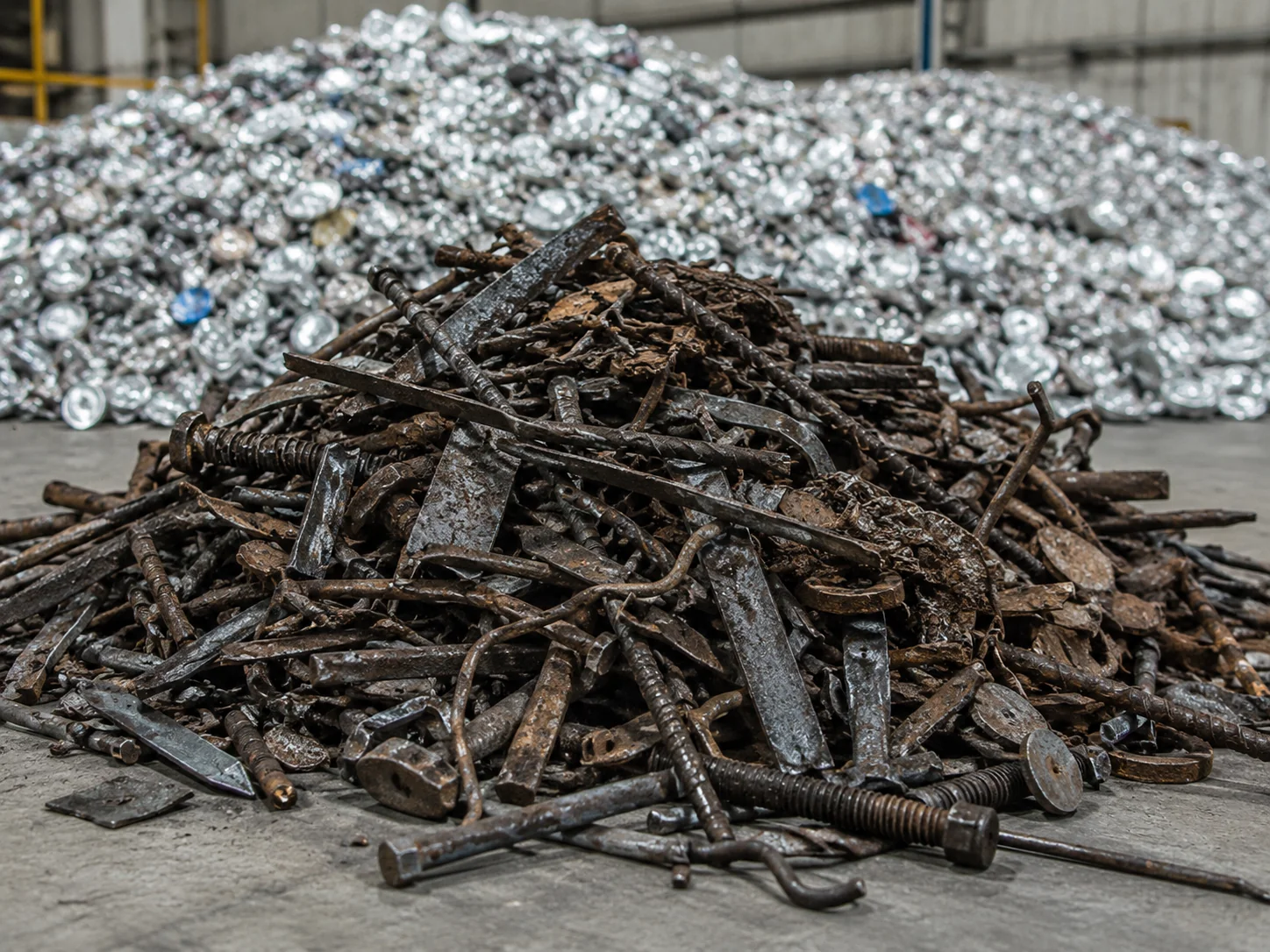
Sealed cylinders, pressurized vessels, complete engines with fluids, wheels with tires installed, batteries and unknown hazardous containers.

Separate Process Required

Aluminum dross, salt slag, fine aluminum powder, heavily oily swarf and radioactive or chemically contaminated scrap require specialist handling.
Moisture and Oil Control

Wet scrap and machining chips can create handling, fire and downstream melting risks. Drainage or drying may be required before size reduction.

Oversize and Unshreddable Items

Steel shafts, large bearing assemblies and other dense foreign objects should be identified during feed inspection and removed or handled separately.

Project Engineering

What Determines Capacity, Purity and Operating Cost?

Feed GeometryLong profiles, dense castings and loose foil behave very differently in a hopper and cutting chamber.
ContaminationSteel, rubber, plastic, moisture and oil change the required process and achievable output.
Target SizeSmaller output may improve liberation, but also increases power demand, wear and fines.
Downstream UseMaterial sold as scrap does not always need the same preparation as controlled furnace feed.

A 5 t/h profile line and a 5 t/h wheel line are not the same project. Profiles may be limited by hopper volume and bridging, while wheels are more likely to be limited by torque, chamber strength and hidden steel. When reviewing a new inquiry, we normally ask which material occupies most of the shift—not every material the customer may process occasionally.

Project InputMain Sizing FactorWhy It Matters
Long hollow profilesHopper opening and anti-bridging designNominal motor power does not solve unstable feeding.
Dense cast wheelsTorque, chamber strength and steel attachmentsCast parts impose different shock loads than light sheet scrap.
Mixed aluminum scrapPre-sorting and contaminant percentageMore contamination usually requires more liberation and separation stages.
Light sheet and foilBulk-volume feeding rateA low-density feed may fill the hopper before reaching the target weight rate.
Fine target outputSecondary power, screen load and wearSmaller particles may improve liberation but raise energy use and fines.
What we listen for during a trial: Repeated current spikes followed by reversal usually indicate poor feeding, an unremoved dense object or a cutter arrangement that does not suit the material. A steady motor load with weak separator recovery points us further downstream. This is why a complete-line test is more useful than testing each machine in isolation.
Operating Value

How to Protect Output Quality and Reduce Cost per Ton

A good line can still lose money through uneven feeding and poor checks. Operators often focus on the main aluminum product because it looks valuable. During commissioning, we spend just as much time opening the ferrous and residue samples. That is where hidden aluminum loss usually appears.

Feed the Line Steadily

Watch motor current and the depth of material on the separator. Repeated empty-running followed by a heavy surge is a feeding problem, even when the hourly average looks acceptable.

Do Not Ask One Separator to Handle Everything

Long strips, normal chips and fines react differently. Screening them into workable ranges is often more effective than repeatedly adjusting one machine for a mixed bed.

Open the Residue Sample

Large flat aluminum pieces suggest poor liberation. Small bright particles often point to excessive crushing or air loss. The shape of the lost metal helps identify the cause.

Track Wear Against Tonnage and Feed

Record what was processed when cutters, screens or bearings were inspected. A month of clean profiles is not equivalent to a month of castings with steel inserts.

Stop Crushing When the Material Is Free

Once aluminum has separated from steel, rubber or plastic, further crushing may only add fines, dust, oxidation and wear.

Reset Expectations When the Scrap Changes

A line tuned for profiles will not deliver the same rate or wear life on castings. Update feed settings, sampling frequency and production targets when the material mix changes.

Commissioning & Acceptance

What to Confirm Before You Accept the Line

A factory test should answer a practical question: can the complete line run steadily on the customer’s normal scrap? Starting every motor is only the beginning. The test material should include the awkward pieces, normal contamination and bulk density expected in daily production.

Representative Feedstock

Use the same shapes, contamination and bulk density expected in daily operation.

Sustained Throughput

Measure stable operating output over a meaningful run, including normal feeding and separation.

Output Stream Sampling

Inspect aluminum, ferrous and residue streams to identify both contamination and metal loss.

Overload Response

Confirm automatic reversal, alarm logic and safe recovery from difficult feed events.

Maintenance Access

Check access to cutters, screens, magnets, bearings and cleaning points before installation sign-off.

Operator Training

Operators should understand acceptable feed, prohibited items, start-up order, shutdown and daily inspections.

Spare-Parts List

Confirm critical wear parts, normal replacement intervals and what should be stocked locally.

Dust and Safety Review

Confirm enclosure, extraction, housekeeping and local compliance responsibilities for the installed site.

Do not accept the line on one purity number. During the run, take timed samples from the aluminum, ferrous and residue streams. Weigh and inspect all three. A clean main product means little if recoverable aluminum is leaving in the residue or if the stated throughput was reached only for a short, heavily supervised period.
From Material Review to Delivery

What Your Scrap Aluminum Line Proposal Can Include

Recommended Process FlowA practical sequence based on feed shape, contamination and target product.
Main Equipment ListPrimary and secondary machines, separators, conveyors and optional systems.
Estimated Layout & PowerPreliminary footprint and electrical requirements for project planning.
Quotation ScopeClear equipment boundary, optional items, testing, shipment and support assumptions.

Factory testing, overload protection, spare-parts planning and installation guidance can be discussed according to project scope. Daily operating hours and the final use of the recovered aluminum should be included in your inquiry because they affect equipment duty and maintenance planning.

FAQ

Scrap Aluminum Recycling Line FAQ

Can one line process profiles, wheels and mixed aluminum scrap?

One modular system may process several related feedstocks, but capacity and output quality will vary. Dense castings, long profiles and light sheet scrap require different feeding and size-reduction conditions. The line should be designed around the dominant material rather than every possible material.

Do I need both a shredder and a crusher?

Not always. A shredder is useful for bulky and long material. A secondary crusher is added when smaller size or better material liberation is required. Clean, segregated scrap may only need one size-reduction stage or even direct baling.

Can magnetic separation remove all impurities?

No. Magnetic separation removes ferrous material such as steel screws and inserts. Plastic, rubber, copper, zinc, stainless steel and different aluminum alloys may require screening, eddy-current separation, sensor sorting or prior manual removal.

What purity can the line achieve?

There is no useful purity figure without a feed definition and a sampling method. During a material test, we check the main aluminum product and the aluminum lost in the other streams. Both figures are needed before a performance target is meaningful.

Is an eddy current separator always necessary?

No. It is most useful when aluminum must be recovered from a non-metal fraction after size reduction and screening. Clean profile scrap with minor steel attachments may only require shredding and magnetic separation.

Should aluminum chips be shredded?

Usually not. Machining chips and turnings are commonly drained, conveyed and briquetted. A shredder may be considered only where tangled chips or oversized nests create a feeding problem.

What information is needed for a quotation?

Please provide material photos or video, maximum feed dimensions, approximate composition, required throughput, desired output, workshop space, local voltage and whether baling, briquetting or further sorting is required.

How can I estimate the operating cost of the line?

Operating cost is affected by power consumption, cutter and screen wear, labor, dust handling, planned maintenance, rejected residue and the value of aluminum lost in that residue. The lowest installed price does not always produce the lowest cost per recovered ton.

What should be included in a factory acceptance test?

Run normal customer material long enough for feeding and separation to stabilize. Record sustained throughput, motor load and stoppages. Take timed samples from every output stream, test overload reversal, and let the operators access the cutters, screens, magnets and cleaning points before sign-off.

Get a Scrap Aluminum Line Proposal Based on Your Material

Send us material photos, dimensions, contamination details and your target capacity. We will recommend a practical process instead of a generic equipment list.

Contact Us
Scrap Aluminum Recycling Line Cluster
Shredder Machine Expert

Speak To Our
Shredder Machine Expert

Get in touch with our nice team today to get a price estimate for a shredder machine.

Contact Us

Submit Your Inquiry

zhengzhouyuxi@yuximachine.com
+86-13674998188
WhatsApp:+86 13674998188