Why Aluminum Profiles Cause Bridging and Feeding Problems
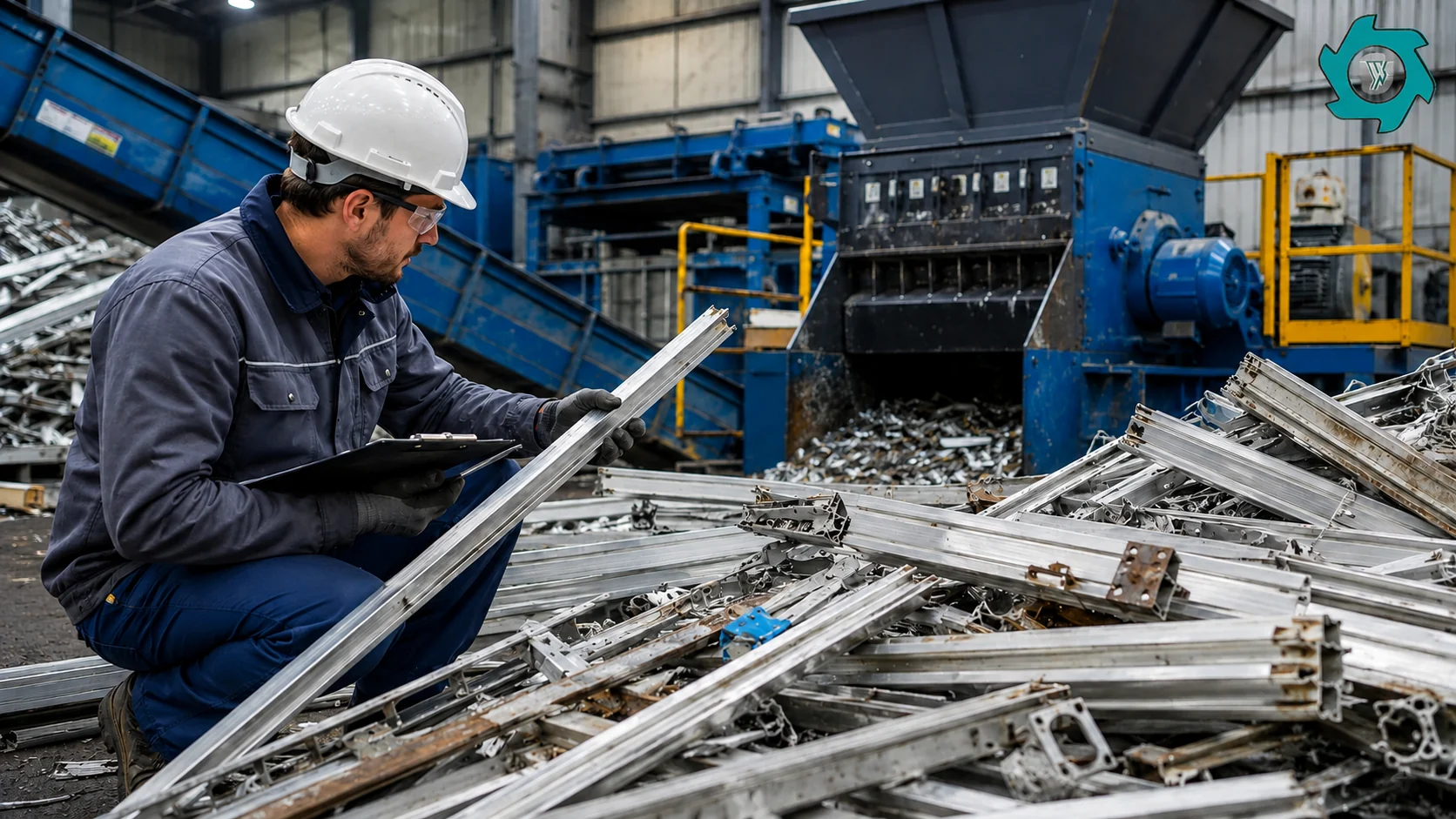
Long extrusion offcuts and window-frame scrap can make an aluminum shredder look undersized even when the machine itself is fine. The feed is unstable. Profiles overlap, spring against each other, and build a bridge above the cutters. Once that happens, the shredder alternates between starving and overloading. Throughput falls, wear goes up, and daily output ends up well below the nameplate figure. If you are planning a broader scrap aluminum recycling line, this article focuses on the point where many profile projects succeed or fail: getting long aluminum into the shredder in a controlled way.
Controlled feeding usually solves more profile-shredding problems than a simple increase in installed power.
Why aluminum profiles behave differently from other scrap aluminum
Cast wheels are dense and shock the machine. Light sheet can flutter and ride conveyors poorly. Long profiles create another kind of headache. They are often light for their length, hollow in section, and awkward in the hopper. A 2-meter profile does not settle like a compact casting. It can lie crosswise, hang on the hopper wall, or lock together with the next piece.
That is why profile shredding problems often begin at the hopper entrance rather than inside the cutting chamber. When the feed is inconsistent, the shredder sees two bad conditions in the same minute: no-load running when material is hanging up, then a sudden surge when the bridge collapses. This stop-start pattern is hard on gearboxes, cutters and downstream conveyors. In our experience, stable feeding is usually the first design decision for profile scrap, not motor power.
What bridging looks like in real operation
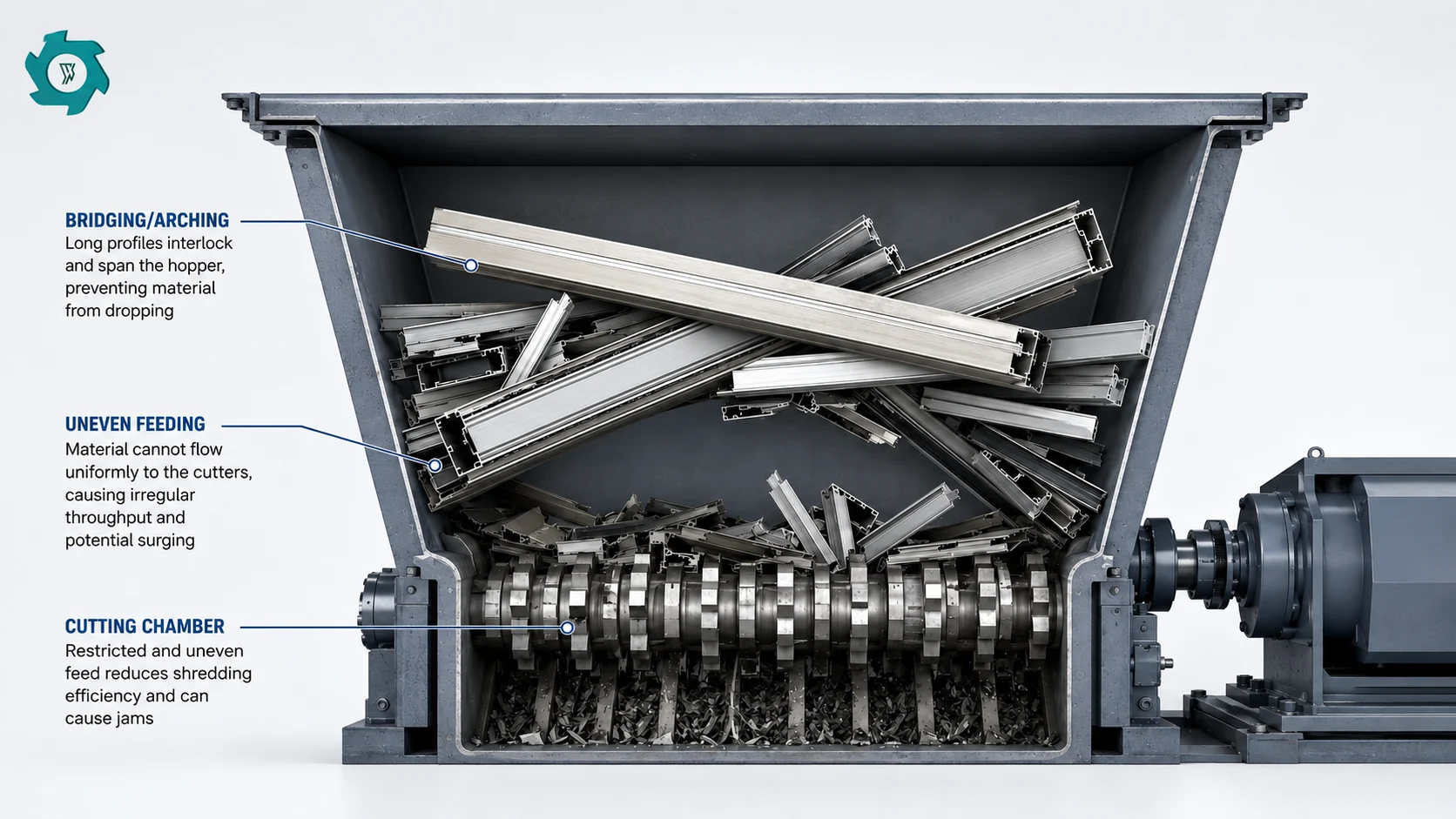
Bridging is not always a dramatic total blockage. Sometimes it is only a partial arch that forms and breaks repeatedly. Operators notice it in several ways. The motor load rises and falls sharply. The hopper looks full, but the shredder is not actually receiving material at a steady rate. Output becomes irregular. A line that should feel continuous starts to behave in pulses.
Window frames and mixed extrusion offcuts are especially prone to this. Screws, brackets, thermal-break plastic strips and attached fittings make the pile less uniform. Profiles may enter as a tangled nest rather than as separated pieces. When that bundle lands in the hopper, a few long pieces span the opening and the rest sit on top of them. The shredder is ready, but the material is not dropping properly.
Long hollow profiles can interlock and form an arch above the cutters, causing alternating starvation and overload.
The main causes of bridging and feeding problems
Most profile-feeding issues come from a combination of material shape and feeding method.
Symptom
What is usually happening
Better response
Hopper looks full but throughput stays low
Long pieces are bridging above the cutters
Improve hopper geometry, separate bundles, meter the feed
Motor load swings from low to high
Material is starving, then surging into the chamber
Reduce lump feeding, add controlled infeed or pusher
Frequent manual clearing at the hopper
Profiles are too long or too tangled for the hopper design
Pre-cut extra-long pieces and control the longest common feed size
Unexpected wear and downtime
Hidden steel fittings and impact from irregular surges
Pre-sort dense steel attachments and smooth the feed pattern
1) Profile length is too long for the real hopper behavior.That sounds reasonable, but the longest common piece matters more. If a significant share of the feed can sit diagonally or crosswise, bridging becomes likely.
2) Bundles are entering as one lump. A conveyor helps, but it does not automatically separate nested or tangled profiles. When a whole bundle hits the hopper together, even a heavy-duty machine can be forced into unstable feeding.
3) Hopper geometry is wrong for the material. Profiles need a hopper that encourages downward movement rather than one that lets pieces sit across the opening. Smooth internal walls, suitable wall angle and a realistic throat width matter more than they seem in a brochure drawing.
4) Operators are surge loading the machine. Even a well-sized double shaft shredder can perform poorly if the line is fed in sudden large lumps. The machine may recover, but daily output suffers.
5) The material mix includes hidden complications. Profiles are rarely only aluminum. Door and window scrap may include hinges, screws, rubber seals, thermal-break strips and occasional stainless or copper accessories. These do not always cause bridging directly, but they change how the pile behaves and how aggressively the shredder can be run.
How to diagnose the problem before changing equipment
First, watch the hopper instead of the output pile. If the top of the hopper keeps “freezing” while the machine below is lightly loaded, the problem is material flow. That points to loading pattern, hopper shape or piece length.
Second, review load behavior over time. A stable process does not need a perfectly flat current reading, but it should not show repeated starvation-and-surge cycles. Wide fluctuation is a clue that material is hanging up and then collapsing into the chamber.
Third, check the longest common profile rather than the average one. We have found that customers often describe feed as “mostly short” when the trouble is actually caused by the repeated presence of a small number of long sections. Those few pieces control hopper behavior.
Fourth, inspect what arrives with the aluminum. Frame corners, brackets, screws and heavy fittings change both flow and shock load. If the feed contains too many assembled window-frame sections, pre-cutting or light dismantling may be cheaper than oversizing the main machine.
Diagnosis should start with the actual feedstock: profile length, bundle condition, fittings and the way material reaches the hopper.
Practical ways to prevent bridging
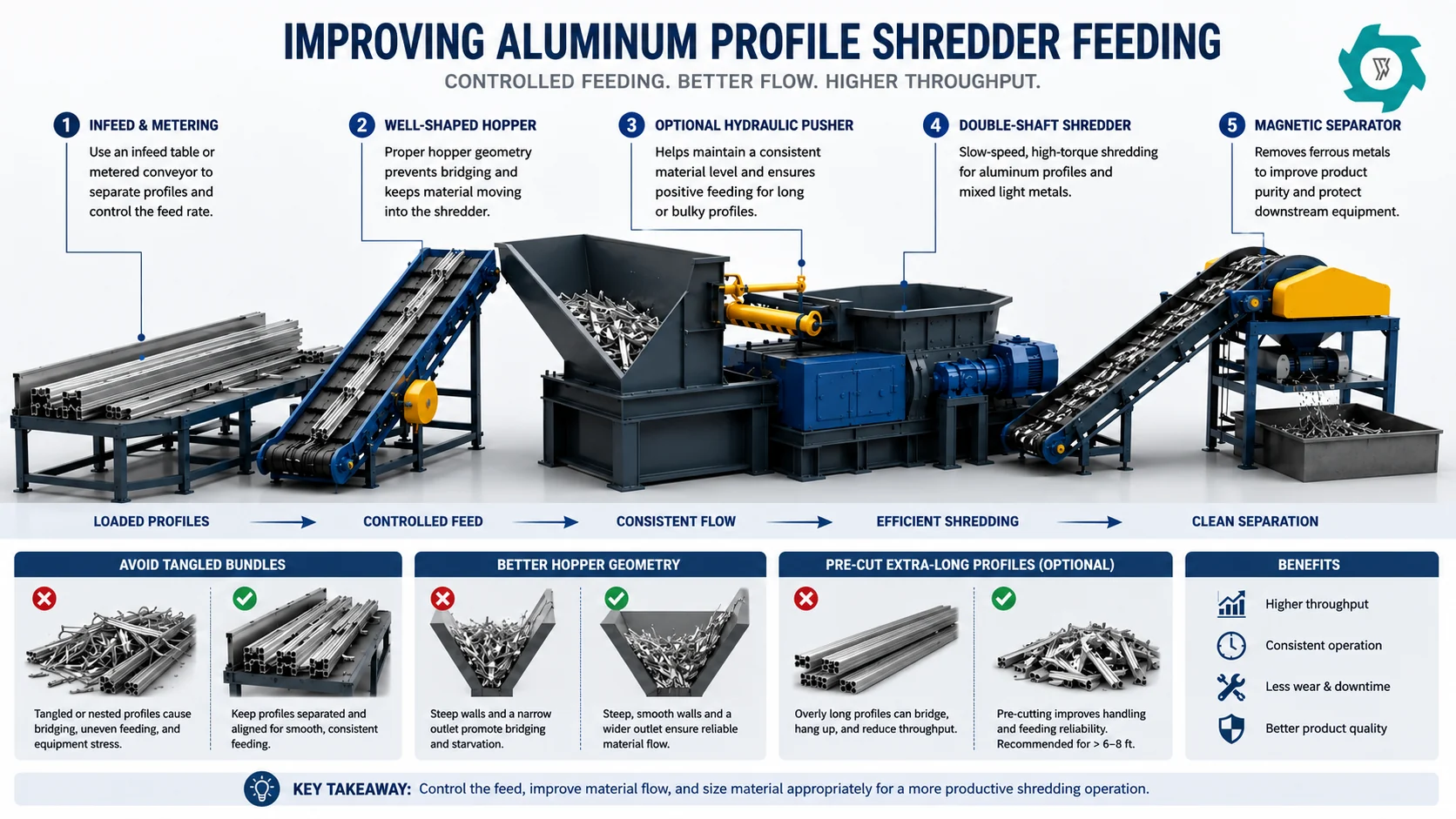
1. Control the infeed instead of dumping material in surges
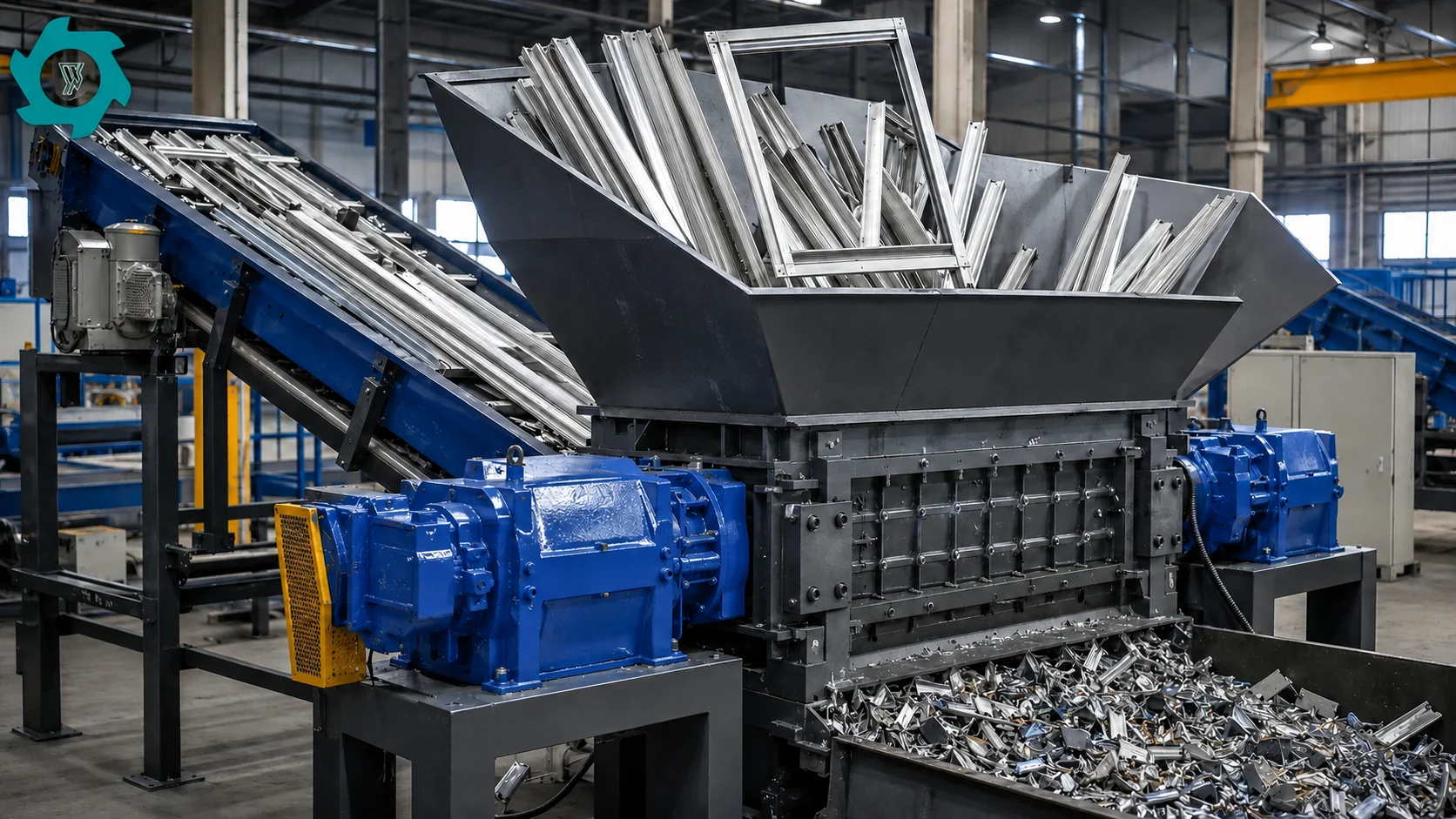
A metered conveyor is often the first improvement worth making. It separates the loading step from the shredding step. That alone reduces the tendency to dump an entire tangled mass into the hopper at once. It also gives the operator a better chance to maintain a consistent feed layer. If the profiles are badly nested, the infeed table should encourage separation rather than simply transporting the same bundle more neatly.
2. Size the hopper around the material that causes trouble
A hopper that works for compact aluminum lumps may not behave well with long extrusions. We normally recommend looking at the dominant profile length range and the worst repeat pieces, then checking whether they can sit crosswise in the throat area.
3. Add a hydraulic pusher when the material stays awkward
Some profile streams remain difficult even after better loading practice. Long, light extrusions can still hesitate above the cutters. A hydraulic pusher or pressing device helps maintain a positive feed into the chamber. This is especially useful where the feed mix changes from hour to hour and the operator cannot rely on perfectly uniform loading.
4. When the feed includes recurring very long sections, it may be the lowest-cost fix.
A simple length reduction step can improve flow, reduce jam clearing, and make the rest of the line easier to run. We normally recommend considering it when only a small percentage of pieces is responsible for a large share of stoppages.
5. Keep assembled frames and hidden steel under control
If the line is repeatedly seeing hinges, corner connectors, screws and dense steel accessories, remove the worst offenders before feeding. That protects the machine and also makes the feed behave more predictably.
When a bigger shredder helps — and when it does not
There are situations where a larger machine is justified. If the chamber is genuinely too small, if the gearbox duty is too light, or if the line must process a much higher hourly tonnage, then up-sizing can be the correct answer.
If the machine runs hard and continuously but still cannot achieve the target reduction, look at shredder size and torque. If the machine spends part of the shift lightly loaded because material is hanging up, solve the feeding problem first. Only after the feed is stable does it make sense to judge whether the shredder itself is really undersized.
There are also cases where a four shaft shredder or another downstream size-reduction stage deserves a review, especially when tighter output control is needed after primary shredding. Still, for profile bridging, the first question is usually feed stability rather than final size control.
A practical buying checklist for profile-shredding projects
Before asking for a quotation, gather the information that actually explains feeding behavior.
Photos or video of the real profile scrap, especially the longest common pieces
Typical length range, not just an average figure
Whether material arrives loose, bundled, baled or assembled as frame sections
Approximate percentage of steel fittings, plastic strips, rubber and other attachments
Required tons per hour over a real shift, not only a short test run
Whether the goal is rough size reduction, cleaner separation, or a downstream furnace-ready fraction
These details tell more about a successful layout than a simple request for “the biggest model in budget.” They also help decide whether the right answer is a different hopper, a pusher, a pre-cut step, or a larger shredder.
What to confirm during testing and acceptance
Profile projects should not be accepted on a short run with easy scrap. The test feed should include normal awkward pieces. Ask the supplier to demonstrate steady feeding, not only motor start-up. We normally recommend confirming the following during a meaningful run: sustained throughput, current fluctuation, jam frequency, ease of clearing difficult pieces, and the condition of the material leaving the shredder. If the line also includes magnetic separation, check whether steel attachments are being released early enough to protect downstream equipment.
A line that looks impressive for ten minutes can still disappoint over a full shift. For aluminum profiles, the difference is often hidden in feed stability.
Need Help With Aluminum Profile Feeding?
Send us photos of your profile scrap, the longest common feed size, and your target capacity. We can help review whether the better answer is a hopper change, metered feeding, a pusher, pre-cutting, or a different shredder configuration.
Frequently Asked Questions
Why do aluminum profiles bridge more than cast aluminum scrap?
Profiles are long, light for their length and often hollow, so they can overlap and span the hopper opening. Dense cast scrap usually settles more directly into the cutting chamber.
Will a larger motor automatically fix unstable feeding?
No. A larger motor may help only when the shredder is genuinely undersized. If material is hanging up above the cutters, the first fix is usually better feeding control, not more power.
When is a hydraulic pusher worth adding?
It is useful when long or bulky profiles still hesitate in the hopper after loading has been improved. A pusher helps maintain a consistent material level and positive feed into the cutters.
Do all aluminum profiles need pre-cutting?
No. Pre-cutting is most useful when extra-long pieces are a repeated cause of bridging or manual clearing. Many profile streams can run without it if feeding and hopper geometry are right.
What information should I send for a quotation?
Provide material photos or video, longest and typical profile length, contamination details, required throughput, and whether the material arrives loose, bundled or assembled.
David focuses on industrial shredding and recycling equipment,including material evaluation,shredder selection,process configuration,and recycling line planning.
Speak To Our Shredder Machine Expert
Get in touch with our nice team today to get a price estimate for a shredder machine.

 English



 Fast Delivery
 Reliable
 Certified
 Experienced