





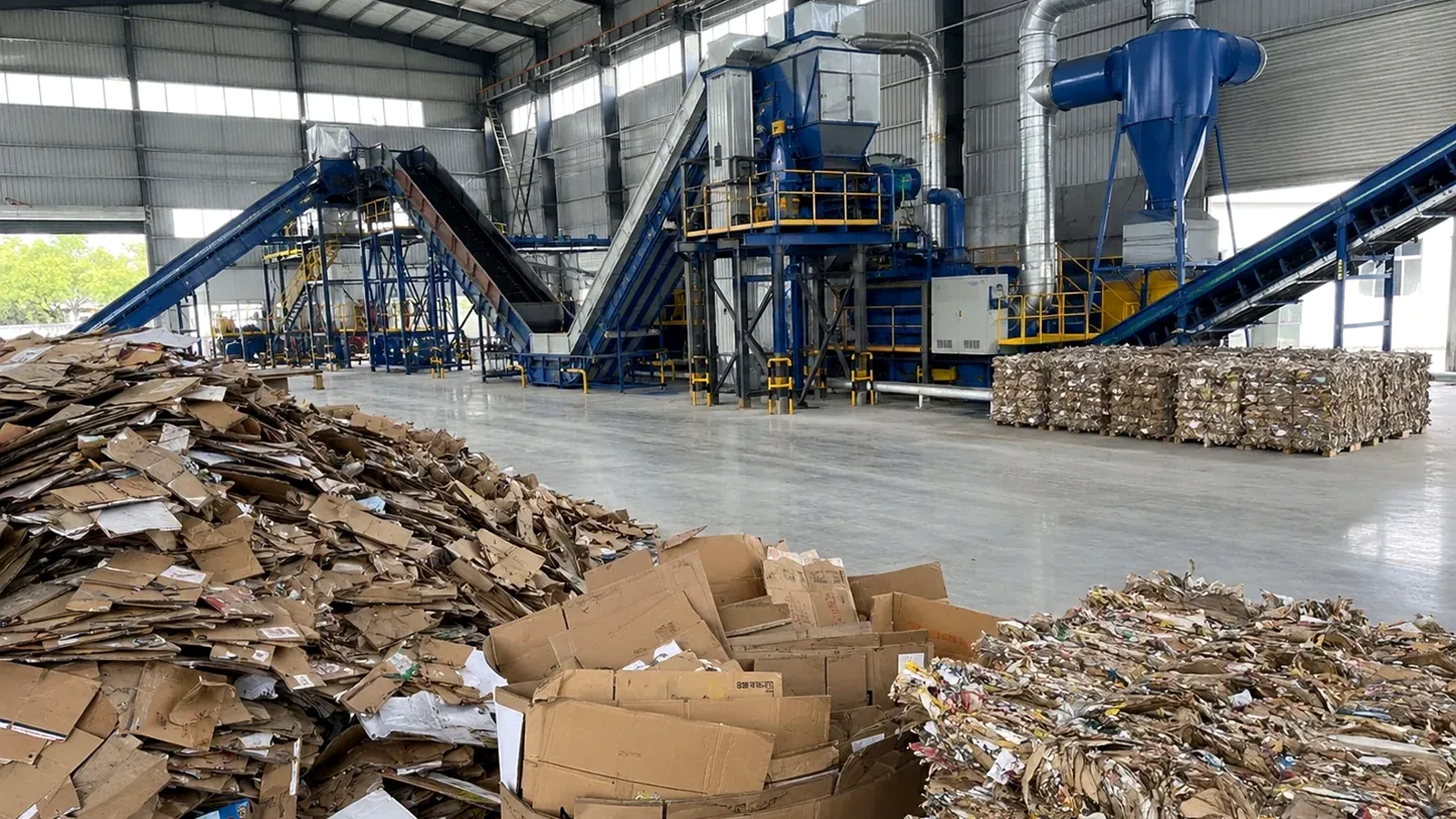
Quick answer: The industrial cardboard recycling process normally begins with collection, dry storage, receiving and grade control. The material is inspected, pre-sorted and often baled or size-reduced. Ferrous pieces and visible non-paper contamination are removed. A dry recycling line may then meter, mechanically open, dust-control and bale the fiber-rich material. At the paper mill, recovered cardboard is repulped with water, screened and cleaned before the fibers are formed, pressed and dried into new paperboard. YUXI’s current waste cardboard recycling machine and plant covers the dry mechanical preparation section; it is not presented as a complete wet paper-making line.
The Cardboard Recycling Process Is Usually Split Between Facilities
The phrase “cardboard recycling plant” can describe three very different operations. This is the first distinction a buyer should make.Collection or MRF
Receives mixed recyclables or source-separated cardboard, removes obvious contaminants, separates paper grades and produces transport bales.Dry preparation plant
Opens or reduces bulky material, removes ferrous pieces, controls feeding, mechanically loosens the paper, captures dust and prepares loose or baled recovered material.Paper mill
Repulps recovered paper with water, screens and cleans the fiber slurry, then forms, presses, dries and winds new paper or containerboard.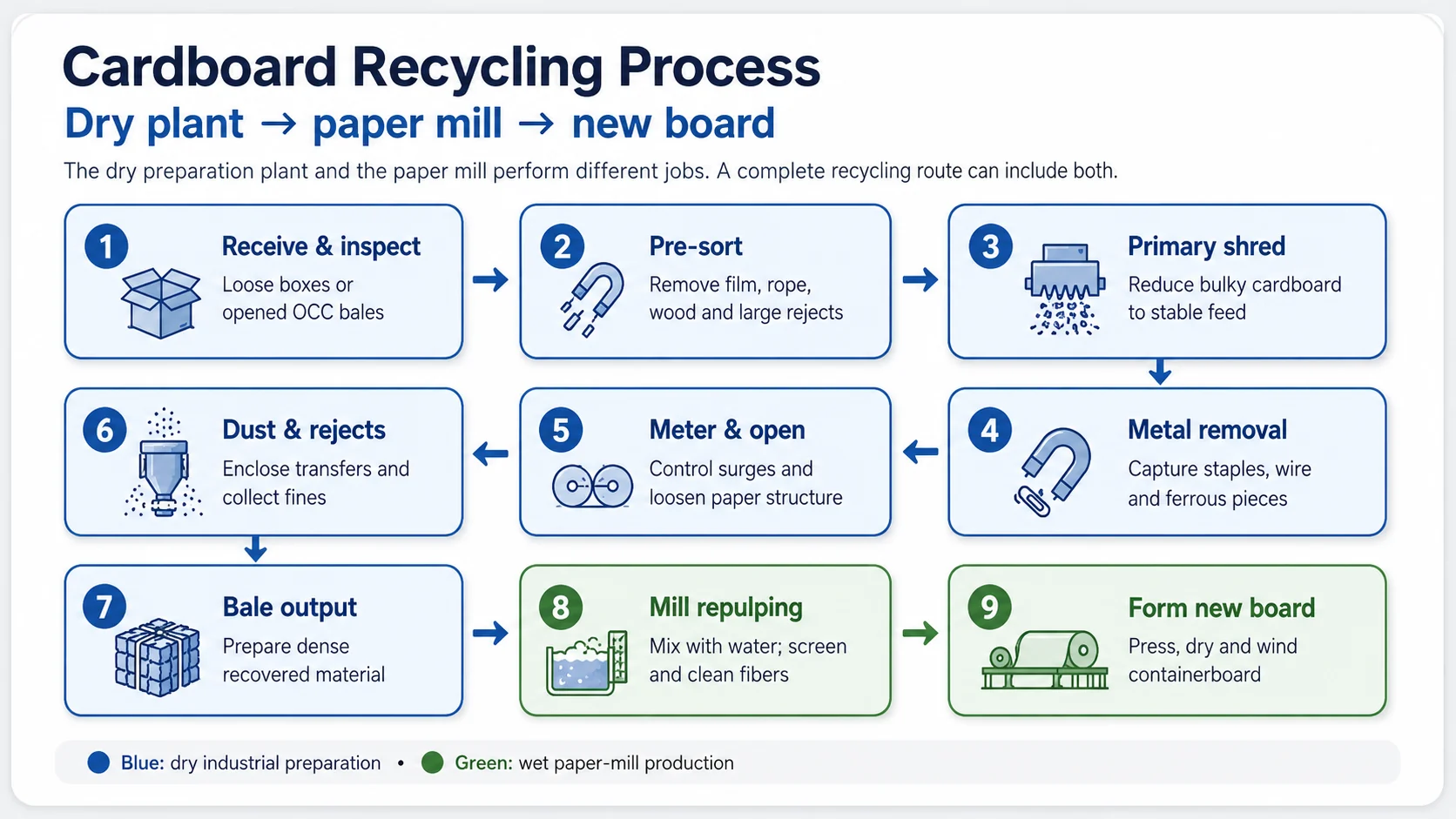
What Waste Cardboard Enters an Industrial Plant?
Most high-volume projects focus on old corrugated containers, usually shortened to OCC. These are the shipping boxes, produce bins, appliance cartons and corrugated sheets built from flat linerboard around a fluted middle layer. Clean kraft offcuts and selected paper-mill trim may also be attractive feeds. Mixed paper is possible, but the line becomes harder to control because coatings, film, wet-strength treatments and non-paper content vary from load to load.| Incoming material | Typical condition | Process implication |
|---|---|---|
| Loose warehouse boxes | Large, light and irregular; often flattened but not dense | Needs a receiving area, controlled conveyor and hopper design that resists bridging. |
| Compressed OCC bales | Dense material held by wire or strap | Needs safe bale handling, wire control, opening and inspection before continuous feeding. |
| Corrugated production trim | Relatively clean, dry and consistent | May use a simpler front end, although light material still needs stable metering. |
| Kraft paper waste | Sheets, rolls or converting offcuts | Requires confirmation of size, roll cores, coatings and the desired downstream product. |
| Selected mixed paper | Variable grades with more labels, film and coated material | Usually needs stronger sorting and a clear buyer acceptance standard. |
| Wet or food-contaminated boxes | High moisture, odor, mold risk or organic residue | May be rejected or require a different handling route; it should not be treated as clean dry OCC. |
“Cardboard” could mean loose e-commerce boxes, wired OCC bales, wax-treated produce cartons, laminated displays or dry factory trim. Photos, bale data and representative samples reveal far more than the word itself.
How Waste Cardboard Is Recycled: The Industrial Steps
1. Collection, segregation and dry storage
The process starts before the recycling machinery. Retailers, warehouses, factories and collection systems separate cardboard from general waste. Cleaner source-separated material normally carries fewer glass fragments, food residues, liquids and flexible plastics than cardboard recovered from a mixed stream. Boxes are flattened to save collection volume, but plants still need to know whether the feed arrives loose or baled. Loose cardboard occupies large floor and vehicle volume. Baling improves logistics, although the receiving plant must then handle a dense block that can release suddenly when its wire or strap is removed.2. Receiving, weighing and load inspection
At the plant, the load is identified, weighed and inspected. Operators check the grade, moisture, odor, visible contamination and whether the load matches the purchase or processing specification. This is not paperwork added after the real process. It is the first quality-control step. A plant that accepts every load into one stockpile loses traceability. When film rises in the product or a paper mill rejects a bale, the team cannot connect the problem to a supplier, shift or incoming grade. Basic receiving records—source, date, net weight, material condition, photos and nonconformance—make later troubleshooting much faster.3. Bale opening and pre-sorting
Baled OCC must be opened under a defined procedure. Large wire, plastic strap, rope and obvious non-paper items are removed before they reach rotating equipment. The opening area also gives operators a chance to see what was hidden inside the bale. Loose boxes need pre-sorting too. Plastic liners, foam inserts, wood, cans and bundled film should not be left for the shredder to “sort.” A shredder changes size. It does not identify material chemistry or create purity on its own.4. Primary size reduction
Bulky boxes and corrugated sheets can bridge, fold or arrive in sudden surges. A slow-speed double shaft shredder can tear the material into a more manageable and consistent feed for conveying and later opening. The goal is normally controlled reduction, not a precise final particle size. This stage should be judged by the complete line.Large cutting rooms can accept large boxes,but the continuous output still depends on the loading of the conveyor,the bulk density of the material,the emission and the next machine.Surprisingly,the shredder is not always the main bottleneck.Very light cardboard can starve the chamber,and poorly opened bundles can be overloaded in a few seconds.5. Ferrous metal removal
Staples, nails, bale wire and small steel pieces can enter with recovered cardboard. After primary shredding, a magnetic separator has better access to exposed ferrous material. This protects downstream equipment and reduces metal in the recovered output. That is only one part of contaminant control. A magnet does not remove aluminum foil, plastic film, adhesive, glass, moisture or coated paper. Those materials require source control, inspection, screening, air separation, wet cleaning at the mill—or rejection, depending on the project.6. Buffering and metered conveying
A buffer conveyor or controlled transfer stage evens out the flow before dry fiber opening. This is easy to underestimate. The next machine performs best when the feed is neither empty nor flooded. We’ve found that many “capacity” problems are actually interface problems. The shredder produces faster than the downstream opener can accept for a few minutes, material backs up, and the whole line stops. The brochure ratings of both machines may be individually correct. The interface is still wrong.7. Dry mechanical fiber opening
In YUXI’s current system concept, shredded cardboard passes through mechanical dry opening rather than a conventional hydrapulper and process-water loop. Mechanical action loosens and separates the paper structure into a fiber-rich form that can be handled, evaluated or baled. This is a preparation step. It may improve density, uniformity and handling, but it does not automatically deliver paper-machine-ready stock. The downstream paper mill may still need repulping, screening, cleaning and grade adjustment.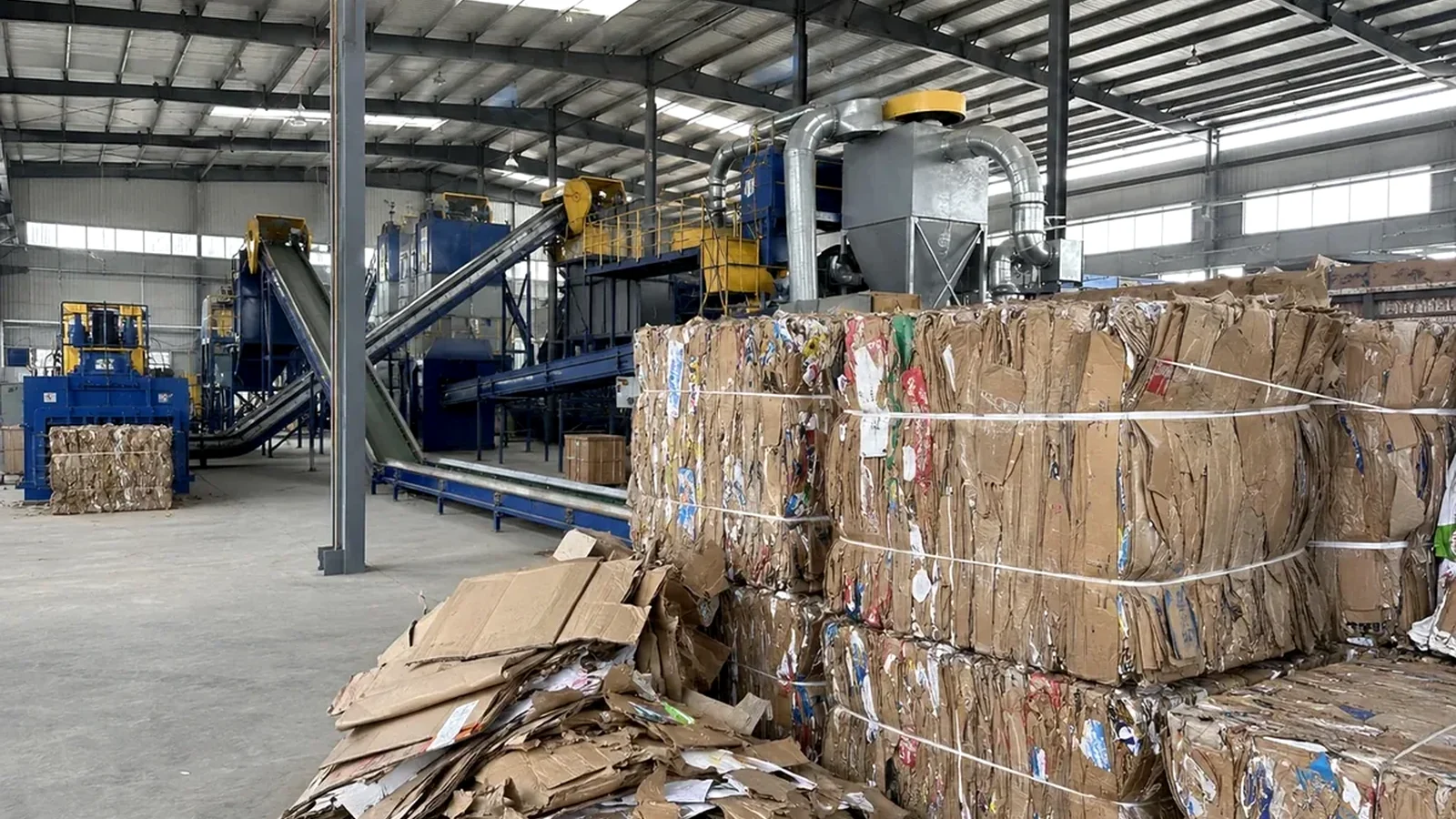
8. Dust collection and light-reject control
Paper handling creates scraps and fines, especially around shredding, transfer and dry opening points. Enclosures, pickup hoods, duct routing and the dust collector have to be designed as a system. A collector connected to poor pickup points will not solve dust escaping into the workshop. Paper dust also belongs in the plant’s formal safety review. OSHA lists moving machinery, unexpected startup, crushing, combustible materials and combustible dust among the hazards in paper recycling facilities.[5] OSHA’s combustible-dust guidance includes paper among organic dusts that can present an explosion hazard under certain conditions.[6] The required controls depend on the dust characteristics, equipment, building and local rules; they should not be reduced to “install a fan.”9. Baling and dispatch
The dry-prepared material may be discharged loose or sent to an automatic baler. Dense, stable bales use storage and transport more efficiently and can make sampling and sales easier. Bale size and density are equipment- and material-dependent, so they should be agreed with the transporter and downstream buyer. At this point the plant has produced recovered paper or fiber-rich material—not new cardboard. The next processing stage normally occurs at a paper mill.10. Paper-mill repulping, screening and cleaning
At the mill, recovered cardboard is mixed with water in a repulper. The mechanical action separates the paper into a fiber slurry. Screens and cleaners remove remaining tape, labels, staples and other rejects; the exact stock-preparation sequence depends on the mill and the grade being made.[1] Coated or treated corrugated products may behave differently in common mill systems. AF&PA and the Fibre Box Association updated a voluntary testing standard in 2025 to evaluate the repulpability and recyclability of treated corrugated material in the OCC stream.[3] That is a useful reminder: a box can look like ordinary brown corrugated board and still contain a treatment that affects fiber recovery.11. Sheet forming, pressing, drying and converting
Cleaned fiber stock is diluted and distributed onto a moving forming section. Water drains, presses remove more moisture, and heated drying sections produce a continuous paper sheet. The finished sheet is wound into large rolls. For corrugated packaging, linerboard and fluting are later combined and converted into new boxes. AF&PA reported that more than 33 million tons of cardboard were recycled in the United States in 2024, with an estimated cardboard recycling rate of 69%–74%. It also reported that nearly half of recycled paper went into containerboard production that year.[2] Those numbers describe a mature material market, but they do not remove the need for load-level quality control. Mills still buy usable fiber, not just tonnage.Dry Cardboard Preparation Is Not the Same as Wet Pulping
| Question | Dry preparation line | Paper-mill wet process |
|---|---|---|
| Primary purpose | Reduce bulk, stabilize feed, remove obvious contamination, loosen paper and prepare transportable material. | Separate fibers in water, clean stock and manufacture new paper or board. |
| Main inputs | Loose or baled OCC, cartons, kraft waste and suitable dry paper waste. | Recovered-paper bales or prepared fiber matched to the mill’s furnish. |
| Core operations | Feeding, bale opening, pre-sorting, shredding, magnetic separation, dry opening, dust control and baling. | Repulping, screening, cleaning, stock preparation, forming, pressing and drying. |
| Water loop | No conventional wet pulper or complete process-water loop in the YUXI concept. | Water is central to repulping, cleaning, stock transport and sheet formation. |
| Immediate output | Loose or baled mechanically opened, fiber-rich recovered material. | Finished paper or paperboard rolls ready for converting. |
| Key acceptance test | Sustained handling, contamination, dust, output condition and bale requirements. | Fiber yield, stock cleanliness, drainage, strength and final paper specifications. |
How Contamination Changes the Cardboard Recycling Process
Not all contamination is handled at the same stage. That is why “the machine removes impurities” is too vague for a useful proposal.| Contaminant | Best control point | Why it matters |
|---|---|---|
| Large plastic film and bags | Source segregation, bale opening and pre-sort; optional light-reject separation | Can wrap, bridge, appear in product and reduce buyer confidence. |
| Bale wire, nails and staples | Manual wire removal plus downstream magnetic separation | Creates injury risk, equipment damage and metal contamination. |
| Food, oil and liquids | Reject or segregate at source and receiving | Causes odor, moisture, biological contamination and fiber-quality loss. |
| Waxed, wet-strength or treated board | Grade control and mill-specific testing | May not repulp like normal OCC and can reduce usable fiber yield. |
| Wood, glass and stones | Receiving inspection and pre-sort | Creates severe wear, breakage and downstream rejects. |
| Adhesives, labels and ordinary tape | Controlled at source where practical; later screening and cleaning at the mill | Small amounts may be manageable, but excessive load affects reject volume and stock cleanliness. |
| Moisture and rain exposure | Covered storage and load acceptance | Changes weight, flow, opening behavior and commercial value. |
A practical rule: remove large, dangerous and easy-to-identify contaminants before shredding. Use magnets and optional dry separation for materials those devices can actually capture. Leave fine stock cleaning to equipment designed for wet paper-mill preparation. Do not expect one separator to solve every impurity.
What Each Machine Does in an Industrial Cardboard Recycling Plant
A line should be selected by function, not by copying a fixed equipment list from another project.Receiving conveyor
Matches loader, forklift or manual feeding and creates a controlled entry point. Its width, sidewalls and speed influence bridging and operator access.Bale opener and inspection area
Breaks compressed feed and exposes hidden contamination. Wire handling and stored energy need a defined safe method.Primary shredder
Tears bulky cardboard into a size the next stages can accept. Knife geometry, chamber width and feed control are matched to the actual material.Magnetic separator
Removes ferrous pieces after they have been exposed by opening or shredding. It does not remove non-ferrous or non-metal contamination.Buffer and metering conveyor
Separates the speed of the upstream shredder from the demand of the downstream opener and reduces overload cycles.Dry fiber opener
Mechanically loosens the paper structure without a conventional wet pulper loop.Dust-control system
Connects enclosures and pickup points to appropriate collection and safety controls. It must be engineered with the process, not appended later.Automatic baler
Produces a denser output for storage and transport when the downstream buyer does not require loose material.What Actually Controls Throughput and Output Quality?
Catalog capacity is only a starting point. Cardboard is a low-bulk-density feed, so volumetric behavior matters as much as motor power. A line processing dry production trim can behave very differently from one receiving mixed, wired OCC bales.Feed density and release pattern
Loose boxes may look easy because they are light, yet they occupy large volume and can float or bridge above a hopper. Dense bales create the opposite problem: the line may be quiet, then receive a sudden block of compacted material. The receiving and buffer system decides whether either condition becomes stable production.Moisture
Wet cardboard weighs more but does not necessarily produce more usable dry fiber. It can smear, compact and move differently through a dry opener. Capacity comparisons should state feed moisture and use accepted output, not only gross wet input.Contamination and reject rate
A line can report high input tonnage while producing a poor saleable yield. Measure non-paper rejects, ferrous removal and the final buyer’s acceptance—not just what crossed the scale.Interface control
Every transfer point matters. If the downstream machine cannot accept the temporary discharge from the shredder, material backs up into the previous stage. Sensors, buffer capacity and conveyor interlocks often determine whether the plant runs steadily or stops every ten minutes.Dust and housekeeping
Dust buildup is a production, maintenance and safety issue. Escaped fiber can block sensors, contaminate bearings and create slippery floors, while accumulations may require combustible-dust evaluation. Good collection begins with enclosure and capture velocity at the source, followed by suitable ducting and collection equipment.Commissioning observation: a short demonstration with hand-selected dry boxes can prove that the machines rotate and the material can be processed. It does not prove sustained plant output. A meaningful test includes representative feed, normal loading, contamination, planned bale changes, output sampling, stops and reject measurement.
What Comes Out of the Dry Cardboard Recycling Line?
The immediate output may be a loose, mechanically opened fiber-rich material or a compressed bale. Its value depends on grade consistency, moisture, non-paper contamination, bale integrity and the downstream user’s requirements.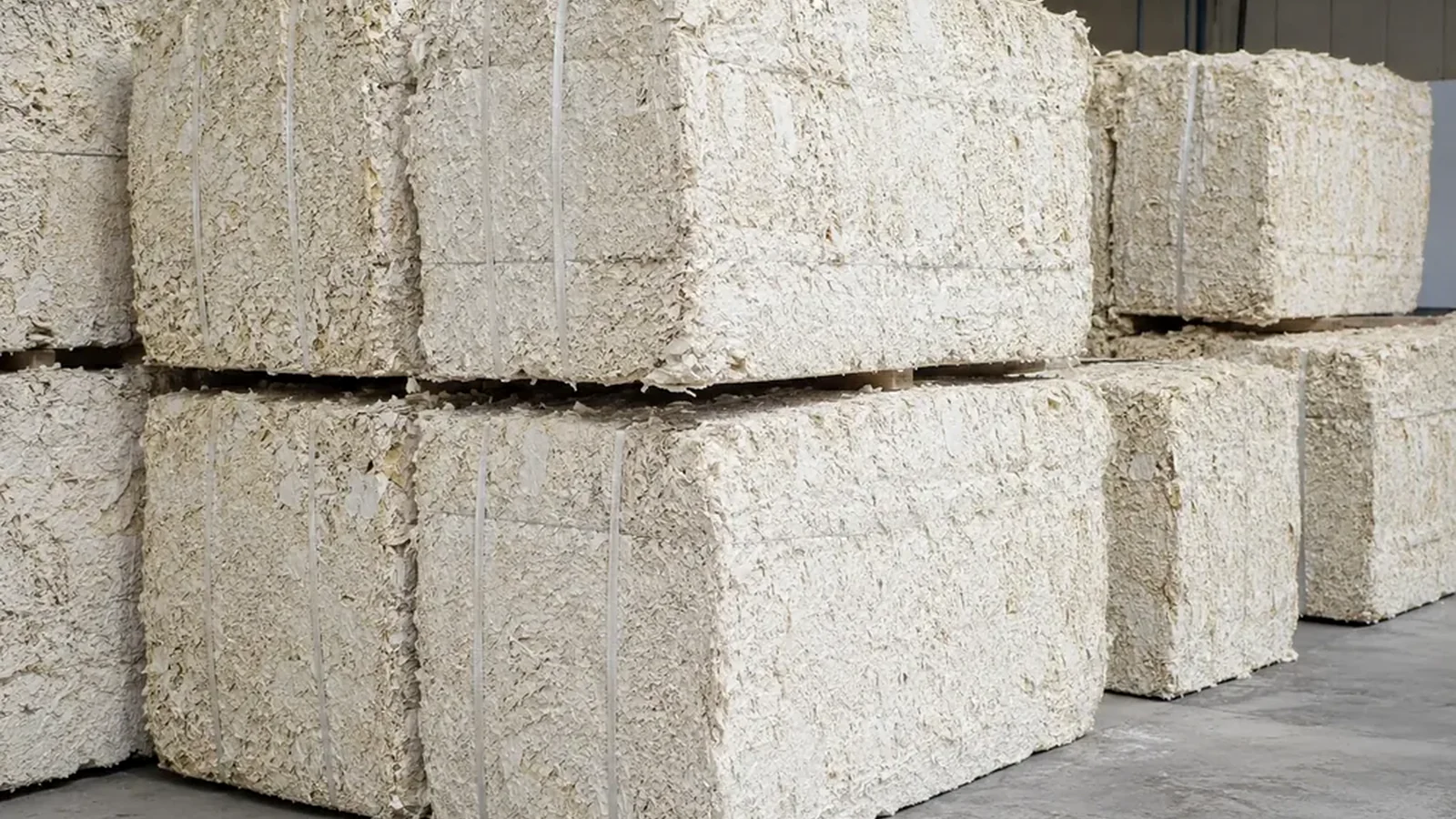
Information Needed Before an Industrial Cardboard Recycling Plant Is Designed
A useful proposal starts with the waste and the outlet. Equipment comes second.- Feed form: loose boxes, flattened sheets, wired bales, rolls or production trim.
- Material grades: OCC, kraft, boxboard, mixed paper, coated or treated board.
- Bale data: dimensions, mass, density, wire or strap and how bales will be unloaded.
- Moisture: normal range, rain exposure and storage condition.
- Contamination: film, tape, metal, foam, wood, food, glass and non-paper percentage.
- Capacity basis: sustained accepted output per hour or shift, not a short peak.
- Operating schedule: daily hours, shifts and expected seasonal variation.
- Output requirement: loose material, bale size, bale density and buyer specification.
- Workshop: length, width, clear height, columns, doors, forklift routes and maintenance access.
- Utilities and safety: electrical supply, dust controls, fire protection, guarding and local compliance.
Plan the Cardboard Recycling Process Around Your Actual Feed
Send material photos, bale information, contamination, required output and workshop dimensions. YUXI can review the dry preparation scope from receiving and shredding through metal removal, fiber opening, dust control and baling.FAQ
What are the main steps in the cardboard recycling process?
Typical processes include collecting,receiving,checking,sorting,downsizing or baling,removing pollutants,packing or preparing dry fibers,transporting to paper mills,screening,cleaning,sheet forming,pressing and drying.The exact order depends on whether the facility is an MRF,a dry preparation plant or a paper mill.Will the cardboard recycling factory directly turn the box into new cardboard?
Not every plant does this. A sorting or dry preparation plant may only prepare a clean, dense recovered-paper feedstock.The new container board was later manufactured in the paper mill using repilping,screening,cleaning,molding,pressing and drying equipment.Why should cardboard be shredded before recycling?
Shredding reduces bulky boxes to a more stable size for conveying, metal removal, dry opening or downstream handling. It does not remove tape, moisture, plastic film or all non-paper contamination.Can wet cardboard be recycled in an industrial plant?
Some mills may accept limited moisture, but wet cardboard is harder to store, meter, sort and value consistently. It is also more vulnerable to mold and contamination. Dry-line equipment should be sized and tested on representative feed conditions rather than dry catalog samples.Do staples and tape have to be removed before cardboard recycling?
Small staples and ordinary labels are usually processed by industrial screening and cleaning later,but bale wires,straps,ropes,films and non-paper packaging should be removed before shredding. Acceptance rules vary by collector, processor and paper mill.What output does the YUXI dry cardboard recycling line produce?
The YUXI line is described as producing mechanically opened, fiber-rich recovered material that can remain loose or be baled. It is not represented as finished wet pulp or a complete paper-making line. Downstream suitability depends on the paper grade, moisture, contaminants and the buyer’s stock-preparation process.What information is needed to configure an industrial cardboard recycling plant?
Useful inputs include material photos, loose or baled condition, bale size and wire, paper grades, moisture, contamination, required sustained throughput, daily hours, workshop dimensions, power supply, output handling and the downstream buyer’s acceptance requirements.References
- American Forest & Paper Association, “Paper Recycling Process,” collection, MRF baling, paper-mill pulping, screening and new-paper formation.
- American Forest & Paper Association, “How Much Cardboard Is Recycled?,” 2024 U.S. cardboard recycling and containerboard-use statistics.
- American Forest & Paper Association and Fibre Box Association, “Updated Voluntary Standard for Recycling Cardboard,” repulpability and recyclability of coated or treated corrugated fiberboard.
- U.S. Environmental Protection Agency, “How Do I Recycle Common Recyclables?,” preparation and contamination guidance for cardboard and paper packaging.
- U.S. Occupational Safety and Health Administration, “Green Job Hazards—Recycling: Paper,” machinery, crushing, unexpected startup and combustible-material hazards.
- U.S. Occupational Safety and Health Administration, “Combustible Dusts,” general dust-explosion hazard information including paper dust.