


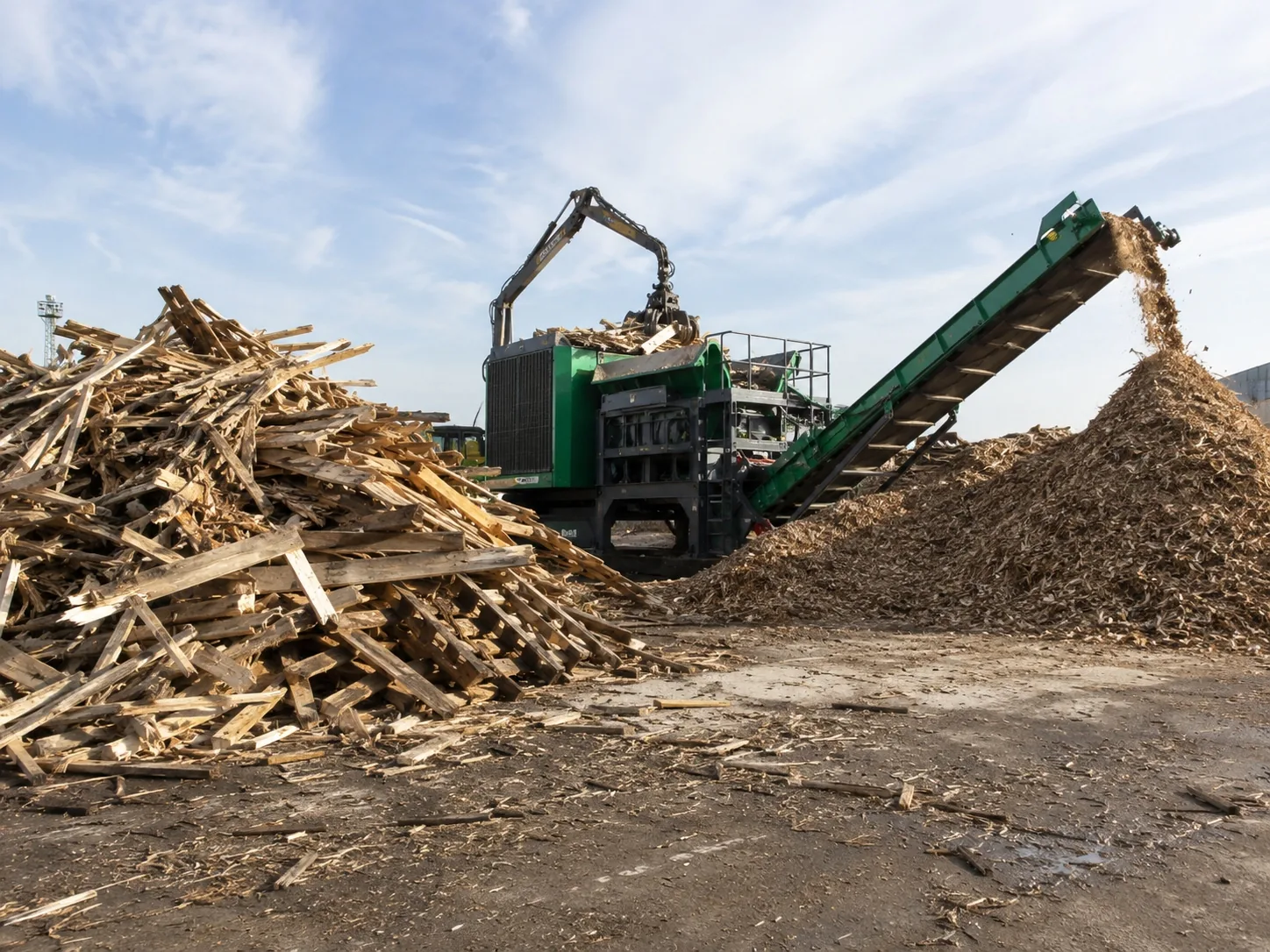
Waste Wood & Pallet Shredding
For pallet boards, production offcuts and mixed waste wood requiring volume reduction and optional ferrous-metal removal.

 EnglishEnglish
 Fast Delivery
 Reliable
 Certified
 Experienced
A configurable industrial line for reducing straw, corn stalks, bagasse, branches, garden waste, waste wood and pallets into controlled-size material for fuel preparation, composting, recycling or downstream processing.
The line reduces bulky, irregular biomass into material that is easier to convey, store, dry, screen, mix or feed into a downstream process. Depending on the feedstock, it can use a slow-speed shredder for tough or contaminated material, a cutting or crushing stage for fibrous crops, and optional screening or metal removal.
In practice, moisture and contamination matter as much as nominal capacity. Wet bagasse can bridge in a hopper. Long straw can wrap around poorly selected rotors. Pallets and demolition wood may carry nails. Green waste may include soil and stones. These details determine whether a line runs steadily or spends too much time reversing and clearing blockages.
The following materials do not all use the same cutting system. We match the feeding method, rotor, cutter geometry, screen and downstream equipment to the actual material condition.
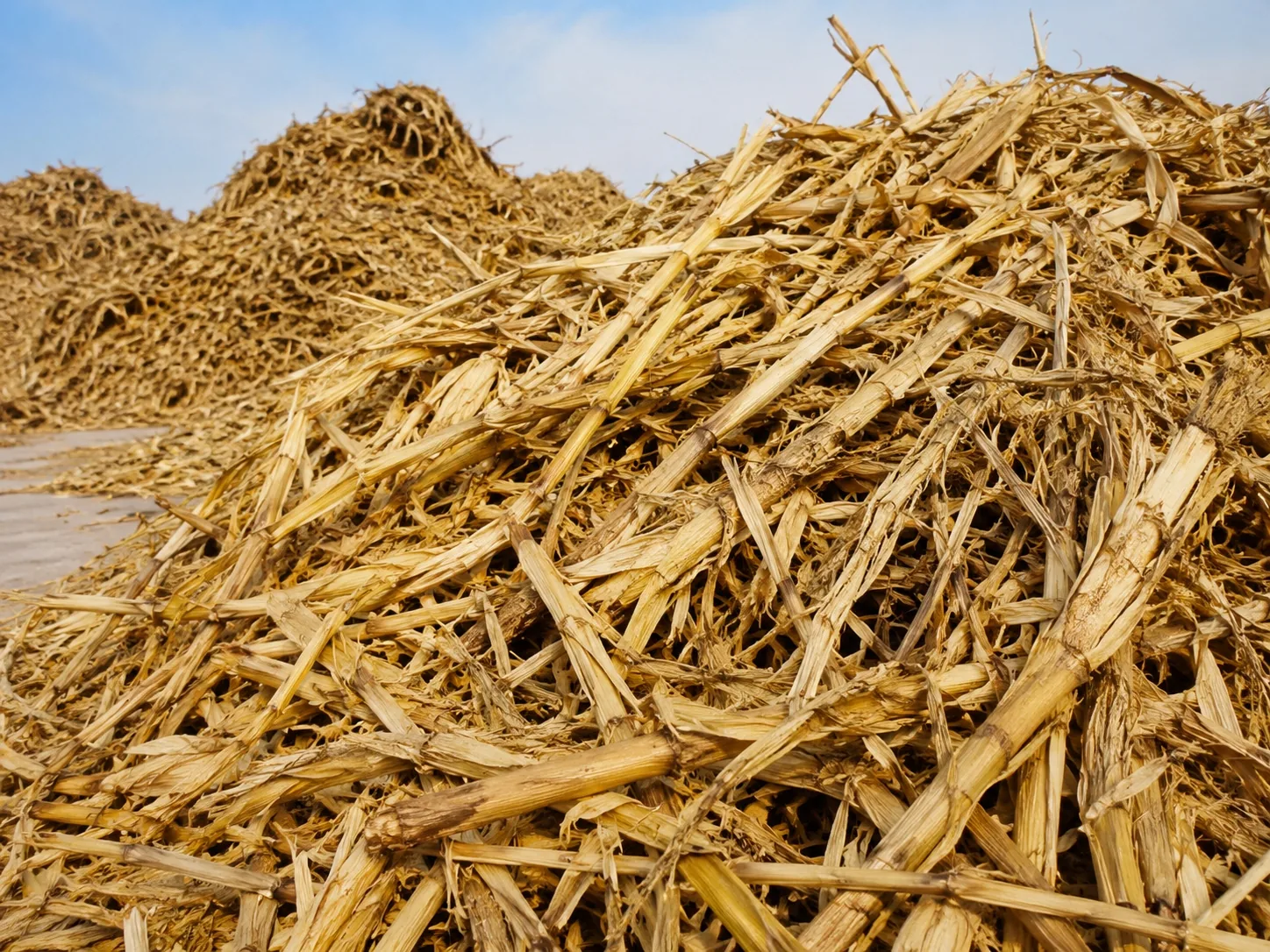 Corn Stalks
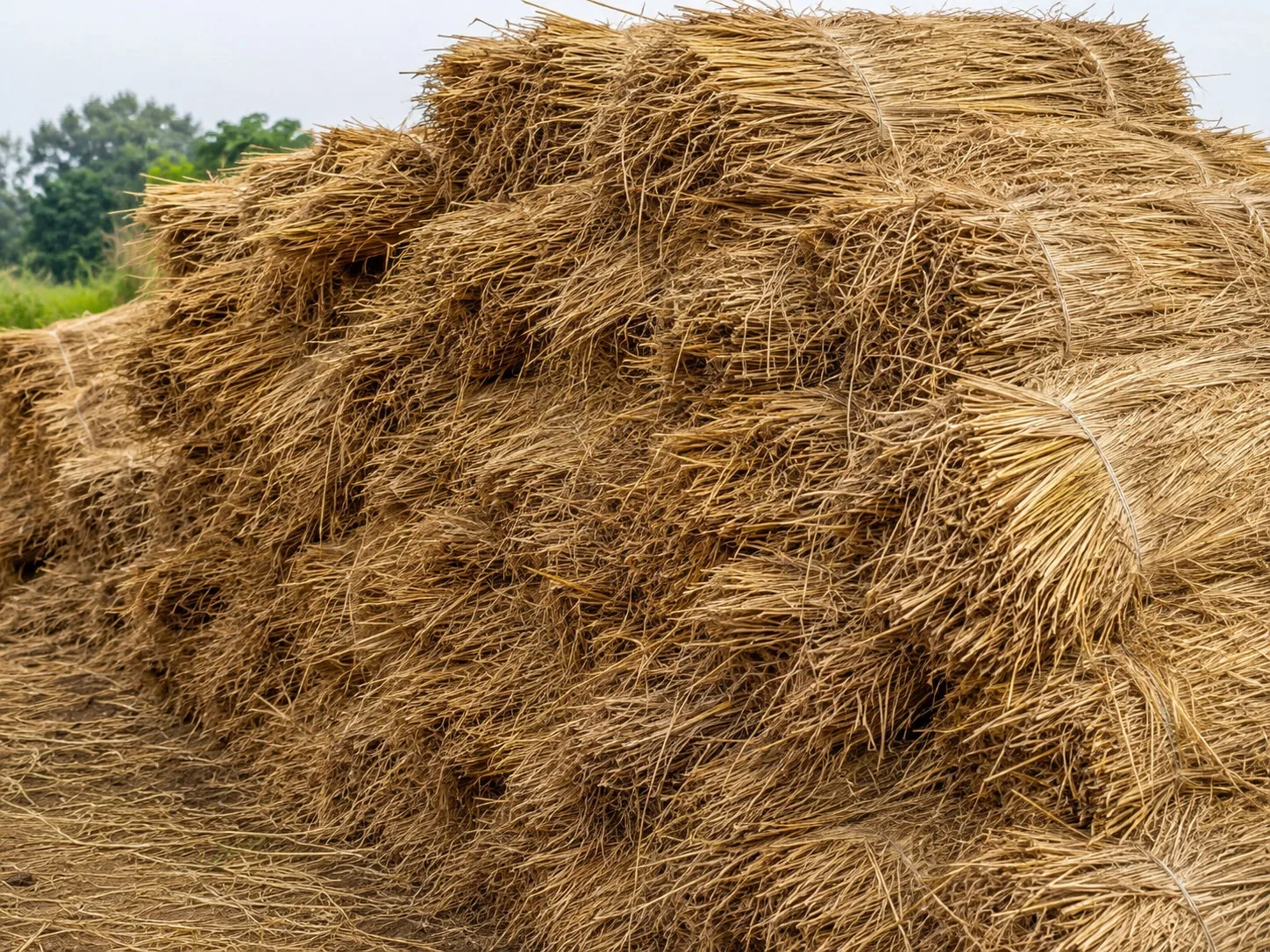 Rice Straw
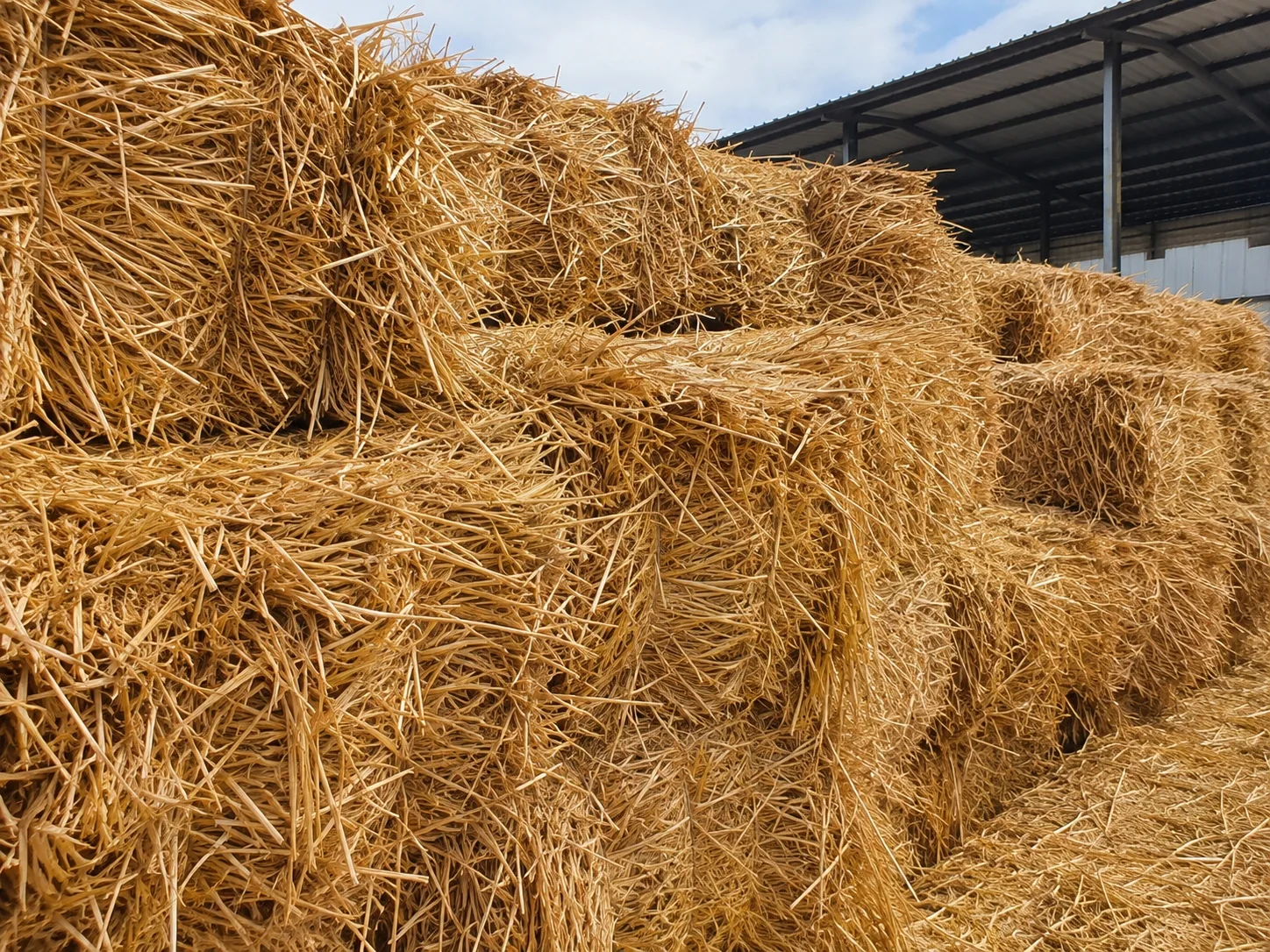 Wheat Straw
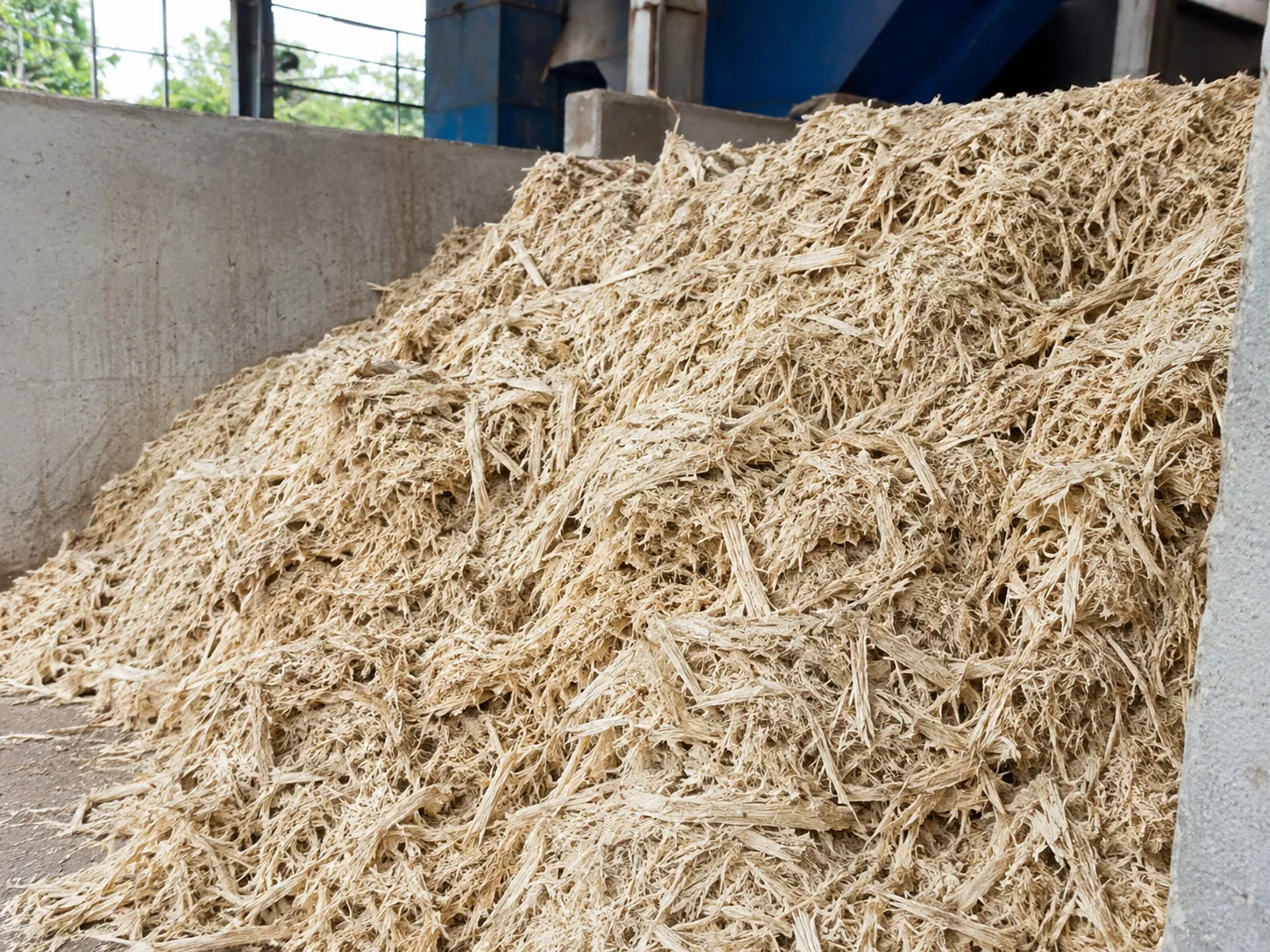 Sugarcane Bagasse
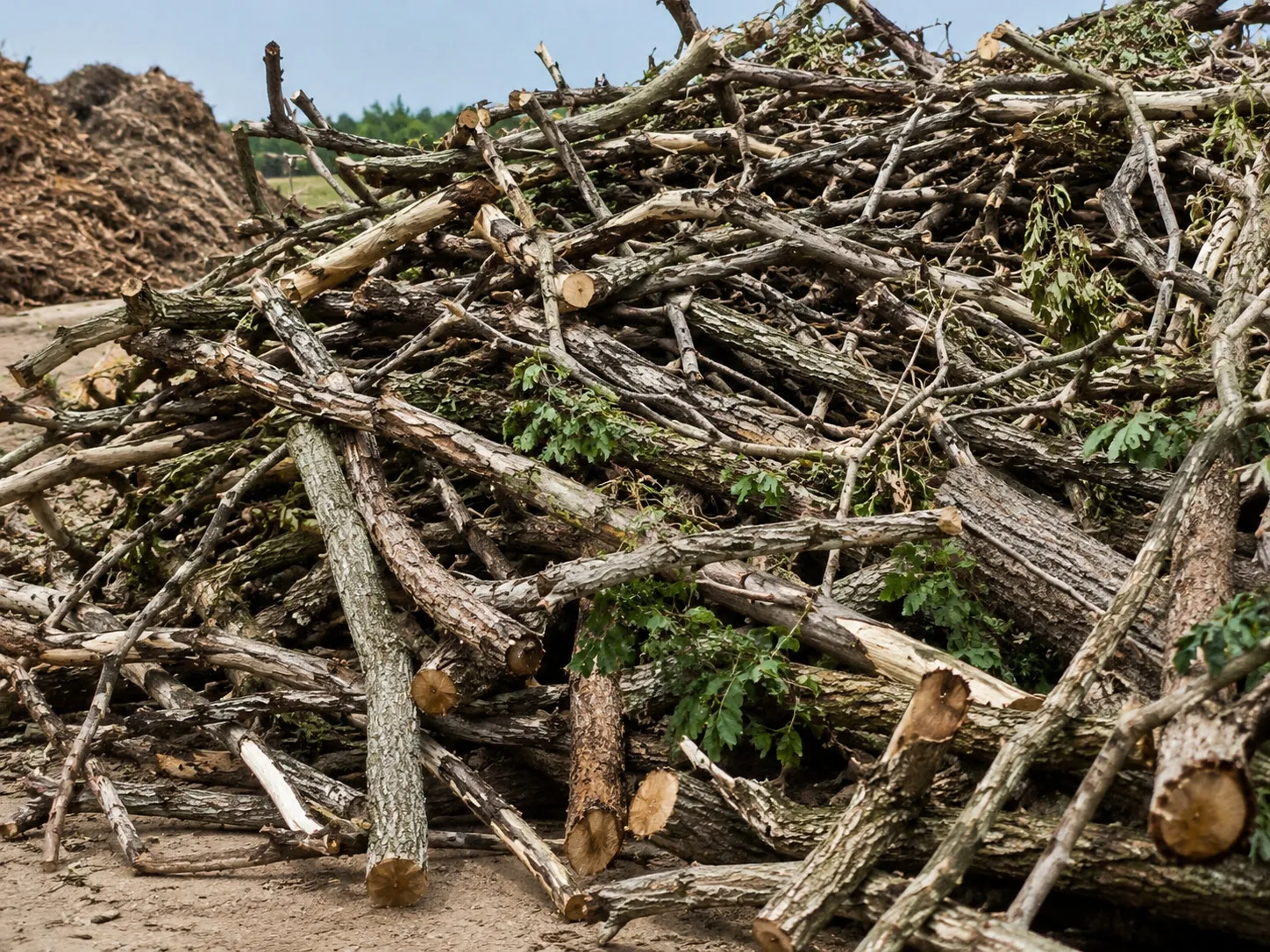 Tree Branches
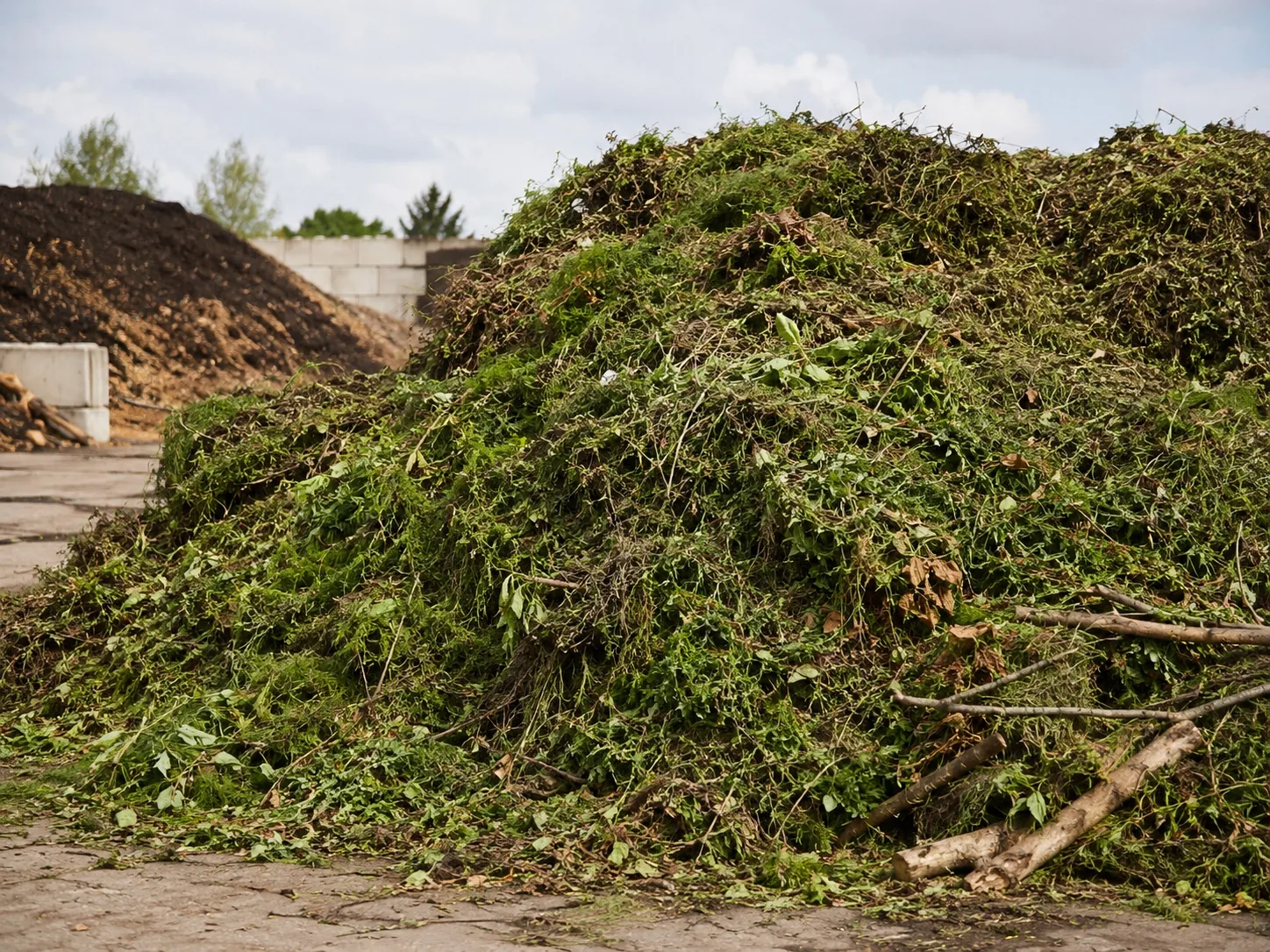 Garden & Green Waste
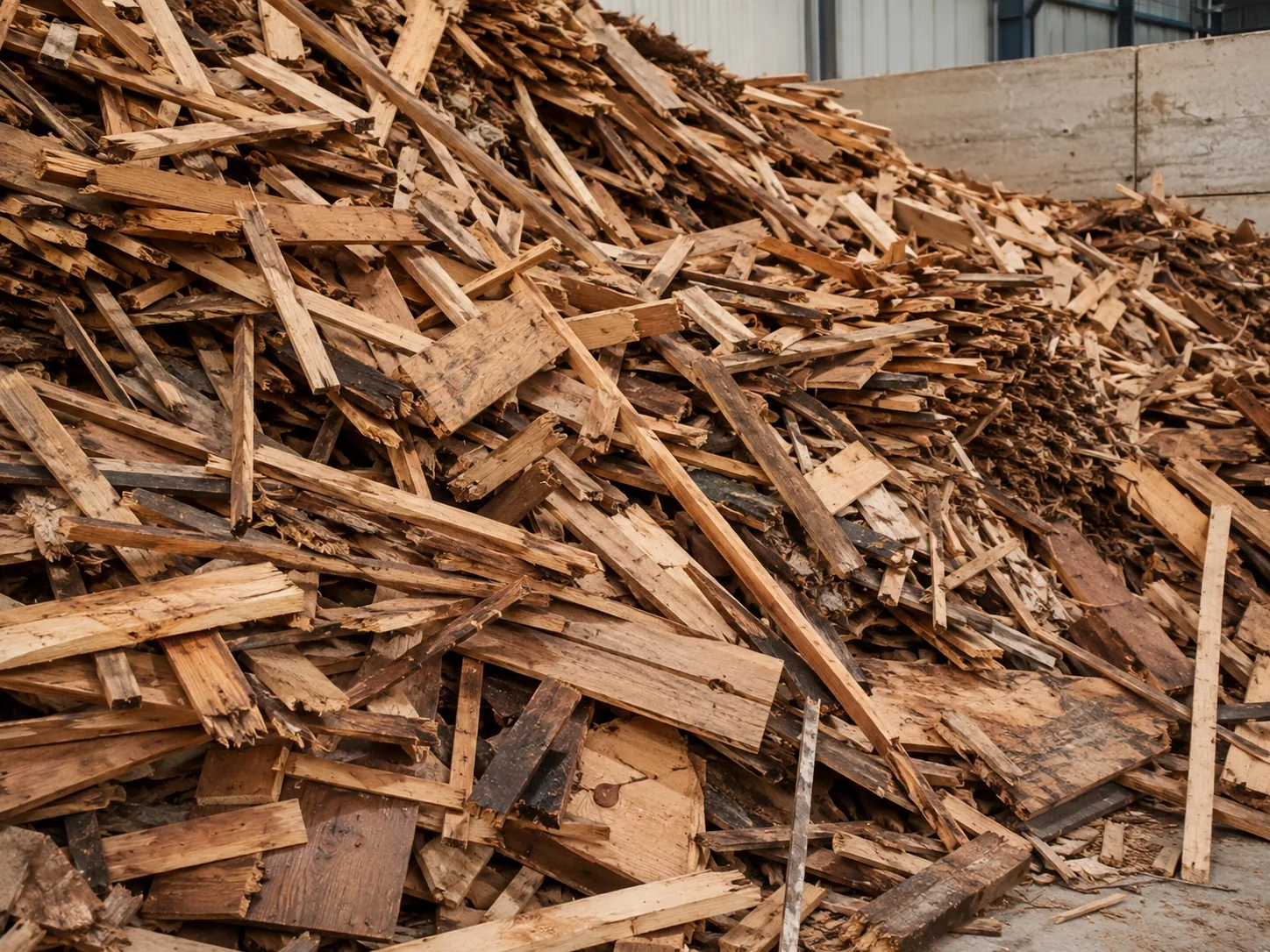 Waste Wood
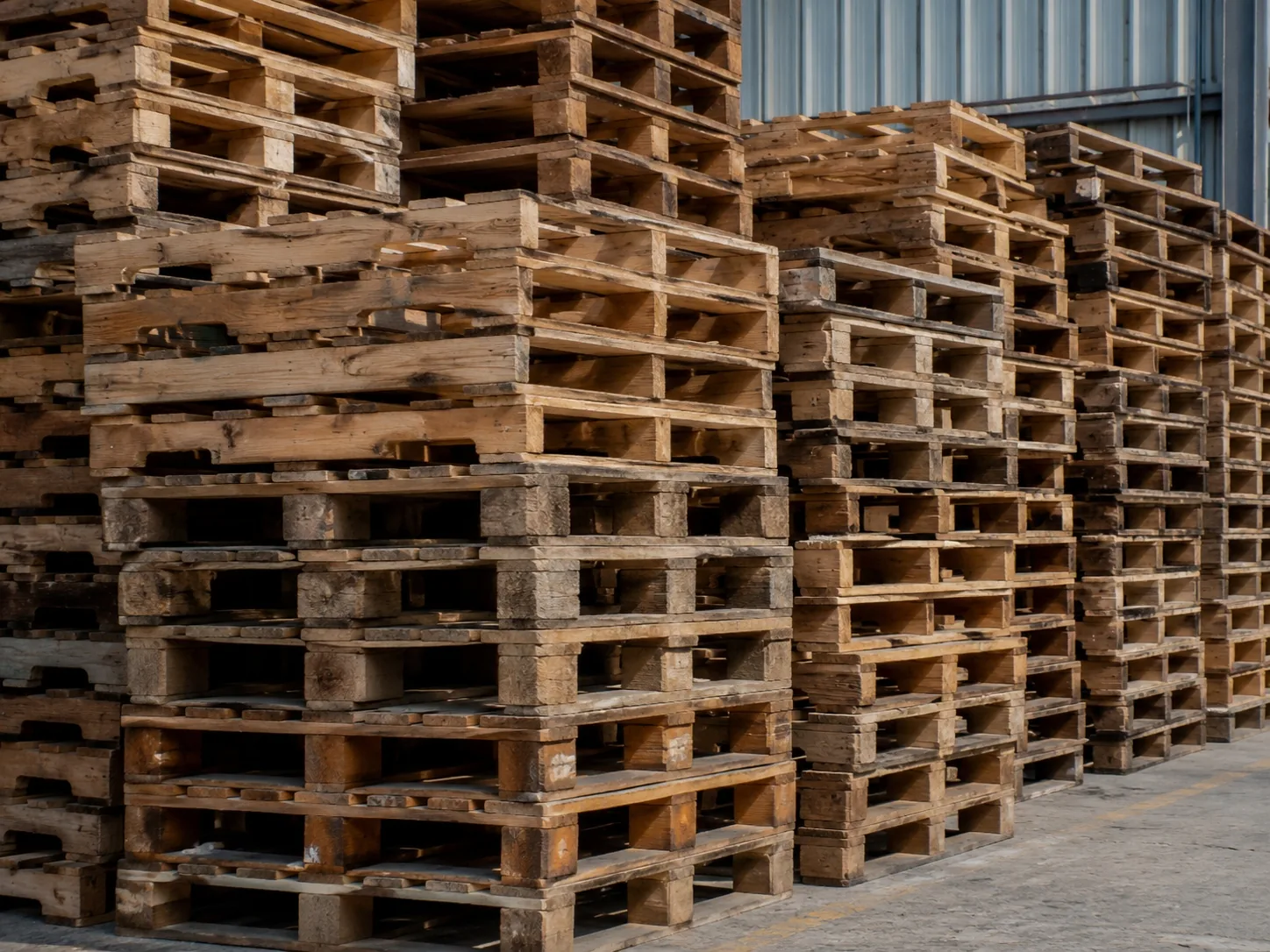 Wood Pallets
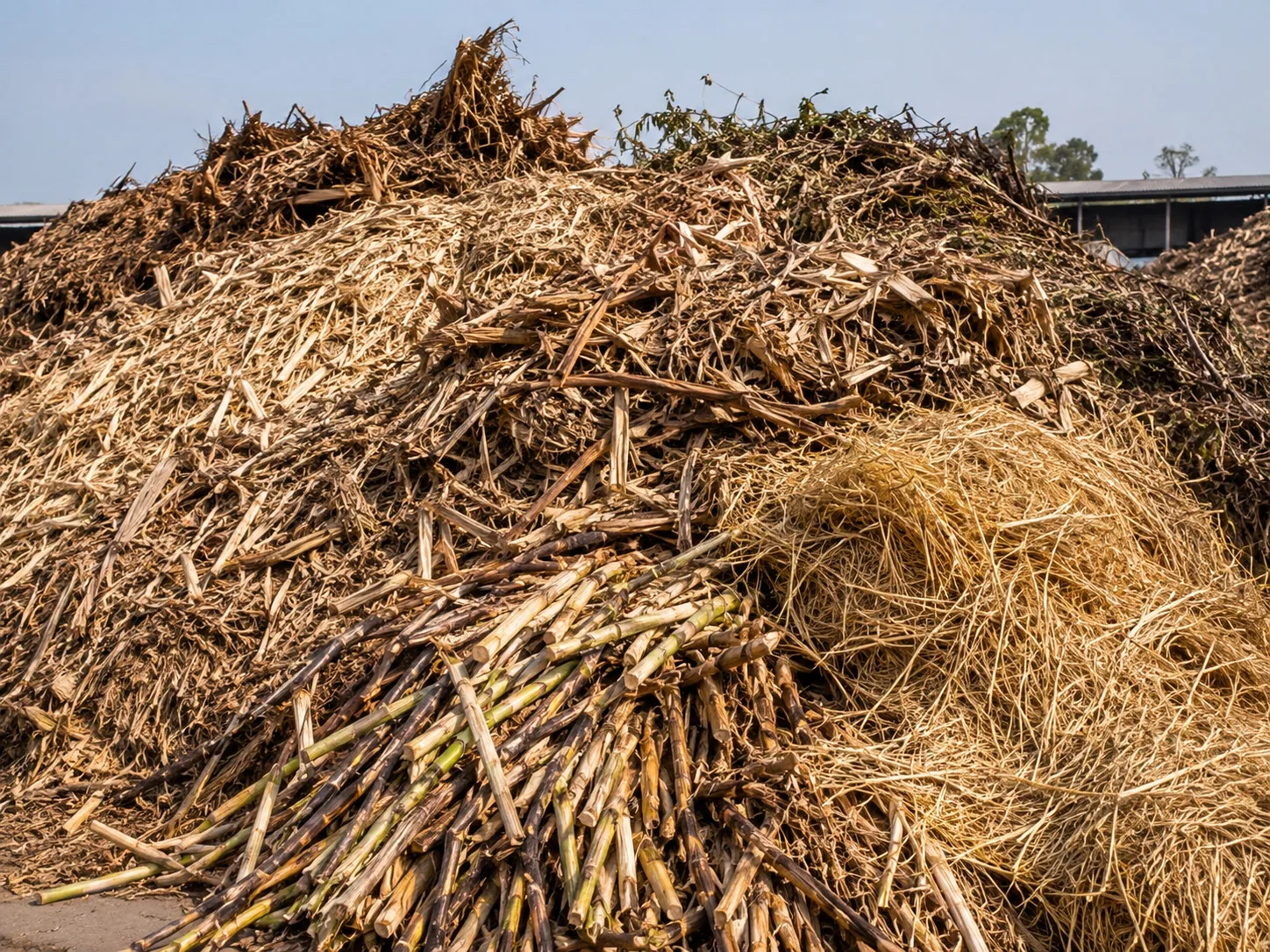 Mixed Agricultural Residues
Not every project needs every step. The line is built from the modules required to reach the target output while avoiding unnecessary power consumption and maintenance.
A good proposal starts with the feedstock, not with a standard model list.
Focus on stable feeding, anti-wrapping cutter design, dust control and the required fiber length.
Focus on hopper geometry, anti-bridging measures, discharge reliability and corrosion-aware design.
Focus on mixed feed size, soil and stones, irregular loading and wear-resistant cutting components.
Focus on shock loads, nails, tramp metal, magnetic separation and the required clean-chip specification.
Focus on consistent particle size, fines control, moisture management and steady feeding to the next process.
Focus on opening the structure without over-grinding, while creating a mix that aerates and decomposes well.
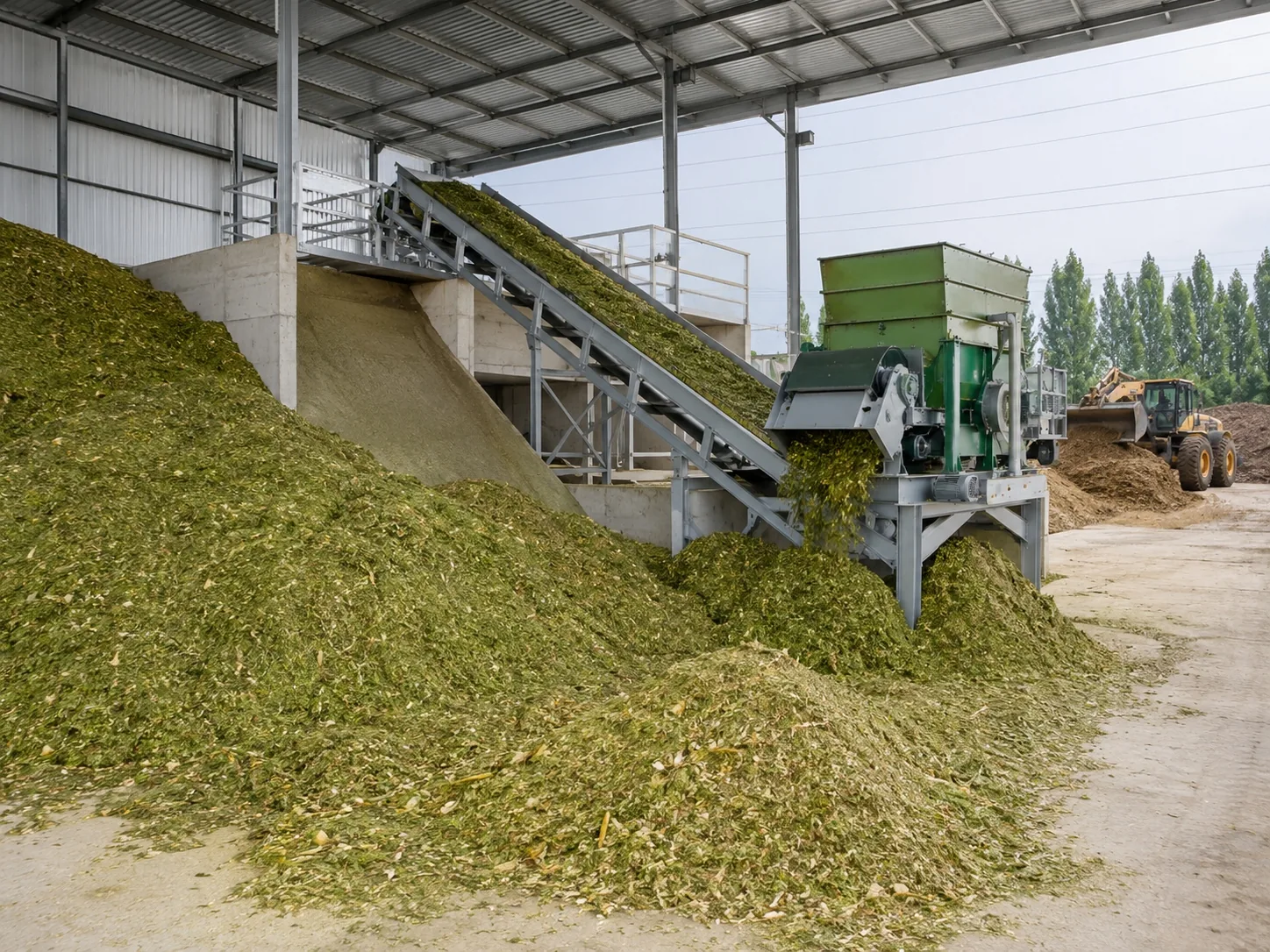
The project photographs show the range clearly: pallet and waste-wood reduction, green-waste processing, crop-residue size reduction and larger stationary installations.
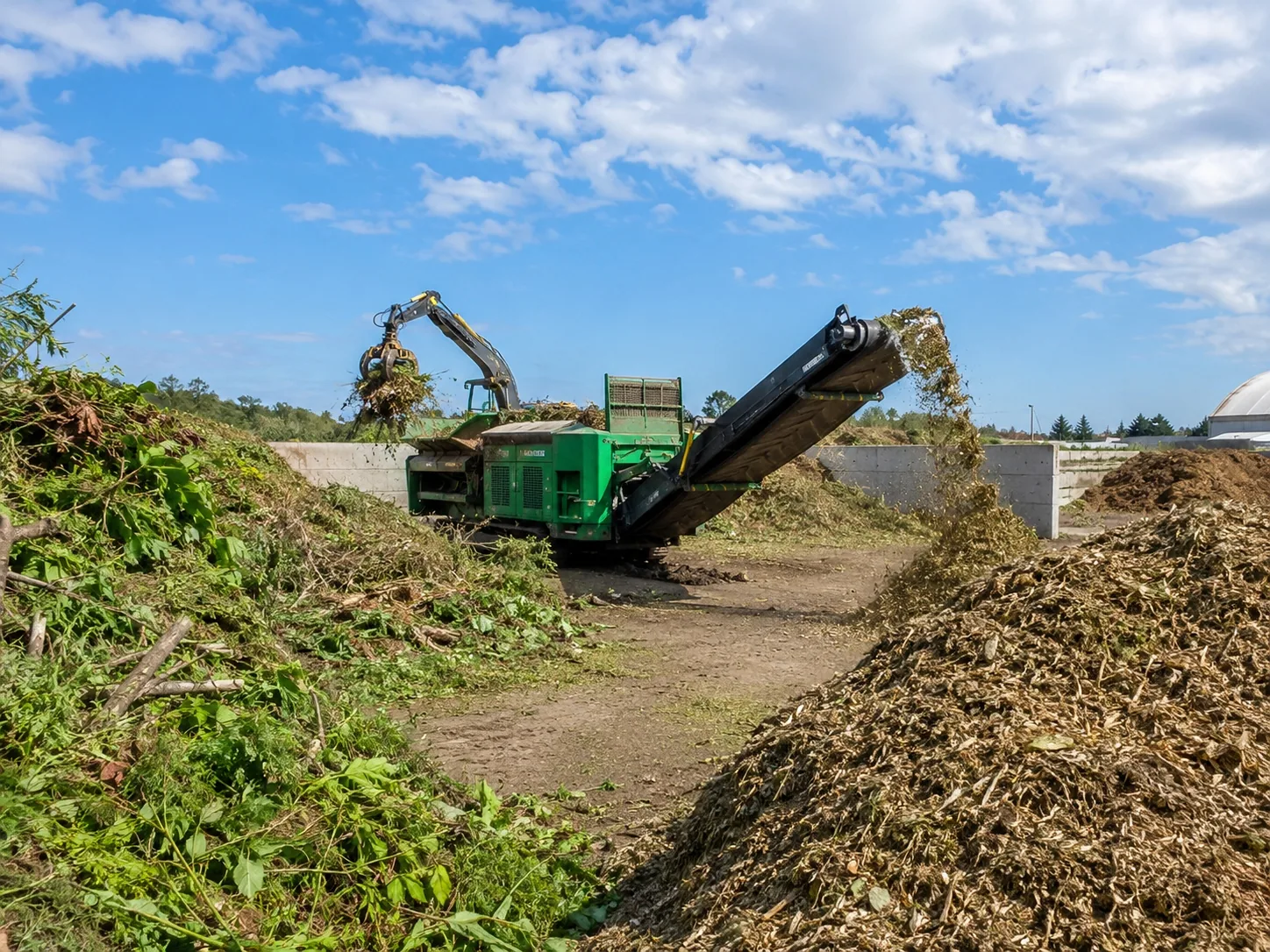
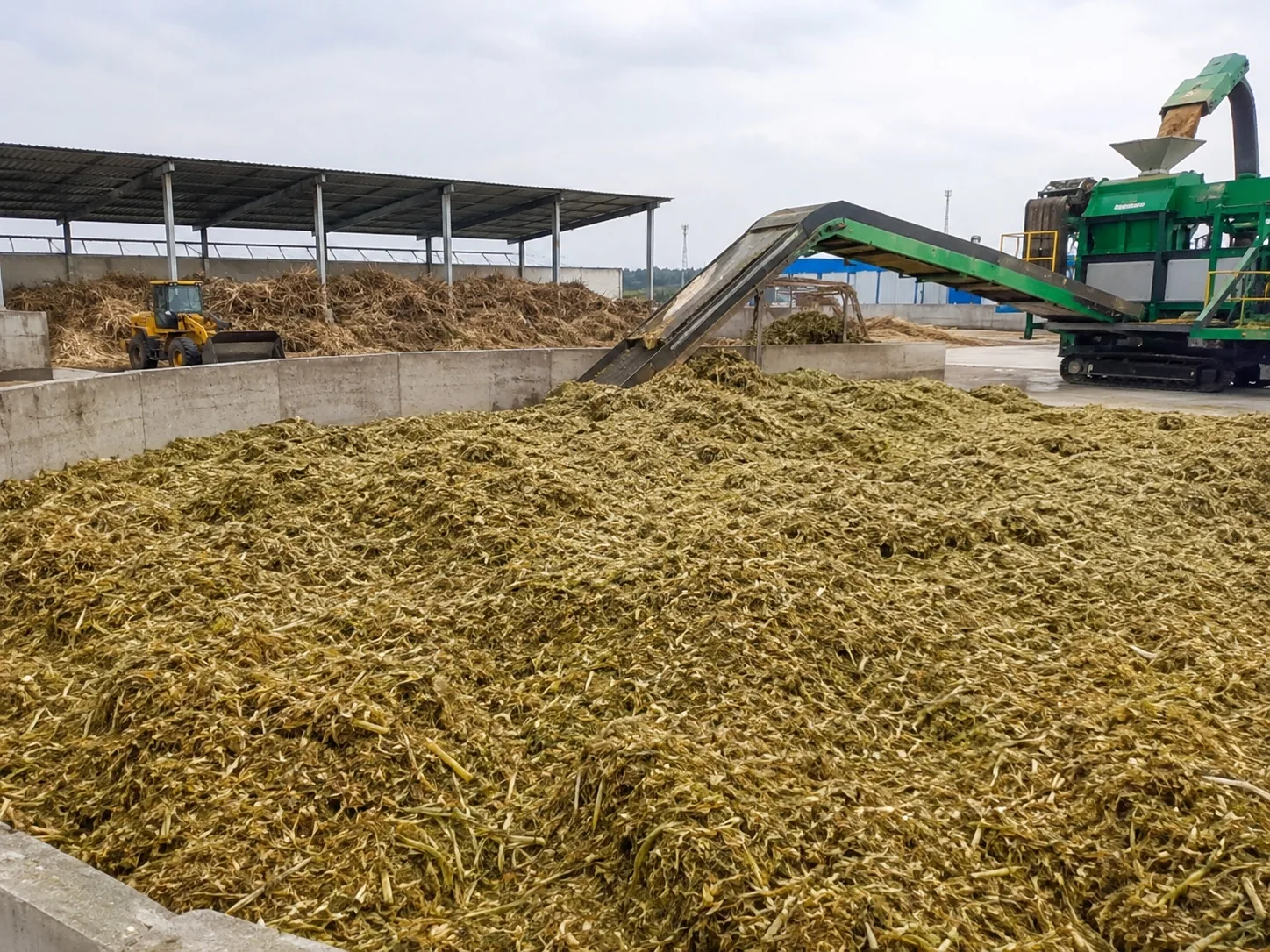
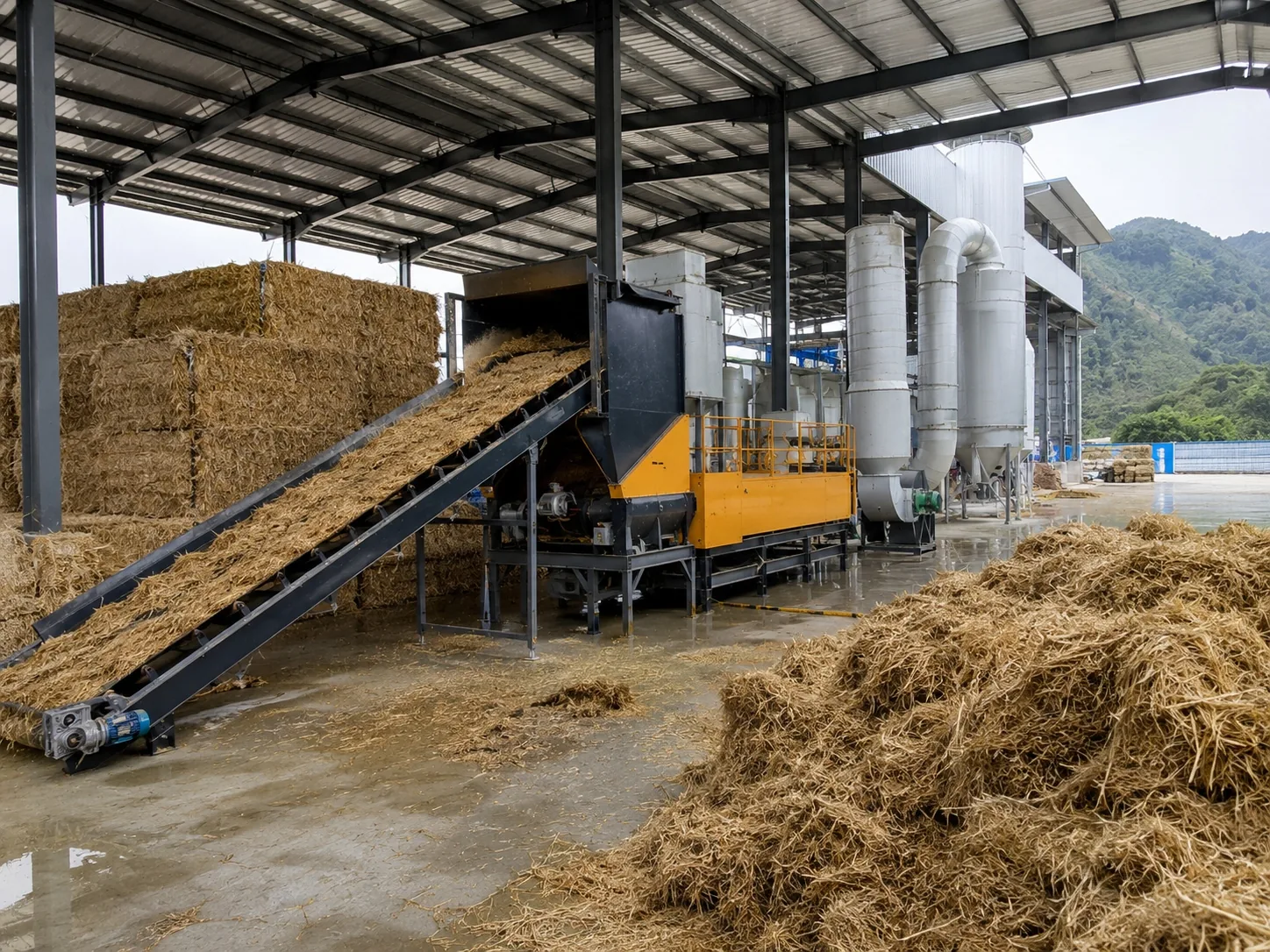
The line prepares feedstock. Final product quality still depends on drying, fermentation, densification or other downstream processes where applicable.
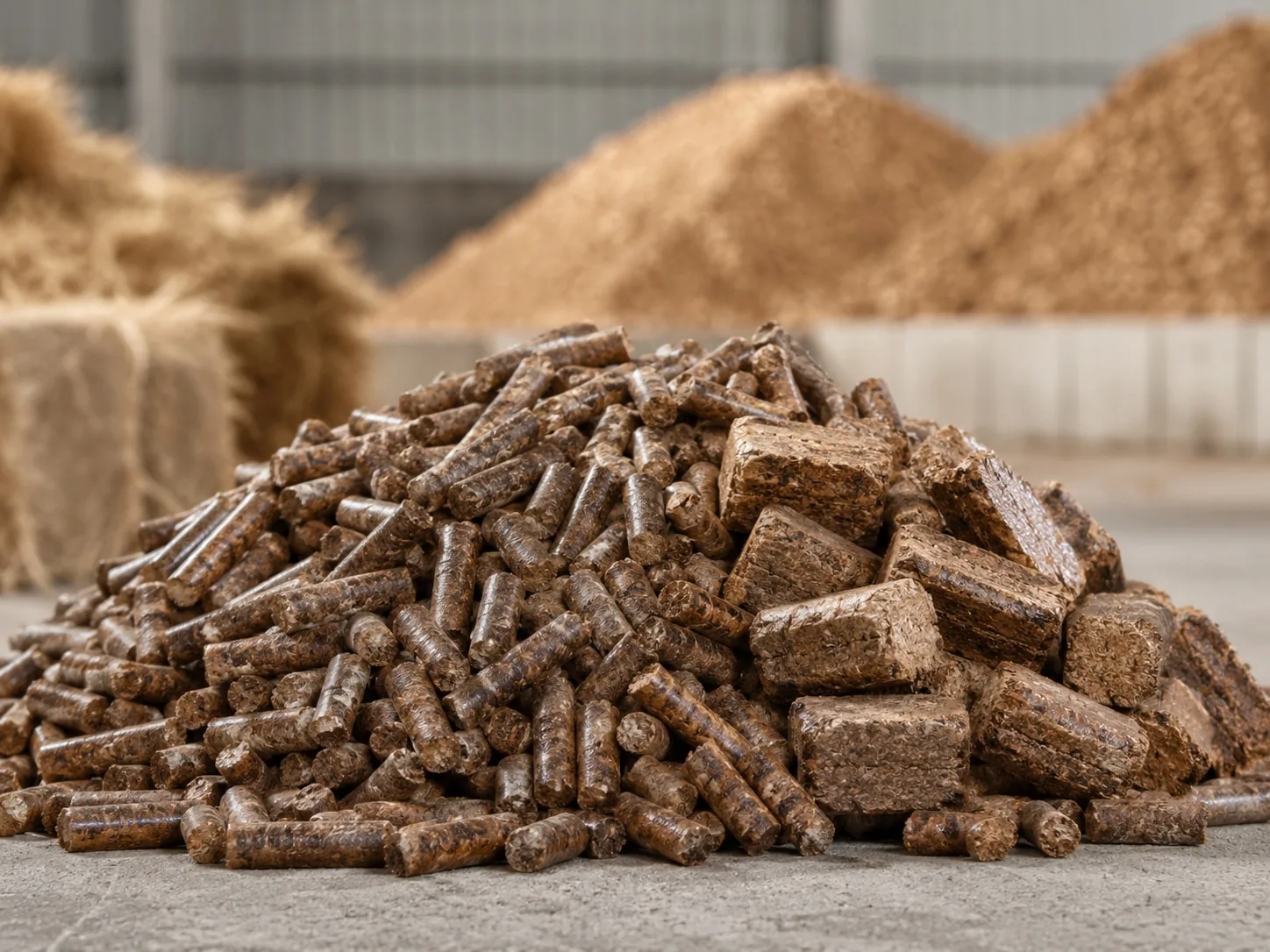
Size-reduced material for boilers, pellet mills, briquetting systems or other fuel-preparation steps.
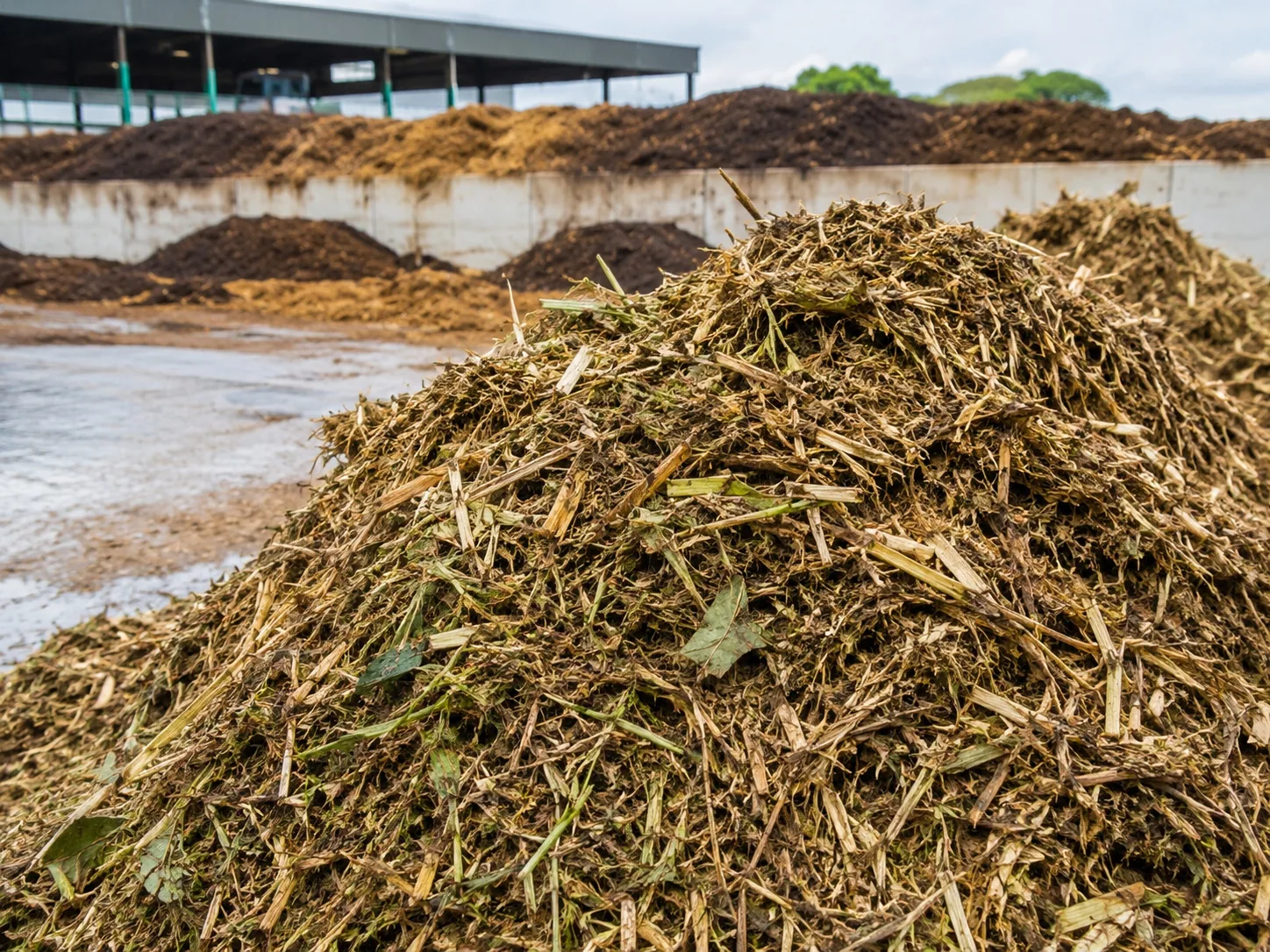
Opened and reduced green waste, straw and plant residue for mixing and controlled composting.
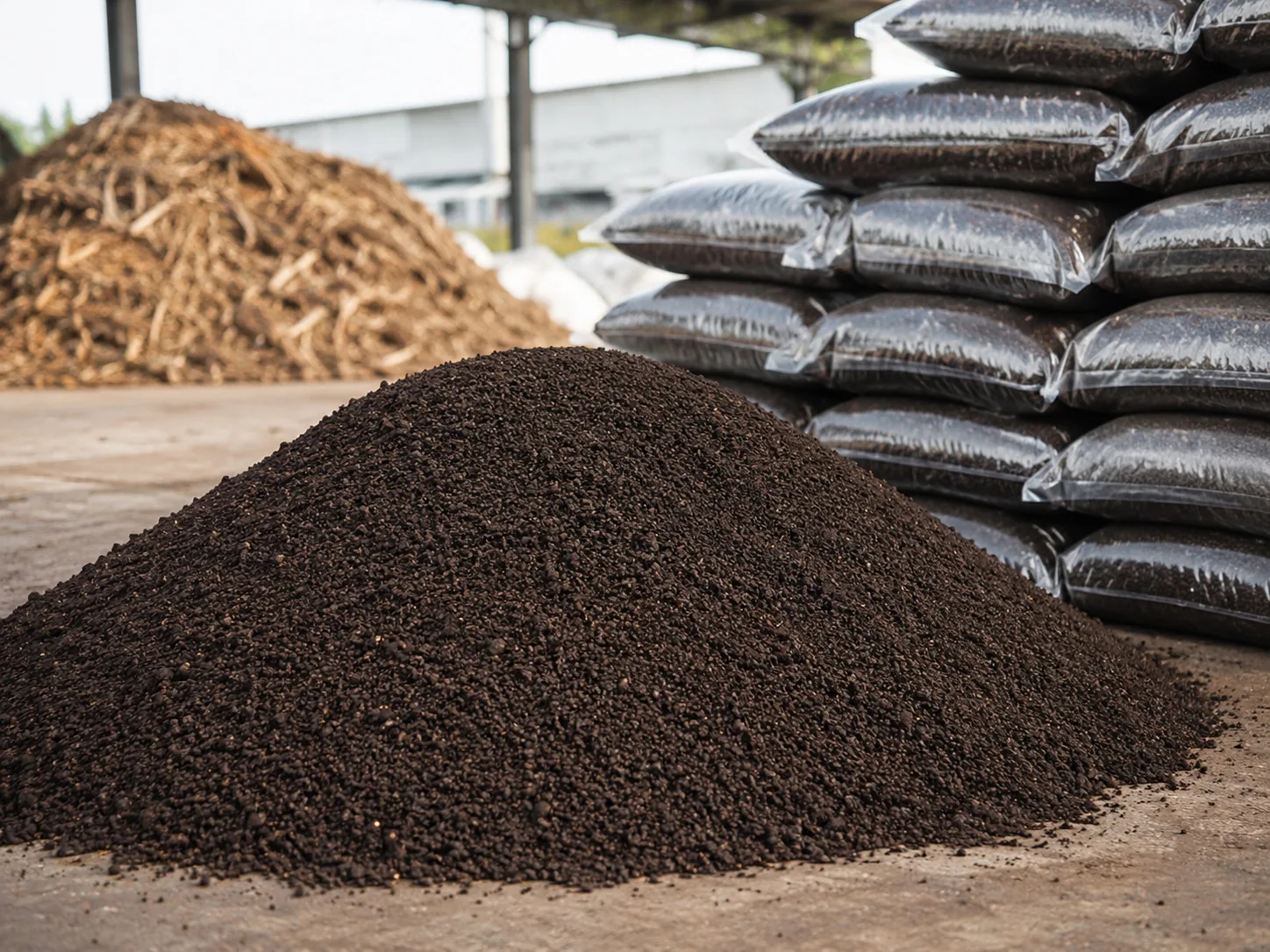
Pre-processed biomass for later mixing, fermentation, granulation or fertilizer production.
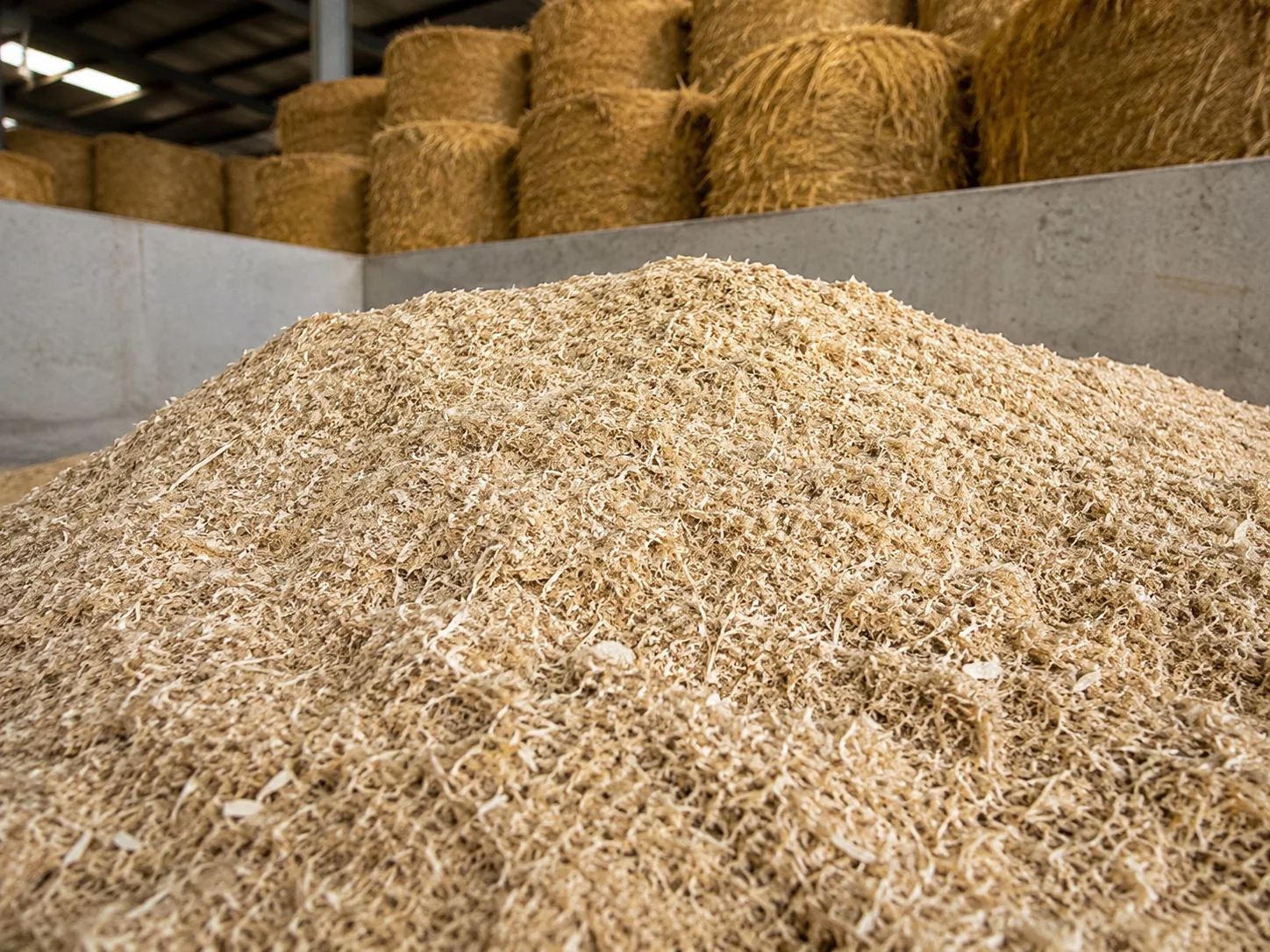
Clean, dry and suitably sized plant fiber for bedding applications after quality checks.
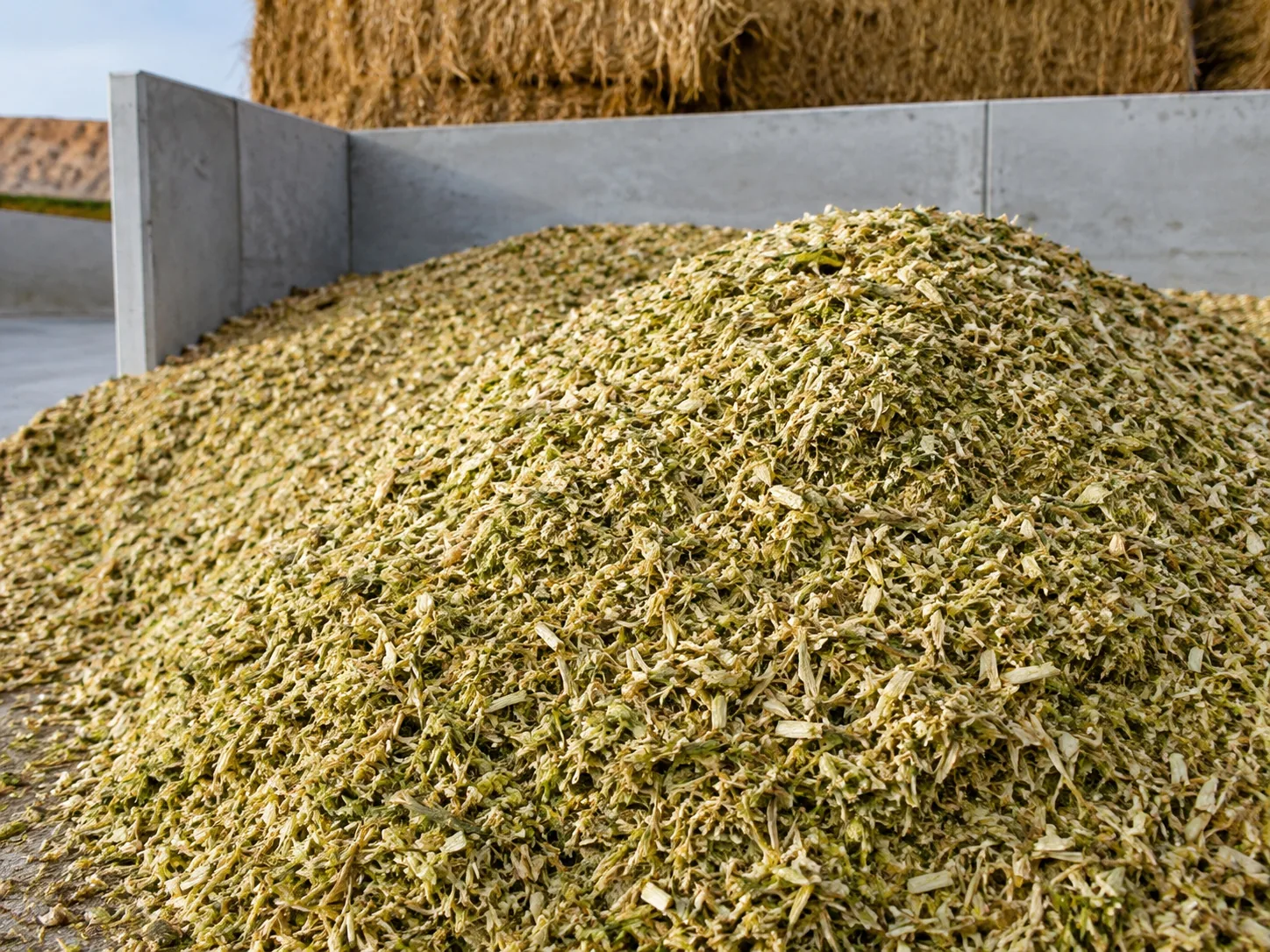
Crop residue reduced to a manageable size for subsequent feed or silage operations where appropriate.
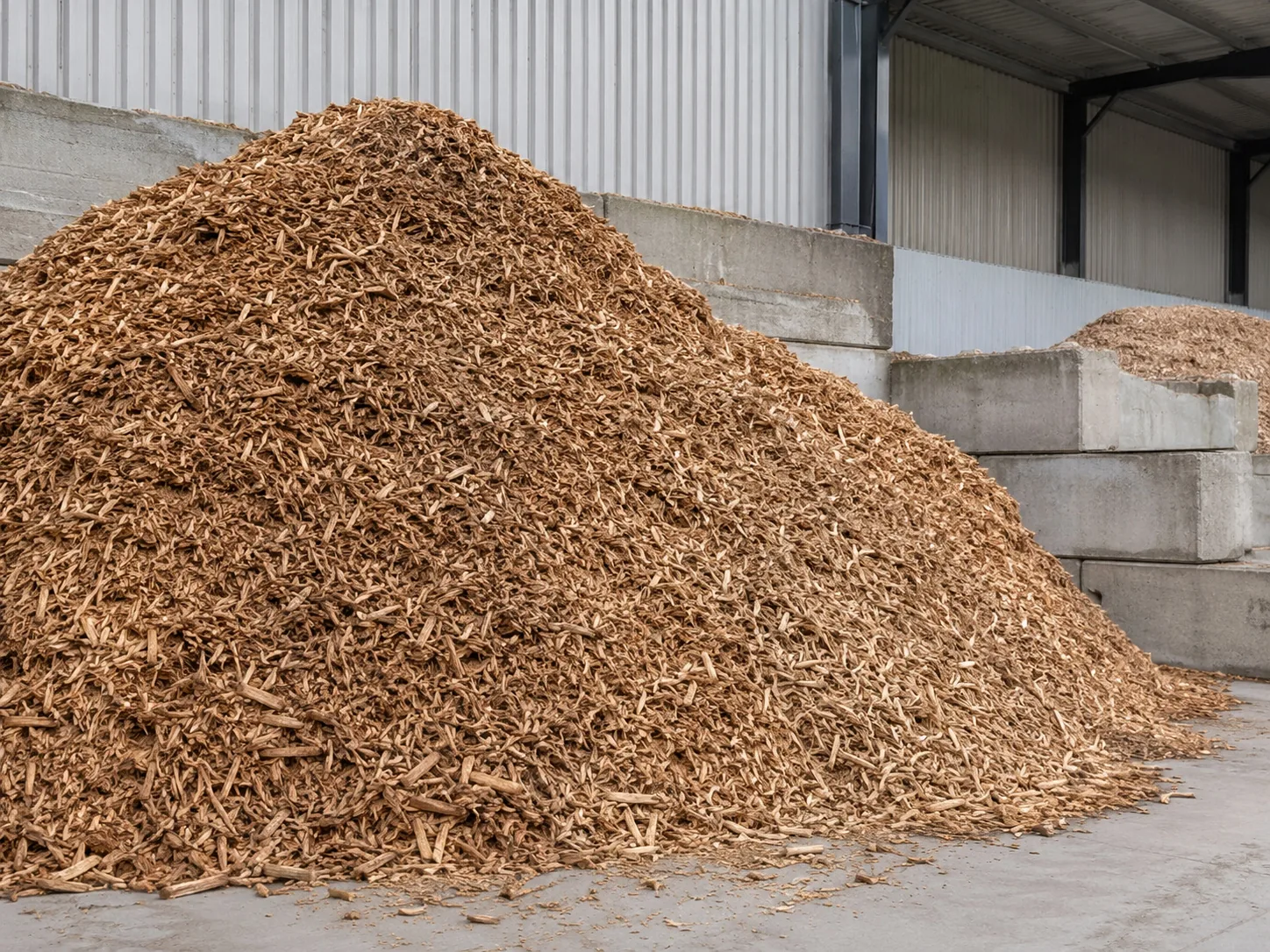
Wood chips or reduced wood fractions for reuse, storage, transport or further refining.
Watch the line handle bulky biomass, control the feed rate and reduce the material into a more uniform fraction for conveying, storage or downstream processing. Actual equipment selection still depends on feedstock condition, contamination, moisture and target output.
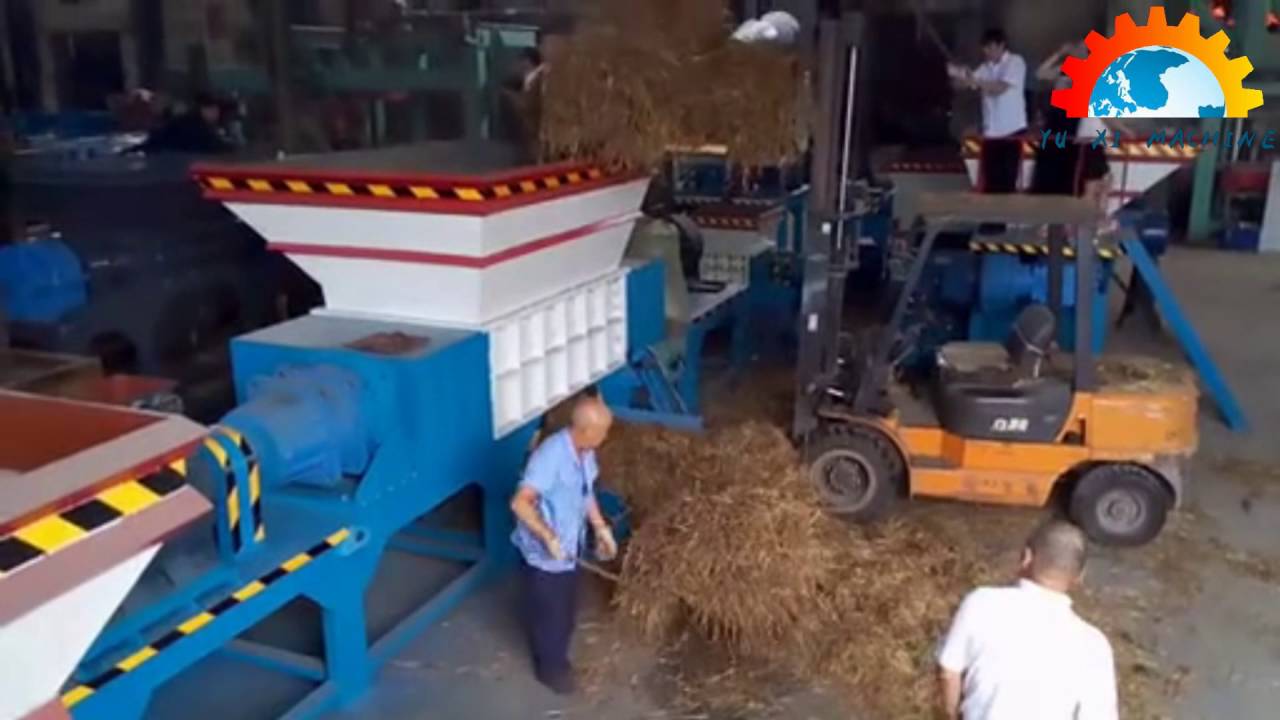
These project blocks present realistic configuration directions without implying that one fixed machine suits every feedstock.
For pallet boards, production offcuts and mixed waste wood requiring volume reduction and optional ferrous-metal removal.
For municipal green waste, tree trimming, branches, leaves and landscaping residues with highly variable feed size.
For baled or loose rice straw, wheat straw, corn stalks and other dry agricultural residues.
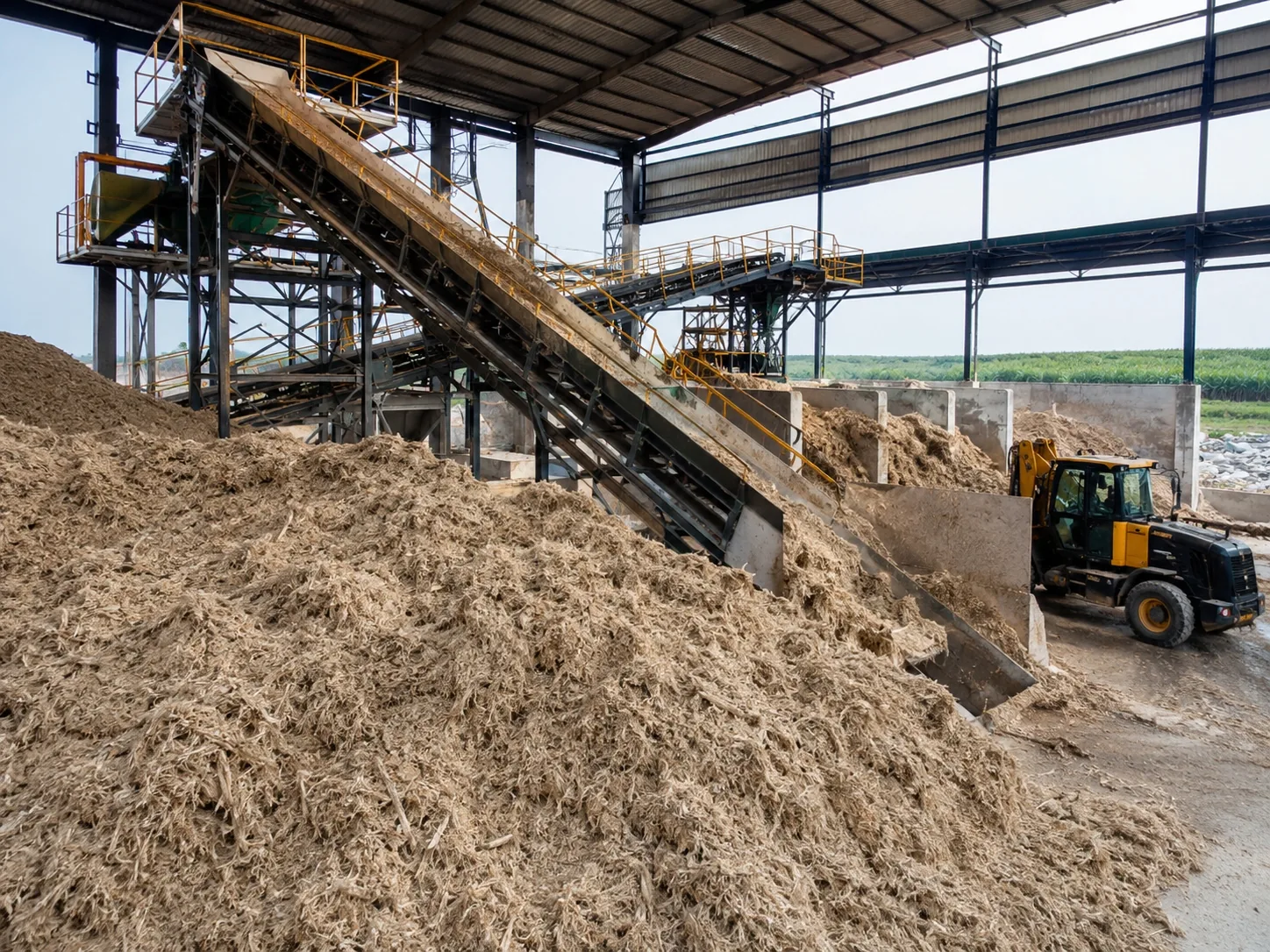
For wet or semi-dry fibrous residues where bridging, moisture and steady discharge are key design concerns.
A model recommendation based only on “straw” or “wood waste” is rarely reliable. For a serious line proposal, provide the following project data:
One machine may handle several materials, but the feeding system, cutter design, screen, power and wear protection must match the dominant feedstock. A configuration optimized for dry straw is not automatically the best choice for nail-containing pallets or soil-contaminated green waste.
The practical output depends on the material, cutting system and whether a screen or secondary reduction stage is used. The target should be defined by the downstream process rather than choosing the smallest possible size.
The shredding line prepares feedstock. Pelletizing, briquetting, drying, cooling and packing require separate downstream equipment.
It is strongly recommended for pallets, construction wood and other feedstocks likely to contain nails or ferrous contamination. Clean crop residues may not require it.
High moisture can increase bridging, reduce screening efficiency and change power demand. Hopper angles, conveyor type, rotor design and discharge arrangement should be reviewed for the worst expected moisture condition.
Share your feedstock photos, moisture range, capacity target, required output size and site conditions. We will use them to define the shredding stages, feeding method, separation needs and downstream arrangement.

Get in touch with our nice team today to get a price estimate for a shredder machine.
Contact Us