Industrial Shredder & Recycling Systems Manufacturer - YUXI
Service EfficientFast Delivery
Service EfficientReliable
Service EfficientCertified
Service EfficientExperienced
Turnkey Cooling Appliance Recycling Solution

Waste Refrigerator Recycling Line for Fridges and Freezers

A project-based recycling system for waste refrigerators and freezers, covering depollution, refrigerant and oil recovery, compressor removal, cabinet shredding, PU foam collection, and separation of ferrous metal, non-ferrous metal and plastics.

Quick answerA refrigerator recycling plant normally works in two controlled stages. The first stage removes refrigerant, compressor oil and detachable components. The second stage opens the cabinet, liberates the steel, plastic and insulation foam, then separates each fraction with air, magnetic and non-ferrous sorting equipment.

View Process Flow
Whole fridges or pre-treated cabinets
Refrigerant and compressor-oil pre-treatment
Steel, copper, aluminum, plastic and foam recovery
Layout, automation and dust-control options
Product Overview

What Is a Waste Refrigerator Recycling Line?

A refrigerator recycling plant is a complete material-recovery line for end-of-life refrigerators, freezers and selected cooling appliances. Unlike a general white-goods shredder line, it must deal with refrigerant, compressor oil and insulation foam before or during mechanical processing.

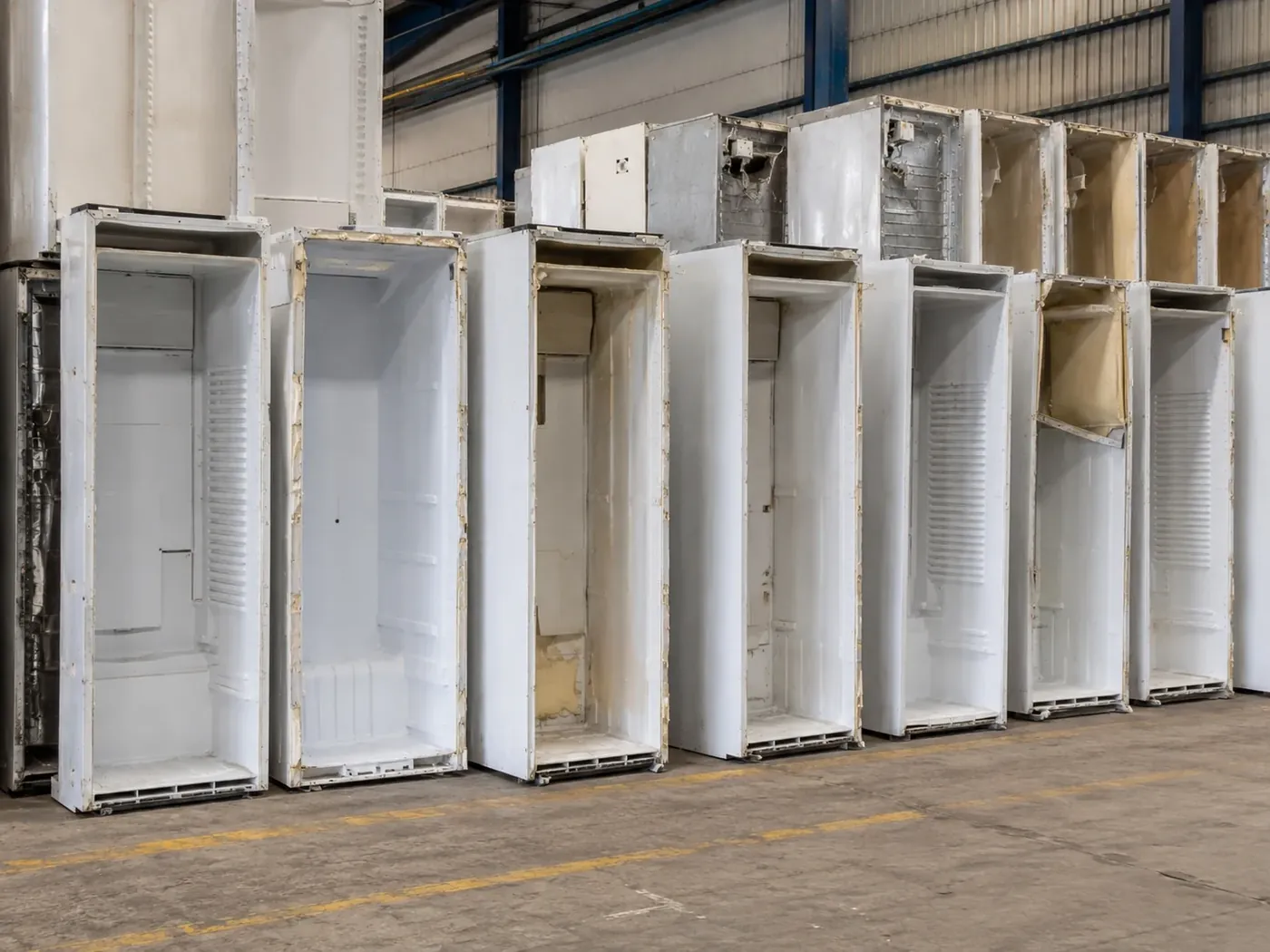
The exact configuration depends on what arrives at the factory. A plant receiving intact household refrigerators needs a depollution and dismantling stage. A scrap processor receiving already drained and depolluted cabinets may only need the cabinet shredding, foam removal and material-separation section.

YUXI designs the waste refrigerator recycling line around the incoming appliance mix, units per hour, average cabinet size, refrigerant-handling plan, target output fractions, workshop layout, local environmental requirements and downstream buyers for the recovered materials.

Engineering boundary: a shredder alone is not a complete fridge recycling system. Refrigerant recovery, oil drainage, foam management, fire and gas risk assessment, dust control and local permits must be considered as part of the project.
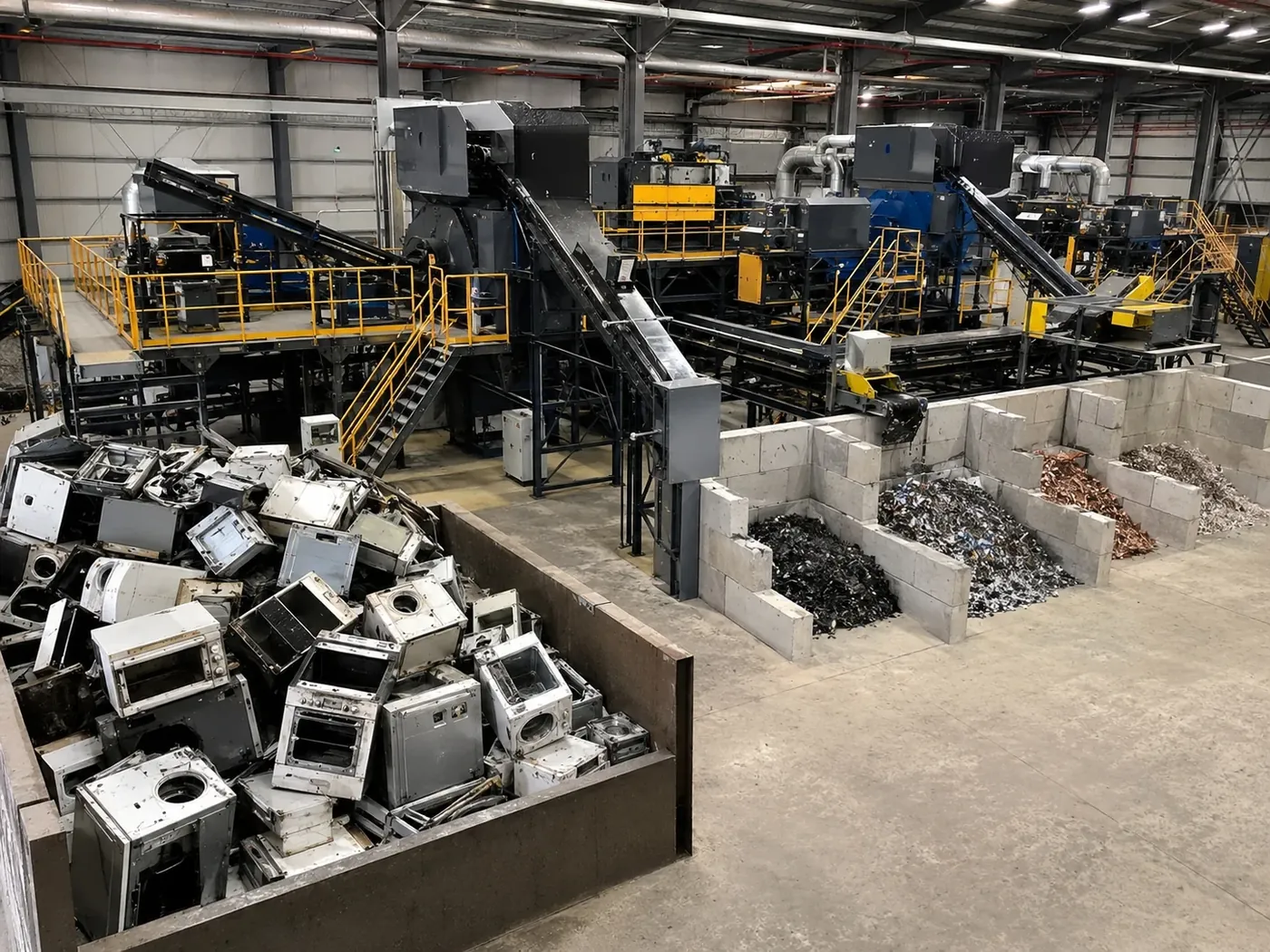
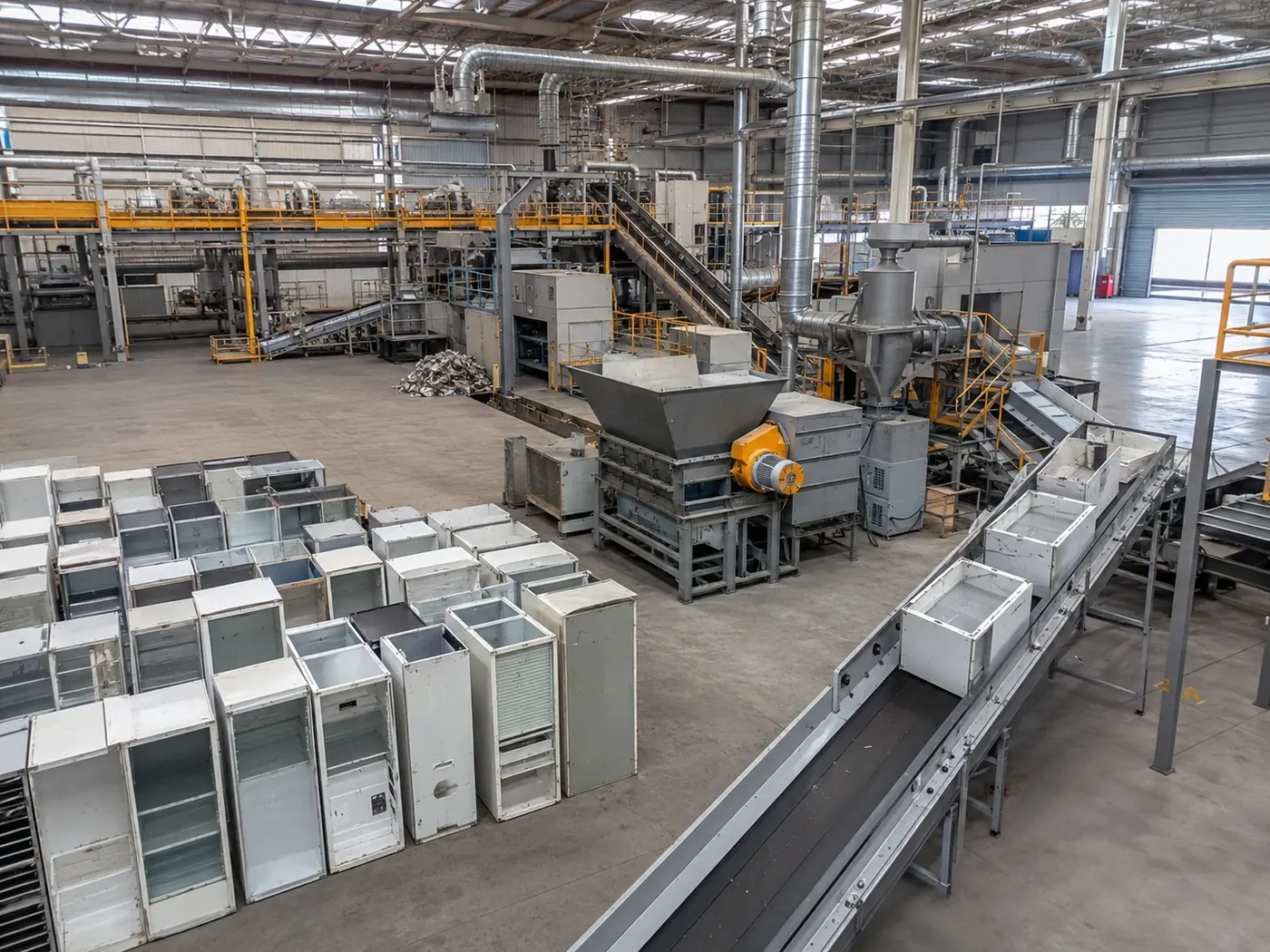
Automated household appliance and refrigerator recycling line with conveyors and material bins
Working Video

Watch the Waste Refrigerator Recycling Line in Operation

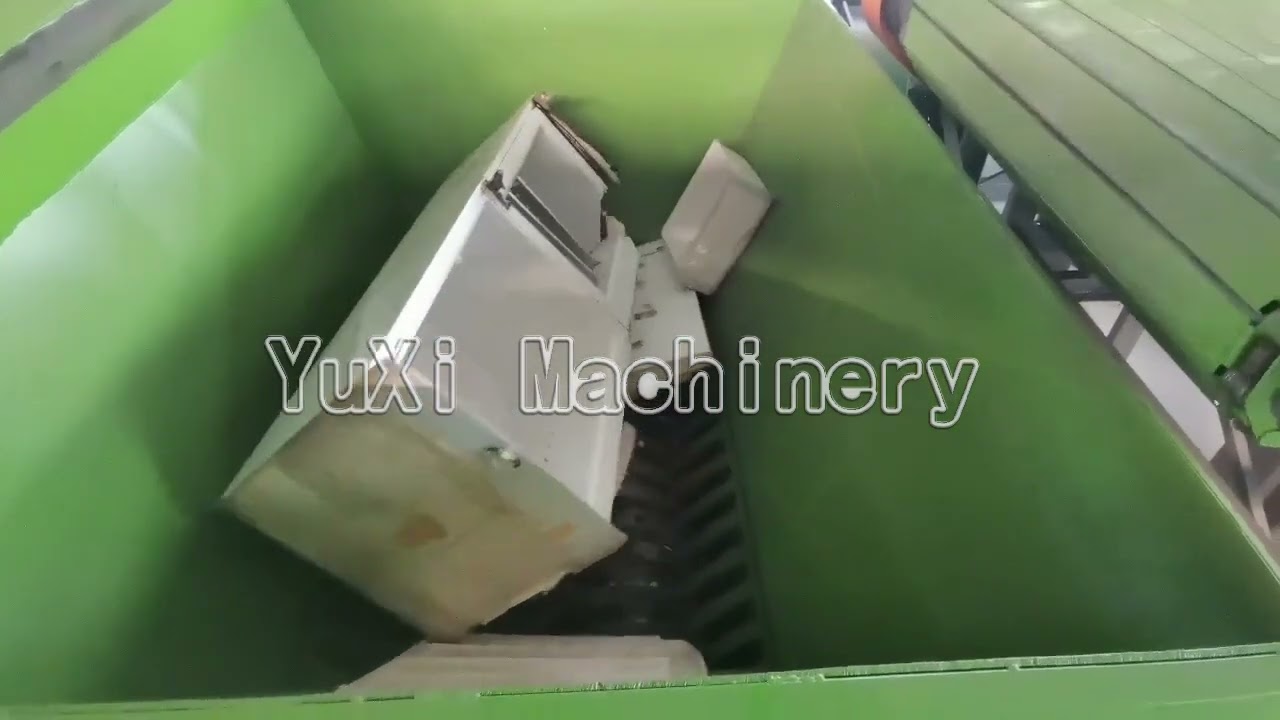
This video shows the processing concept and equipment arrangement used for waste refrigerator and cooling-appliance recycling. The final configuration is selected according to feed condition, required pre-treatment, capacity, workshop layout and target recovered materials.

Waste Refrigerator Recycling Line and Equipment Video

Actual equipment sequence and operating performance depend on the incoming appliance mix and the approved refrigerant, oil, foam and dust-handling plan.

Feed Materials

What Can the Fridge Recycling Line Process?

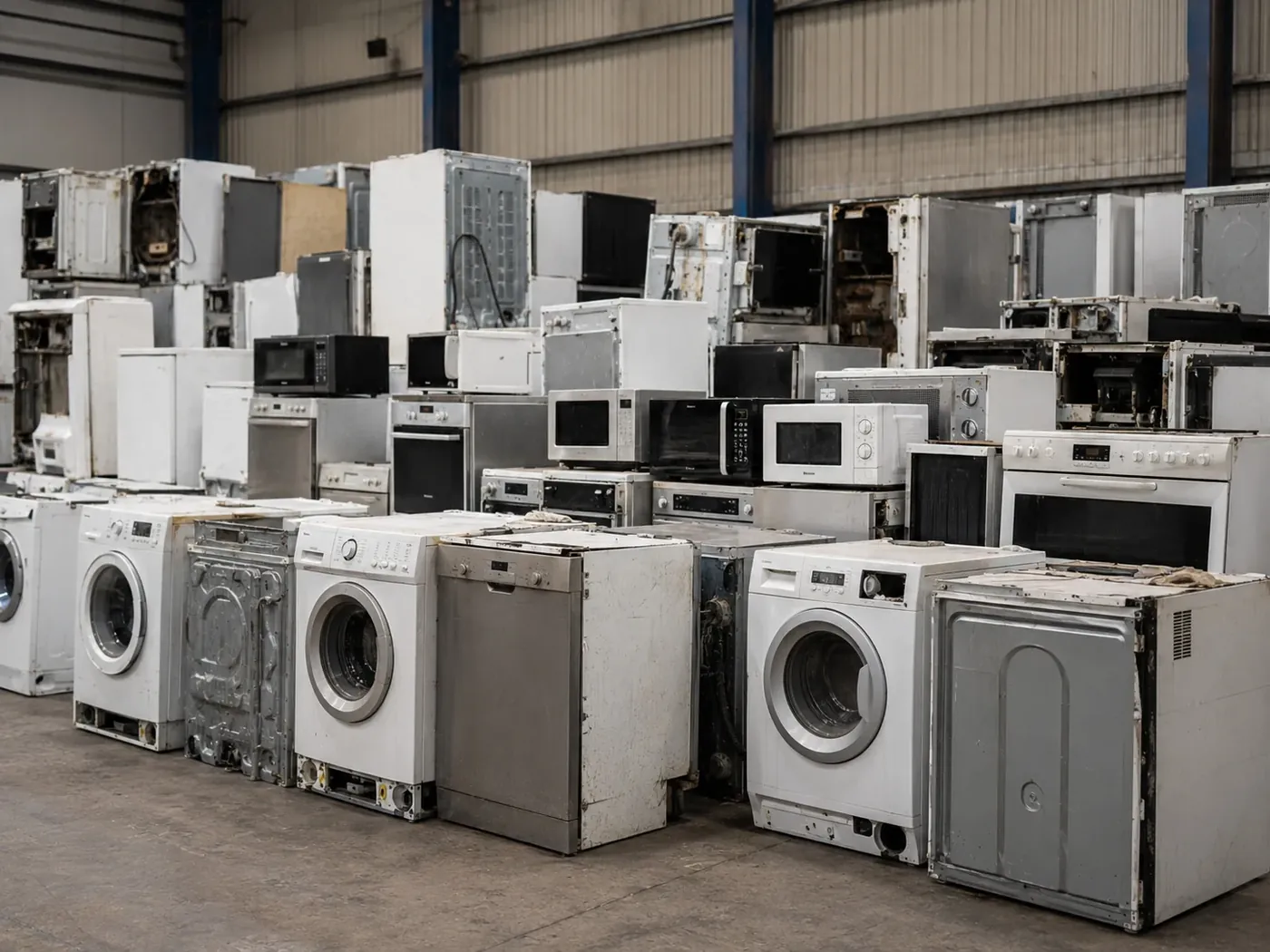
The core feed is waste refrigerators and freezers. Selected appliance bodies or mixed white goods can be evaluated, but they should not be added only because they fit through the same hopper. Washing machines, air conditioners, display cabinets and mixed WEEE have different hazardous components, material structures and separation behavior.

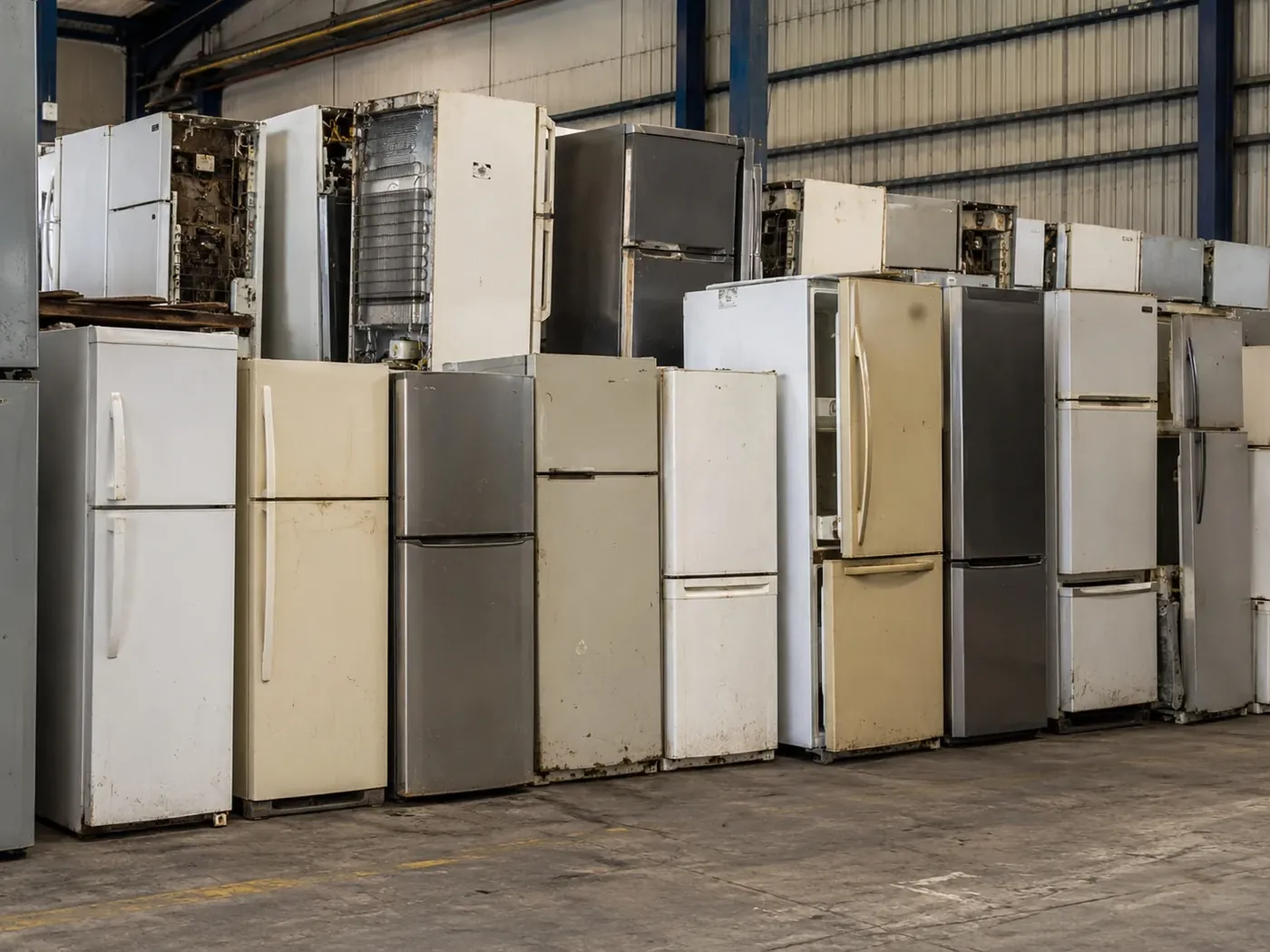
Waste refrigerators prepared for refrigerator recycling plant
Waste Refrigerators
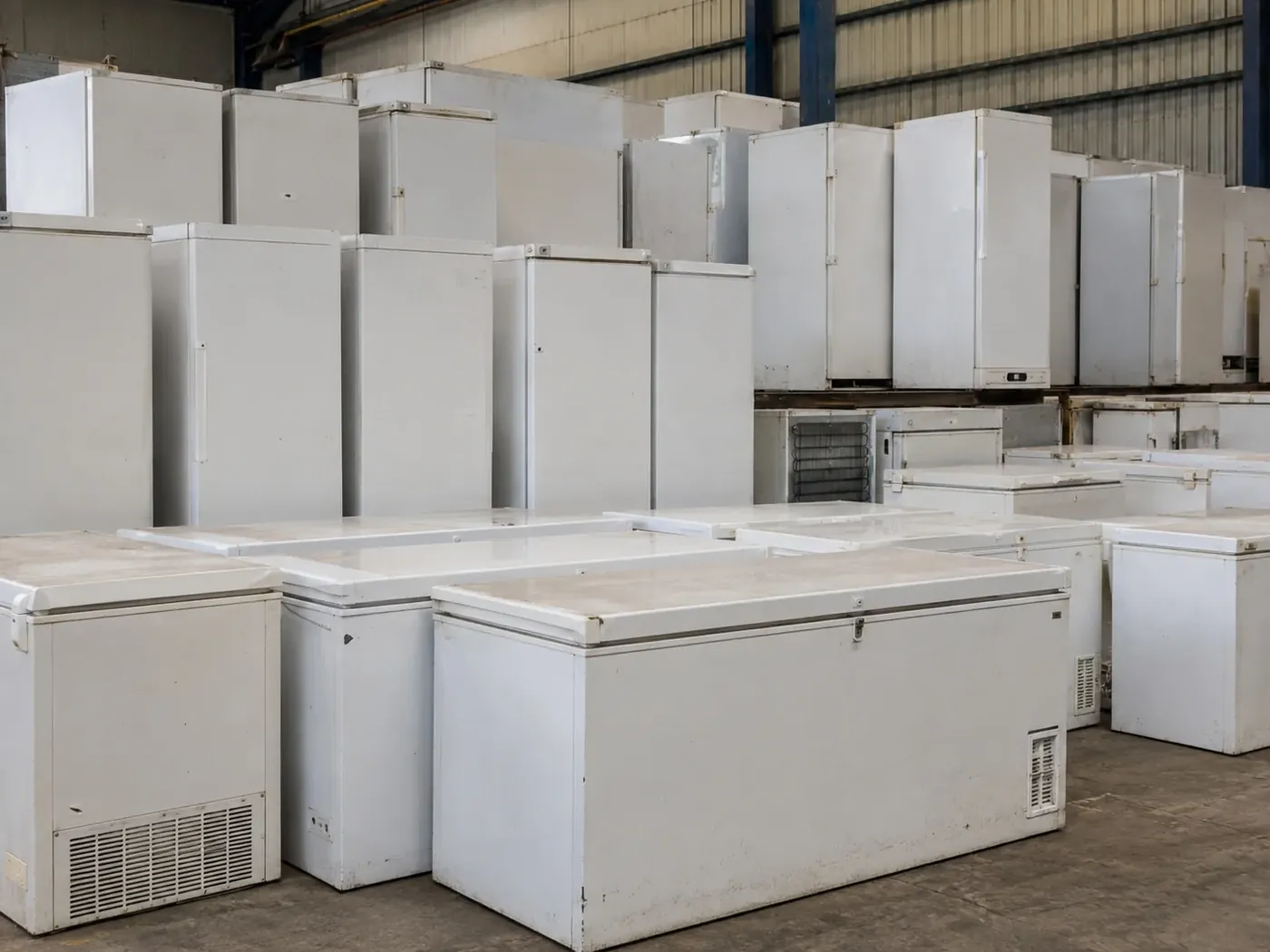
Waste chest freezers for fridge and freezer recycling line
Freezers
Depolluted refrigerator cabinets ready for shredding
Depolluted Cabinets
Household appliances for a project-specific white goods recycling plant
Selected White Goods
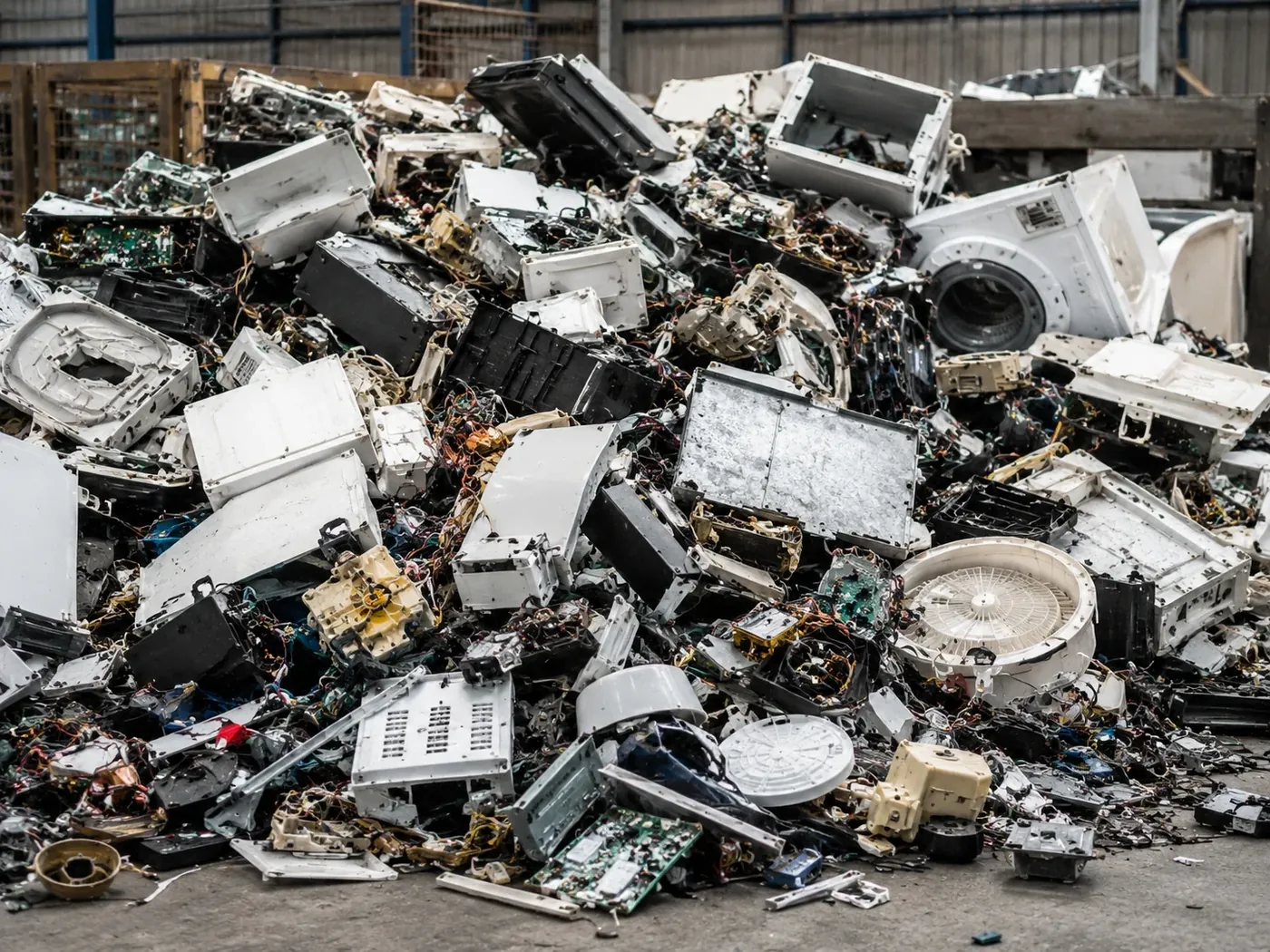
Mixed WEEE scrap requiring separate feed evaluation
Evaluated WEEE Fractions
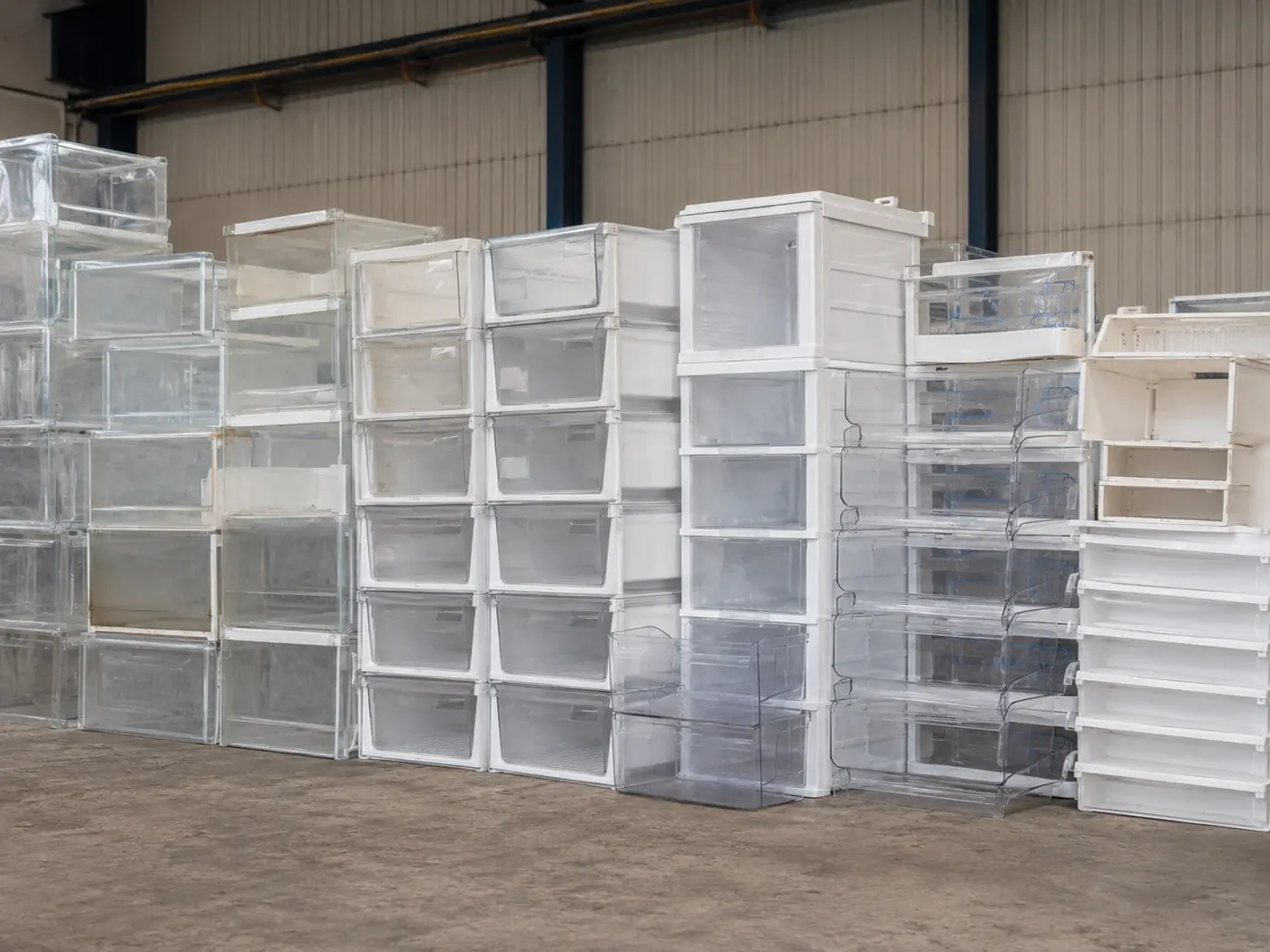
Plastic refrigerator drawers removed during dismantling
Plastic Drawers & Liners
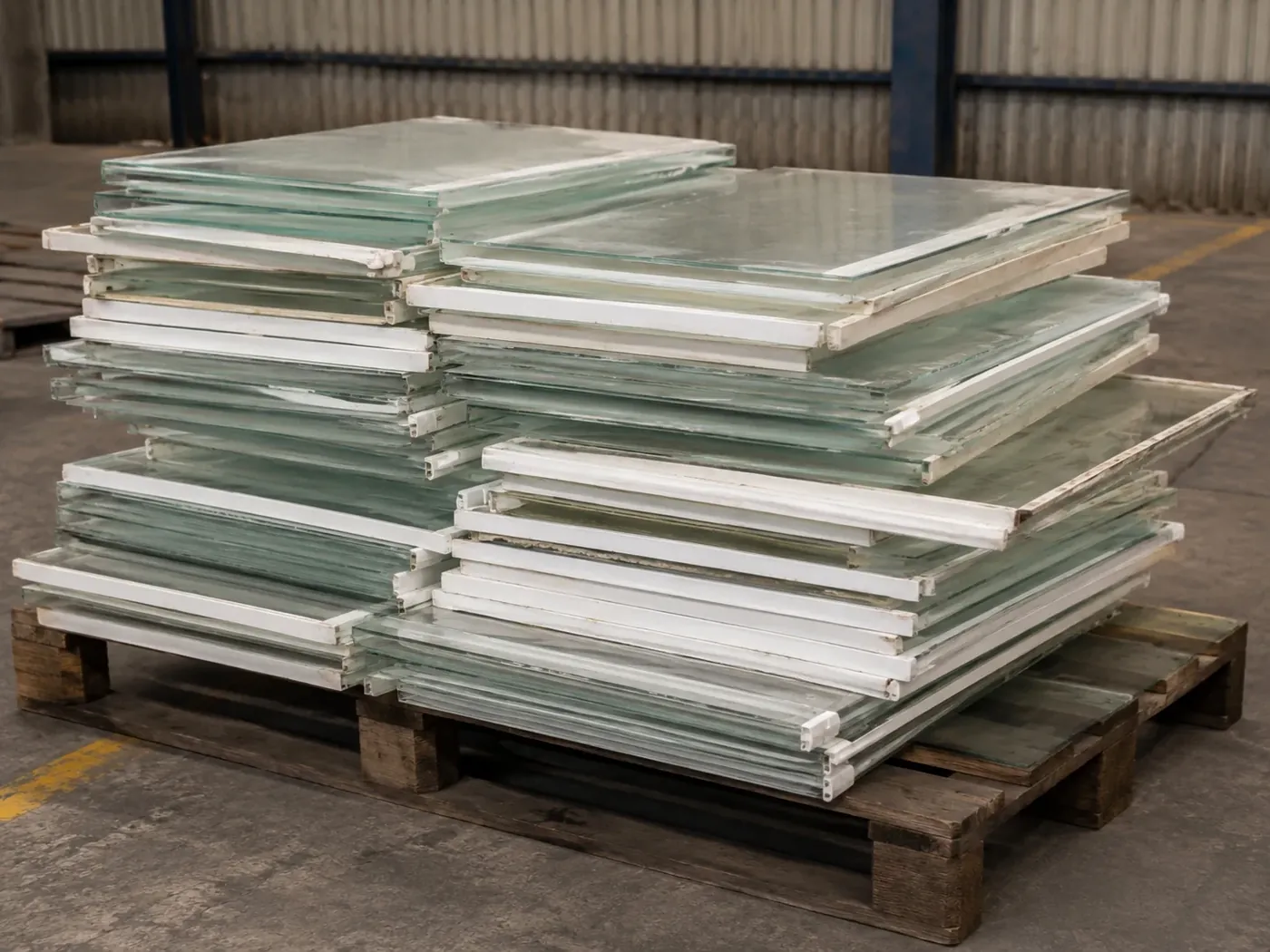
Glass refrigerator shelves removed before cabinet shredding
Glass Shelves
Real Project Problems

Why Refrigerator Recycling Needs a Dedicated Process

Most performance problems begin before the main crusher. The feed is bulky, cabinet construction varies by age and manufacturer, and the light foam fraction behaves very differently from metal. A line that looks acceptable on a drawing may still suffer from unstable feeding, foam carry-over or contaminated non-ferrous output if these details are ignored.

Depollution cannot be skipped

Refrigerant and compressor oil should be recovered before cabinet size reduction under the applicable local procedure.

Cabinets vary greatly

Domestic fridges, chest freezers, commercial cabinets and older foam structures do not break apart in the same way.

Foam is light and mobile

PU foam can circulate through conveyors and separators unless airflow, collection points and sealing are designed together.

Copper can remain trapped

Tubes and wiring that are not removed or fully liberated reduce the value of steel and plastic output.

Oversize pieces upset sorting

Poor liberation sends attached metal-plastic-foam pieces into magnetic or eddy-current stages that were not designed to finish the crushing job.

Mixed appliances change the risk

Adding other WEEE may introduce batteries, capacitors, mercury components, glass, liquids or pressurized parts that require separate controls.

Process Flow

How Does the Refrigerator Recycling Plant Work?

The following flow is a practical baseline for whole refrigerators. Each project should be adjusted to the local depollution rules, incoming appliance condition and required final fractions.

1. Receive & inspectIdentify appliance type and remove unacceptable items
2. Manual pre-treatmentRemove shelves, drawers, cables and loose electronics
3. Recover refrigerant & oilDrain the cooling circuit and compressor under the project procedure
4. Remove compressorCollect compressor, copper tube and motor-rich parts
5. Primary shreddingOpen and reduce the depolluted cabinet
6. Secondary liberationSeparate foam, plastic and metal attachments
7. Foam air separationExtract light insulation through controlled airflow
8. Magnetic separationRecover the ferrous steel fraction
9. Non-ferrous sortingRecover copper and aluminum where particle condition permits
10. Product collectionStore plastics, foam, metal and dismantled parts separately
Refrigerator compressor, refrigerant and oil pre-treatment area
1

Stage 1: Depollution and Dismantling

Whole units are inspected before any cabinet crushing. Operators remove food residues, glass, shelves, plastic drawers, accessible electronics, lamps, switches and other loose parts as required. Refrigerant is recovered from the cooling circuit, compressor oil is drained or managed under the selected procedure, and the compressor is removed for separate metal recovery.

This stage determines whether the mechanical line receives a controlled cabinet feed or an unpredictable mixture. In our experience, a few extra minutes of disciplined pre-treatment often protect several downstream machines from contamination and stoppages.

Refrigerator cabinet shredding and material separation line
2

Stage 2: Cabinet Shredding and Material Liberation

The depolluted cabinet enters a low-speed primary shredder. The purpose is controlled opening and volume reduction, not instant production of a perfectly clean final product. A secondary crusher or liberation stage then reduces attached steel, plastic liner and foam into a condition suitable for separation.

A double shaft shredder is commonly selected for the first reduction stage because it can grip bulky refrigerator bodies at low speed. Cutter design, chamber width and protection logic should be matched to the largest cabinet and remaining metal thickness.

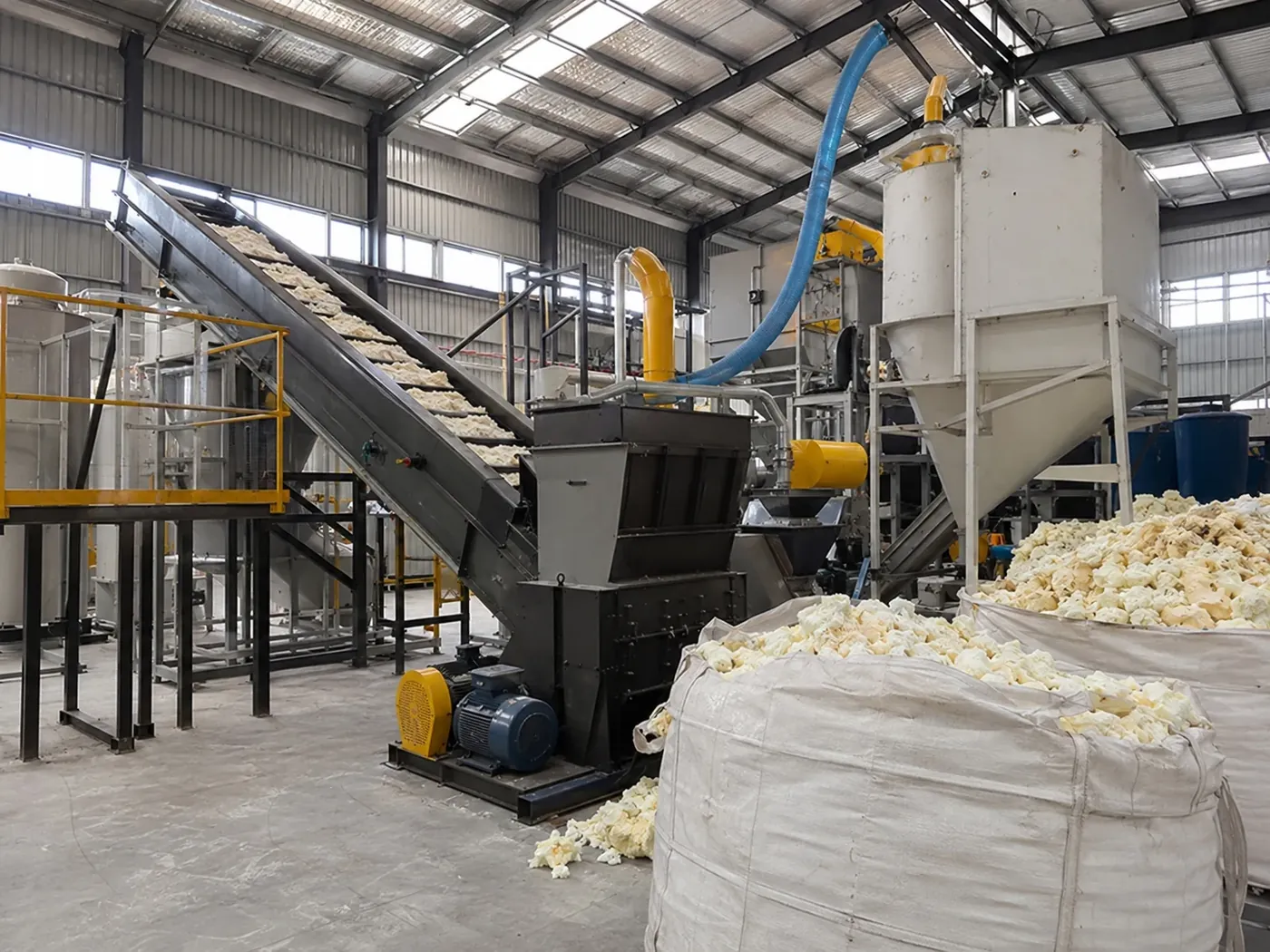
PU foam separation and collection system for refrigerator recycling
3

Stage 3: Foam, Metal and Plastic Separation

Air separation removes the light PU foam fraction after the cabinet structure has been sufficiently opened. Magnetic equipment then removes ferrous steel. Depending on particle size and liberation, eddy-current, gravity, manual or sensor-based sorting can be added for non-ferrous metals and plastics.

Foam collection is not only a separator choice. Duct size, air balance, cyclone loading, filter area, transfer-point sealing and the route to storage or densification all affect whether the workshop stays controllable.

Main Equipment

Typical Refrigerator Recycling Equipment

The final equipment list is not fixed. It should be built around the feed condition and the materials the buyer actually plans to sell.

Receiving and dismantling stationInspection, manual removal of detachable components and controlled preparation of whole units.
Refrigerant recovery stationProject-specific recovery equipment, cylinders, hoses, weighing and documentation arrangement.
Compressor and oil stationCompressor removal, copper tube collection and oil drainage or controlled oil handling.
Feeding conveyorStable cabinet presentation to the shredder with inspection and emergency-stop access.
Primary shredderLow-speed opening and size reduction of depolluted refrigerator cabinets.
Secondary crusherFurther liberation of steel, plastic and foam before physical separation.
Air and foam separatorControlled extraction of light PU foam using ducts, cyclone and collection equipment.
Magnetic separatorRecovery of steel after sufficient liberation and size control.
Eddy-current separatorOptional recovery of aluminum and other conductive non-ferrous pieces from a suitable feed fraction.
Gravity or plastic sortingOptional refining of mixed non-ferrous and plastic fractions after primary separation.
Dust collection systemCollection at shredding, crushing and foam-transfer points, sized according to the complete airflow network.
PLC and safety controlsInterlocks, overload reverse, alarm logic, emergency stops and project-specific gas or fire monitoring.
Recovered Materials

Final Products from Waste Refrigerator Recycling

Output purity is influenced by pre-treatment discipline, liberation size, moisture, contamination, separator loading and how the final fractions are collected. The values below describe material categories, not guaranteed purity figures.

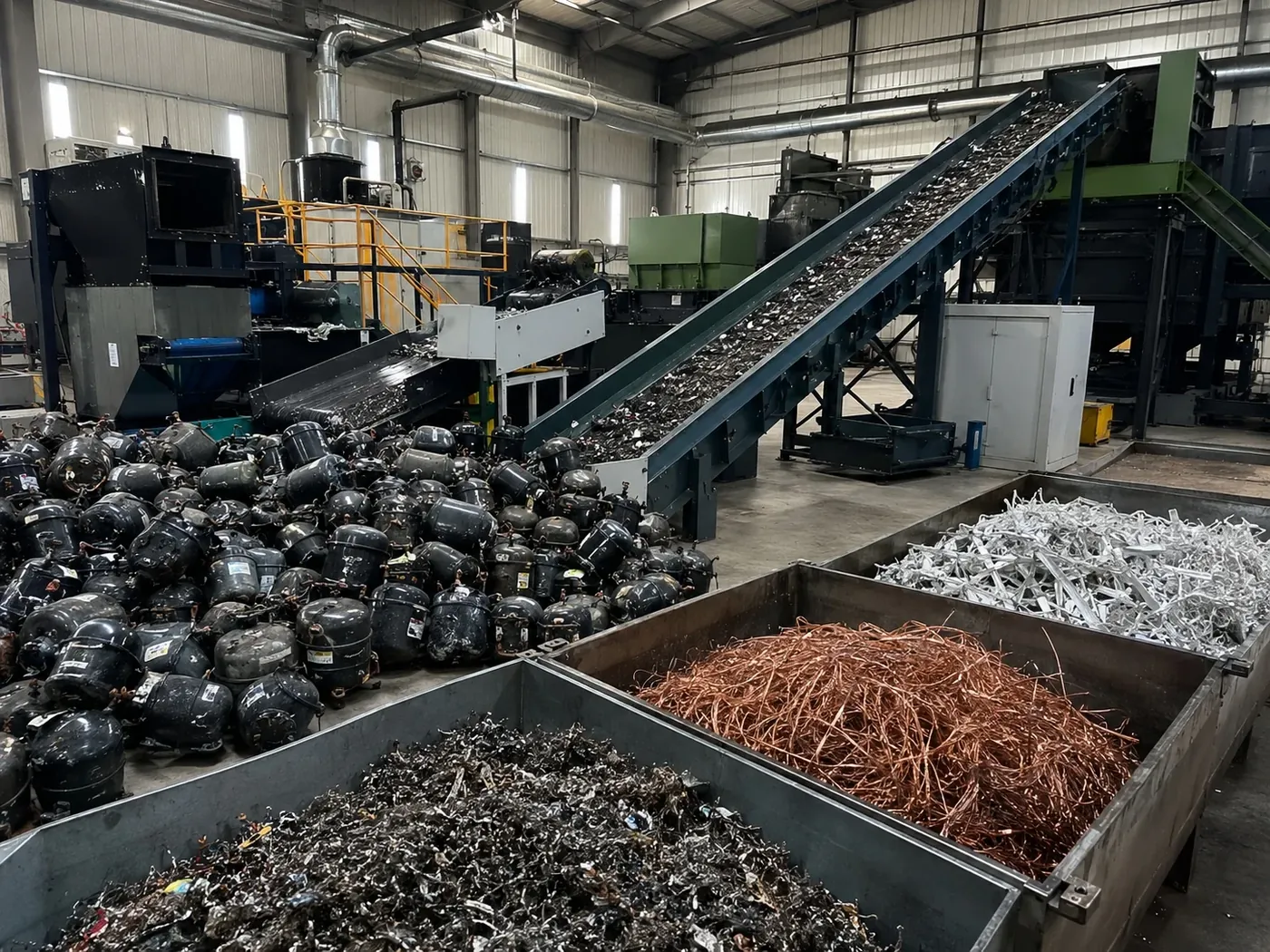
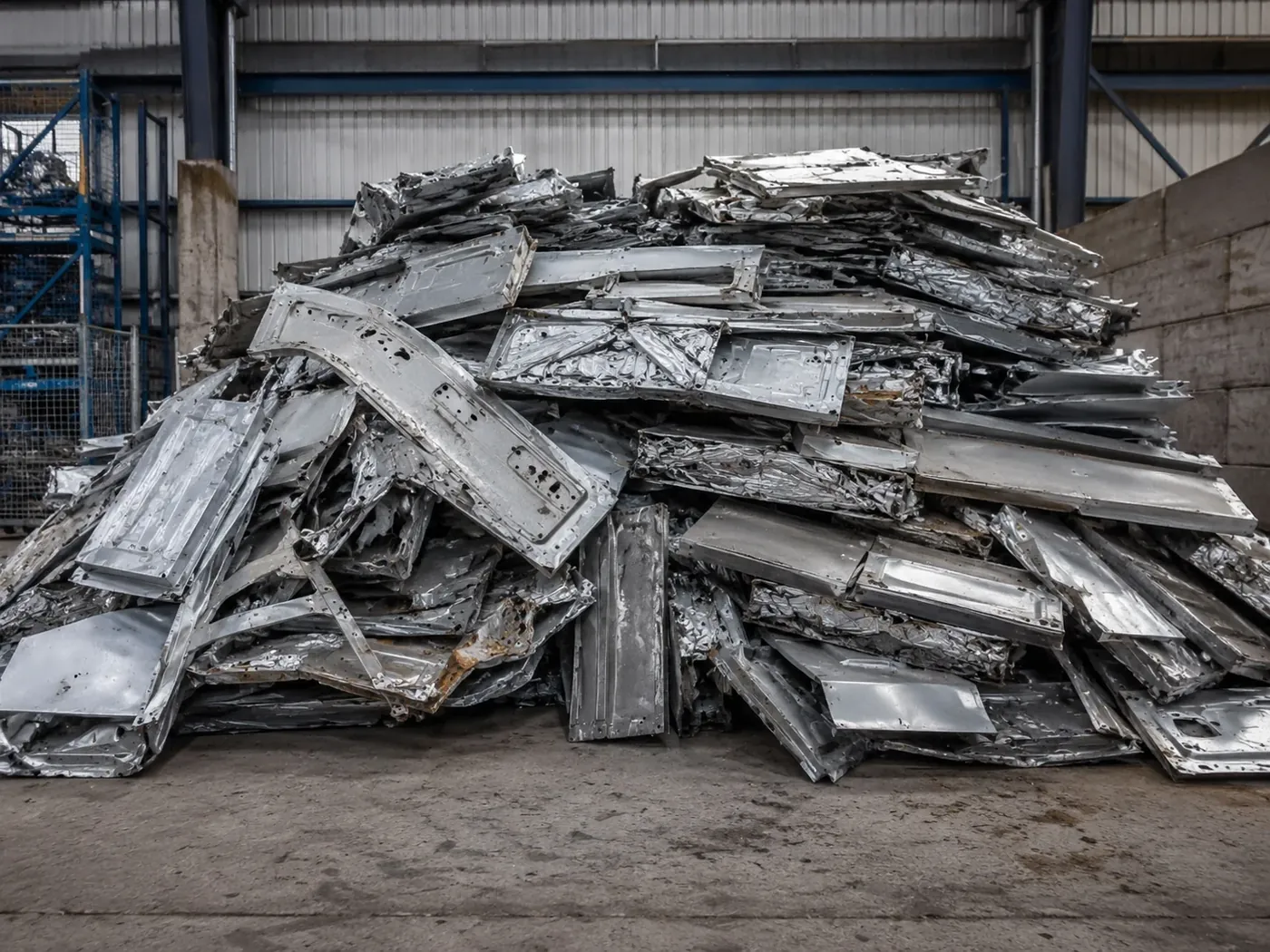
Ferrous steel recovered from refrigerator recycling plant

Ferrous Metal

Steel outer shells and magnetic components recovered for scrap-metal processing or sale.

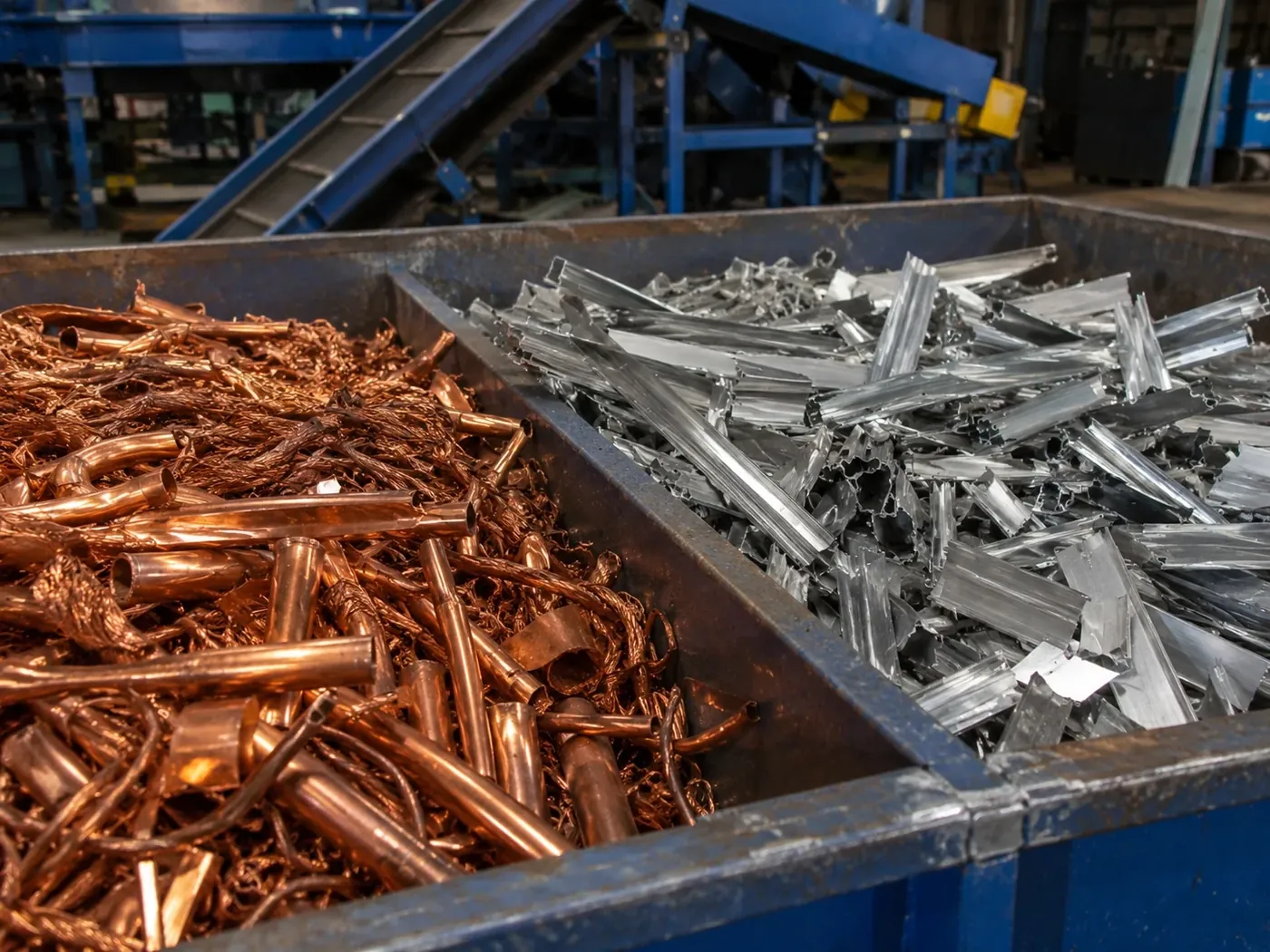
Copper and aluminum recovered from fridge recycling line

Copper & Aluminum

Copper tubing, wiring and aluminum components collected during dismantling or downstream sorting.

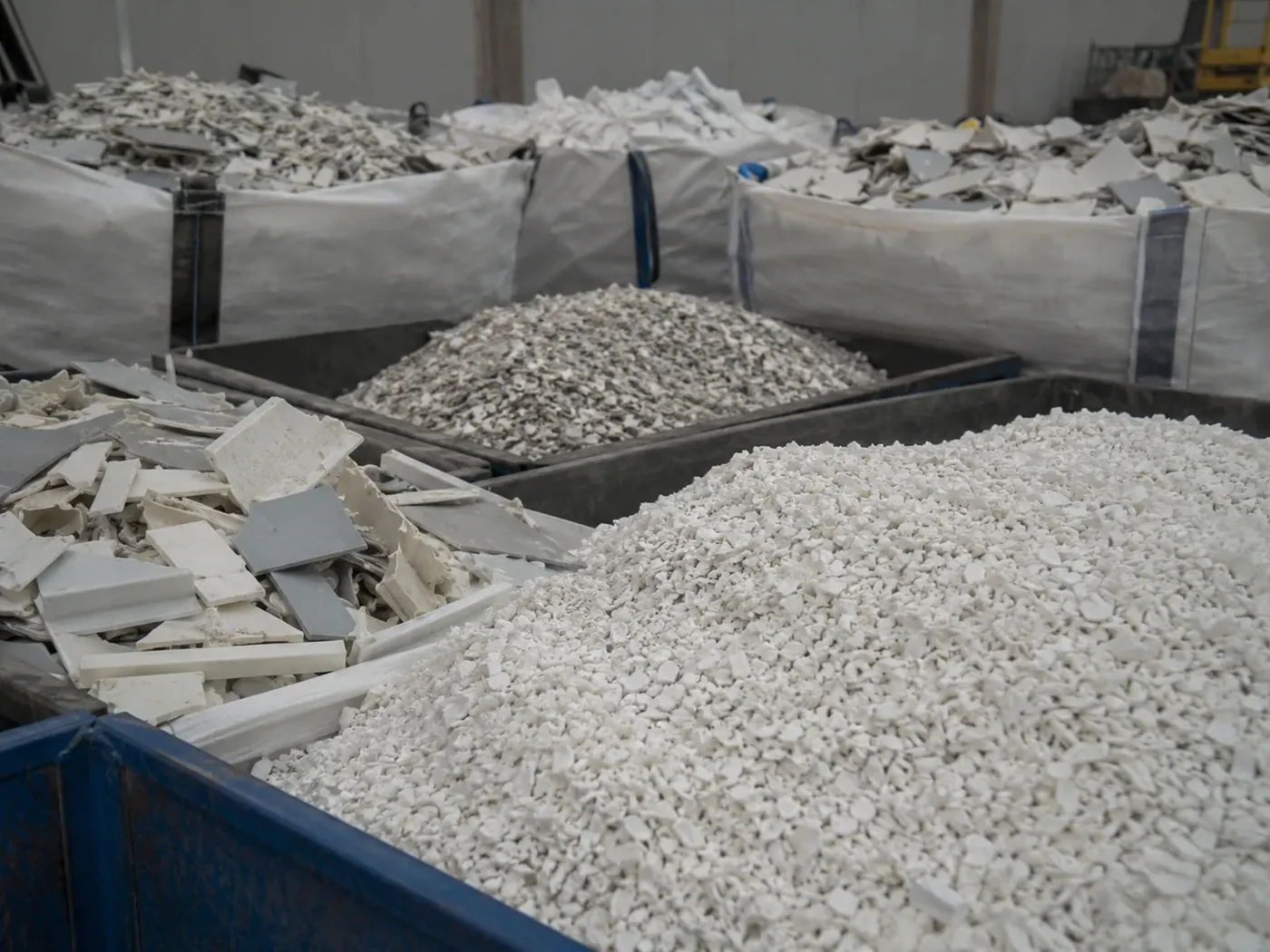
Plastic fraction from refrigerator recycling equipment

Plastic Fractions

Cabinet liners, drawers and other rigid plastics after removal, crushing and separation.

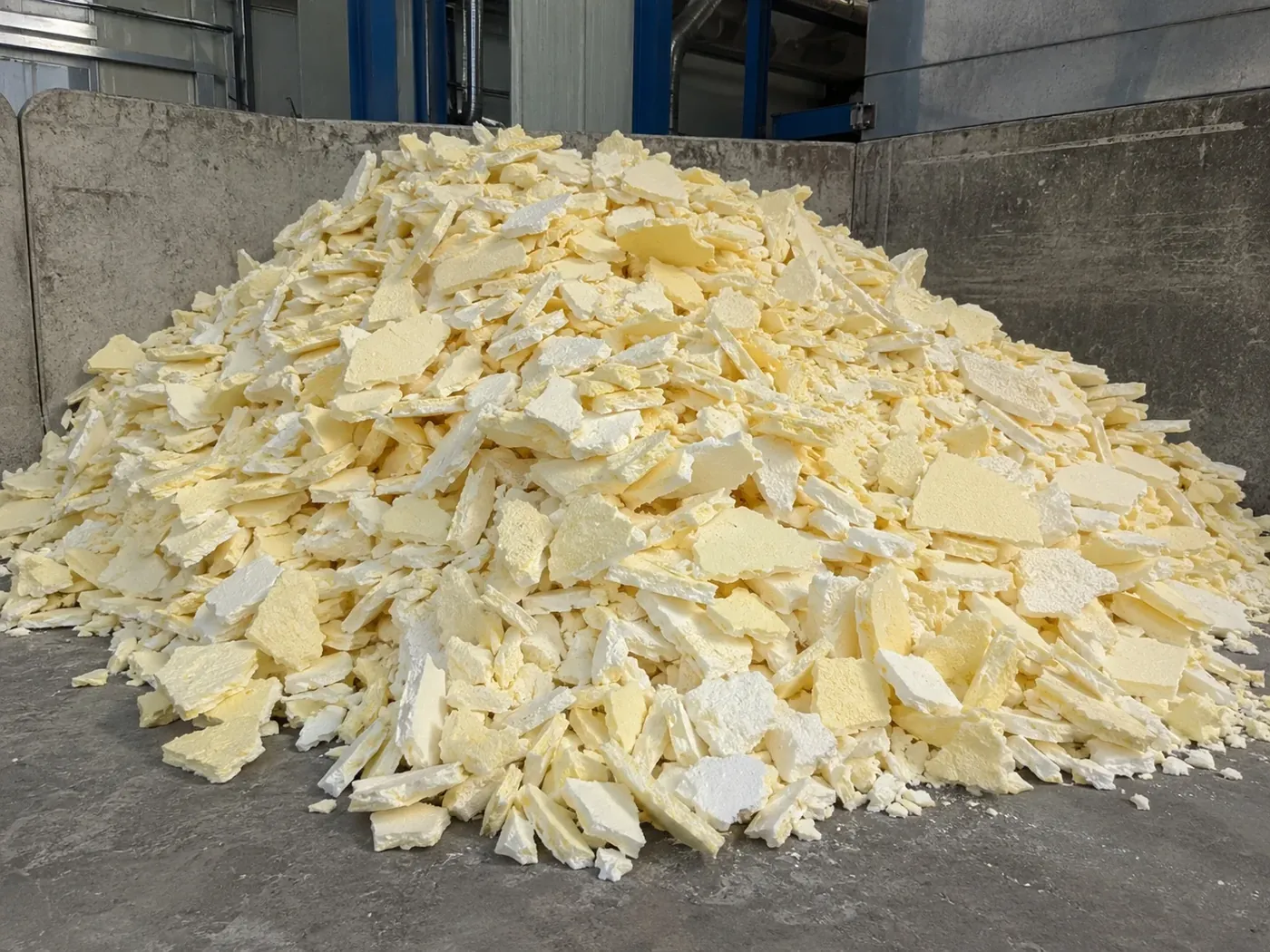
PU insulation foam separated from waste refrigerators

PU Insulation Foam

Light foam fraction collected by air separation for approved downstream handling or volume reduction.

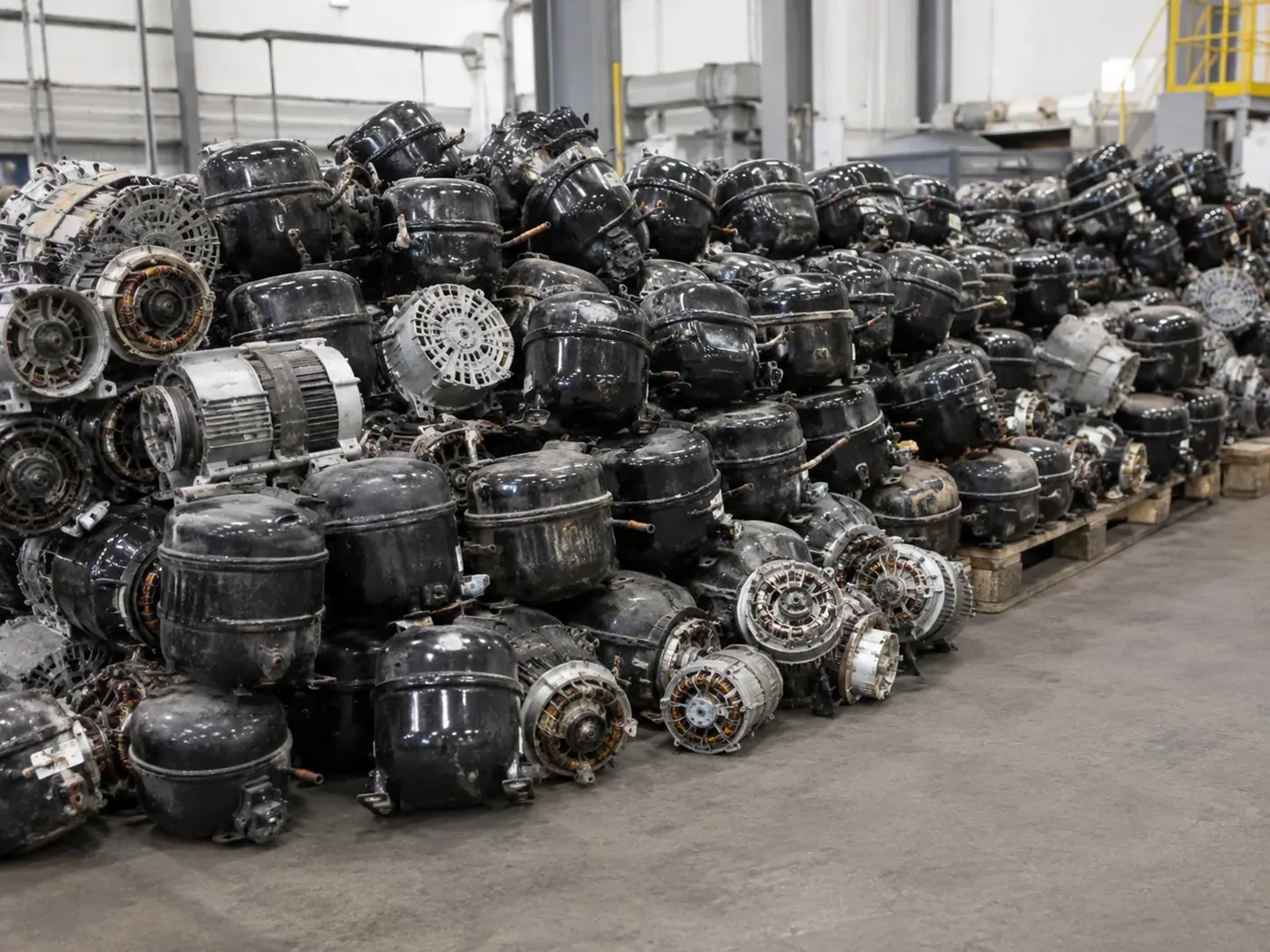
Refrigerator compressors and motors removed before shredding

Compressors & Motors

High-value assemblies removed during pre-treatment and handled separately from the cabinet stream.

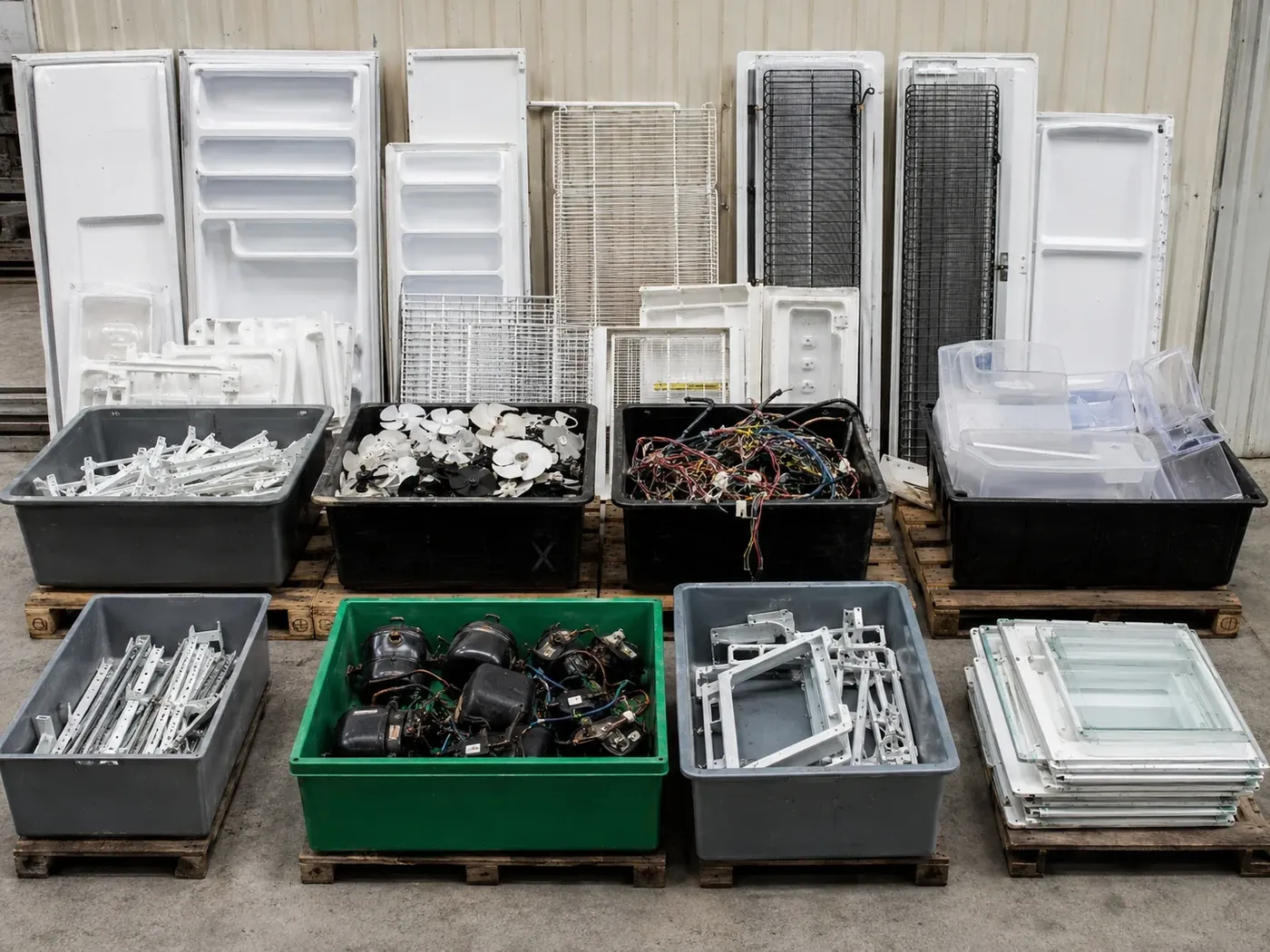
Dismantled wires electronics glass and appliance components

Dismantled Parts

Glass, circuit boards, wires, switches, oil and other parts routed to suitable downstream handlers.

Configuration Logic

Choose the Line by Feed Condition, Not Only by Motor Power

Project type Incoming material Recommended focus Main purchasing risk
Dismantling workshop upgrade Depolluted refrigerator cabinets with compressor removed Feeding, primary shredding, liberation, foam and metal separation Assuming every cabinet has been consistently drained and prepared
Regional refrigerator recycling facility Whole domestic refrigerators and freezers Two-stage depollution plus automated cabinet processing Underestimating labor, storage, refrigerant varieties and peak intake
Integrated WEEE or white-goods center Cooling appliances plus selected household appliances Feed classification, bypass routes and dedicated pre-treatment cells Sending incompatible appliances into one universal line
High-automation fridge plant Large and relatively consistent refrigerator volume Metered feeding, enclosed transfer, monitoring and automatic fraction collection Buying automation before confirming real feed consistency and service capability

Capacity should normally be discussed in both units per hour and tons per hour. Refrigerator mass and size vary enough that either figure alone can be misleading.

Engineering Judgment

What Actually Determines Separation Quality?

  • Pre-treatment consistency: residual tubes, wires, glass and compressor parts change the shredder load and contaminate output.
  • Liberation before sorting: separators cannot recover clean fractions when metal, plastic and foam remain physically attached.
  • Controlled particle range: very large and very fine pieces behave differently in magnetic, eddy-current and air separation.
  • Stable feed rate: surge loading reduces separator efficiency and overloads foam collection.
  • Air balance: too little airflow leaves foam with metal; too much airflow carries fines and lightweight plastic into the foam stream.
  • Housekeeping and access: foam dust and wrapped wires require practical cleaning doors, inspection points and safe maintenance space.
Safety and Compliance

Refrigerant, Foam and Fire Risk Must Be Reviewed

Older and newer cooling appliances may contain different refrigerants and foam-blowing agents. Some refrigerants are flammable. The project risk assessment may therefore require recovery procedures, gas detection, ventilation, inerting, fire suppression, explosion-protection measures or other controls that are not part of a basic cabinet shredder line.

For U.S. projects, the EPA requires refrigerant recovery before disposal under Section 608. Buyers should also check state and local rules for compressor oil, capacitors, mercury components, foam and recordkeeping. See the U.S. EPA appliance disposal guidance. Other countries should follow their own WEEE, ozone-depleting-substance, refrigerant and occupational-safety requirements.

The equipment supplier can support process design, but the plant owner remains responsible for permits, environmental approvals, refrigerant management and site-specific safety engineering.
Before Quotation

Information Needed to Configure the Refrigerator Recycling Line

A useful quotation needs more than the requested capacity. Send the following information so the line can be checked as one process rather than a list of machines.

1. Feed scope: domestic fridges, freezers, commercial cabinets or mixed white goods.
2. Feed condition: whole units, drained units or fully depolluted cabinets.
3. Capacity: units/hour, tons/hour, shifts/day and seasonal peak intake.
4. Appliance size: average and largest cabinet dimensions and approximate weight.
5. Refrigerant plan: known refrigerant types, recovery equipment and local handling route.
6. Required products: steel, copper, aluminum, plastic, foam and expected downstream buyer specifications.
7. Site data: available floor area, clear height, voltage, ventilation, drainage and dust-emission limits.
8. Automation level: available labor, preferred manual stations, container/big-bag discharge and maintenance resources.
Frequently Asked Questions

Waste Refrigerator Recycling Line FAQ

Can whole refrigerators be fed directly into the shredder?

Not as a default operating method. Whole refrigerators normally require inspection, refrigerant recovery, compressor and oil handling, and removal of selected parts before the cabinet enters the mechanical line. The exact pre-treatment sequence depends on local rules and appliance type.

What materials can a refrigerator recycling plant recover?

A complete line can recover ferrous steel, copper, aluminum, rigid plastics, PU insulation foam, compressors, motors, wires, circuit boards, glass and other dismantled parts. Final purity depends on liberation and separation configuration.

Can the same line process freezers?

Many domestic freezers can be processed with the same basic system, but chest freezers and commercial cabinets may be larger, heavier or constructed differently. Maximum size and weight should be confirmed before hopper and shredder selection.

Can washing machines and other household appliances be added?

Selected depolluted white goods may share some shredding and metal-sorting equipment, but they should be evaluated separately. A mixed household appliance recycling plant needs feed classification and may require bypass or dedicated treatment routes.

How is refrigerator PU foam separated?

After the cabinet is opened and the foam is liberated, an air-separation system extracts the lightweight foam. Cyclones, filters, ducts and collection equipment must be balanced as one system to limit foam carry-over and workshop dust.

What capacity should be used for line selection?

Provide both units per hour and tons per hour, plus average appliance dimensions, working shifts and peak intake. Capacity based only on tons can hide large differences in refrigerator size and feeding labor.

What affects the purity of recovered metal and plastic?

Pre-treatment quality, crushing size, degree of liberation, feed consistency, separator loading, moisture and contamination all matter. A larger motor does not correct poor liberation or unstable feed.

Does every refrigerator line need an eddy-current separator?

No. It is useful when the downstream particle size and composition are suitable for non-ferrous recovery. For some projects, manual removal, gravity separation or a different sorting route provides better value.

Is a standard dust collector enough for refrigerator foam?

Not necessarily. Foam is light, bulky and electrostatically active. The complete airflow network, transfer-point sealing, cyclone, filter area, collection method and fire/gas risk must be evaluated together.

How can I receive an accurate refrigerator recycling equipment quotation?

Send material photos or video, feed condition, largest appliance size, units per hour, operating shifts, desired output fractions, local power supply, workshop drawing and refrigerant-handling requirement. YUXI can then propose a process layout and equipment list.

Project-Based Line Design

Plan the Waste Refrigerator Recycling Line Around Your Real Feed

Share the appliance types, pre-treatment condition, capacity, workshop drawing and required recovered materials. YUXI will review the complete process from receiving and depollution to cabinet shredding, foam collection and final sorting.

Waste Refrigerator Recycling Line & Equipment Cluster
Shredder Machine Expert

Speak To Our
Shredder Machine Expert

Get in touch with our nice team today to get a price estimate for a shredder machine.

Contact Us

Submit Your Inquiry

zhengzhouyuxi@yuximachine.com
+86-13674998188
WhatsApp:+86 13674998188