Industrial Shredder & Recycling Systems Manufacturer - YUXI

 English

 English
 Fast Delivery
 Reliable
 Certified
 ExperiencedEnglishEnglishFast DeliveryReliableCertifiedExperienced
A practical selection guide for recycling plants, plastic processors, wood workshops, RDF projects and industrial waste buyers who need to know whether one machine can really handle their material.
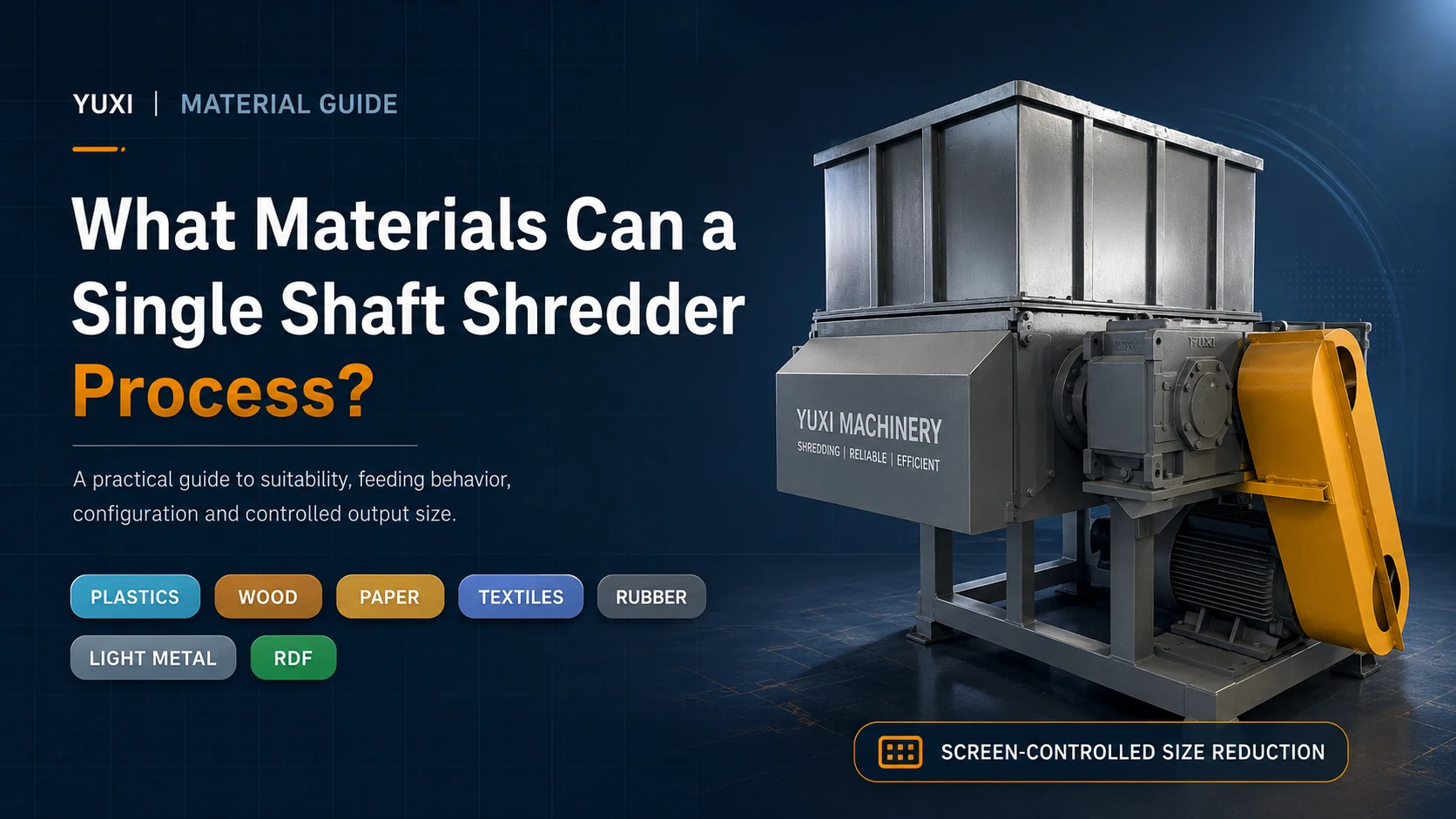
When a recycling plant contacts a shredder supplier, the first serious question is rarely “How much is the machine?” The real first question is usually: Can this single shaft shredder process my material safely and consistently?
That question sounds simple, but it is not answered by the material name alone. “Plastic waste” may mean heavy purge lumps, thin LDPE film, long pipes, hollow drums, woven bags, dirty agricultural film or mixed injection molding rejects. “Wood waste” may mean clean pallet offcuts, MDF boards, furniture scrap with screws, wet biomass or demolition wood. Each material feeds differently, cuts differently, wears blades differently and creates different expectations for output size.
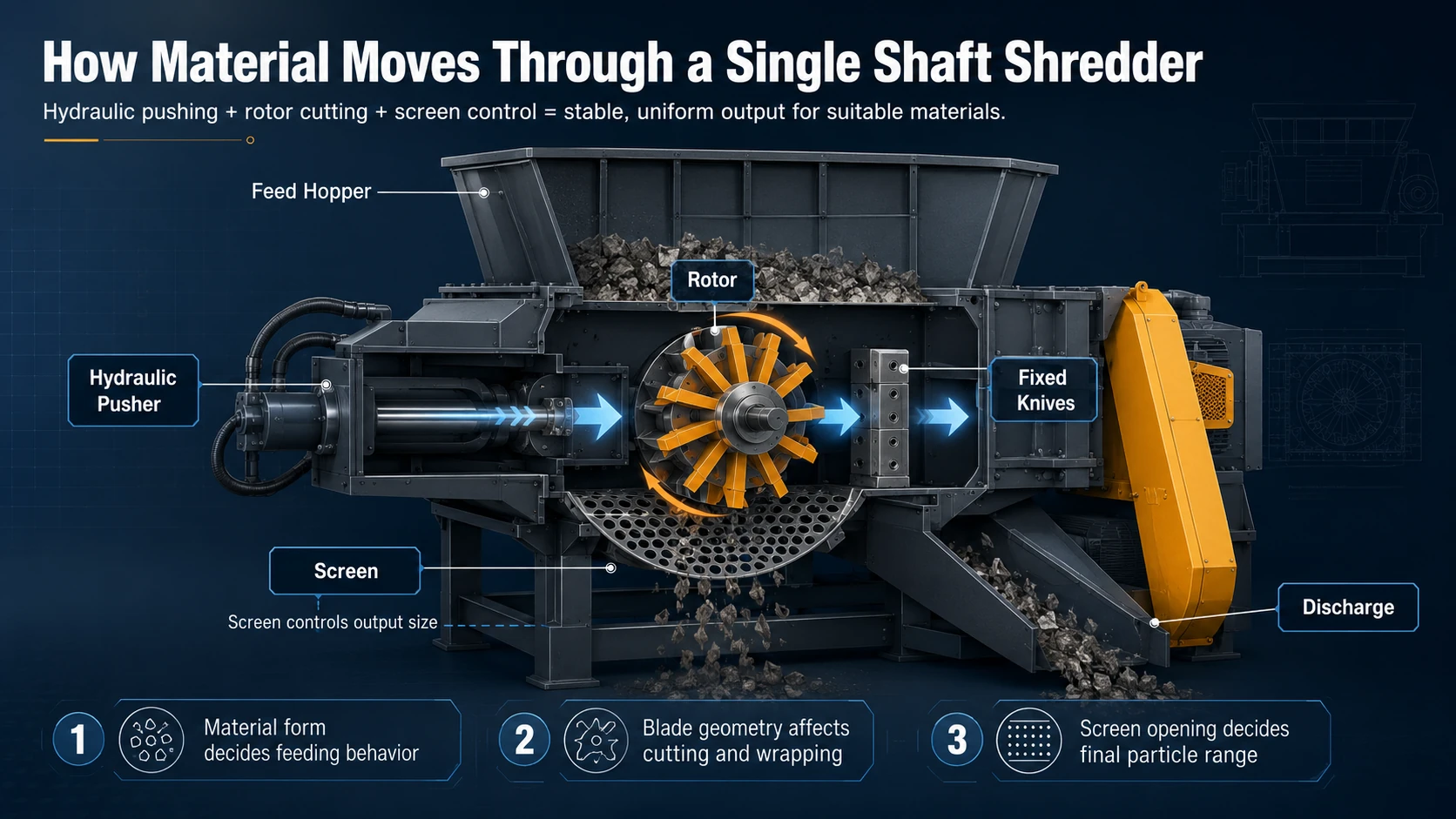
A single shaft shredder machine is especially useful when the project needs controlled size reduction through a screen. The machine normally uses a rotor with cutting knives, fixed counter knives, a hydraulic pusher and a screen below the cutting chamber. This makes it a strong option for many recyclable materials, but it also means the wrong material can cause wrapping, screen blockage, overload, blade damage or poor capacity.
This guide explains what materials a single shaft shredder can process, which applications need caution, which materials are better handled by a double shaft shredder, and what information buyers should send before asking for a quotation.
A single shaft shredder can process many recyclable and industrial waste materials, including plastic lumps, rigid plastic, plastic film, pipes, wood waste, pallets, paper, cardboard, textiles, rubber sheets, light metal scrap, cables, production scrap and selected mixed waste. It is most suitable when the buyer needs a controlled output size through a screen.
However, very heavy metal scrap, stones, concrete, glass-heavy waste, thick steel parts, explosive materials and highly contaminated unsorted waste are not ideal for a standard single shaft shredder. Those materials may require sorting, pre-shredding, a double shaft shredder, a hammer mill, a metal recycling line or another dedicated system.
Best-fit materials: plastic lumps, rigid plastics, wood pallets, cardboard, paper rolls, rubber sheets, textile scraps and sorted RDF.
Conditional materials: plastic film, cable, light aluminum, e-waste components and mixed industrial waste.
Not ideal materials: thick steel, engine blocks, stones, concrete, glass-heavy waste and highly contaminated unsorted MSW.
This is also why experienced suppliers do not select a shredder only from a material category. They ask for feeding size, bulk density, moisture, contamination, expected capacity and target output size. A machine that works well for plastic lumps may not work well for thin film. A machine that handles clean wood offcuts may struggle with wet dirty bulky waste.
The useful question is not only “Can it shred this material?” A stronger question is: Can it feed, cut, discharge and keep working for my material under real plant conditions?
Single shaft shredders are widely used because they can create a more controlled final particle range. Single-shaft technology as adaptable for materials such as plastics, wood, paper, cardboard and metals, while Vecoplan highlights homogeneous particle sizes as one of the advantages of this shredder type. SSI also positions single-shaft rotary grinders for wood, paper, hard and soft plastics and brittle materials with limited metal contamination when small, uniform particle size is important. These industry descriptions are useful, but they still need to be translated into buyer decisions on the factory floor.
In real projects, the same material name can behave in completely different ways. A loose PE film bale has low bulk density and may bridge in the hopper. A plastic purge lump is heavy and dense, so the rotor and pusher need enough torque and pressure. A wood pallet with a few nails may be acceptable, but mixed demolition waste with steel brackets and stones becomes a different problem. Textile rolls may cut cleanly in one setup and wrap badly in another setup.
Before selecting a model, check five material factors:
Technical reference: Official single-shaft shredder documentation from WEIMA describes the hydraulic pusher as the component that feeds material to the rotor and the screen below the rotor as the component that defines discharged particle size. SSI’s heavy-duty SR900G specification illustrates why model-specific engineering matters: that machine offers screen sizes from 12 to 150 mm and drive options from 224 to 298 kW, but those figures should not be transferred to a different machine or feedstock without testing.
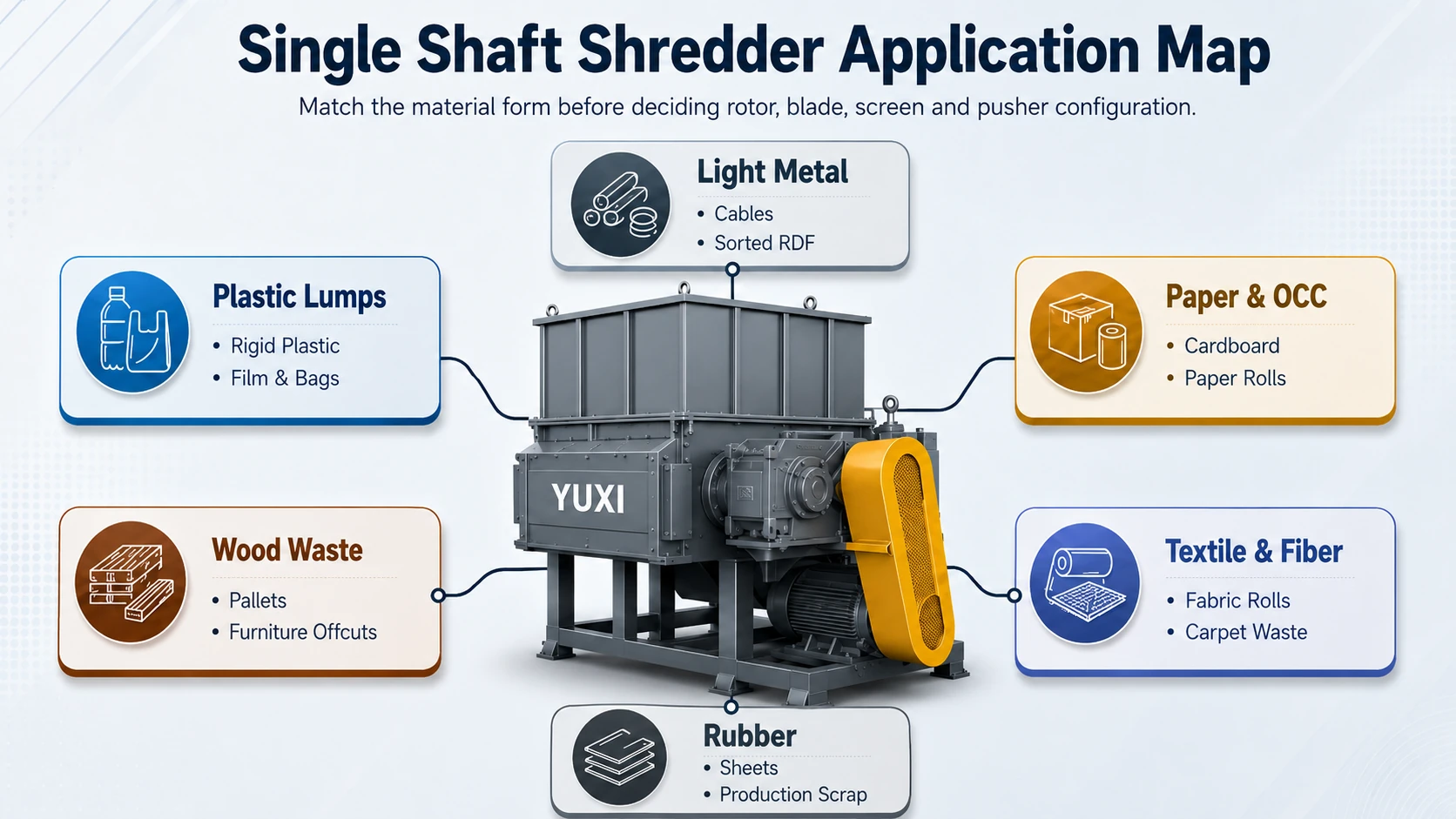
Plastic waste is one of the most common single shaft shredder applications. In plastic recycling plants, the shredder may be used before washing, granulation, extrusion, pelletizing or internal scrap reuse. Many buyers also use a single shaft shredder to reduce bulky plastic waste into a controlled size before a granulator does finer crushing.
Plastic lumps, purge blocks, startup waste and thick production scrap are usually strong candidates for a heavy-duty single shaft shredder. These materials are dense enough for the hydraulic pusher to press them toward the rotor, and the screen helps control the final size. Common examples include injection molding purge, extrusion purge, plastic blocks, thick sprues, rejected plastic parts and factory production scrap.
The mistake is assuming every single shaft shredder can process large purge blocks just because the material is “plastic.” Large dense lumps need enough rotor diameter, gearbox torque, blade strength and chamber size. If the lump is too large for the hopper or too dense for the installed power, capacity will drop and overload protection will reverse too often.
Rigid plastic applications include HDPE drums, PP crates, PE containers, PVC profiles, plastic pallets, buckets, bottles, sheets, automotive plastic parts and rejected molded products. This is a good fit when the buyer wants more consistent output size than a primary rough shredder can provide.
Large hollow parts can behave differently from solid parts. A plastic drum may bounce or rotate before it is gripped. Long pipe and profile scrap may need a special feeding arrangement, longer chamber, side feeding or pre-cutting depending on length. For this reason, suppliers usually ask for photos, videos and maximum feeding size before recommending the model.
Plastic film can be processed by a properly configured single shaft shredder, but it needs more attention than rigid plastic. LDPE film, agricultural film, packaging film, woven bags, jumbo bags, raffia, stretch film and flexible packaging waste may wrap around the rotor or bridge in the hopper if the cutting chamber is not designed for soft material.
For film waste, do not judge the machine only by motor power. The more important points are rotor style, knife layout, pusher pressure, feeding method, anti-wrapping design and screen opening. Dirty agricultural film may also contain sand, soil and moisture, which increases wear and can reduce effective capacity. In many plastic recycling lines, film shredding works best when the machine is selected as part of the full washing or pelletizing process, not as an isolated machine.
Wood is another common material for single shaft shredders. Typical applications include pallets, wood offcuts, furniture waste, MDF board, plywood, timber scrap, packaging wood, branches and selected biomass feedstock. Wood processing plants use shredders for volume reduction, boiler fuel preparation, recycling, board production feedstock or downstream screening.
Clean wood offcuts are usually easier than mixed waste wood. Pallets are also common, but nails and metal fasteners should be considered. A small number of nails may be acceptable for many heavy-duty machines, but large metal brackets, bolts, stones or unknown demolition contamination can damage blades and create unplanned downtime.
Moisture is another practical issue. Wet wood may not cut and discharge the same way as dry wood. It can smear, stick, reduce screen efficiency and increase power demand. If the final material must be used for fuel or biomass, the shredder is only one part of the process; screening, magnetic separation, drying or conveying may also be needed.
Selection note from the field: when a buyer says “wood pallets,” ask whether the pallets are clean warehouse pallets, painted pallets, wet outdoor pallets or mixed construction wood. The correct answer may change the blade material, screen size and need for magnetic separation.
Paper and cardboard are often processed for volume reduction, baling preparation, recycling plant feeding, waste-to-energy preparation or internal waste management. Materials include cardboard boxes, OCC, paper rolls, office paper, packaging waste and paper mill waste.
A single shaft shredder can be useful when the plant wants a controlled output rather than random tearing. For cardboard, the machine can reduce bulky material volume and create a more manageable size for conveying or downstream handling. For paper rolls, the feeding method and rotor engagement are more important because rolls can spin, bridge or resist cutting if the chamber is not suitable.
Some buyers only need rough size reduction before baling, and a double shaft shredder may also be considered. If the buyer needs a smaller and more uniform output, the screen-based discharge of a single shaft shredder becomes more attractive. The correct choice depends on whether the downstream process cares about particle size or simply needs material to be opened and reduced.
Textile waste is possible but should be discussed carefully. Suitable materials may include fabric scraps, fabric rolls, carpet waste, fiber waste, non-woven material, used clothes, leather-like soft material and production offcuts from textile factories.
The challenge is not always hardness. The challenge is often flexibility and wrapping. Long fibers, loose cloth and soft rolls can wrap around the rotor or build up around the cutting area. A shredder for textile waste needs the correct knife design, enough pusher control and a chamber arrangement that helps material stay engaged with the rotor instead of riding over it.
If the textile waste is part of RDF preparation, the target output may be a controlled fluff or smaller fraction. If it is for textile recycling, the downstream requirement may be different. Do not copy a plastic shredder selection directly into a textile project without testing or detailed material review.
Buyer mistake: many inquiries only say “cloth waste.” A supplier needs to know whether it is loose cutting scrap, compressed bales, carpet with backing, wet fabric, mixed clothing, fiber dust or roll material. Those details strongly affect capacity and wear.
A single shaft shredder can process some rubber waste, especially rubber sheets, rubber blocks, rubber rolls, conveyor belt sections, rubber production scrap and selected pre-cut tire rubber pieces. Rubber is tough and elastic, so it behaves differently from brittle plastic or dry wood.
For thin or medium rubber production scrap, a heavy-duty single shaft shredder may work well when the rotor, blades and screen are selected properly. For thick rubber blocks or reinforced rubber, the machine must be built for higher torque and stronger wear resistance. Heat buildup and elastic rebound can also affect capacity.
Whole tires are a special case. A normal single shaft shredder is not usually the first recommendation for whole passenger tires, truck tires or steel-wire tires. Tire recycling lines often use a double shaft shredder or dedicated tire shredder for primary size reduction, followed by granulation, steel separation and fiber separation. If a buyer only has clean rubber sheet scrap, the answer may be yes. If the buyer wants to feed whole tires directly, the answer is usually a different system.
This section creates many inquiries, so it needs a careful answer. Some single shaft shredders can process light metal scrap such as thin aluminum profiles, aluminum sheets, small aluminum production scrap, copper pieces, brass pieces, light non-ferrous metal waste and thin containers. WEIMA, for example, lists light metals in some single-shaft shredder applications. But this does not mean a standard single shaft shredder is a universal scrap metal shredder.
The safe way to describe it is this: light metal is conditional; heavy metal is not ideal for a standard single shaft shredder. Thin aluminum and small non-ferrous production scrap may be acceptable when the machine is designed with suitable blades, drive protection, lower speed, strong torque and wear-resistant parts. Thick steel, castings, engine parts, dense mixed scrap, metal drums with heavy rims and unknown ferrous scrap are better matched with dedicated metal shredding equipment or a metal recycling line.
If the feed stream contains only light metal contamination, magnetic separation and protection systems should be considered. If metal is the main material, the buyer should compare a single shaft shredder with a double shaft shredder, hammer mill, metal shear or full scrap metal recycling line. For mixed projects, read this comparison: single shaft vs double shaft shredder.
Waste cable, copper wire, small electronic plastic housings, appliance plastic parts and selected e-waste components may be processed by a single shaft shredder in the right setup. However, cable and e-waste are not simple “plastic” materials. They often contain copper, aluminum, steel, screws, circuit boards, glass fiber, rubber and mixed plastics.
For copper cable recycling, the shredder may be used as a front-end size reduction machine before granulation and separation. It should not be described as the only machine needed to recover copper cleanly. The downstream system may include a granulator, air separator, magnetic separator, dust collection and sometimes electrostatic separation.
For e-waste plastic shells, the main concerns are metal contamination and abrasive components. Circuit board edge scrap and small electronic components may cause faster blade wear. If the e-waste is mixed, unsorted and contains heavy metal parts, the buyer should consider pre-sorting or a more robust primary shredder before a single shaft machine.
Battery fire data: The U.S. Environmental Protection Agency identified more than 240 fires caused by lithium-ion batteries at 64 waste-management facilities between 2013 and 2020. EPA warns that batteries or battery-containing devices can be damaged or crushed by processing and sorting equipment, creating a fire hazard. Batteries should therefore be identified and removed for appropriate specialist handling before general e-waste shredding. Sources: U.S. EPA waste-facility fire analysis and U.S. EPA used lithium-ion battery guidance.
Single shaft shredders are used in some RDF and mixed industrial waste applications, especially when the input has already been sorted and the final output size matters. Suitable feed may include packaging waste, mixed plastic-paper waste, commercial waste, light industrial waste, selected bulky waste after sorting and RDF feedstock.
The keyword here is sorted. A single shaft shredder can be a good tool for controlled secondary size reduction, but it is not a magic solution for every unknown mixed waste stream. Municipal solid waste may contain stones, glass, metal, wet organics, textiles, plastic, wood and hard unshreddable objects. If the waste is dirty and unpredictable, a primary double shaft shredder, sorting line, trommel, magnet or manual sorting stage may be needed before screen-controlled shredding.
For RDF production, the target output size, moisture level, chlorine concern, calorific value and downstream fuel specification must be considered. The shredder only prepares the physical size; it does not solve material quality by itself. Buyers should share their final RDF specification before selecting a screen opening and motor power.
Fuel specification note: ISO 21640:2021 establishes a classification system and property-specification template for solid recovered fuels. The standard states that SRF is produced from non-hazardous waste and that untreated municipal solid waste is not, by itself, SRF. This supports treating sorting, quality control and fuel specification as separate requirements from particle-size reduction.
A professional supplier should not say yes to every material. Some materials create high risk, poor capacity, heavy wear or unsafe operation in a standard single shaft shredder. Saying “not ideal” early can save the buyer money later.
These materials usually need caution or a different solution:
Some of these materials can still be processed in a complete system after sorting or pre-treatment. The important point is to avoid using a single machine name as the whole process design.
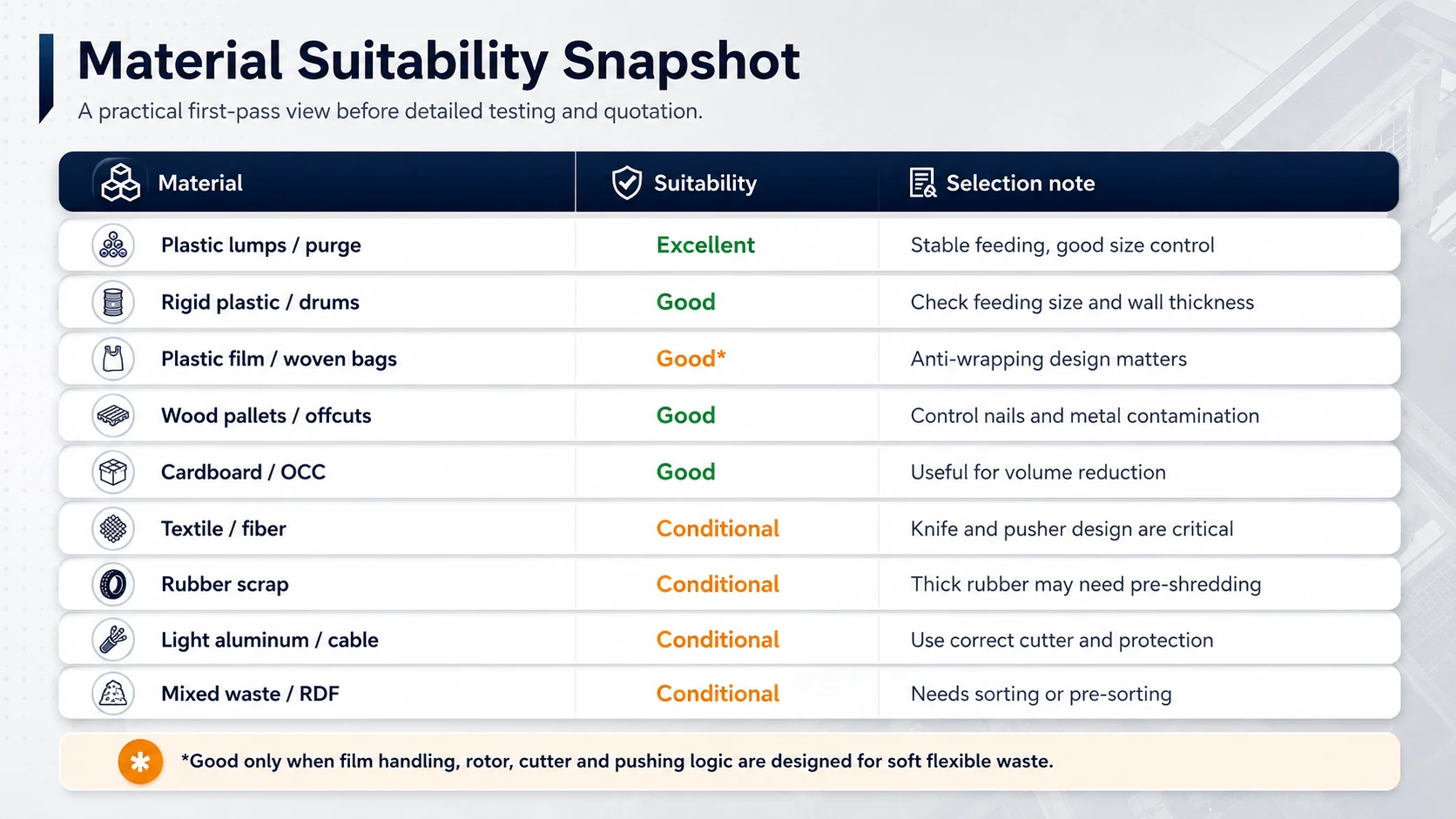
The table below is a first-pass selection guide. It is not a final engineering decision, because capacity and output size depend on the exact material form, contamination, feeding size and machine configuration.
| Material | Suitability | Practical Notes |
|---|---|---|
| Plastic lumps and purge | Excellent | Stable feeding; needs enough torque for dense blocks. |
| Rigid plastic drums, crates and pallets | Good | Check feeding size, hollow shape and target output. |
| Plastic film and woven bags | Good, with correct design | Anti-wrapping rotor and feeding control are important. |
| Wood pallets and offcuts | Good | Control excessive nails, screws and stones. |
| Cardboard, OCC and paper rolls | Good | Useful for volume reduction and controlled discharge. |
| Textile and carpet waste | Conditional | Soft fibers may wrap; knife design matters. |
| Rubber sheets and production scrap | Conditional | Thick or reinforced rubber may need heavy-duty setup. |
| Light aluminum and thin non-ferrous scrap | Conditional | Use suitable blades, protection and wear parts. |
| Cable and wire waste | Conditional | Often best as part of a cable recycling line. |
| Sorted RDF and mixed industrial waste | Conditional | Sorting and contamination control are strongly recommended. |
| Heavy steel scrap, stones and concrete | Not ideal | Use a stronger primary shredder, metal shredder or pre-treatment system. |
Two machines can both be called single shaft shredders but perform very differently. Configuration decides whether the shredder is suitable for film, plastic lumps, wood, rubber or light metal.
The most important configuration points include:
For buyers comparing cost, this is where price differences appear. A low-price machine may look similar in photos but use smaller blades, weaker drive components, lighter chamber construction or a less suitable pusher. For budget planning, see the single shaft shredder price guide.
External references from established shredder manufacturers also support this configuration-based thinking. In real selection work, broad material adaptability still depends on rotor design, hydraulic pushing, screen opening, drive protection and wear resistance. Single-shaft rotary grinders are generally more suitable when the feedstock has limited metal contamination and the project requires a more uniform particle size. These points all come back to machine configuration, not just the material name.
Safety reference: ISO 12100:2010 defines a machinery risk-assessment and risk-reduction methodology covering hazard identification, risk estimation, evaluation and verification across relevant life-cycle phases. OSHA also identifies plastics, wood, paper, rubber, metals and recycling operations among environments where combustible-dust hazards may exist. A project handling fine or dusty material should therefore evaluate extraction, housekeeping, ignition sources and fire or explosion protection as part of the complete system, not only the shredder. Source: OSHA Combustible Dust Explosion Hazard Alert.
Most wrong shredder selections start with incomplete material information. The buyer may not be hiding anything; they simply do not realize which details matter. Here are common mistakes we see in real B2B inquiries.
Plastic film, plastic lumps, PVC pipe, HDPE drums, PET bottles and plastic pallets need different machine thinking. The supplier needs the exact material form and size, not only the polymer name.
Power matters, but power alone does not solve feeding, wrapping or screen blockage. A better machine choice considers rotor type, cutter shape, chamber size, pusher force, gearbox torque and discharge design.
A small amount of light contamination may be manageable. Large steel pieces, stones or thick bolts are a different risk. If contamination is unknown, use sorting, magnets or a more robust primary shredder.
A single shaft shredder is often selected because it can use a screen to control output size. If the buyer does not specify the target size, the supplier cannot correctly recommend the screen opening or estimate capacity.
For cable, RDF, plastic washing, tire rubber or e-waste, shredding is only one process step. Separation, conveying, dust control, washing, drying or granulation may be required to reach the final product.
To get a useful quotation, send more than a material name. A good supplier can make a faster and more accurate recommendation when you provide the following information:
If you are still comparing machine types, start with this guide on how to choose a single shaft shredder. If your material is bulky, mixed or heavily contaminated, compare it with a double shaft option before finalizing the purchase.
A single shaft shredder can process a wide range of materials, including plastic waste, wood waste, paper, cardboard, textiles, rubber, light metal scrap, cable, RDF feedstock and selected mixed industrial waste. Its main advantage is controlled size reduction through a screen, which makes it valuable when the downstream process needs a more uniform output.
But the correct machine depends on the real material condition. Dense plastic lumps, thin film, wood pallets, textile rolls, rubber sheets and light metal scrap do not require the same setup. Heavy steel, stones, concrete, glass-heavy waste and highly contaminated unsorted waste are normally not ideal for a standard single shaft shredder.
For a reliable selection, send material photos, videos, size range, contamination level, capacity target and output size requirement before asking for price. YUXI can then recommend the proper rotor, blades, screen opening, power, pusher system and downstream equipment for your recycling project.
Send your material photos, feeding size, target output and capacity requirement. YUXI can help evaluate whether a single shaft shredder, double shaft shredder or complete recycling line is the better choice.
Yes, but it should be configured for soft and flexible materials. Film can wrap around the rotor if the cutter design, pushing logic and anti-wrapping structure are not suitable.
It can process some light metal scrap, thin aluminum and small non-ferrous production scrap when the machine is built for that duty. Heavy steel scrap, castings and thick metal parts are normally better handled by a double shaft shredder or a dedicated metal recycling system.
Yes. Wood pallets, timber offcuts and furniture wood are common applications, but excessive nails, screws and other metal contamination should be controlled to reduce blade wear and downtime.
Thick steel, engine blocks, stones, concrete, glass-heavy waste, explosive or hazardous materials and very dirty mixed waste are usually not ideal for a standard single shaft shredder.
Choose a single shaft shredder when you need more controlled output size through a screen. Choose a double shaft shredder for bulky, tough or highly mixed material that needs strong primary reduction before further processing.
Send material photos or video, feeding size, bulk density, contamination level, moisture, required capacity, target output size, working hours and downstream process. This helps the supplier recommend the correct rotor, blades, power and screen.

Get in touch with our nice team today to get a price estimate for a shredder machine.
Contact Us