Service EfficientFast Delivery
Service EfficientReliable
Service EfficientCertified
Service EfficientExperienced

Double Shaft Shredder Price Guide | Cost Factors

Double Shaft Shredder Price Guide: Cost Factors, Model Selection and Buyer Notes Most buyers ask for a double shaft shredder price first. That is normal. But the useful question is not only “how much is the machine?” It is “what configuration can run my material every day without becoming a repair problem?” This guide explains the real cost factors behind a two shaft shredder quotation.
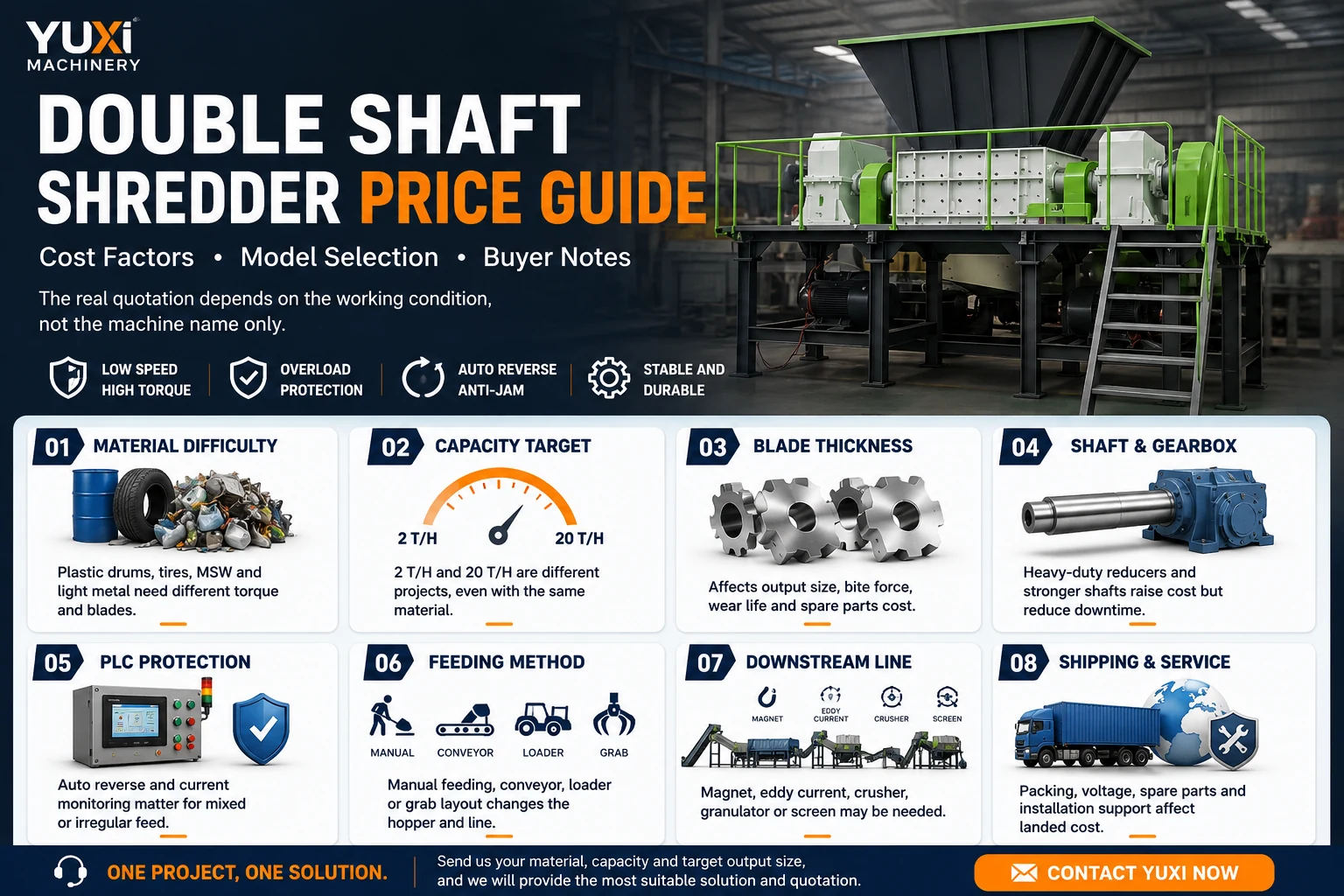
Double shaft shredder price guide for industrial recycling projects
Double shaft shredder price is mainly shaped by material difficulty, capacity, blade design, gearbox, feeding method and downstream process.

Quick Answer: How Much Does a Double Shaft Shredder Cost?

A double shaft shredder price can vary widely because most industrial machines are selected or customized according to material, feeding size, blade thickness, motor power, gearbox, hopper size, control system and downstream equipment. A small machine for light plastic or packaging waste may cost far less than a heavy-duty unit for tires, light metal scrap, bulky waste or MSW. For a reliable quotation, buyers should provide material photos, maximum feeding size, target output size, hourly capacity and site conditions. Public market references show wide ranges for two shaft or dual shaft shredders. Some suppliers publish broad ranges around $10,000 to $200,000, while other industrial cost guides list heavy-duty dual-shaft shredders for metals and tires in high five-figure to six-figure ranges. These numbers are useful only as reference. The final price should be checked against the machine configuration and what is included in the scope.

Why Double Shaft Shredder Prices Vary So Much

Two machines may both be called a double shaft shredder, but they may not be built for the same job. One buyer may need to open HDPE drums before a washing line. Another may want to reduce whole tires before a rubber granule system. A third buyer may be handling paint buckets, light aluminum profiles, thin metal sheets and mixed industrial waste. The machine name is the same. The working load is not. A double shaft shredder is a low-speed, high-torque machine. Its job is not to cut like a high-speed granulator. It bites, tears and shears material between two counter-rotating shafts. For bulky or mixed waste, that first rough reduction stage is often the most important part of the line. If the machine cannot grip the material, or if it stops every few minutes because the gearbox and cutter design are too light, the lower purchase price will not help the plant. This is why serious suppliers do not quote only by chamber width. The quotation should reflect what the machine is expected to process, how many hours per day it will run, how the material will be fed, and what comes after the shredder. The cost of the shredder body is only one part of the project. Conveyors, magnetic separation, eddy current separation, crushers, granulators, screens, dust removal, spare blades and installation support can all change the final investment.

Field note: if two quotations look similar on the surface but one is built for plastic crates and the other is built for tire or light metal scrap, the lower price is usually not a saving. It may simply be the wrong machine.
Main Factors That Affect Double Shaft Shredder Price

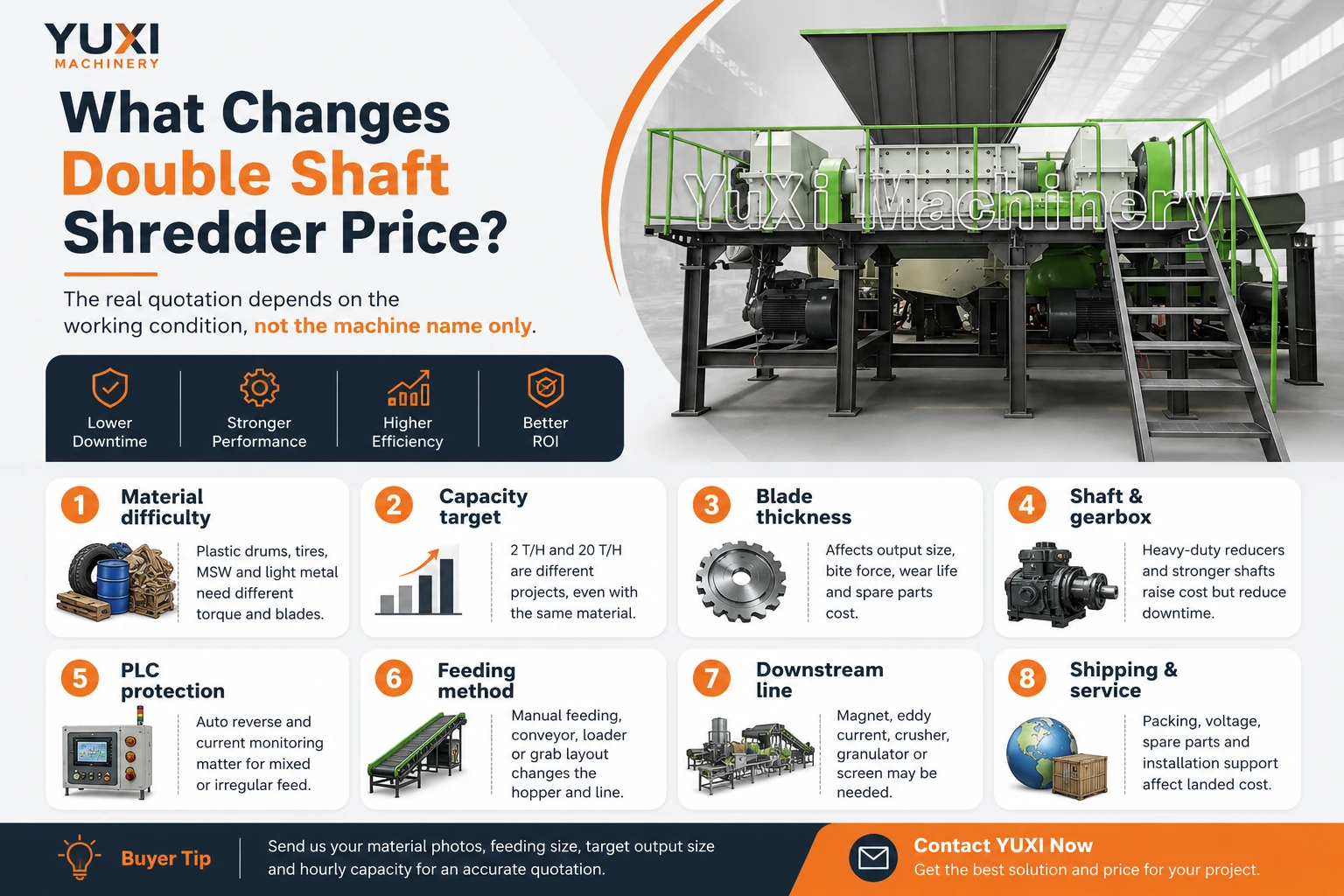
When buyers compare a double shaft shredder machine price, the useful way is to separate the quotation into engineering items. The following factors usually explain most of the price difference.
Eight cost factors that affect double shaft shredder price
Eight common cost drivers behind a double shaft shredder quotation.

1. Machine Size and Processing Capacity

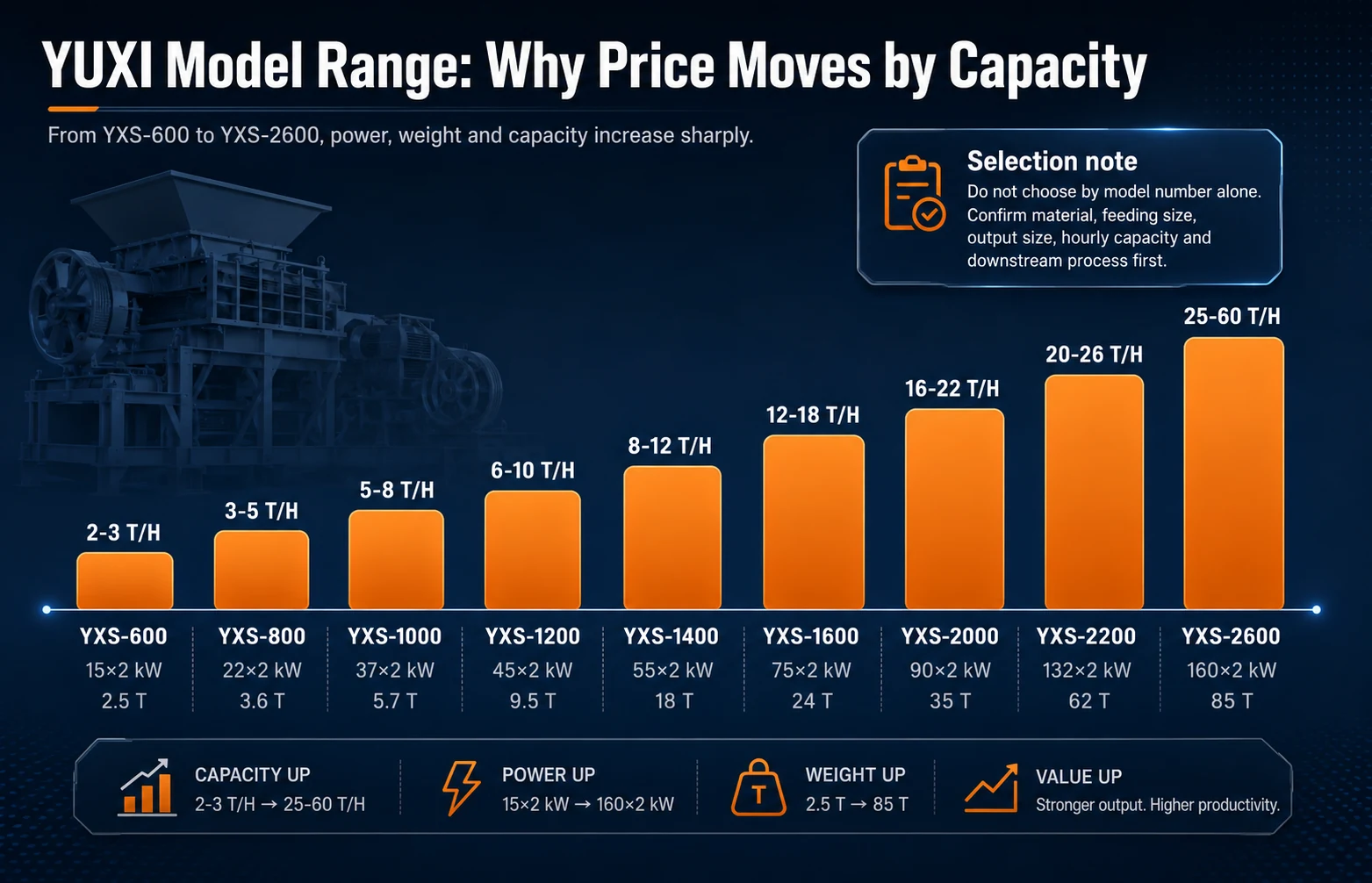
Capacity is one of the clearest price drivers, but it should be discussed carefully. A buyer asking for 5 tons per hour of plastic drums is not the same as a buyer asking for 5 tons per hour of tire chips, light metal scrap or mixed MSW. The motor power, cutter layout, hopper size and shaft strength may be different even when the hourly target is similar. On the YUXI double shaft shredder product page, the model range covers small and heavy-duty projects, from YXS-600 with 15×2 kW power and about 2–3 T/H capacity to YXS-2600 with 160×2 kW power and about 25–60 T/H capacity. That wide range explains why the price cannot be answered accurately with one number.

2. Material Type and Material Difficulty

The material is the first thing an engineer wants to know. Plastic drums, woven bags, cartons and wood pallets are bulky but not always extremely hard. Tires bring rubber elasticity and steel wire. Light metal scrap creates shock load. MSW is unpredictable because the machine may meet textiles, wood, plastic, cans, wet waste and occasional hard objects in the same batch. For this reason, a twin shaft shredder price should never be estimated only by the buyer’s industry name. “Plastic recycling” may mean bottles, drums, film rolls, pipes or lumps. “Metal recycling” may mean thin cans or heavier mixed scrap. A few photos and a short material video often prevent wrong model selection.

3. Blade Material, Thickness and Tooth Design

Cutter blades are not just wear parts. They decide how the machine grips the material, what approximate output size it produces, how much torque is required and how often the buyer will need maintenance. Thinner blades can produce smaller pieces, but they may not be suitable for tougher materials. Thick blades improve strength and bite force, but they may create rougher output and raise cutter cost. For plastic drums, crates and hollow materials, the hook angle and anti-bounce behavior matter. For tires, wear resistance and torque reserve matter. For light metal scrap, shaft strength and impact resistance matter. For textiles or film-like materials, anti-winding design becomes important. The best blade is not the most expensive one; it is the blade matched to the waste stream.

4. Shaft, Gearbox and Drive System

The drive system is where many cheap quotations hide risk. A shredder working on bulky or tough waste needs stable low-speed torque. Heavy-duty reducers, planetary gearboxes, strong shafts and reliable coupling design raise initial cost, but they also protect the machine when it meets difficult feed. YUXI’s double shaft shredder page highlights 42CrMo alloy steel main shafts, dual motors with heavy-duty reducers or planetary gearboxes, and PLC protection. These details are not decorative words. They are the parts that decide whether the machine can survive daily shock load in a real recycling plant.

5. PLC Control and Overload Protection

For clean and regular material, a simple control system may look enough. For mixed waste, tires, wood pallets, metal buckets or MSW, protection matters. Current monitoring, automatic reverse and overload protection reduce manual clearing and protect the gearbox, motor and shafts. A machine that reverses automatically when jammed is usually easier to keep in production than a machine that needs operators to stop and clean the chamber again and again.

6. Hopper, Conveyor and Feeding Method

The feeding method changes both machine design and price. Manual feeding may work for small batches. A belt conveyor may be enough for plastic or packaging waste. A loader or grab feeding layout may require a larger hopper, stronger frame and safer guarding. For bulky waste, the hopper is not a small accessory; it decides whether the material enters the cutting chamber smoothly. Discharge also matters. Some buyers only ask for the shredder body and later find that they need a discharge conveyor, magnetic separator, storage bunker or second crusher. This is why the quotation should clearly state whether conveyors and downstream equipment are included.

7. Complete Recycling Line Configuration

A double shaft shredder is often the first reduction stage in a larger system. In a waste metal recycling line, it may open paint buckets, thin sheet scrap and aluminum profiles before magnetic or eddy current separation. In a waste tire recycling line, it may prepare whole tires for rasper, steel wire separation and rubber granulation. In bulky waste or RDF preparation, it may work before screening, baling or further size reduction. When the shredder is part of a complete line, the price conversation should include the full process. Otherwise the buyer may purchase a machine that reduces volume, but does not produce material suitable for the next step.

8. Shipping, Voltage, Spare Parts and Service Scope

The machine price and the landed project cost are not the same. Packing, sea freight, voltage customization, control cabinet standards, spare blades, bearings, spacers, installation guidance and commissioning support should be listed in the scope. A quotation that looks low may only include a bare machine. A more complete quotation may include the items that the plant actually needs to start production.

YUXI Double Shaft Shredder Model Range and Selection Logic

The YUXI Double Shaft Shredder Machine page lists models from YXS-600 to YXS-2600. The range covers small, medium and heavy-duty recycling projects. The product size is commonly around 3–10 cm, while the capacity, motor power, hopper size and machine weight increase with the model.
YUXI double shaft shredder model range from YXS-600 to YXS-2600
Model selection should start from material and capacity, not from model number alone.
Model Power Capacity Typical buying meaning
YXS-600 / YXS-800 15×2 to 22×2 kW About 2–5 T/H Suitable for smaller projects or lighter materials when the feeding size and working hours are moderate.
YXS-1000 / YXS-1200 37×2 to 45×2 kW About 5–10 T/H Often considered for medium recycling plants handling plastic drums, wood pallets, e-waste, cartons or mixed industrial waste.
YXS-1400 / YXS-1600 55×2 to 75×2 kW About 8–18 T/H Used when the plant needs stronger bite force, larger hopper size and more continuous operation.
YXS-2000 / YXS-2200 / YXS-2600 90×2 to 160×2 kW About 16–60 T/H Heavy-duty projects where material volume, feeding size, torque reserve and line integration become the main cost drivers.
Selection note: if the material is light but bulky, feeding stability may be more important than simply choosing a larger motor. If the material is tires, light metal scrap or mixed MSW, torque reserve, shaft strength, cutter thickness and overload protection should receive more attention.

Typical Price Levels by Project Type

Because every project is different, the better way to discuss double shaft shredder cost is by project level. The table below is not a fixed quotation. It is a practical way to understand why one buyer may receive a small-machine price while another buyer receives a complete-line investment plan.
Project level Typical application Why the price changes Buyer note
Light-duty / small project Cartons, light plastics, packaging waste, small batches Lower motor power, smaller chamber, simpler feeding and fewer accessories Check whether daily working hours are realistic for the selected model.
Medium industrial project HDPE drums, crates, pallets, e-waste, mixed factory waste Larger hopper, stronger blades, better control, conveyors often required Ask whether the quotation includes feeding and discharge conveyors.
Heavy-duty shredding Tires, light metal scrap, bulky waste, MSW, RDF preparation Higher torque, heavier shafts, thick blades, stronger gearbox and overload protection Do not compare this with a small plastic shredder quotation.
Complete recycling line Metal recycling, tire recycling, plastic washing, RDF or bulky waste processing Includes shredder, conveyors, separation, crusher, screen, dust control and control cabinet The line layout should be quoted together, not after the shredder is purchased.
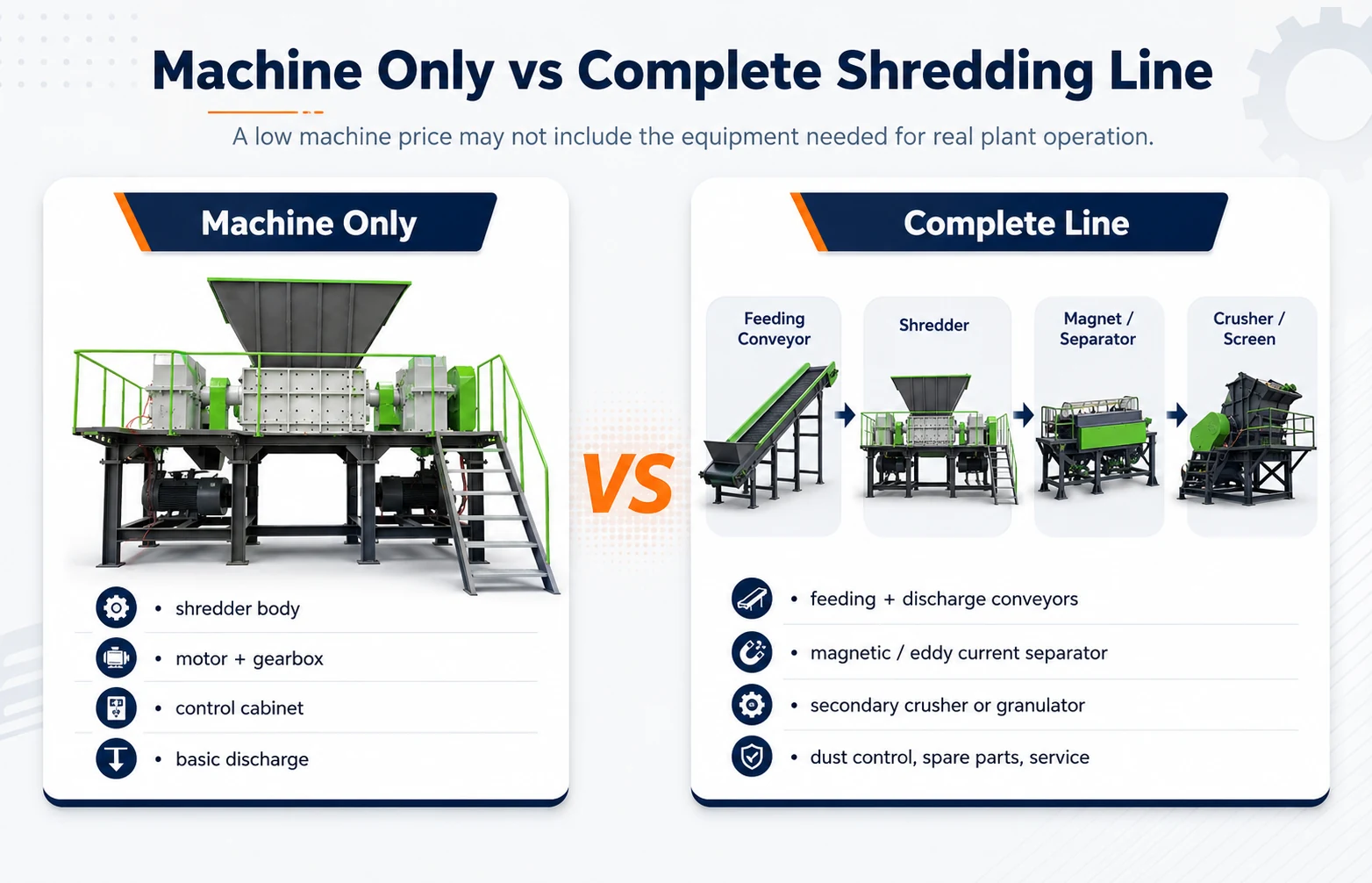
Comparison between machine only price and complete shredding line cost
A machine-only quotation and a complete-line quotation are different scopes. Compare them carefully before judging price.

Is a Double Shaft Shredder Cheaper Than a Single Shaft or Four Shaft Shredder?

Sometimes yes, sometimes no. The machine type alone does not decide cost. A small single shaft shredder for plastic lumps may cost less than a heavy-duty double shaft shredder for tires or metal scrap. But a large single shaft machine with hydraulic pusher, screen control and high output requirements may also be more expensive than a simpler double shaft pre-shredder. A four shaft shredder usually has a more complex chamber and more cutting parts. It may provide better reduction or output control for certain materials, but maintenance points and cutter cost may be higher. A double shaft shredder is often chosen when the first job is to open, tear and reduce bulky or mixed material before it enters another process. If the buyer needs controlled output size, a screen-controlled shredder, crusher or granulator may be required after the first stage. If the buyer mainly needs volume reduction and stable feeding into a separation line, a double shaft shredder is often the practical starting point.

Buyer Mistakes When Comparing Double Shaft Shredder Prices

Only comparing motor power

Motor power is important, but it does not tell the full story. Gearbox quality, shaft strength, blade thickness and chamber design decide how the power is used.

Using a plastic waste price for tires or metal scrap

Plastic drums, tires and light metal scrap create very different loads. A price based on easy plastic material can be misleading for tougher waste.

Ignoring the largest feeding size

A 200-liter drum, a truck tire, a wooden pallet and a furniture board require different hopper openings and cutter bite behavior.

Buying the shredder before planning the line

If the next step is magnetic separation, granulation, washing or baling, the shredder output and discharge layout should be designed early.

Choosing the lowest FOB price

A low FOB price may exclude conveyors, spare parts, custom hopper, voltage work, installation support or stronger wear parts.

Not sending material photos or videos

Without real material information, the supplier can only make a rough guess. Photos and short videos help prevent wrong model selection.

What Information Should You Prepare for an Accurate Quotation?

If you want a more accurate double shaft shredder price, send clear project information at the beginning. This saves time and avoids several rounds of vague communication.
  • Material name and photos: plastic drums, tires, aluminum scrap, paint buckets, wood pallets, e-waste, MSW, paper, textile or mixed waste.
  • Maximum feeding size: length, width, thickness or diameter of the largest piece.
  • Target output size: rough pieces, chips, pre-shredded material for crusher, or material for direct baling.
  • Capacity target: tons per hour and planned working hours per day.
  • Feeding method: manual, conveyor, grab, loader or customized hopper.
  • Downstream process: magnetic separator, eddy current separator, tire rasper, crusher, granulator, washing line, screen, RDF preparation or baler.
  • Site conditions: voltage, workshop space, discharge height, dust or noise requirements and maintenance access.
  • Budget and delivery plan: target investment level and expected installation time.
For difficult materials, a material test is often worth more than a long email. A short test video can show feeding behavior, output size, torque response and whether the cutter design needs adjustment.

Material Notes: How Different Waste Streams Change the Price

Material Quotation focus Possible downstream equipment
Plastic drums, crates and buckets Blade hook shape, anti-bounce feeding, stable discharge and possible washing line connection Crusher, washing line, granulator, pelletizing line
Waste tires Torque reserve, wear-resistant blades, controlled feeding and tire chip size Rasper, steel wire separator, rubber granule line
Light metal scrap Shaft strength, blade thickness, gearbox protection and separation layout Magnetic separator, eddy current separator, metal crusher, baler
MSW and bulky waste Large hopper, auto reverse, easy cleaning, mixed-material tolerance and maintenance access Conveyor, screening, RDF preparation, baler
Wood pallets and furniture waste Strong bite force, anti-impact cutter layout and possible metal removal Magnetic separator, secondary crusher, biomass preparation
Paper, textile and leather waste Anti-winding cutter layout and controlled feeding Baler, RDF line, fiber recovery process

How to Compare Two Double Shaft Shredder Quotations

When two suppliers send different prices, do not compare only the final number. Put the quotations side by side and check the scope. A serious comparison should include at least these items:
  1. Model, chamber size and actual cutting width.
  2. Motor power, reducer type and shaft speed.
  3. Shaft material, blade material, blade thickness and tooth design.
  4. Hopper size and feeding method.
  5. PLC control, overload protection and auto reverse function.
  6. Included conveyors, separators, crusher, screen or other line equipment.
  7. Spare parts package and recommended wear parts.
  8. Packing, shipping terms, voltage customization and installation support.
  9. Warranty terms and service response.
A cheaper quotation is not automatically bad. Sometimes the buyer only needs a simple machine. But if the lower price removes the parts needed for the actual job, the plant may pay the difference later through downtime, blade damage, slow feeding or extra retrofitting.

When the Cheapest Double Shaft Shredder Is Not the Best Choice

The lowest price is risky when the material is mixed, dirty, elastic, hard to feed or hard to predict. For example, MSW and bulky waste may contain plastic, wood, metal, textile, moisture and occasional unexpected hard objects. Tires contain steel wire and elastic rubber. Light metal scrap can create shock load. These conditions punish light-duty gearboxes, thin shafts and weak cutter design. The cheapest option may still be acceptable for simple, clean, low-volume material. But for a plant that expects continuous production, price should be judged together with machine uptime. A shredder that costs less but stops often is not cheap in real operation.

Do Not Forget Operating Cost

The purchase price is only the first cost. Operating cost includes power consumption, blade wear, labor, cleaning time, lubrication, bearings, spacers, cutter repair and downtime. The cheapest blade may wear faster. The smallest motor may save power on paper but overload in real production. A simple control cabinet may reduce initial price but create more manual work during jams. For recycling plants, stable feeding and predictable maintenance are often worth more than a small saving on the purchase order. Ask the supplier how often blades should be inspected, what spare parts should be stocked, and how the machine is accessed for cleaning and maintenance.

How YUXI Helps Buyers Control Shredder Investment

YUXI does not need every buyer to choose the largest model. A practical proposal starts from the material and the output requirement. For light but bulky materials, the focus may be hopper, feeding stability and cutter bite. For tires or metal scrap, the focus shifts to torque, shaft strength, blade wear resistance and protection. For a full recycling line, the shredder should be matched with conveyors, separators and the next processing machine. Buyers can start from the double shaft shredder product page to check basic models and then send project information for a custom proposal. If the material is oversized, hard to press into the chamber or requires special feeding, it may also be useful to compare with a hydraulic shredder. If the project is mainly plastic size reduction, the plastic shredder page may also be relevant.

Double Shaft Shredder Price FAQ

How much does a double shaft shredder cost?The cost depends on model size, material type, blade design, motor power, gearbox, hopper, control system and whether conveyors or separation equipment are included. A small light-duty machine and a heavy-duty tire or metal shredder are very different investments.
Why do double shaft shredder prices vary so much?Because the machine is usually selected for a specific material and capacity. Tires, light metal scrap, plastic drums, wood pallets and MSW need different torque, cutters, hoppers and protection systems.
Is a double shaft shredder cheaper than a single shaft shredder?Not always. A simple double shaft pre-shredder may be cheaper than a large screen-controlled single shaft shredder, but a heavy-duty double shaft machine for tires or metal can cost much more than a small plastic single shaft shredder.
Does blade thickness affect the price?Yes. Blade thickness affects cutter cost, output size, bite force, wear life and the torque required. The correct thickness should be selected according to material and target output size.
Is a tire double shaft shredder more expensive than a plastic shredder?Usually yes, if the tire shredder needs stronger torque, wear-resistant blades, controlled feeding and heavy-duty drive parts. Final cost still depends on capacity and line configuration.
Can I buy only the shredder without conveyors?Yes, but it depends on your feeding and discharge plan. Many industrial projects still need at least a feeding conveyor, discharge conveyor or downstream separator for stable operation.
What spare parts should be included in the quotation?Common spare parts include blades, spacers, bearings and other wear parts. For heavy-duty projects, ask the supplier to recommend a startup spare parts package.
What information is needed for an accurate quotation?Send material photos, maximum feeding size, target output size, hourly capacity, working hours, feeding method, downstream process, voltage and workshop conditions.
Can YUXI provide a complete shredding and recycling line?Yes. YUXI can configure the shredder with conveyors, magnetic separation, eddy current separation, crushers, granulators, screens or other equipment depending on the recycling process.

Need a Double Shaft Shredder Price for Your Material?

Send material photos, feeding size, target output size and capacity requirement. YUXI can help you select a suitable double shaft shredder model and confirm whether you need a single machine or a complete recycling line.
 
Shredder Machine Expert

Speak To Our
Shredder Machine Expert

Get in touch with our nice team today to get a price estimate for a shredder machine.

Contact Us

Submit Your Inquiry

zhengzhouyuxi@yuximachine.com
+86-13674998188
WhatsApp:+86 13674998188