Industrial Shredder & Recycling Systems Manufacturer - YUXI

 English

 English
 Fast Delivery
 Reliable
 Certified
 ExperiencedEnglishEnglishFast DeliveryReliableCertifiedExperienced
A factory-side explanation for buyers who need to pre-shred bulky, dirty or mixed waste before sorting, crushing, granulation, baling or RDF preparation.
When a buyer asks how a double shaft shredder works, the real question is usually not only mechanical. They may be planning a tire recycling line, a metal scrap preparation system, a plastic drum reduction project, a bulky waste plant or an MSW/RDF front-end line. In those cases, the machine is expected to do a dirty first job: grab oversized material, tear it open, reduce the volume and make the next machine’s work more stable.
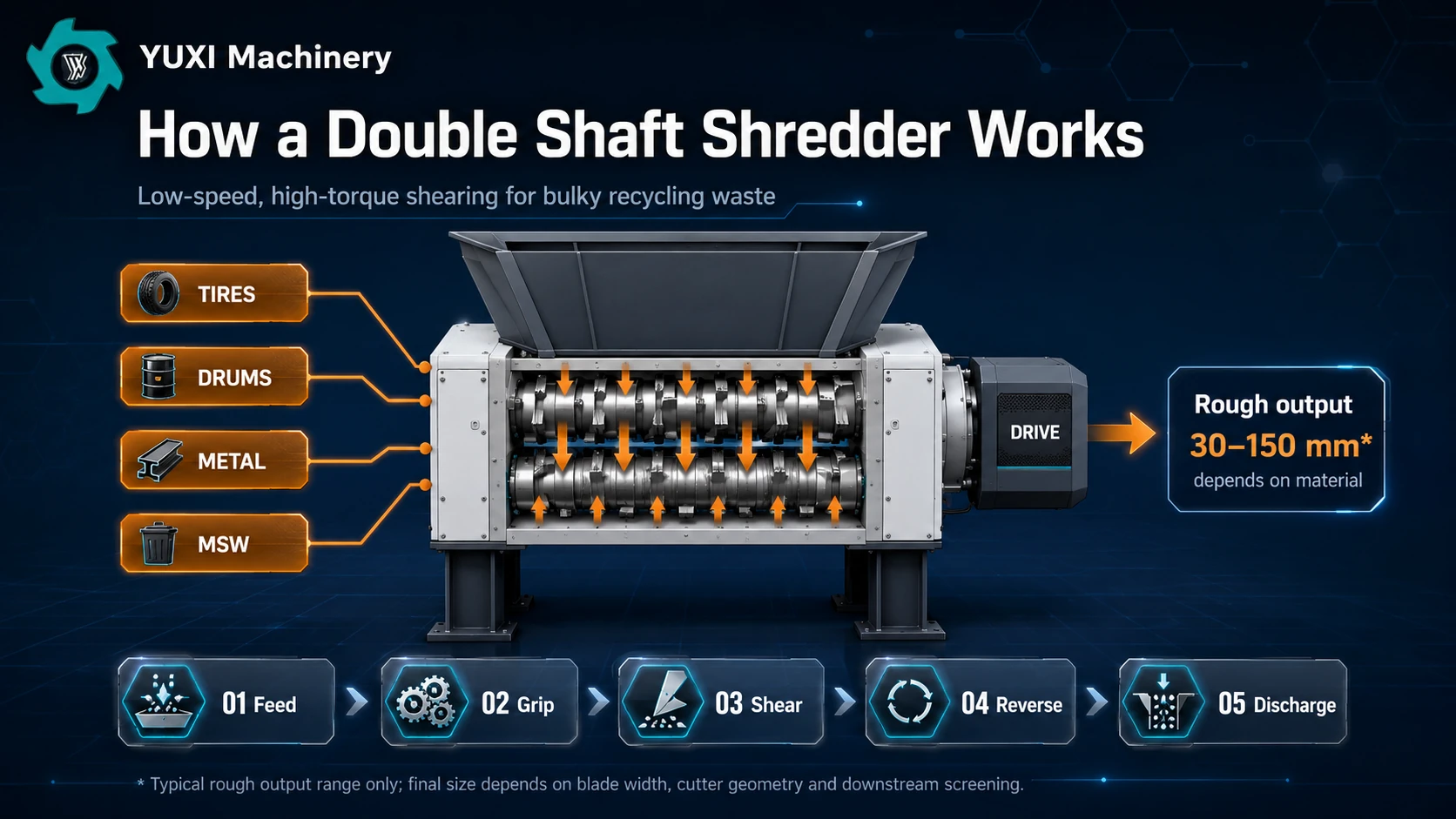
A double shaft shredder is not designed like a fine granulator. It normally works at low speed with high torque. Two cutter shafts rotate toward each other. The cutter hooks bite into the material, pull it into the chamber, and then tear, shear and squeeze it between the intermeshing cutter discs. That is why it is often used as a primary shredder, pre-shredder or first-stage shredder before a crusher, separator, baler, granulator or fuel preparation system.
YUXI’s double shaft shredder product page positions the machine for bulky waste reduction and mixed material recycling, including metal scrap, plastic drums, tires, e-waste, wood pallets and MSW. The model range runs from smaller YXS-600 units to heavy-duty YXS-2600 machines, with model selection depending on material, feeding size, target discharge, capacity, working hours and downstream equipment.
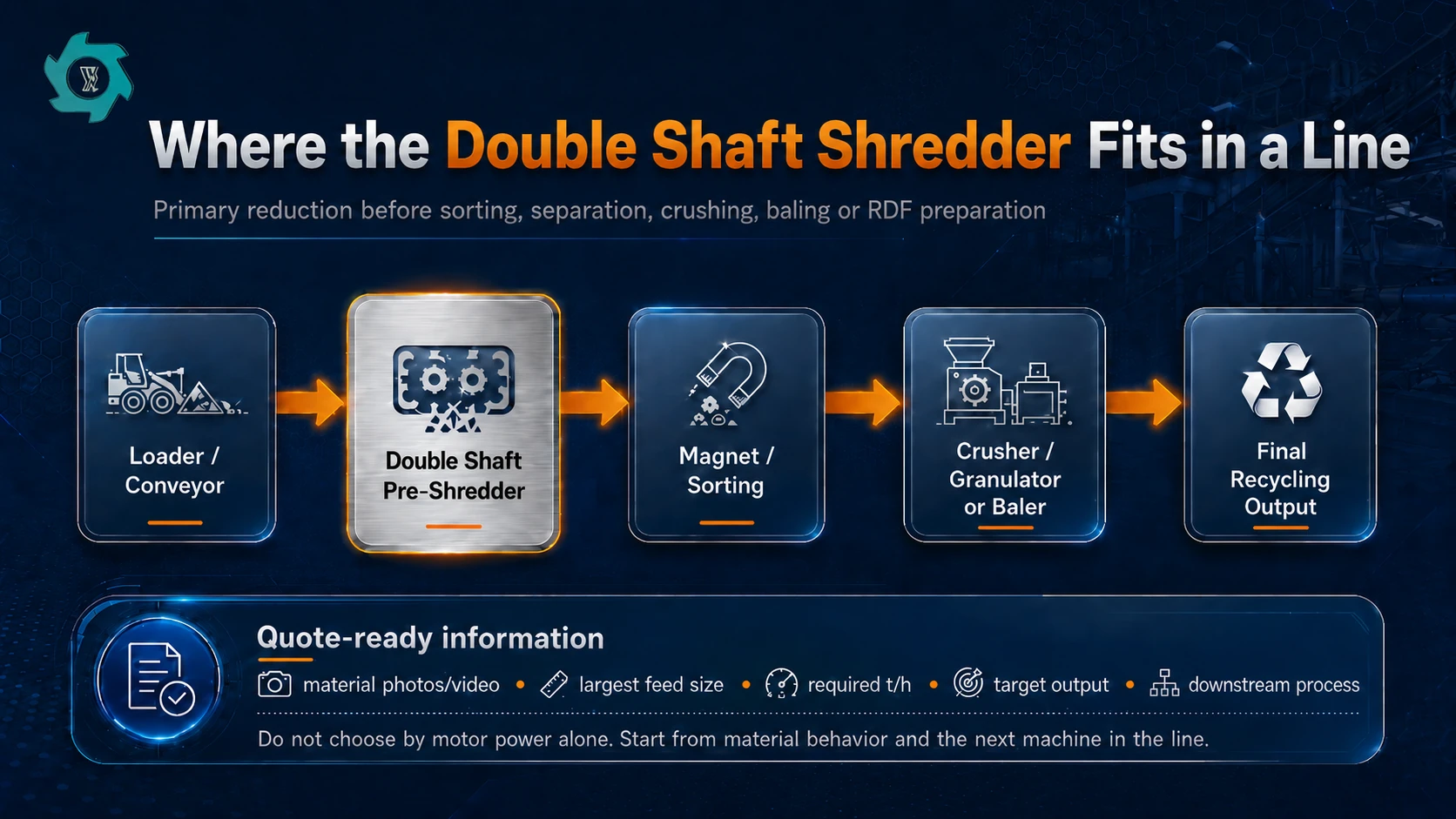
A double shaft shredder works by using two parallel, counter-rotating shafts fitted with cutter discs. Material enters the hopper, is gripped by the cutter teeth, pulled into the cutting chamber, and reduced by slow-speed shearing and tearing. Output size is usually rougher than a screen-controlled single shaft shredder, but the machine is stronger for bulky, irregular and mixed waste. For recycling projects, it is commonly placed before magnetic separation, eddy current separation, tire rasper, granulator, baler, crusher or RDF preparation.
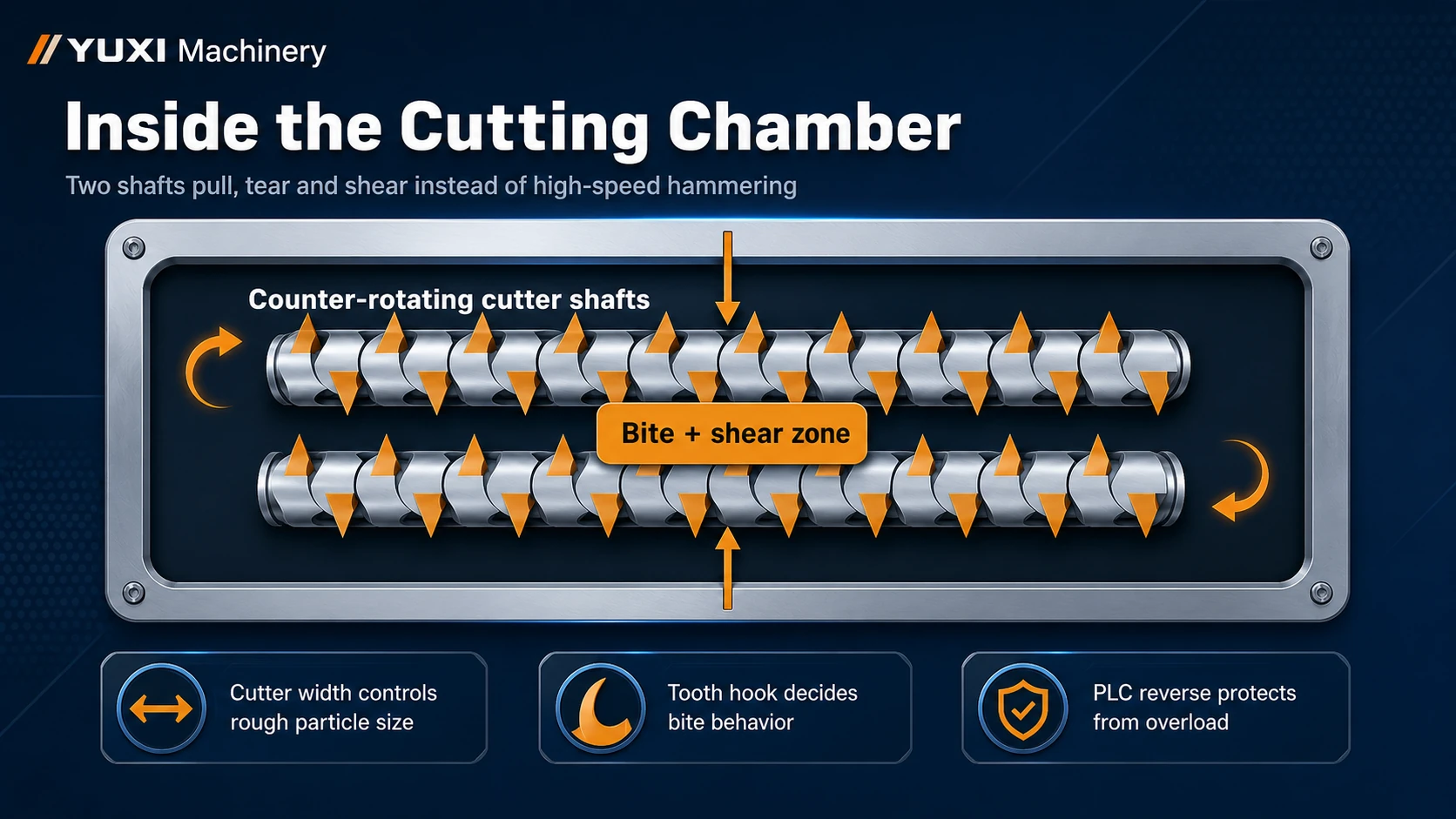
Inside the cutting chamber, the machine does three things at the same time: it pulls material downward, tears the material apart, and forces it through a narrow cutting zone between the cutter discs. The movement looks simple from outside, but the result depends heavily on cutter geometry.
Each shaft carries a series of cutter discs and spacers. The two shafts are arranged side by side and rotate inward. When a tire, plastic drum, pallet board or metal bucket touches the cutter teeth, the hooks catch the edge and pull it into the chamber. As the cutters overlap, the material is squeezed and sheared. Larger pieces may be grabbed again until they become small enough to fall through the lower opening or move to the discharge conveyor.
This is different from high-speed crushing. A hammer crusher depends on impact, speed and repeated striking. A double shaft shredder depends more on torque and bite. For dirty or mixed waste, that lower-speed action can be useful because the machine is less likely to throw material violently and can tolerate irregular shapes better.
Industry descriptions of twin-shaft shredders usually focus on the same core principle: two shafts arranged in parallel, rotating in opposite directions, with cutting tools that break down large-volume materials by cutting, tearing and shredding. In practical project conversations, that translates into one question: can the cutter set pull in the buyer’s real material without bridging, wrapping or repeated jamming?
Material can be fed by conveyor, grab, loader or manual feeding depending on the project scale. For bulky waste, the hopper must be large enough to accept irregular pieces without constant repositioning. For metal scrap or heavy tires, feeding should be controlled so the chamber does not receive a shock load all at once.
A common mistake is to judge the shredder only from the opening size. A big hopper helps, but it does not solve every feeding problem. Low-density plastic drums may bounce. Long textile waste may bridge. Pallets may cross the chamber at an awkward angle. Whole tires with steel wire may need controlled feeding to avoid unnecessary cutter wear.
The two shafts rotate toward each other. Cutter hooks catch the edge of the waste and drag it into the center. This self-feeding action is one reason buyers choose a double shaft shredder for bulky or hard-to-feed material. A single rotor with a pusher can be excellent for controlled output, but a dual-shaft design often wins when the first problem is simply getting large, irregular waste opened.
Once material is inside the cutting zone, the cutter discs tear and shear it. Blade thickness, overlap clearance, shaft speed and tooth shape influence how aggressive the machine feels. Thin cutters can produce smaller pieces but may not be the right choice for high-impact metal scrap. Thick cutters resist tougher material better, but output tends to be rougher.
In real plants, no one feeds perfect material all day. A hidden steel piece, a tire bead bundle, wet textile, a bent metal bucket or a large lump can raise current quickly. A PLC-controlled system can stop and reverse the shafts automatically to release the jam. This function does not mean the machine can ignore every unsuitable object, but it reduces manual cleaning and protects the reducer, shaft and cutter set from unnecessary abuse.
Most double shaft shredders discharge rough pieces without a bottom screen. The shredded material falls to a conveyor, storage pit or downstream machine. If the project needs a more uniform final size, the line usually adds a crusher, granulator, screen or a screen-controlled shredder after the double shaft pre-shredder.
Two machines with similar power can behave very differently. In factory discussions, a good engineer will usually ask for material photos or videos before recommending blade layout. The reason is simple: the blade set that works for plastic drums is not automatically right for tires, e-waste or light metal scrap.
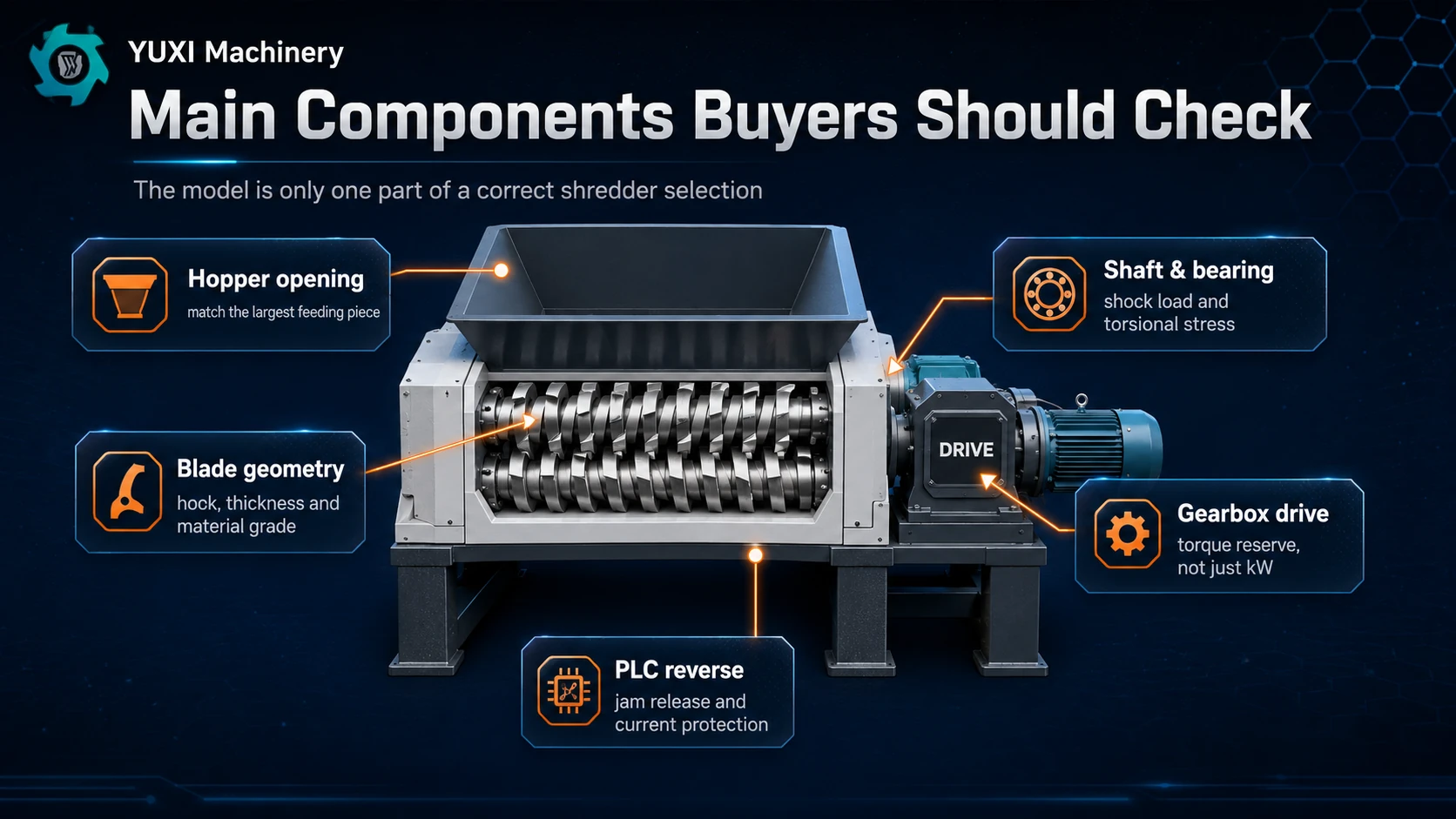
The hopper must match the largest expected feed piece and the feeding method. Loader feeding, grab feeding and conveyor feeding create different impact loads. Light bulky waste may need a taller hopper or anti-bridging attention, while heavy metal scrap may need stricter feeding control.
Cutter thickness, tooth shape and spacing decide the bite force and rough output tendency. Wider cutters are normally used for tougher material and rougher output. Narrower cutters can give smaller pieces, but they may wear faster in abrasive applications.
The shaft has to resist torsional stress and shock load. YUXI’s product page notes 42CrMo alloy steel main shafts, which are commonly selected in heavy machinery when strength and toughness are important.
The reducer is where many cheap selections fail. A buyer may see the same motor power on two proposals, but the torque reserve, reducer type, service factor and coupling design can be completely different.
Auto reverse should be treated as a production feature, not just a brochure phrase. Ask how overload is detected, how many reverse attempts are allowed, and whether current feedback can be adjusted for different materials.
Heavy-duty frames reduce vibration and shaft misalignment. Maintenance access matters because cutter inspection, bolt checking and chamber cleaning are not optional in continuous recycling work.
Buyers often ask for a fixed output size such as 30 mm, 50 mm or 100 mm. With a double shaft shredder, the more honest answer is: output is approximate unless the line adds screening or secondary reduction. The machine can be configured toward a rough size range, but it normally does not produce the same controlled particle size as a single shaft shredder with a bottom screen.
Output size is mainly affected by four factors. The first is blade thickness. A thicker cutter usually produces larger rough pieces. The second is cutter tooth geometry. Aggressive hooks bite better but may create longer torn pieces on flexible material. The third is material behavior. Rubber, textile, thin sheet metal and rigid plastic do not fracture the same way. The fourth is the downstream line. If a screen, granulator or crusher follows the shredder, the first-stage output can be rougher.
For many plants, rough output is not a disadvantage. A tire line only needs the first shredder to open the tire into chips before the rasper and steel separation stage. A metal recycling line may only need to reduce buckets, cans or thin scrap so magnetic separation and downstream crushing run more smoothly. A bulky waste plant may only need volume reduction before sorting, baling or fuel preparation.
The most useful double shaft shredder inquiry is not “What is your price?” It is “Here is my material, here is the largest feeding size, here is the next process, and here is the capacity I need per hour.” That information changes the cutter set, powertrain, hopper and discharge design.
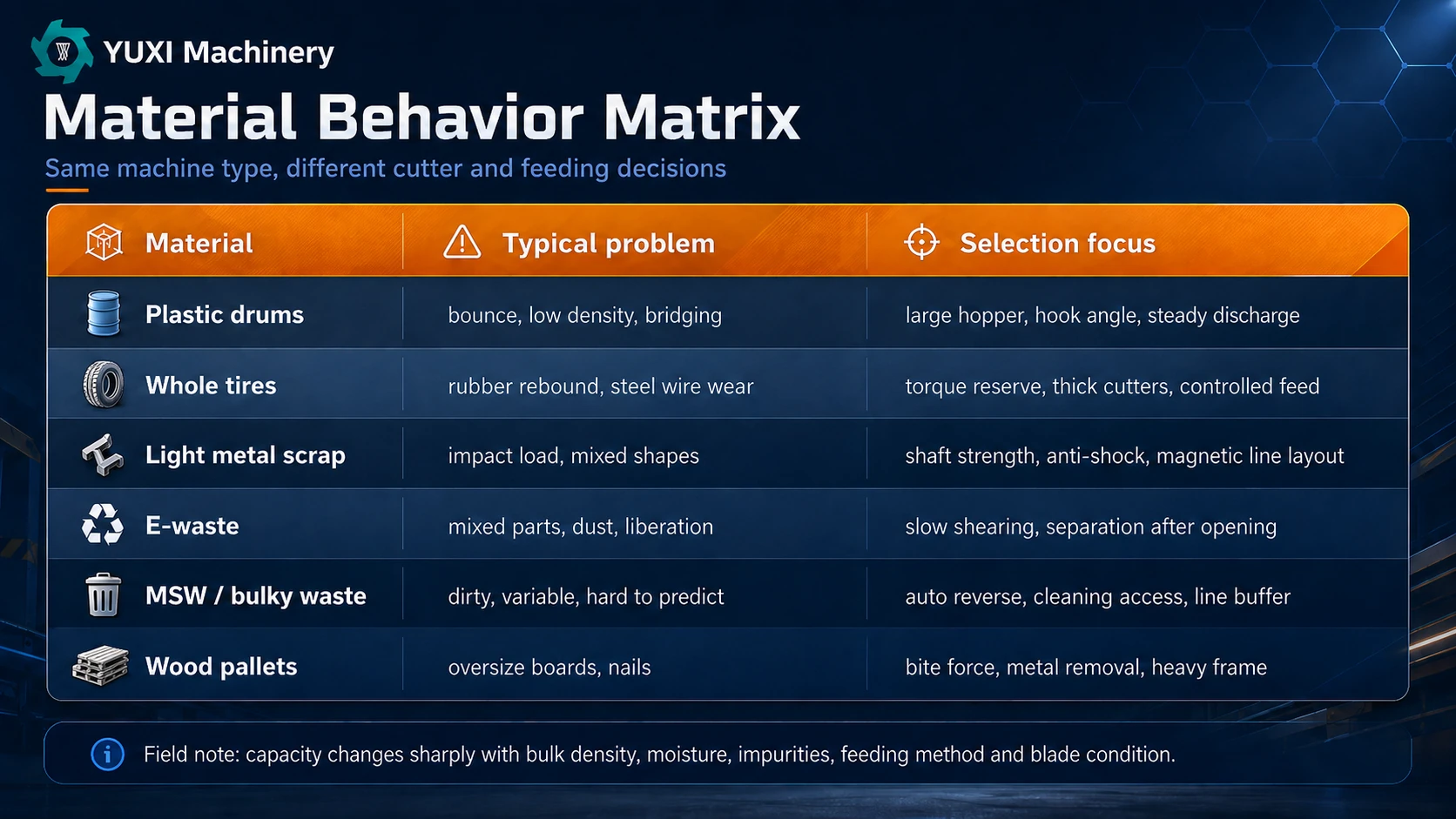
| Material | Typical challenge | Practical configuration focus | Common next process |
|---|---|---|---|
| Plastic drums, crates and buckets | Low density, bouncing, bridging | Hook angle, hopper shape, stable feeding | plastic shredder, crusher, washing line or granulator |
| Waste tires | Rubber rebound, steel wire, high cutter wear | Thick cutters, torque reserve, controlled feed | Rasper, steel wire separator, rubber granule line |
| Light metal scrap | Impact load, folded shapes, mixed impurities | Shaft strength, cutter thickness, magnetic layout | Magnetic separator, eddy current separator, crusher or baler |
| E-waste and small appliances | Mixed materials, component opening, dust | Low-speed tearing, separation planning | Screening, air separation, electrostatic separation |
| MSW and bulky waste | Variable feed, dirty material, hidden hard objects | Auto reverse, chamber access, line buffer | Sorting, RDF preparation, baling or secondary shredding |
| Wood pallets and furniture | Oversized boards, nails and inconsistent thickness | Large hopper, strong bite, metal removal | Magnet, crusher, biomass preparation or volume reduction |
In field use, moisture and contamination are often underestimated. Wet paper, dirty film, textile waste with ropes, and mixed MSW with hidden hard pieces can reduce actual throughput. For this reason, a reliable supplier will normally ask for a short video, not just a material name.
The double shaft shredder is often the first machine after feeding. Its job is to make the material smaller, more open and easier to convey. After that, the material may enter magnetic separation, eddy current separation, screening, secondary crushing, granulation, baling or fuel preparation.
For paint buckets, thin sheet scrap, cans, light aluminum profiles and mixed light metals, the shredder opens and reduces the material before separation or crushing. A complete waste metal shredding and recycling system may include conveyors, magnetic separator, eddy current separator, hammer crusher, dust control and collection equipment.
For whole tires, the double shaft shredder can produce rough tire chips before the rasper and steel wire separation stage. The first shredder does not need to make finished rubber granules. It only needs to feed the next stage safely and consistently. For a full layout, buyers can compare a waste tire shredding and recycling system.
Mixed waste is usually the hardest to quote from a single sentence. The line may need pre-sorting, a double shaft shredder, screening, air separation, magnetic separation, drying or secondary shredding. The U.S. EPA’s non-hazardous materials and waste management hierarchy is a useful reminder that no single waste management method fits all materials and all circumstances, so line design should start from material classification and final use.
For rigid containers and thick plastic scrap, the double shaft shredder may be used as the first opener. For washed flakes, pelletizing feed or strict granulator feeding, buyers may still need a screen-controlled or secondary machine after the first stage.
A good selection starts from the waste stream, not from the largest model in the catalog. Oversizing increases purchase cost and power consumption. Undersizing creates constant overload, low throughput and early wear. The right answer sits between those two problems.
“Plastic waste” is not enough. A 200-liter HDPE drum, woven bag, pipe offcut and film roll behave differently. “Metal scrap” could mean thin cans, aluminum profiles, paint buckets or heavy steel pieces. Send photos and videos.
The largest piece decides hopper opening and chamber width. One oversized item can create more trouble than one ton of smaller material.
If the final target is 20 mm, the double shaft shredder may only be the first stage. Ask what secondary machine or screen is needed.
Capacity should be discussed as tons per hour and working hours per day. Bulk density, moisture and feeding continuity can change the real result.
Do not select cutter thickness only from the output size. Tire, MSW, textile, plastic drum and metal scrap need different wear and bite decisions.
Blade checking, bearing lubrication, bolt inspection and chamber cleaning must be possible without dismantling half the line.
The machine name is less important than the job it must do. A double shaft shredder is usually selected for aggressive rough reduction. A single shaft shredder is often selected when the line needs more controlled output through a screen. A four shaft shredder can offer stronger internal recirculation and better sizing control than a simple two-shaft layout, but it is also more complex.
| Machine type | Working principle | Best fit | Selection warning |
|---|---|---|---|
| Double shaft shredder | Two counter-rotating cutter shafts grip, tear and shear | Bulky, mixed, dirty or difficult first-stage reduction | Output is rough unless followed by screening or secondary reduction |
| Single shaft shredder | Rotor, fixed knives, hydraulic pusher and screen | Controlled output before granulation, washing, storage or RDF sizing | Oversized or very mixed feed may need pre-shredding first |
| Four shaft shredder | Multiple shafts and screen-based internal recirculation | More controlled reduction of e-waste, confidential waste, packaging or RDF | More maintenance points and higher chamber complexity |
In many serious recycling plants, two machines are used together. The double shaft shredder opens the material first. A secondary shredder, crusher or granulator then produces the smaller and more uniform size required by the final process.
A double shaft shredder contains rotating cutter shafts, nip points and heavy moving parts. Guarding, emergency stop layout, lockout procedures and operator training should be part of the project discussion, not an afterthought. OSHA’s general machine guarding standard notes that guarding is required to protect operators from hazards such as point of operation, ingoing nip points, rotating parts, flying chips and sparks. Local requirements may differ, so the final safety layout should be reviewed for the buyer’s country and plant rules.
Routine maintenance should include cutter inspection, bolt checking, gearbox oil checks, bearing lubrication, chamber cleaning and review of abnormal vibration or noise. For abrasive material such as tires, dirty plastic, sand-contaminated waste or metal scrap, spare cutters and wear parts should be planned at the proposal stage.
Do not wait until the machine loses capacity before checking blades. Dull or damaged cutters increase current, reduce bite, create more jams and stress the reducer. In many plants, a simple inspection schedule saves more money than a larger motor.
This machine is versatile, but it is not suitable for every problem. If the project requires very fine and uniform particle size in one step, a screen-controlled machine or a complete two-stage line may be better. If the material is hazardous, explosive, liquid-filled or chemically unstable, the process needs special safety review. If the feed is mostly clean plastic film and the line needs controlled flake size, a single shaft or plastic recycling configuration may be more economical.
The double shaft shredder is strongest when the plant has a rough first-stage reduction problem: large pieces, mixed shapes, bulky material, irregular feeding and a downstream process that can handle rough output.
To recommend a practical model, prepare the following details before asking for price:
For oversized, highly mixed or heavy-duty projects, some buyers also compare a hydraulic shredder before finalizing the feeding and drive configuration.
These references are useful when planning recycling lines, circular material flow and plant safety. They are not a substitute for project engineering, but they help buyers ask better questions.
It uses two counter-rotating cutter shafts. The cutters grab the material, pull it into the chamber, and reduce it by low-speed shearing, tearing and squeezing.
Because the shafts usually rotate slower than crushers or granulators, while the reducer and drive system deliver high torque for tough, bulky or irregular material.
Most standard double shaft shredders do not use a screen for discharge control. Output is rough and mainly affected by blade thickness, cutter shape and material behavior.
Not by itself in most rough pre-shredding applications. If uniform output is required, add a screen, crusher, granulator or a secondary shredder after the first stage.
Common materials include tires, plastic drums, crates, light metal scrap, e-waste, wood pallets, bulky waste, paper, textiles and MSW. Final suitability depends on size, impurities and output target.
Jamming can come from oversized hard pieces, poor feeding control, wrapped textile, hidden steel, wet material, dull cutters or wrong blade geometry. Auto reverse helps, but it does not replace proper selection.
Start from the material and rough output requirement. Tougher materials such as tires, bulky waste and light metal scrap often need thicker or stronger cutters, while plastics and paper may use different layouts.
Send material photos or video, largest feed size, target output, required capacity, working hours, country, voltage, feeding method and the downstream process after shredding.
If your project involves bulky waste, plastic drums, tires, light metal scrap, e-waste, wood pallets or mixed MSW, do not start with model names only. Send the material condition and the final recycling goal. YUXI can help match cutter design, chamber size, motor/reducer configuration, conveyor layout and downstream equipment to the real plant requirement.

Get in touch with our nice team today to get a price estimate for a shredder machine.
Contact Us