





A single shaft shredder is often the most practical first size-reduction machine for plastic recycling lines that need controlled output, stable feeding and reliable downstream processing. It can reduce bulky plastic bottles, drums, lumps, pipes, profiles, crates and selected films into more uniform pieces before washing, sorting, granulation or pelletizing.
Quick Answer
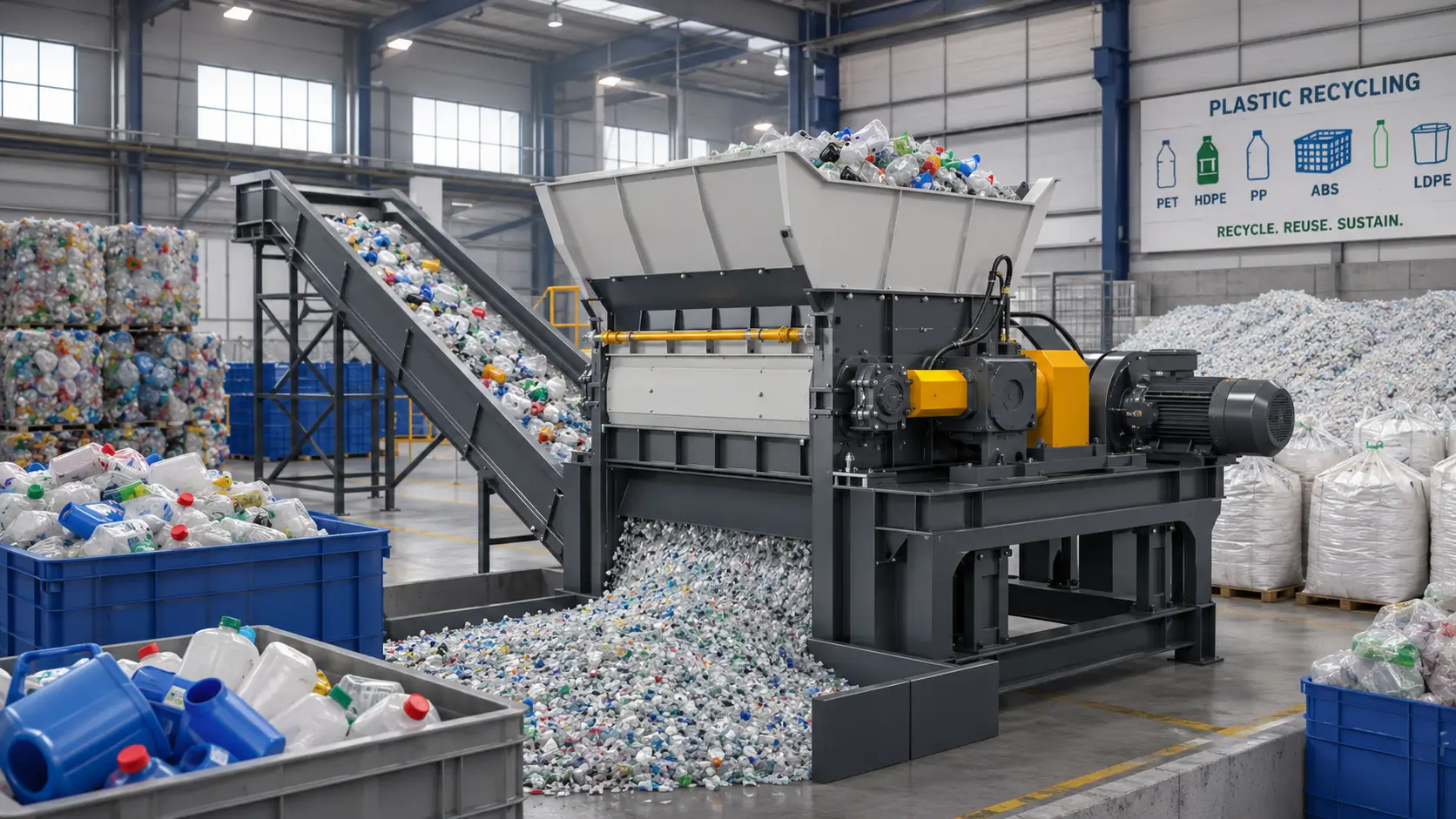
A single shaft shredder for plastic recycling uses one low-speed, high-torque rotor, fixed counter knives, a hydraulic pusher and a bottom screen to cut plastic waste into a controlled discharge size. It is especially useful for PET bottles, HDPE containers, PP crates, plastic drums, pipe sections, profiles, plastic lumps, injection molding scrap and many forms of post-industrial plastic waste. In a complete recycling line, it usually works before washing, separation, drying, granulation or pelletizing.
Why Plastic Recycling Lines Need Controlled Shredding
Plastic recycling is not only a waste-handling problem. It is a material-preparation problem. Bottles may be hollow and bouncy. HDPE drums are bulky and slippery. PP crates can be rigid and springy. Plastic film may wrap around a rotor if the machine is not configured correctly. Pipe sections and profiles can feed unevenly because they are long, curved or thick-walled. Before a recycling plant can wash, separate, dry or pelletize these materials, it needs a stable feed size and a stable feed rate.
This is where the single shaft shredder becomes valuable. It does not simply tear material randomly. A well-configured single shaft plastic shredder uses a rotor, fixed blades, a pusher and a screen to create a more predictable output. That predictable output reduces the burden on conveyors, washing tanks, friction washers, granulators, drying systems and pelletizing extruders.
The need for better plastic recycling infrastructure is also clear from public data. The OECD reported that only about 9% of plastic waste was ultimately recycled, while large portions were landfilled, incinerated or mismanaged. UNEP also reports that 19–23 million tonnes of plastic waste leak into aquatic ecosystems every year. These figures show why recycling plants need practical equipment that can turn difficult plastic waste into a processable secondary raw material.
For a manufacturer or recycling investor, the question is not simply, “Can the machine shred plastic?” The more important question is, “Can the machine deliver the particle size, capacity and feeding stability required by the next step of the line?” That is the core reason single shaft shredders are commonly used for plastic recycling applications.
What Is a Single Shaft Shredder for Plastic Recycling?
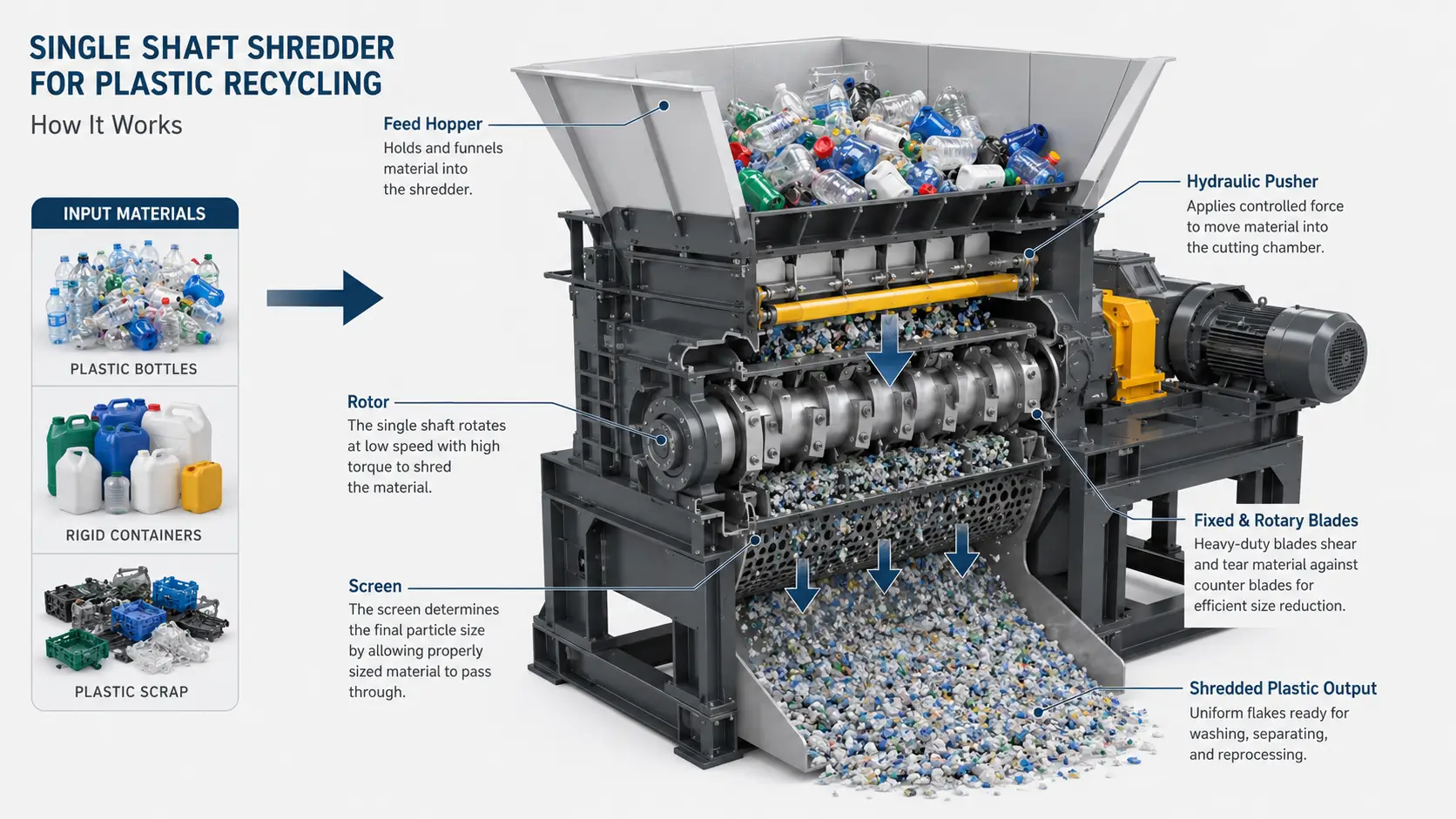
A single shaft shredder is an industrial size-reduction machine built around one rotating cutter roller. Plastic waste is loaded into a hopper, pressed toward the rotor by a hydraulic pusher and cut between rotary knives and fixed counter knives. Material that becomes small enough passes through the screen under the cutting chamber. Oversized pieces remain in the chamber until they are cut again.
Compared with a rough double shaft shredder, a single shaft shredder is normally selected when the recycling process needs better control of final output size. Compared with a high-speed plastic crusher or granulator, a single shaft shredder is more suitable for bulky, hollow, irregular or thick plastic waste that needs pre-size reduction before finer processing.
For buyers reviewing the Single Shaft Shredder Machine product page, the important design points are consistent: hydraulic feeding, controlled output size screening, heavy-duty rotor design and wear-resistant blades for continuous industrial operation. These features are especially relevant for plastic recycling plants that process mixed material shapes rather than only small clean scrap.
How Does a Single Shaft Plastic Shredder Work?
1. Feeding through the hopper
The hopper receives loose plastic bottles, containers, crates, lumps, pipes or production scrap. A large hopper is important because many plastic items have low bulk density. A plant may handle a high volume of bottles or containers even when the actual weight per batch is not very high.
2. Hydraulic pusher stabilizes contact with the rotor
The hydraulic pusher moves material toward the cutting rotor. This is one of the main differences between a single shaft shredder and many simpler crushers. Bulky plastic waste does not always fall naturally into the cutting zone. The pusher helps reduce bridging, bouncing and empty cutting. For hollow containers, plastic lumps and pipe sections, a controlled pushing force helps keep the machine cutting instead of spinning without load.
3. Low-speed rotor creates high torque cutting
The rotor turns at relatively low speed but produces high torque. Rotary knives mounted on the rotor work against fixed knives to shear, tear and cut plastic waste. Low-speed cutting helps reduce dust and heat compared with very high-speed impact reduction. It also gives the machine stronger bite on thick or irregular plastic items.
4. Screen controls the discharge size
The bottom screen is the sizing element. If the screen opening is small, the output can be more uniform, but throughput may be lower and blade wear may increase. If the screen opening is larger, the machine may process more material per hour, but the discharge will be rougher. This is why screen selection should match the downstream process. For example, a washing line or granulator feeding stage usually needs smaller and more consistent pieces than a rough volume-reduction application.
5. Discharge moves to the next process
After screened discharge, the shredded plastic can move by conveyor, screw conveyor, blower or manual collection, depending on the plant layout. The output may then enter washing, label removal, float-sink separation, drying, metal removal, granulation or pelletizing.
What Plastics Can a Single Shaft Shredder Process?
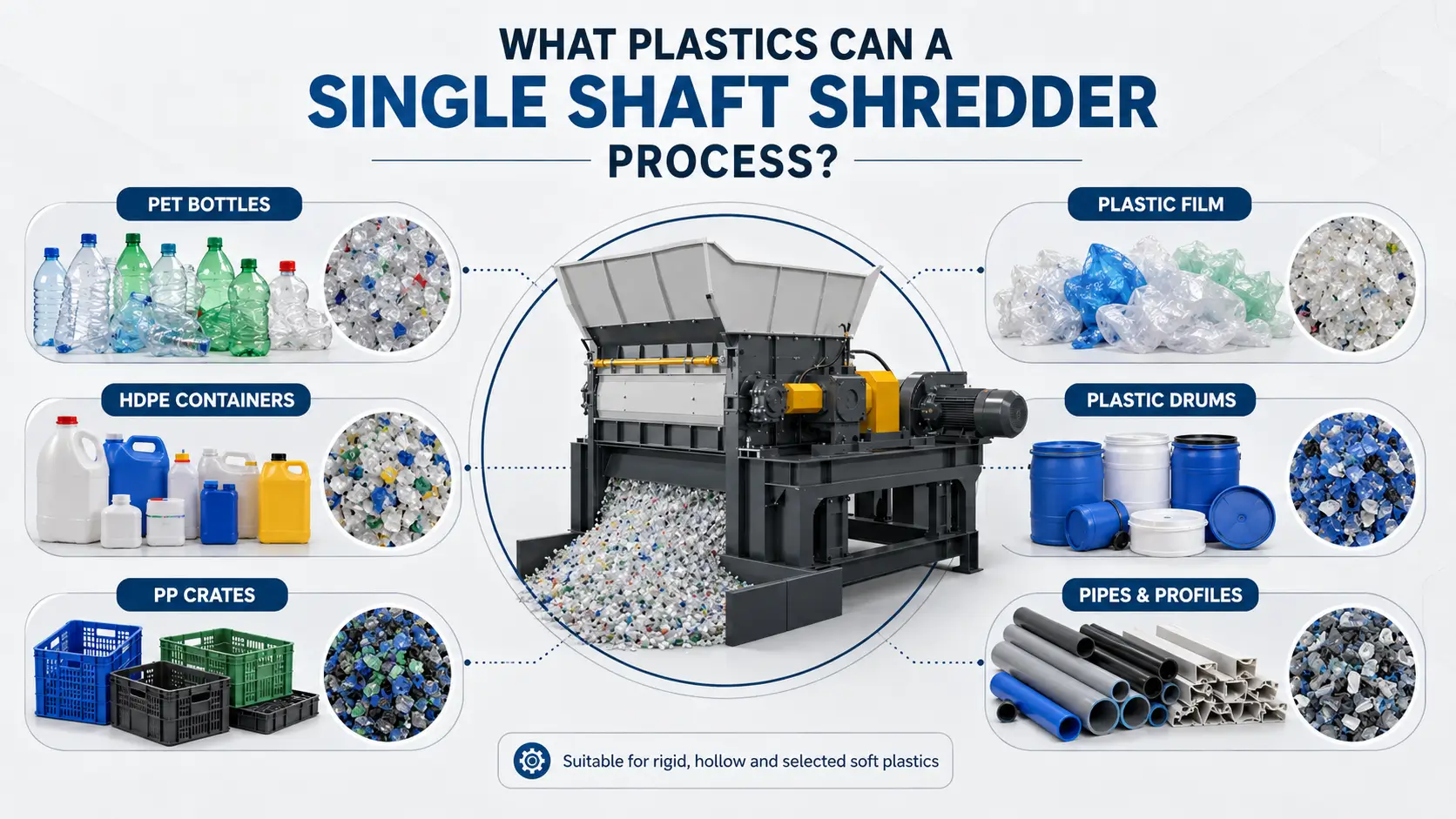
The best way to evaluate a plastic recycling shredder is by material behavior. Different polymers and product shapes create different feeding, cutting and discharge challenges. The table below summarizes common plastic recycling applications.
| Plastic material | Common examples | Why a single shaft shredder is used | Typical next step |
|---|---|---|---|
| PET | Bottles, trays, packaging scrap | Reduces hollow bottles and mixed packaging into washable pieces | Washing, label removal, flake sorting |
| HDPE | Milk bottles, detergent bottles, drums, containers | Handles hollow, rigid and sometimes thick-walled plastic | Washing, granulation, pelletizing |
| PP | Crates, boxes, buckets, caps, injection scrap | Breaks rigid and springy parts into controlled fragments | Sorting, granulation, extrusion |
| PE film | Film rolls, bags, agricultural film, woven bags | Can be used when rotor, screen and pusher are configured for soft material | Washing, squeezing, pelletizing |
| PVC / PE / PP pipe | Pipe sections, profiles, extruded scrap | Pre-reduces long or thick sections before finer crushing | Granulation, separation, reprocessing |
| Plastic lumps | Purge, blocks, start-up waste, rejected molded parts | High torque cutting reduces dense pieces that are hard for crushers | Granulation or pelletizing |
PET bottle recycling
PET bottles are light, hollow and often mixed with labels, caps and residue. A single shaft shredder can open and reduce bottles before washing. The goal is not to produce final clean PET flake in one machine; the goal is to make the bottle stream easier to convey, wash and separate. In many bottle-to-flake lines, shredding supports stable feeding into washing and separation stages.
HDPE containers and drums
HDPE is common in detergent bottles, chemical containers, milk bottles and drums. These items can be bulky and tough, especially when thick-walled. A single shaft shredder with a suitable rotor and screen can reduce them into pieces that are easier to wash and granulate. The U.S. EPA has reported PET bottle and HDPE natural bottle recycling rates near 29% in its 2018 material-specific data, showing that these streams are important targets for mechanical recycling systems.
PP crates, buckets and injection molding scrap
PP crates, pallets, boxes and injection molding rejects often have ribs, corners and irregular thickness. They can jam simple feeding systems if not prepared correctly. A hydraulic pusher helps keep the material in contact with the rotor. For PP scrap that will enter a granulator, the shredder can act as a first reduction stage, protecting the granulator from oversized pieces and unstable feeding.
Plastic film and woven bags
Film is more sensitive than rigid plastic because it can wrap, stretch or bridge. A single shaft shredder can process selected film streams, but the configuration matters. Clean PE film, woven bags and certain soft plastics may require a different rotor design, pusher program, screen size and discharge arrangement from rigid plastic. For dirty agricultural film, washing and dewatering requirements must also be considered.
Pipes and profiles
Pipe and profile scrap is often long, tough and difficult to feed into a high-speed crusher directly. The single shaft shredder provides controlled pre-shredding before granulation. For pipe recycling, the buyer should confirm maximum feeding length, wall thickness, polymer type, target output size and whether a conveyor or special feeding system is needed.
Main Application Scenarios in Plastic Recycling
Plastic recycling plants
In a general plastic recycling plant, the shredder is used to reduce incoming waste into a manageable size. This improves downstream line stability and reduces manual cutting or pre-processing. It is especially useful when the plant receives mixed rigid plastics, production scrap or bulky containers.
Post-industrial plastic scrap recovery
Factories that produce bottles, pipes, profiles, crates, molded parts or packaging often generate internal scrap. Clean post-industrial scrap has strong recycling value because contamination is usually lower than municipal waste. A single shaft shredder helps the factory convert rejects, trims, purges and start-up waste into regrind-ready material.
Post-consumer packaging recycling
Post-consumer plastic is more difficult because it may contain labels, caps, liquids, dirt, metal and mixed polymers. The shredder plays an early preparation role. It opens containers, reduces size and helps washing equipment access the surface of the plastic. Good sorting before shredding is still important, because a shredder does not solve polymer contamination by itself.
Plastic drum and container recycling
Large plastic drums and containers are commonly used for chemicals, food ingredients and industrial fluids. These materials may require pre-cleaning or safety inspection before shredding. Once prepared, the single shaft shredder can reduce them into pieces suitable for washing, granulation or pelletizing.
Pipe, profile and extrusion waste recycling
Extrusion plants often deal with long start-up scrap, off-spec profiles and thick pipe sections. The shredder can be installed near the production area or in a centralized recycling workshop. The output can then be fed into a granulator to produce smaller regrind for reuse or sale.
Where the Single Shaft Shredder Fits in a Plastic Recycling Line
A plastic recycling line is a sequence of preparation steps. The shredder is usually not the final machine. It is the machine that makes the rest of the line work more predictably. A common process can include sorting, shredding, washing, drying and pelletizing.
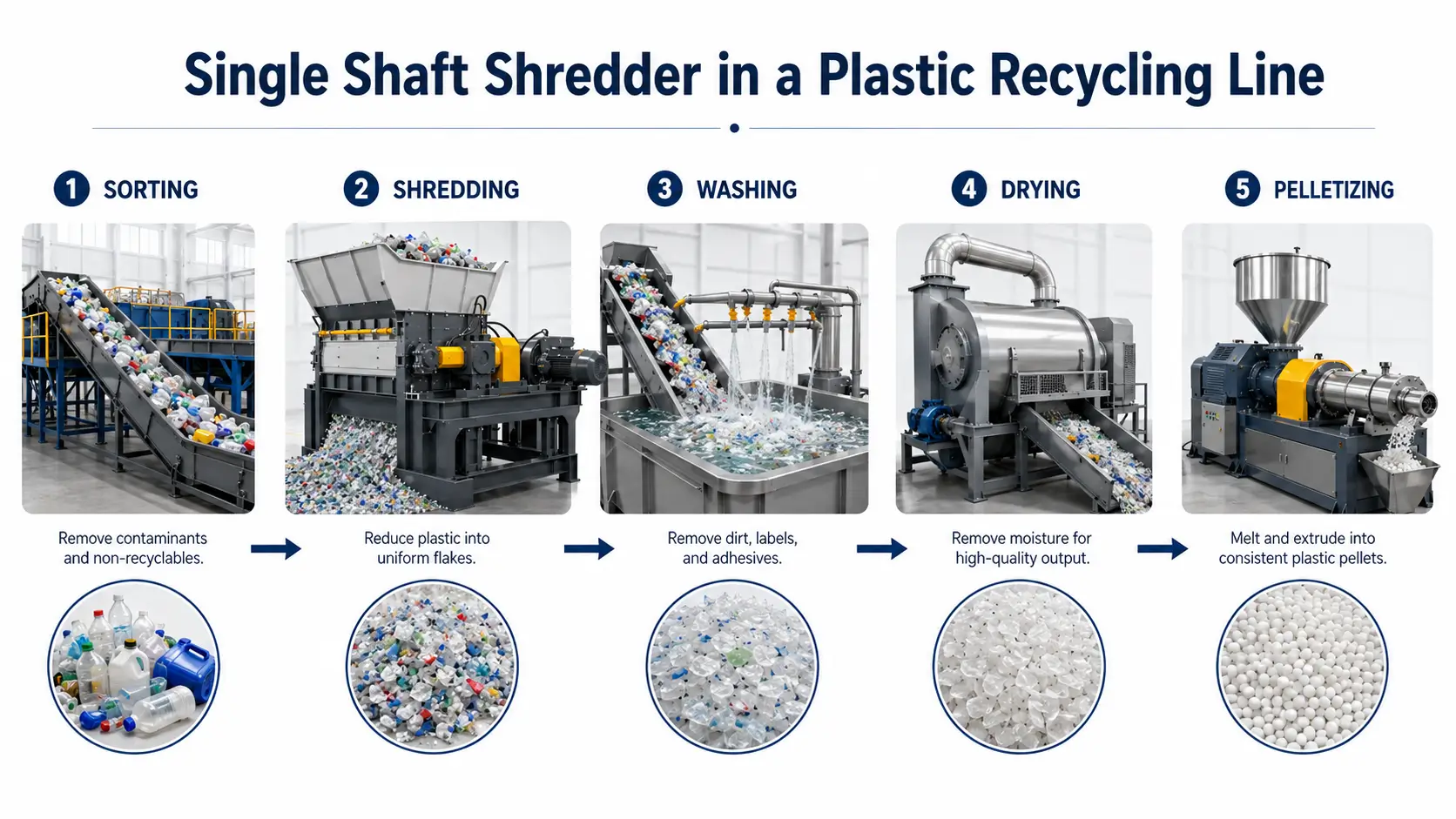
In a bottle washing line, shredding creates pieces that can release labels and contaminants more easily. In a rigid plastic recycling line, shredding reduces drums, crates and containers before washing and granulation. In a film recycling line, the shredder may feed washing and squeezing equipment, although the configuration must be adapted to soft material. In a pelletizing line, shredding and granulation create a more stable feedstock for the extruder.
For buyers building a complete system, the shredder should not be selected alone. It should be selected together with conveyor layout, magnetic separation, washing requirements, water treatment, drying method, granulator size, pelletizer capacity and the final product quality target. You can also review the Single Shaft Shredder Hub for related application and buying guides.
Single Shaft Shredder vs Double Shaft Shredder vs Plastic Crusher
Many buyers compare these machines because all of them can reduce plastic size. However, they are not interchangeable. Choosing the wrong machine can create poor feeding, high wear, unstable output or downstream blockage.
| Machine type | Best use | Output control | Typical plastic application |
|---|---|---|---|
| Single shaft shredder | Controlled size reduction of bulky or irregular plastics | Good, because of screen sizing | Bottles, drums, crates, pipes, lumps, production scrap |
| Double shaft shredder | Rough pre-shredding and volume reduction | Lower unless followed by another stage | Large bulky mixed waste, bale opening, rough reduction |
| Plastic crusher / granulator | Finer size reduction of already manageable pieces | Good for clean and smaller feed | Regrind production, injection scrap, pre-shredded flakes |
A practical rule is simple: use a single shaft shredder when you need controlled discharge from bulky plastic waste. Use a double shaft shredder when the material is extremely bulky or mixed and only rough tearing is needed first. Use a crusher or granulator when the feed is already small enough and the goal is finer regrind.
How to Choose the Right Single Shaft Shredder for Plastic Recycling
The best model is determined by material and process requirements. A supplier should not quote only from a machine name. A reliable quotation should ask what plastic will be processed, how large the incoming material is, what hourly capacity is required, what output size is needed and what downstream equipment follows the shredder.
1. Confirm material type and contamination level
Clean HDPE container scrap is very different from dirty agricultural film. PET bottles with labels are different from pipe sections. Plastic lumps are different from hollow drums. Contamination such as metal, sand, stones, liquid residue or labels affects blade wear, washing design and safety. Before ordering, prepare photos, videos, dimensions and sample weights of the material.
2. Define target output size
The screen opening directly affects output size and throughput. Smaller screens can produce more controlled pieces but may reduce capacity. Larger screens increase throughput but may require a second size-reduction stage. For many plastic recycling systems, the correct target is not the smallest possible output; it is the size that feeds the next machine efficiently.
3. Match rotor and blade configuration
Rotor diameter, knife quantity, blade material and blade layout influence cutting behavior. Rigid plastics need strong cutting force. Film may need anti-wrapping design. Lumps and pipe sections may require heavier rotor structure. Wear-resistant blades reduce maintenance frequency, but correct blade selection also depends on contamination and operating hours.
4. Consider feeding and discharge layout
Manual feeding may be acceptable for small batches, but industrial recycling plants usually need conveyor feeding. Discharge may use conveyor, screw conveyor, blower transport or direct drop into a bin. The layout should keep operators safe, reduce spillage and match plant space.
5. Evaluate automation and protection
Overload protection, automatic reverse, electrical safety, pusher control and easy access for maintenance are important for continuous operation. Plastic recycling plants often run long shifts, so downtime and maintenance access can be as important as headline capacity.
Operational Value: Why Shredding Improves Recycling Economics
A shredder is not only a machine cost. It is a process-stability investment. When the output is consistent, conveyors run more smoothly, washing systems receive steadier material, granulators avoid oversized feed, and pelletizers receive more uniform prepared scrap. This can reduce labor, manual cutting, feeding interruptions and downstream equipment stress.
The economic value is strongest when the plant handles materials that are difficult to feed directly into a granulator: drums, crates, pipe, profile scrap, lumps and mixed rigid plastics. In these cases, the shredder can increase total line availability, even if it adds an extra processing stage. For clean production scrap, the value may come from faster internal recycling and reduced outsourcing of scrap handling.
For a practical ROI estimate, buyers should calculate more than machine price. Include labor savings, recovered plastic value, reduction in disposal cost, granulator protection, blade consumption, electricity, maintenance time, screen changes and expected running hours. If the shredded material can be sold or reused at a higher value than unprocessed scrap, the payback can be significantly improved.
Maintenance Points for Plastic Recycling Shredders
Plastic shredding looks simple from outside, but maintenance determines long-term performance. The most common areas to check are blades, fixed knives, screen condition, rotor bearings, hydraulic pusher movement, gearbox oil, motor load, electrical protection and discharge clearance. Operators should also watch for material wrapping, unusual vibration, reduced output and increasing power draw.
Blade wear depends heavily on material contamination. Clean factory scrap is easier on blades than post-consumer plastics containing sand, stones or metal. Good sorting and metal removal before shredding can reduce blade damage. Regular screen inspection is also important because blocked or damaged screens can change output size and reduce capacity.
Buyer Checklist Before Requesting a Quotation
- Material type: PET, HDPE, PP, PE film, PVC, pipe, profile, plastic lumps or mixed plastic waste.
- Material form: bottle, drum, crate, film roll, pipe section, lump, bale or loose scrap.
- Maximum feeding size and average bulk density.
- Required capacity per hour or per shift.
- Target output size and downstream equipment.
- Contamination level: liquid, label, metal, sand, stone or mixed polymers.
- Working hours per day and required automation level.
- Available plant space, feeding method and discharge direction.
- Local electrical standard and safety requirements.
- Spare blades, screen sets and maintenance tools.
If you already know these details, you can send them through the waste shredder machine product category page or review the plastic shredder machine page for broader plastic processing options.
Summary: When Is a Single Shaft Shredder the Right Choice?
A single shaft shredder is the right choice when a plastic recycling project needs controlled size reduction, stable feeding and better preparation for downstream processing. It is highly suitable for rigid plastics, hollow containers, plastic lumps, production scrap, drums, crates, pipes and profiles. It can also process selected soft plastics when configured properly.
For plastic recycling plants, the main value is not only cutting plastic into smaller pieces. The real value is creating a stable material stream that washing, separation, granulation and pelletizing equipment can handle efficiently. That is why the machine is commonly used as a core preparation stage in industrial plastic recycling systems.
When choosing a machine, start with the material and the line requirement, not only the machine name. Confirm input size, material behavior, output size, capacity, screen opening, rotor configuration, blade material and downstream equipment. A properly selected single shaft shredder can improve line stability, protect downstream machines and help turn plastic waste into reusable material.
FAQ: Single Shaft Shredder for Plastic Recycling
Can a single shaft shredder process PET bottles?
Yes. A single shaft shredder can process PET bottles and reduce them into pieces suitable for washing, label removal and flake processing. The final line may still need sorting, washing and separation to produce clean PET flakes.
Is a single shaft shredder suitable for HDPE drums and containers?
Yes. HDPE containers, bottles and drums are common applications. The machine configuration should match container size, wall thickness, contamination level and target output size.
Can it shred plastic film?
It can process selected plastic film, PE film and woven bags, but soft plastics require careful rotor, pusher and screen configuration to reduce wrapping and bridging. Dirty agricultural film may also require special washing and dewatering equipment.
What is the difference between a single shaft shredder and a plastic crusher?
A single shaft shredder is better for bulky, hollow or irregular plastic waste and uses a low-speed rotor with hydraulic feeding and screen control. A plastic crusher or granulator is usually better for smaller, cleaner and more manageable pieces that need finer regrind.
What output size can a single shaft shredder produce?
The output size depends mainly on the screen opening, rotor configuration and material behavior. Smaller screen openings create more controlled output but may reduce throughput. The right output size should match the next process, such as washing, granulation or pelletizing.
How do I choose the right model?
Prepare material photos, maximum input size, target capacity, desired output size, contamination level, working hours and downstream equipment details. A manufacturer can then recommend rotor, blade, motor, screen, feeding and discharge configuration.