A practical receiving-to-hopper checklist for safer loads, steadier feeding and fewer surprises in the cutting chamber.
Prepare the Load Before You Prepare the Machine
Good aluminum feed preparation starts at receiving, not beside the shredder. Identify what arrived, separate incompatible grades, quarantine batteries and closed containers, remove free liquids, take off attachments that are cheap to dismantle, and check the largest recurring piece against the real feed opening. The aim is not to make every item spotless. It is to stop hazards and damaging tramp material, preserve valuable grades, and give the line a controlled feed.
1. Set the Preparation Boundary Around the Actual Scrap
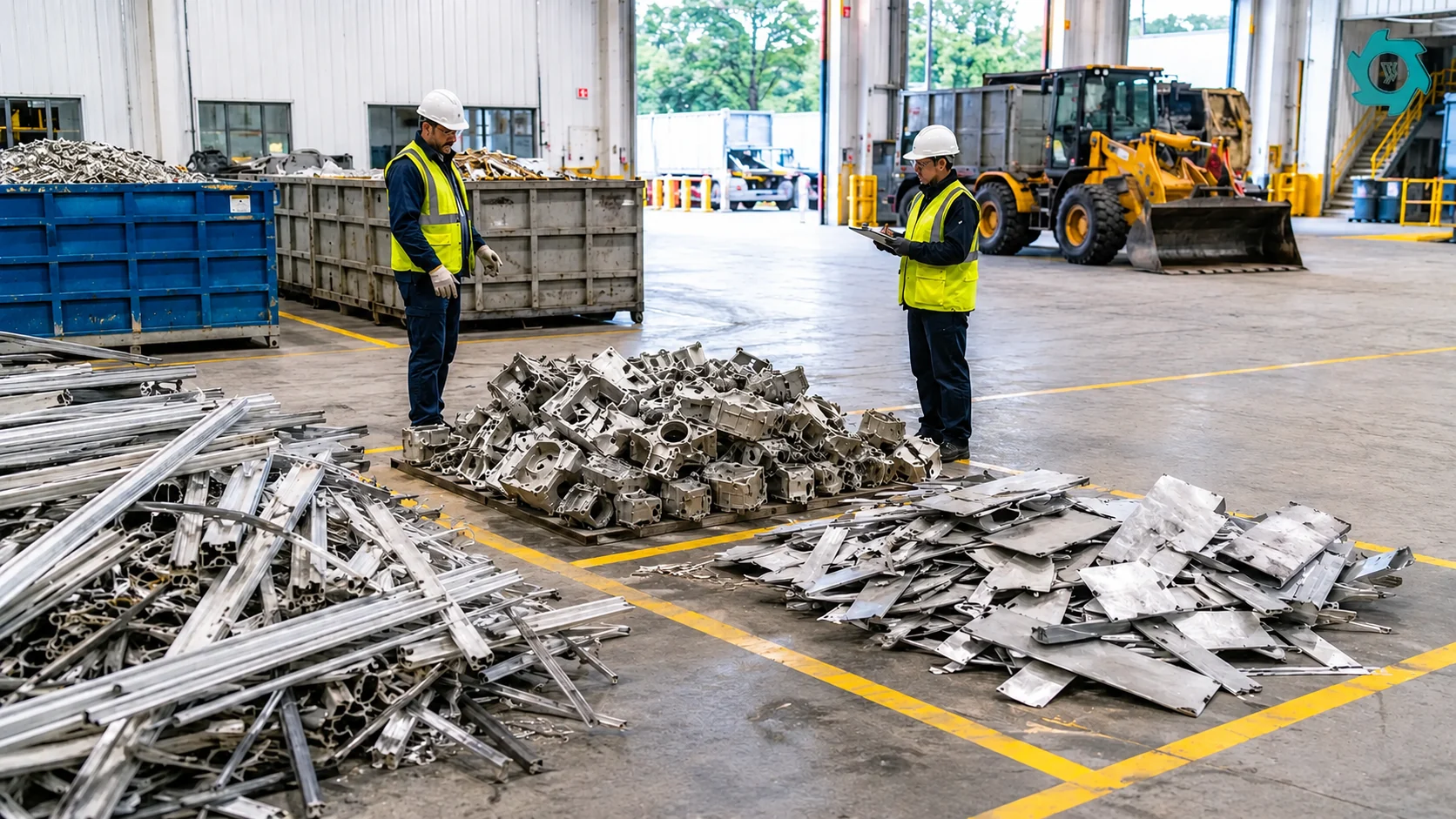
“Scrap aluminum” is not one feed. A bin of clean extrusion offcuts may need little more than length control. Demolition frames can carry steel hinges, screws, rubber seals and thermal-break strips. Cast housings may arrive with shafts, bearings or oily cavities. Thin sheet behaves differently again: it can nest, spring back or arrive as loose low-density bundles.
If a clean, known production grade already meets a remelter’s size and packaging requirement, shredding may add cost without adding value. If the purpose is liberation, volume reduction or steady downstream sorting, preparation should remove only what the installed line should not receive. The scrap aluminum recycling line pillar explains why profiles, wheels, castings, sheet and mixed feed cannot be treated as one fixed machine package.
Separate the load into recognizable feed families before deciding what preparation each one needs.
2. Inspect, Identify and Classify Each Incoming Load
Tip or open the load in a controlled inspection area rather than feeding it directly from the delivery container. Compare the paperwork with what is visible, photograph unusual pieces and sample more than the clean top layer. Mixed or suspicious loads belong in a hold area until someone with authority releases them.
Record the facts that affect the line
source, supplier and declared scrap category;
loose, bundled, baled or containerized condition;
largest recurring dimensions, not only the average piece;
estimated mix of extrusion, cast, sheet and non-aluminum attachments;
visible oil, water, coatings, dirt, rubber, plastic, wood or glass;
closed sections, tanks, cylinders, batteries or unfamiliar assemblies;
batch weight and the bin or campaign assigned after inspection.
Keep known wrought and cast grades separate when the buyer values that distinction. Do not blend a clean production lot with demolition scrap merely to fill the hopper. Once mixed and shredded, the lost identity may be difficult or uneconomic to recover.
Sample the load where the risk actually hides
A top-layer photograph is weak evidence for a deep bin, bale or walking-floor load. Define a repeatable check by delivery form: inspect several loader grabs from different positions in loose material; open a stated number of bundles; or isolate bales with broken ties, staining, unexpected density or inconsistent supplier records. The method does not need to be statistically elaborate to be useful, but it must prevent the clean surface from becoming the entire acceptance decision.
Keep a retained photo set and, where chemistry affects value, a labeled physical sample. Link both to the batch ID. When a downstream aluminum fraction fails specification, this record helps determine whether the cause was the incoming grade, incomplete liberation, separator settings or cross-contamination in storage.
3. Give Every Load a Red, Amber or Green Release Class
A three-class gate makes acceptance rules easier to enforce than a long list that operators must interpret under production pressure. The useful point is that a load cannot move from receiving to the feed bunker without a recorded status.
Class
Typical condition
Required action
Green — direct stage
Known source, correct grade, no prohibited items or free liquid, geometry inside the approved envelope
Assign batch ID and stage in the designated feed zone
Send to a defined dismantling, cutting, draining or reinspection step; record the result before release
Red — quarantine or reject
Battery, pressurized or unknown closed container, explosive/radioactive suspicion, hot load, unidentified chemical residue or material outside the permitted process
Stop movement and follow the site emergency, quarantine or supplier-rejection procedure
Do not downgrade a Red item to Amber simply because production needs material. Only the person named in the acceptance procedure should be able to release a held load, and the reason should remain attached to the batch record.
4. Stop Prohibited and High-Risk Items Before Size Reduction
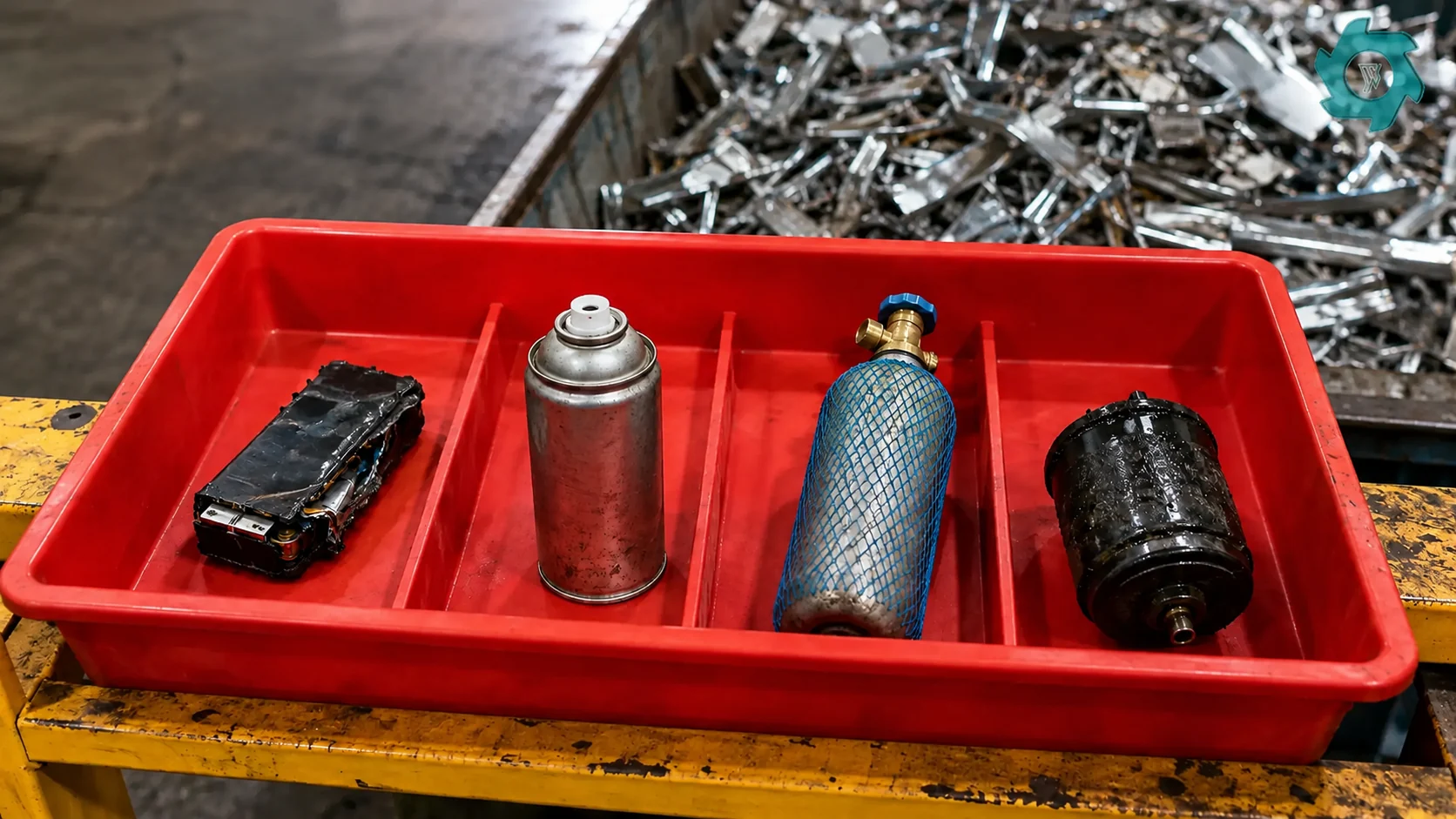
The shredder should never be used to discover whether a closed object was empty. Reject or quarantine compressed-gas cylinders, aerosol cans, fire extinguishers, fuel tanks, sealed hydraulic components and other containers unless an approved site procedure has identified, emptied and verified them. OSHA accident records include scrap-yard incidents involving acetylene and oxygen cylinders during cutting or shearing.1
EPA advises that lithium-ion batteries be sent to separate collection or recycling because crushing and damage can create a fire hazard.2 Check hollow profiles, vehicle parts, devices and mixed demolition scrap for concealed cells. Isolate suspect items without puncturing or dismantling them at the feed line.
Also stop ammunition, explosive devices, radioactive sources, unknown chemical containers and hot material. OSHA’s metal scrap recycling guidance treats hazard identification and control as a facility-wide responsibility rather than a task left to the shredder operator.3 The exact rejection list and response plan must reflect local law, supplier contracts, the site risk assessment and the equipment manufacturer’s limits.
Batteries, closed containers and unknown residue-bearing parts should be isolated before they approach the feed conveyor.
5. Remove Free Liquids and Manage Residue Separately
Free oil, coolant, fuel and water create more than a housekeeping problem. They can contaminate other grades, spread through conveyors, affect dust behavior and change how the receiver accepts the finished fraction. Drain only at a designated station with suitable capture, labeling and spill control. Do not assume that tipping a part once has emptied every cavity.
Distinguish free liquid from a thin surface film or bonded coating. Mechanical shredding can expose coated surfaces and trapped pockets, but it is not a wastewater system or a universal de-coating process. If the material is oily turnings or chips, a drainage, centrifuging and briquetting route may be more appropriate than the bulky-scrap line.
6. Remove Attachments When the Pre-Shred Cut Pays Back
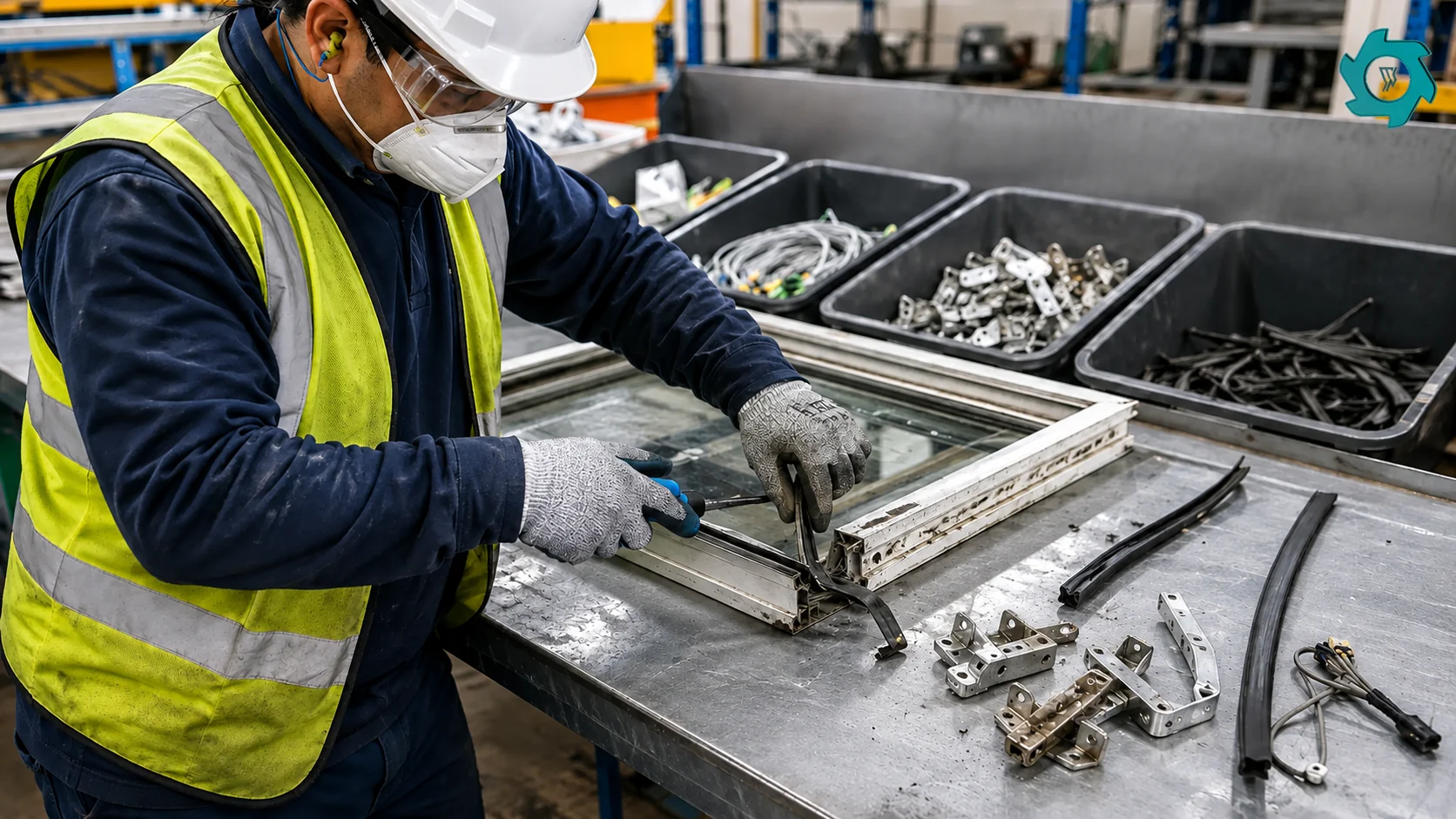
Dismantle an attachment before shredding when it presents a hazard, can damage the machine, carries meaningful resale value, preserves an alloy grade, or costs less to remove intact than after fragmentation. Large steel shafts, bearing blocks, counterweights, electric motors, thick rubber pieces and easy-release wiring are common candidates.
Small ferrous fasteners can sometimes stay with the feed if shredding will expose them and a downstream magnet is sized for the liberated load. But a magnet cannot pull out steel that remains locked inside a heavy aluminum assembly, and it does nothing for stainless steel, copper, rubber, glass or alloy chemistry.
Use a removal-value test instead of a blanket dismantling rule
For a recurring attachment, compare the intact removal cost with the cost it creates inside the line:
Pre-removal value per ton = avoided wear + avoided downtime + recovered attachment value + aluminum quality gain − removal labor − disposal cost
Use measured plant data where available. If ten minutes of dismantling removes a large steel hub that repeatedly triggers reversals, contaminates the aluminum product and has its own scrap value, the result may be positive. Hand-removing dozens of harmless screws from clean frames may be negative. Review the decision when labor cost, buyer deductions or the attachment mix changes.
Window and door scrap deserves its own check. Remove bulky locks, handles and hinge groups where practical; decide whether thermal-break strips and seals will be liberated downstream. Long-profile feeding and bridge control are treated in detail in the existing aluminum profile shredder feeding guide.
Remove easy, high-impact attachments intact when that reduces risk, wear or downstream contamination.
7. Control Length, Shape and Package Density
Preparation size is a machine-interface decision. Check the delivery package against the receiving conveyor, loading tool, hopper opening, chamber geometry and cutter engagement. A profile can fit through the opening yet still bridge across the hopper. A dense casting can be physically small and still exceed the acceptable impact or foreign-part condition.
Define a maximum recurring piece and a separate absolute reject limit. Cut or dismantle the pieces outside that envelope with an approved tool and procedure. Never rely on an operator to “try one” in a running shredder. Include the longest, widest, thickest and most awkward normal parts in the supplier test and factory acceptance test.
Write two size limits, not one vague “maximum feed size”
Normal operating envelope: the length, width, thickness, form and mass range expected through most of the shift. This controls the performance test.
Absolute reject envelope: the size, mass, attachment or construction that must not enter without separate approval. This controls receiving and operator decisions.
Add geometry notes to both limits. A straight 2 m extrusion, a tangled 2 m bundle and a flat 2 m sheet share one length but do not share one feeding behavior. Catalog “opening size” alone cannot describe that difference.
Bales and bundles can improve logistics, but they can also hide contaminants, create surge loads and make the feed harder to inspect. For light sheet, compare cutting, shearing and baling before deciding; the separate aluminum sheet scrap guide covers that route choice. Likewise, foil and very light scrap require a density-specific decision described in the foil and light-gauge scrap guide.
8. Build Stable Feed Batches Instead of Averaging the Month
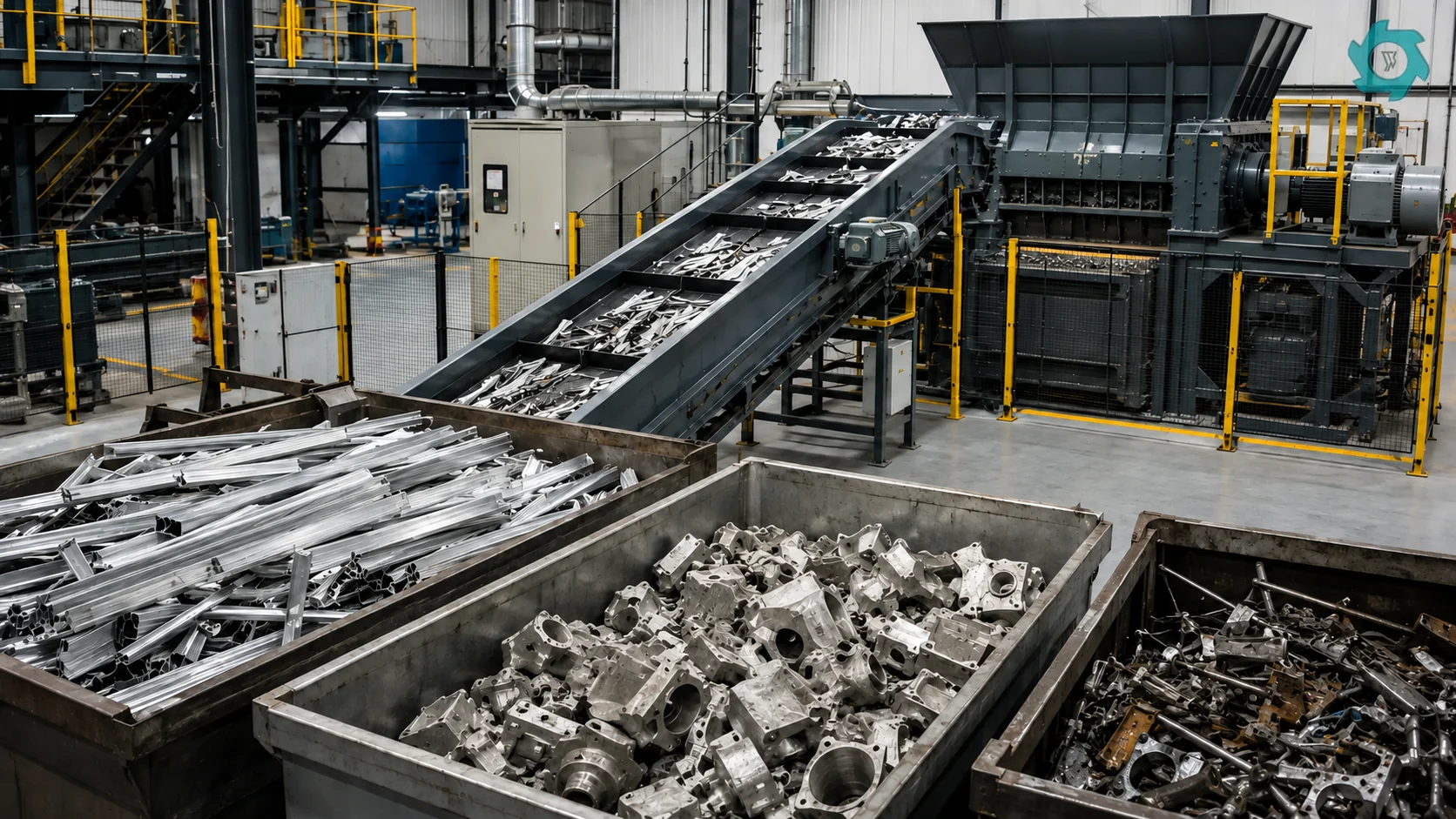
A monthly average hides the conditions that stop a line. Stage material by scrap family and contamination level, then feed one defined campaign at a time. If blending is necessary, specify the ratio and method. A loader alternating one bucket of castings with one bucket of profiles is different from a mixed bin in which dense parts settle to the bottom.
Set the conveyor rate from accepted tons, not the loading tool’s peak delivery. Watch for surges, empty intervals, bridging and recirculation. Record why the operator slowed or stopped. Those notes distinguish a preparation problem from cutter wear, screen restriction or downstream congestion.
Defined lots and controlled metering give a more useful performance test than an irregular mixed pile.
9. Measure What Preparation Removes—and What It Accidentally Loses
A cleaner-looking feed pile does not prove that preparation is economical. Weigh the incoming lot, every deliberately removed stream and the accepted aluminum sent forward. A simple mass balance exposes unrecorded disposal and valuable aluminum leaving with attachments.
Preparation cost per accepted ton = (labor + equipment + disposal + preparation downtime) ÷ accepted feed tons
Example: account for a 1,000 kg mixed-frame batch
Stream
Weight
What the number tells you
Gross received batch
1,000 kg
Starting mass, not saleable aluminum
Recovered steel attachments
65 kg
Separate value stream; do not call it disposal
Rubber/plastic removed
85 kg
Cost or secondary route depends on acceptance
Liquid/dirt/reject residue
20 kg
Requires documented handling
Accepted aluminum-bearing feed
830 kg
Preparation yield = 83%
If the four outputs do not reconcile with the received weight within the scale and moisture tolerance, investigate before using the data to quote yield or capacity.
Audit the removed streams for aluminum loss
Periodically hand-sort or reprocess a sample of the steel, plastic and residue streams. Record recoverable aluminum found in each one. This “loss audit” can reveal over-aggressive dismantling, poor work instructions or composite parts being sent to waste. Report loss as a percentage of incoming aluminum-bearing mass, not as a percentage of the small reject stream, which can exaggerate or hide the commercial effect.
10. Put the Preparation Assumptions Into the RFQ and FAT
A supplier test is only meaningful when the prepared test feed matches the intended operating feed. Attach a feed schedule to the RFQ and factory acceptance test rather than using a single broad phrase such as “mixed aluminum.” EPA describes secondary-aluminum pretreatment as sorting, processing and cleaning scrap before smelting and refining; preparation is therefore a process boundary, not an informal yard activity.4
FAT field
What to specify
What to record
Feed identity
Source and proportions of extrusion, cast, sheet and attachments
Actual batch weights and photographs
Geometry
Normal envelope plus difficult recurring pieces
Largest tested length, width, thickness, mass and form
Preparation
Exactly what was removed, drained, cut or left attached
Labor time and removed-stream weights
Run condition
Required stable duration after ramp-up
Accepted tons, reversals, stops and operator interventions
Output
Required size, liberation and downstream acceptance method
Representative samples and all output-stream weights
Do not “improve” the FAT feed until it no longer represents the contract feed. If profiles are pre-cut, hubs removed or wet parts excluded for the test, those same steps must appear in the operating scope, labor plan and cost model.
Control fines at the source
Preparation choices can change the fines burden. Extra cutting, grinding or repeated size reduction may create dust without improving liberation. OSHA identifies finely divided aluminum as a combustible-dust hazard.5 The practical response is not a generic dust collector added after the fact: identify where fines are generated, minimize unnecessary reduction, and have the collection and housekeeping system designed for the actual material hazard under applicable requirements.
11. Release the Batch With a Short, Enforceable Checklist
Check
Release condition
If it fails
Identity
Source and scrap family recorded
Hold, inspect and reclassify
Hazards
No batteries, sealed cylinders or prohibited items
Quarantine under the site procedure
Liquids
No uncontrolled free liquid
Drain or route to specialist handling
Attachments
Heavy and damaging foreign parts removed
Dismantle or reject the piece
Geometry
Largest normal piece fits the approved envelope
Cut, dismantle or use another route
Batch
Destination bin and blend rule identified
Restage before feeding
The checklist should name the person who can release a held load and the person who can change the acceptance rule. Without that ownership, production pressure gradually turns exceptions into normal feed.
Test the Prepared Feed, Not a Hand-Picked Sample
Send material photos, the largest recurring dimensions, attachment and contamination details, required throughput and downstream product specification. YUXI can review the receiving, feeding, shredding and separation boundary around the feed that will actually arrive.
FAQ
Does all scrap aluminum need to be cleaned before shredding?
No. The required preparation depends on the load and the downstream specification. Remove prohibited items, free liquids and damaging foreign objects first. Extra dismantling or cleaning should have a clear safety, recovery or product-quality benefit.
Should steel attachments be removed before the shredder?
Remove large, heavy or easy-to-release steel parts when doing so is safer and cheaper before shredding. Small attached ferrous pieces may be liberated and removed magnetically downstream if the line was designed and tested for them.
Can sealed containers go into an aluminum shredder?
Do not feed an unidentified or potentially pressurized container. Isolate it and follow the site acceptance, depressurization and verification procedure. A container that looks empty is not proof that it is safe to shred.
How short should aluminum profiles be before shredding?
The prepared length must suit the conveyor, hopper opening, cutter engagement and anti-bridging design. Confirm the limit with representative material during a witnessed test.
Why keep cast, sheet and extrusion scrap separate?
They differ in alloy family, geometry, bulk density and feeding behavior. Separate lots give steadier throughput.
What information should be recorded for each prepared batch?
Record supplier or source, scrap category, gross and net weight where available, largest normal piece, visible attachments, free-liquid status, rejected hazards, preparation performed and the destination bin or campaign.
David focuses on industrial shredding and recycling equipment,including material evaluation,shredder selection,process configuration,and recycling line planning.
Speak To Our Shredder Machine Expert
Get in touch with our nice team today to get a price estimate for a shredder machine.

 English



 Fast Delivery
 Reliable
 Certified
 Experienced