Radiator Types & Recycling Routes: Cu-Brass vs Al-Cu
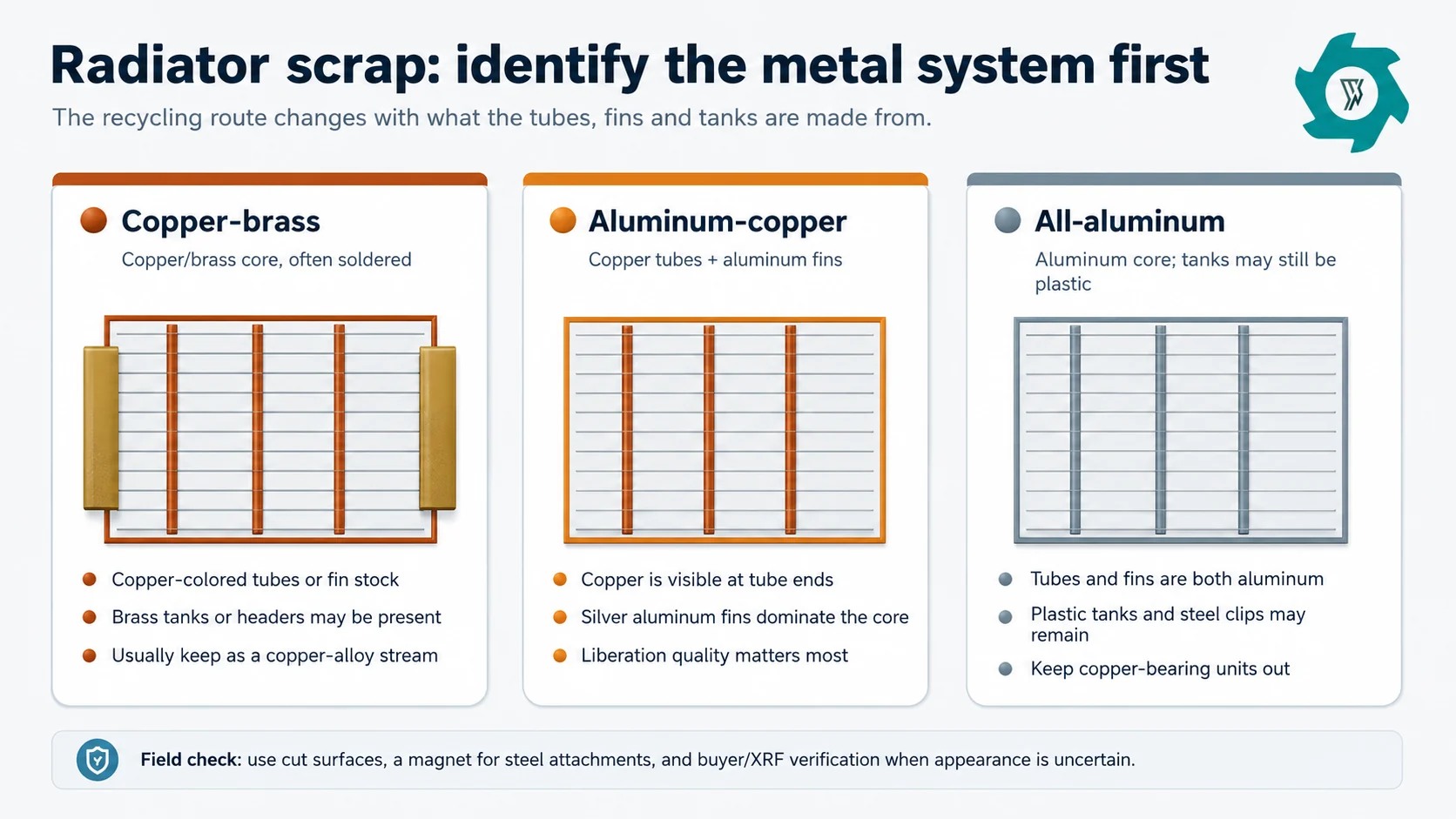
A radiator can look like one product category at the scrap yard and behave like three different materials once it enters a recycling plant. Copper-brass cores, copper-tube/aluminum-fin coils and all-aluminum radiators do not create the same separation problem. That difference should decide the process route before anyone starts comparing crusher power or separator count.Start with the core material, not the name “radiator.” Tube and fin composition determines whether deep liberation is useful.
The same radiator recycling line should not be the default answer
The complete copper aluminum radiator recycling line is built for feed that needs staged size reduction, contaminant removal and, where necessary, liberation of attached copper and aluminum. That is a strong fit for mixed ACR material and deformed heat exchanger scrap. It does not mean every radiator should be crushed to the same size or sent through every separator.For a copper-brass radiator, the valuable stream is already a copper-alloy combination. Grinding it into fine pieces can add wear and dust without creating a useful copper-versus-brass split. For a copper-tube/aluminum-fin coil, on the other hand, the value problem is exactly the bond between two different non-ferrous metals. Here, liberation matters. An all-aluminum core presents a third case: once steel and non-metal attachments are removed, there may be no economic reason to run a dedicated copper-aluminum separation stage at all.
Decision rule: do not choose the route by radiator shape alone. Choose it by the metal system inside the core and the sale specification at the end.
First identify what kind of radiator scrap you actually have
Copper-brass radiators
Older units can also contain solder at joints. The Recycled Materials Association still lists “Ocean” as Mixed Unsweated Auto Radiators under its red-metal specifications, which is an important commercial clue: a buyer may value the complete copper-alloy radiator as a recognized scrap stream rather than demand that every copper and brass part be mechanically separated.From a recycler’s point of view, this makes copper-brass scrap very different from ACR. The main concern is normally keeping iron, plastic, rubber and unrelated aluminum out of the load, then meeting the receiving mill or smelter’s specification.
Aluminum-copper radiators and ACR coils
The metals are valuable separately but physically intertwined. A clean, flat coil can sometimes be stripped mechanically. Once the feed is bent, crushed, mixed with frames or fed in high volume, a crushing-and-separation route becomes more practical.Here, the quality of liberation controls the value of the next stage. If pieces leave the crusher with aluminum fins still wrapped around copper tube fragments, the separator receives a composite particle rather than two metals. No separator setting can fully correct poor liberation upstream.
All-aluminum radiators
“All-aluminum” should be read as a description of the heat-exchanger core, not a promise that the whole scrap unit is pure aluminum. Automotive radiators can still carry plastic side tanks, steel clips, mounting brackets, rubber seals or fittings. Some industrial units may have larger aluminum headers and fewer plastic parts.The route is therefore usually about cleaning an aluminum-rich stream. Copper contamination matters because even a small amount may affect the value or melt chemistry of the aluminum product, but a clean all-aluminum pile should not be treated as if copper is intentionally built into every core.
Side-by-side: what changes in the recycling route?
Decision point
Copper-brass
Aluminum-copper
All-aluminum
Main metal relationship
Copper plus copper alloys, often with soldered joints
Two distinct non-ferrous metals physically bonded together
Predominantly aluminum core
Priority before shredding
Keep separate from aluminum-rich radiators; remove obvious contamination
Remove liquids, bulky steel and unrelated scrap
Keep copper-bearing units out; remove plastic/steel when practical
Need for deep liberation
Often limited unless the buyer asks for a refined feed
Usually important
Usually limited to releasing contamination
Magnetic separation
Useful for steel attachments
Important for frames, clips and screws
Important for steel attachments
Eddy current / nonmetal cleanup
Project-specific
Useful after size reduction to separate conductive metal from light nonmetal fractions
Useful when plastic and other nonmetal fractions remain
Copper-aluminum gravity separation
Not the main objective
Core downstream separation step when separate metal fractions are required
Usually unnecessary unless copper contamination is present
Typical process risk
Overprocessing a saleable copper-alloy scrap grade
Under-liberation or excessive fines
Grinding clean aluminum too fine and increasing loss/dust
Route 1: copper-brass radiators — preserve the copper-alloy value
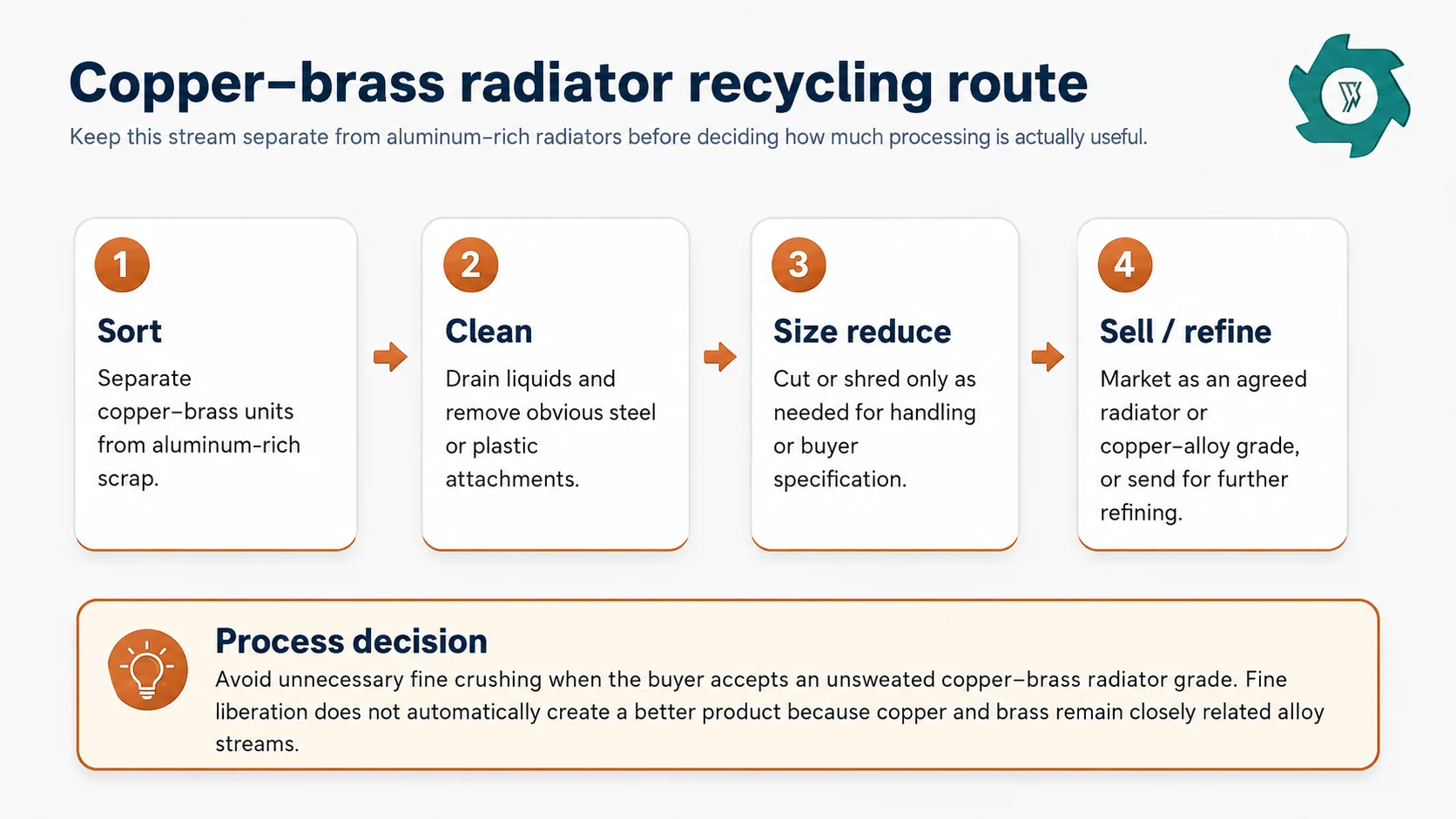
Copper-brass scrap often needs sorting and cleaning more than it needs a copper-versus-brass separation circuit.There is a temptation to assume that a more complex process must produce a more valuable product. Copper-brass radiators are a good example of why that is not always true.SAE literature on copper/brass radiator recycling describes these radiators as a recyclable copper-alloy scrap source and discusses returning suitable material to melting or refining routes. ReMA’s current red-metal specification list likewise recognizes mixed unsweated auto radiators as a trade category. Together, those references point to a useful purchasing question: does the receiving buyer already accept this material as a copper-alloy radiator grade?If yes, the process can stay comparatively simple. Drain free liquids. Remove large steel pieces and nonmetallic contamination. Cut or shred only when size reduction is needed for transport, feeding or a specific receiving specification. Keep the copper-brass stream separate from aluminum-rich radiator scrap.If the material is heavily contaminated, mixed with steel tanks, or must be converted into a more controlled furnace feed, additional shredding, magnetic removal and screening can make sense. But trying to make “pure copper” mechanically from a traditional copper-brass radiator is a different task. Brass itself is a copper alloy, and older joints may contain solder. Density separation is not a magic line between all of those metallic constituents.
Route 2: aluminum-copper radiators — liberation is the real job
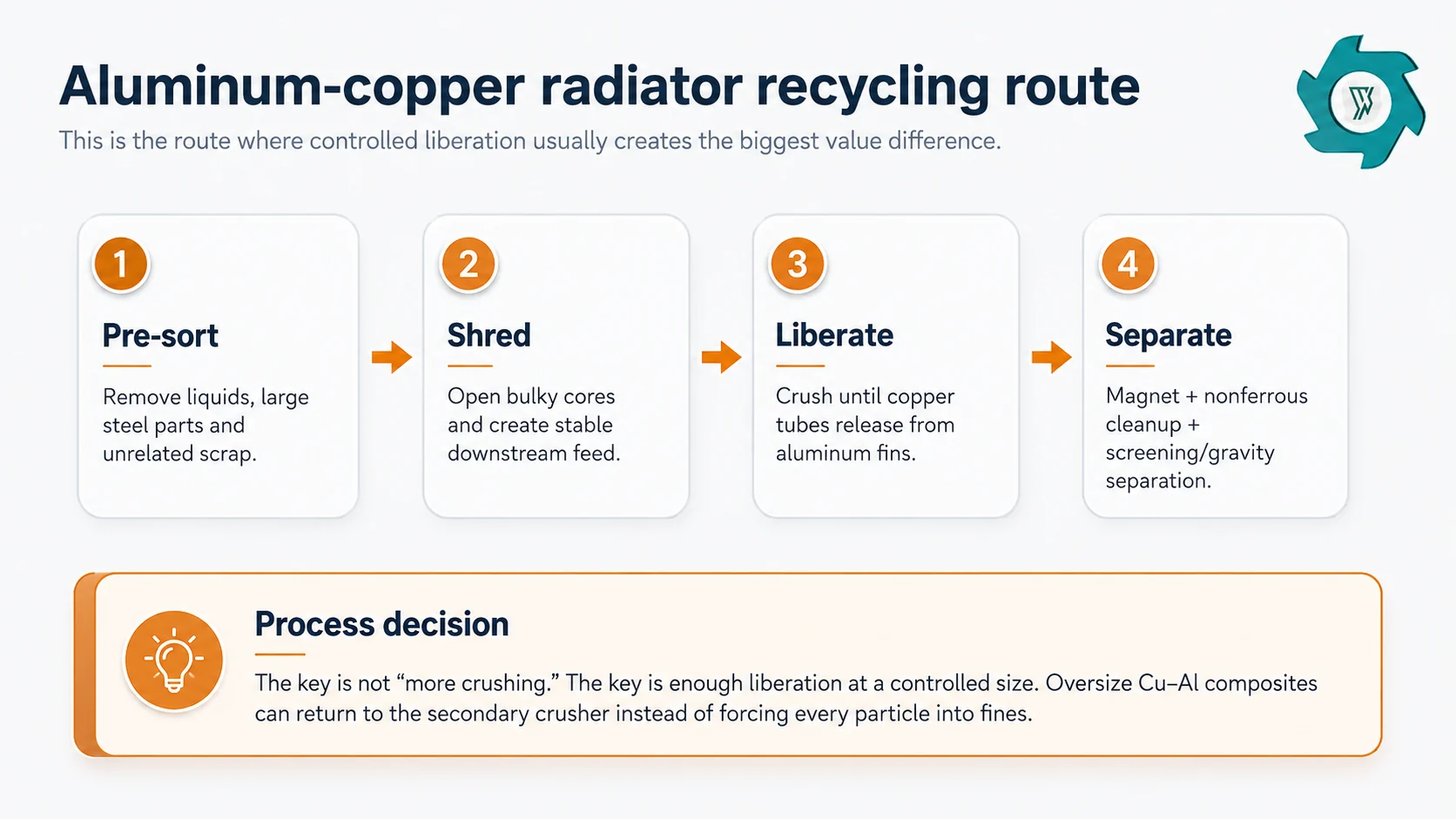
For aluminum-copper material, controlled liberation and size classification usually decide downstream separation quality.Aluminum-copper radiator scrap creates a much clearer mechanical separation problem. The fins are light and thin. The copper tube is denser and tougher. Both are non-ferrous. Before that difference can be used, the pieces have to be released from each other.A practical route normally starts with pre-sorting and safe feed preparation. Free liquid, sealed components, very heavy steel and unrelated objects should not be treated as normal radiator feed. Whole or deformed units can then be reduced in a low-speed shredder so the crusher receives a more stable size and load.The crusher opens the core and breaks attached tubes and fins into a sortable range. A magnet removes ferrous pieces. Conductive non-ferrous material can then be cleaned away from plastic and other light nonmetal material. After that, screening becomes important because a gravity or air-based separator behaves more consistently when the feed size range is controlled.The usual mistake is to use “smaller” as a substitute for “liberated.” Those are not the same thing. A piece can be small, but it still contains copper and aluminum. At the other extreme, excessive grinding produces fine aluminum, copper dust and light fragments, which are more difficult to recover cleanly. A return loop for incompletely liberated pieces is often more sensible than forcing the entire flow through another aggressive crushing pass.This route earns its complexity when the market rewards separate copper-rich and aluminum-rich fractions. If the buyer accepts a mixed non-ferrous concentrate after iron and plastic removal, the plant can be configured with less separation depth. The feed and the contract should decide that, not a fixed equipment list.
Route 3: all-aluminum radiators — clean the stream, do not invent a copper problem
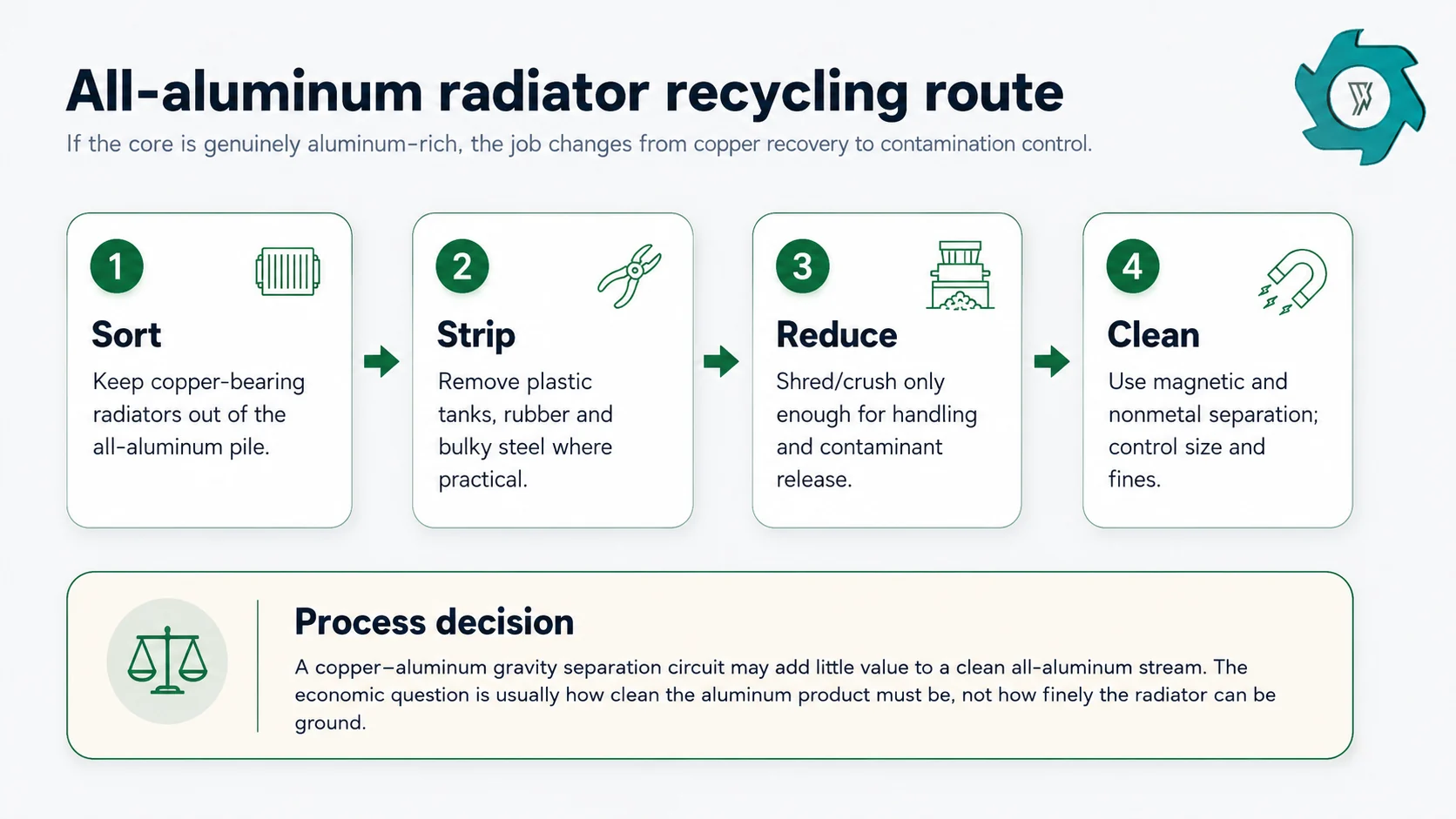
An aluminum-rich radiator stream usually needs contamination control and appropriate size reduction, not a full copper-aluminum separation circuit.Once copper-bearing radiators have been sorted out, an all-aluminum stream can often be processed more directly. The work is mostly about removing what is not aluminum.Plastic tanks are obvious on many automotive radiators. Steel clips and mounting hardware are less obvious until a magnet is used. Rubber seals, dirt and coolant residue can also affect the product. Depending on the incoming condition and labor cost, some of those parts may be removed before shredding; in a higher-volume line, the economic choice may be to release them mechanically and separate them afterward.Size reduction still has a purpose. It can reduce volume, break away attachments and prepare a consistent furnace or sorting feed. The important point is to stop when the objective has been achieved. Fine aluminum has more surface area, creates more dust, and can be lost into light fractions. Making the material smaller without a downstream need can lower rather than raise recoverable value.If copper pieces appear in the final aluminum stream, the first question should be whether copper-bearing radiators were mixed into the feed. Installing a deeper copper-aluminum separation circuit may treat the symptom while leaving the sorting problem untouched.
A mixed load needs a sorting rule before it needs a machine list
Real incoming scrap rarely arrives in perfect categories. A dismantler may send automotive radiators, heater cores, AC condensers and industrial heat exchangers in the same truck. Some units are clean. Some are dirty. A few have been flattened by handling. That is where a simple incoming decision routine helps.
1. Identify the core
Check exposed tube ends, broken sections and fin material. Copper shows through as reddish metal; brass is yellowish; aluminum remains silver-gray. When the equipment is painted,oxidized or dirty,don’t just rely on the surface color.
2. Check attachments
Use a magnet on frames, clips and brackets. Estimate plastic tanks, rubber and other nonmetal content. A clean material system and a dirty version of the same radiator can justify different front-end preparation.
3. Define the sale product
Ask the receiving buyer what they actually pay for: whole radiator scrap, a cleaned alloy stream, copper-rich and aluminum-rich fractions, or furnace-ready aluminum. Processing depth should follow that target.
When appearance is uncertain, especially on coated or corroded material, a small cut sample or handheld XRF check can prevent an expensive sorting mistake. XRF is not a replacement for process testing, but it is useful for verifying whether a “silver” tube is really aluminum or a plated/contaminated copper-alloy part.
Where the routes can share equipment — and where they should split
A mixed radiator plant does not need three completely separate factories. Several front-end stages can be shared when the feed has already been inspected: metered feeding, primary shredding for bulky material, magnetic separation, screening and dust collection. The split becomes important after the core has been opened.
Copper-brass stream: keep its copper-alloy identity and avoid diluting it with aluminum. Add size reduction only when handling or buyer specification requires it.
Aluminum-copper stream: send incompletely liberated composites to the secondary liberation and copper/aluminum separation route.
All-aluminum stream: focus on steel and nonmetal removal, size control and preventing copper contamination from entering the product.
This also explains why a single separator cannot “sort all radiator types.” A magnet only responds to ferrous material. An eddy current separator is useful for separating conductive non-ferrous pieces from many nonmetal fractions, but both copper and aluminum are conductive. The final copper-versus-aluminum split in ACR therefore depends on prior liberation and an appropriate downstream separation method, not on the eddy current stage alone.
Three purchasing mistakes this material comparison prevents
Buying a full copper-aluminum separation line for clean aluminum feed
If most of the incoming material is truly all-aluminum radiator scrap, the business case may favor a simpler cleaning and size-reduction system. Paying for separation stages that have little copper to recover does not improve the product.
Mixing copper-brass radiators into ACR and treating everything as one feed
This can make the copper-rich product chemically less predictable and dilute a copper-alloy scrap stream that could have been sold separately. Sorting before shredding is cheaper than trying to recreate the original material categories after everything has been broken.
Choosing crushing fineness before defining the buyer specification
Fine particles are not automatically high-value particles. The target should be the coarsest size that gives adequate release and reliable separation. That usually means test processing representative scrap rather than specifying a mesh or millimeter value from a brochure.
Which route should you choose?
If your incoming feed looks like this…
Start with this route
Mostly copper/brass automotive or heavy-duty radiators, relatively consistent
Separate copper-alloy stream → clean attachments → size reduce only as required → sell/refine to buyer specification
Clean, flat copper-tube/aluminum-fin AC coils
Evaluate mechanical stripping first; use a complete crushing route when volume, deformation or mixed attachments make stripping unreliable
Deformed or mixed aluminum-copper radiators with steel/plastic contamination
Shred → crush/liberate → magnetic/nonmetal cleanup → screen → copper/aluminum separation with return of unliberated pieces
Mostly all-aluminum automotive radiators with plastic tanks
Pre-strip where economical or shred → magnetic + nonmetal cleanup → controlled aluminum product
Mixed truckload of all three material systems
Sort by core material first; then route each stream separately after any shared front-end inspection
The best configuration is the one that removes a real impurity or creates a product the buyer will pay more for. Everything else is operating cost.
Not sure which radiator stream you have?
Send representative feed photos, a short video, the largest unit size and your target output. YUXI can review whether your material needs simple cleaning, mechanical stripping, staged liberation, or a complete radiator recycling line.
FAQ
How can I tell an aluminum-copper radiator from an all-aluminum radiator?
Look at exposed tube ends and damaged or cut sections. A copper core usually gives itself away once you get past the oxidized surface—the metal underneath is still reddish. An all-aluminum core looks different, with the fins and tubes staying silver in color.
Does an all-aluminum radiator need a copper-aluminum separator?
Not usually when the stream is genuinely aluminum-rich and copper contamination has already been removed. The main job is normally to remove steel, plastic, rubber and other non-aluminum attachments and produce the size and cleanliness required by the buyer.
Should mixed radiator scrap be sorted before shredding?
Yes when the material systems are visibly different. Sorting copper-brass, aluminum-copper and all-aluminum units before size reduction protects product value and avoids sending clean aluminum or copper-alloy scrap through separation stages designed for a different feed.
References
DENSO Auto Parts, Radiators — examples of aluminum-core and copper-core automotive radiator construction.
Recycled Materials Association / ISRI Specs, Red Metals — includes “Ocean: Mixed Unsweated Auto Radiators.”
David focuses on industrial shredding and recycling equipment,including material evaluation,shredder selection,process configuration,and recycling line planning.
Speak To Our Shredder Machine Expert
Get in touch with our nice team today to get a price estimate for a shredder machine.

 English



 Fast Delivery
 Reliable
 Certified
 Experienced