The 8 Main Factors That Affect Four Shaft Shredder Price
1. Shredding Chamber Size
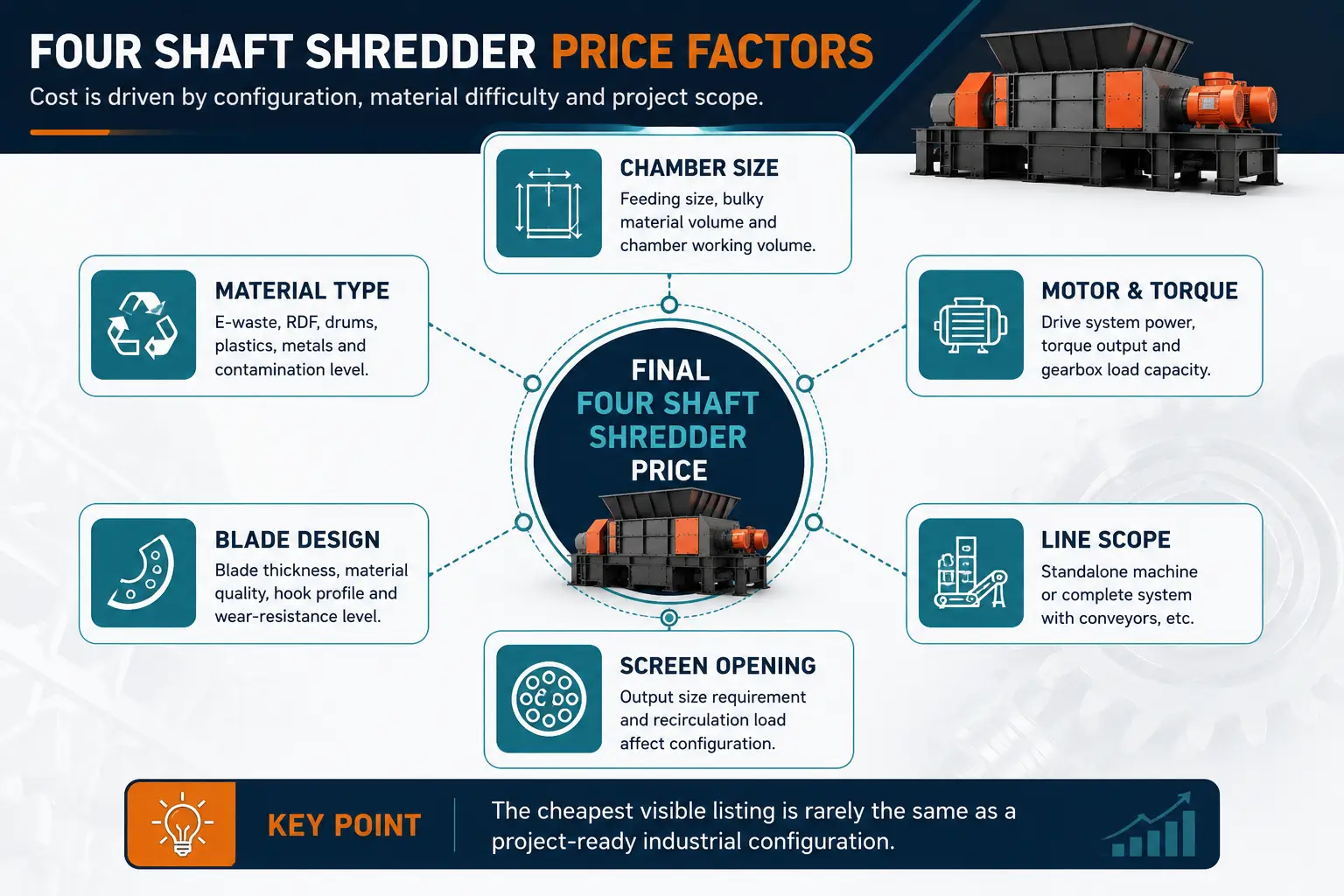
The shredding chamber determines the feeding opening, material residence time and how easily bulky material can enter the cutter area. A larger chamber requires a stronger frame, larger shafts, heavier bearings, larger reducers and a more expensive manufacturing process. For bulky waste, drums, appliances or RDF feedstock, the chamber is often one of the first cost drivers.
2. Motor Power, Torque and Gearbox Design
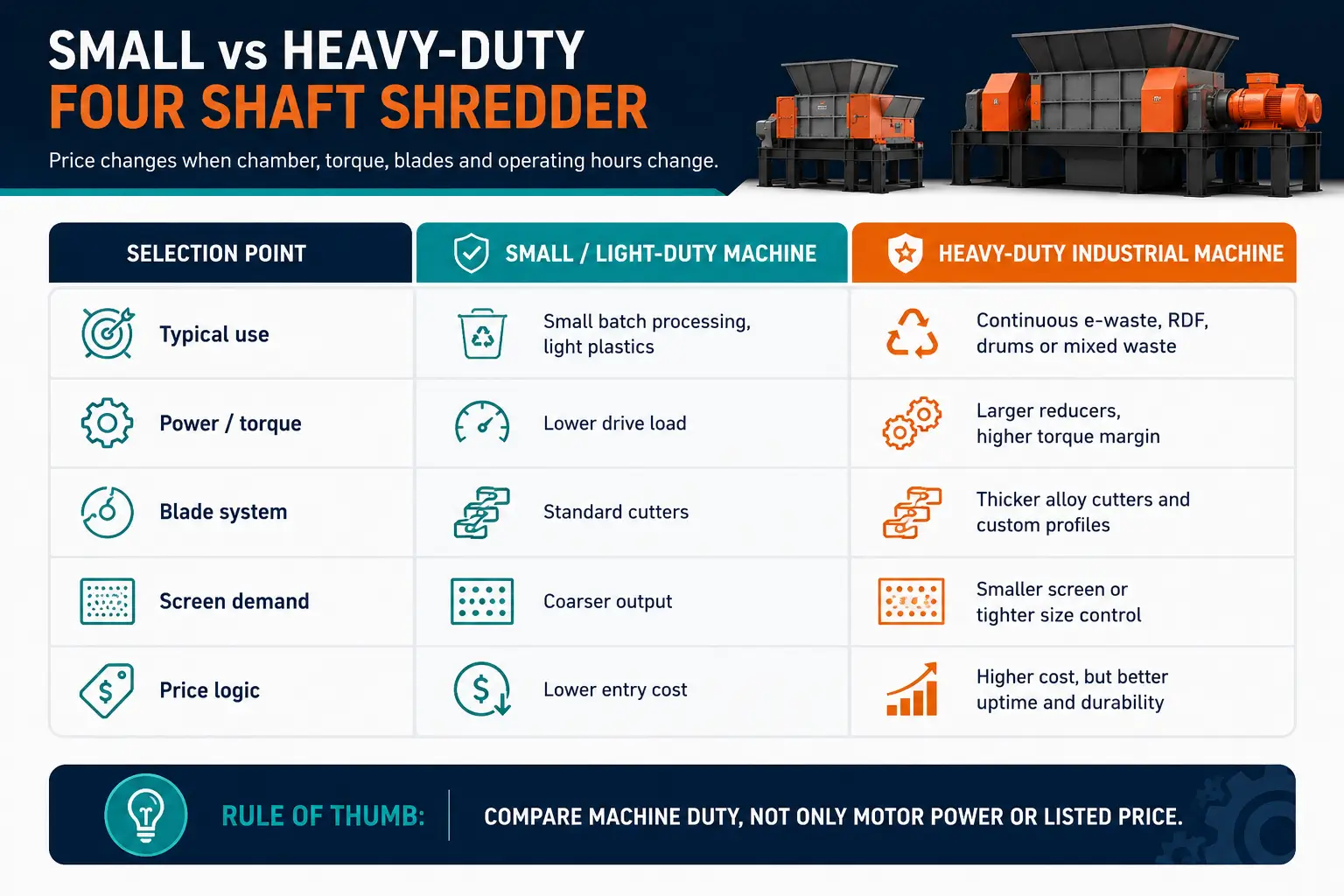
Motor power matters, but the reducer and torque transmission matter just as much. Four shaft shredders run at low speed and high torque. If the gearbox is undersized, the machine may not survive repeated overloads. For mixed industrial waste, the price difference often comes from how much torque margin the supplier builds into the drive system.
3. Blade Material and Cutter Thickness
Cutter blades are not only wear parts; they are the working core of the shredder. Clean plastics may not need the same blade thickness as light metal scrap, RDF or electronic waste. Thicker alloy cutters, special heat treatment and custom hook profiles increase cost, but they also reduce premature wear and improve material grabbing.
4. Screen Opening and Output Size
A four shaft shredder uses screen control to keep oversized material inside the chamber until it reaches the required size. This is one reason buyers choose a four shaft machine instead of a rough double shaft shredder. Smaller screens generally increase load and reduce capacity, so they require stronger machine design.
5. Material Type and Contamination
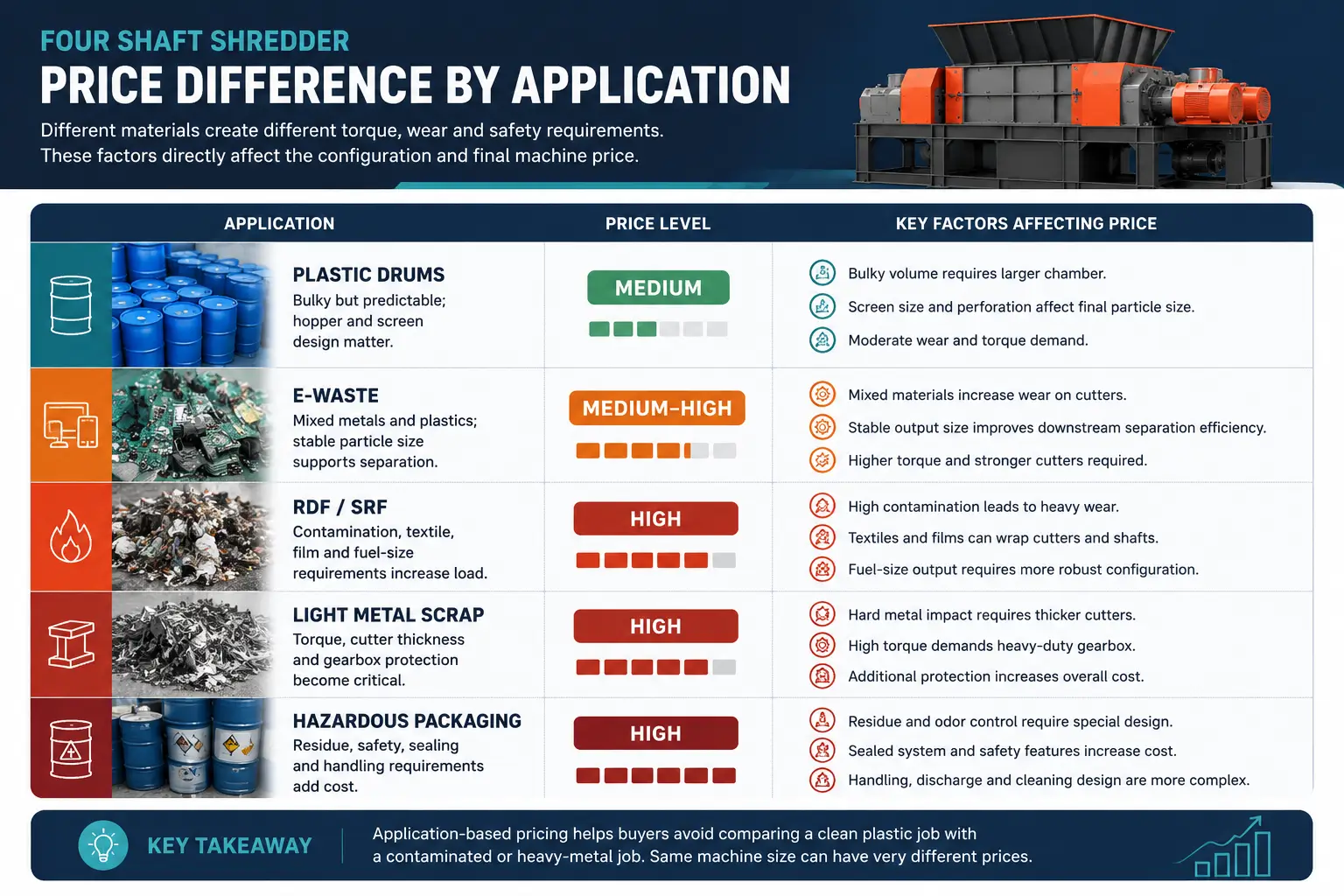
Material behavior changes everything. Plastic drums are bulky but relatively predictable. E-waste contains plastic, metal and circuit-board components. RDF may include textiles, film, wood, light metal and contamination. Hazardous packaging may need safety and residue-handling considerations. A supplier cannot price all of these materials with the same configuration.
6. Capacity Requirement
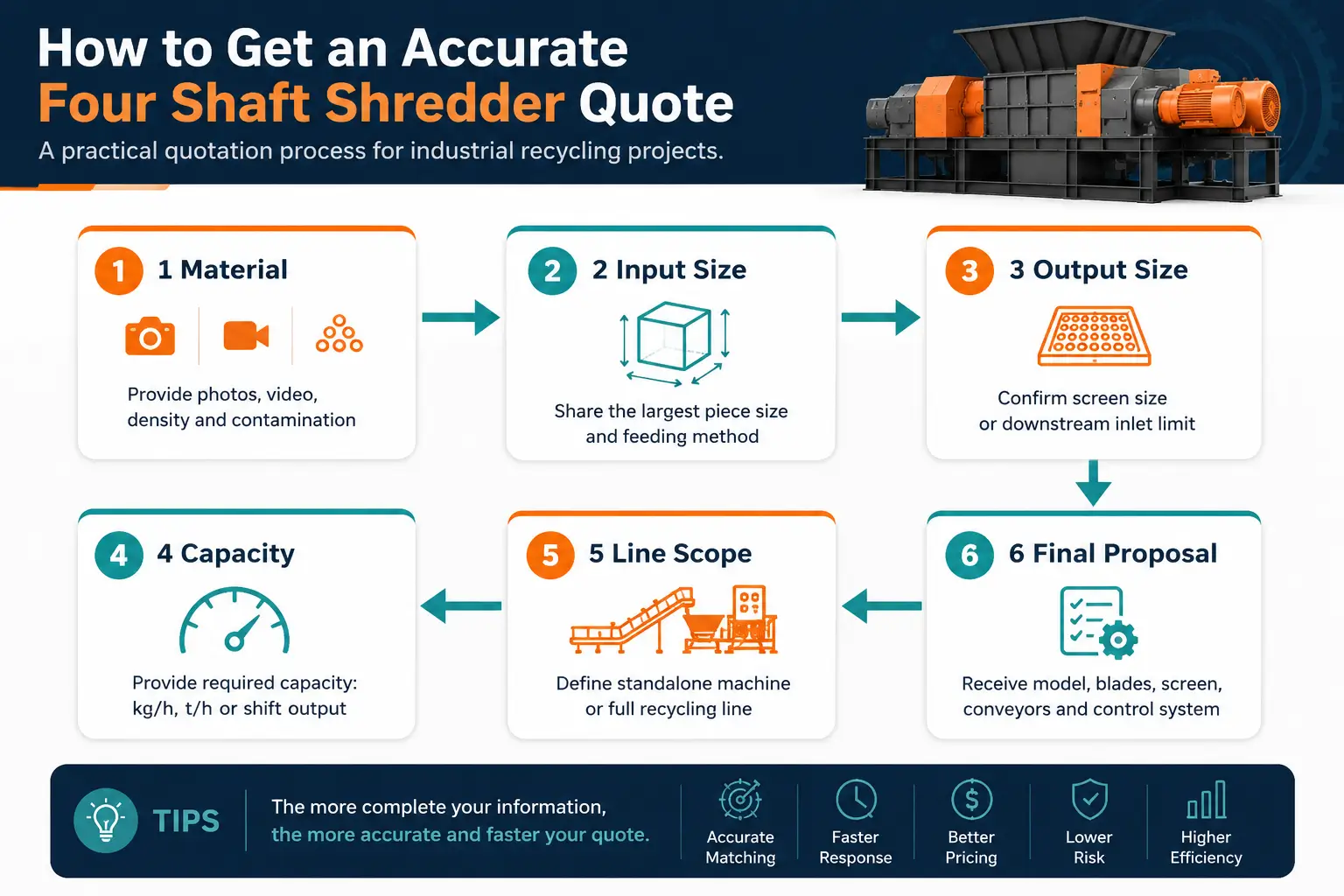
Capacity is not only about motor size. It also depends on material density, feeding method, screen size and discharge system. A target of 500 kg/h for plastic packaging is very different from 3 t/h for mixed industrial waste. Higher capacity usually means larger chamber, stronger drive, more robust discharge and better line integration.
7. Automation and Control System
PLC control, automatic reverse, current monitoring, overload protection, line interlock and alarm display all add cost. But for industrial operation, these features are not decoration. They help protect the machine, reduce jamming and allow conveyors, separators and downstream equipment to run together.
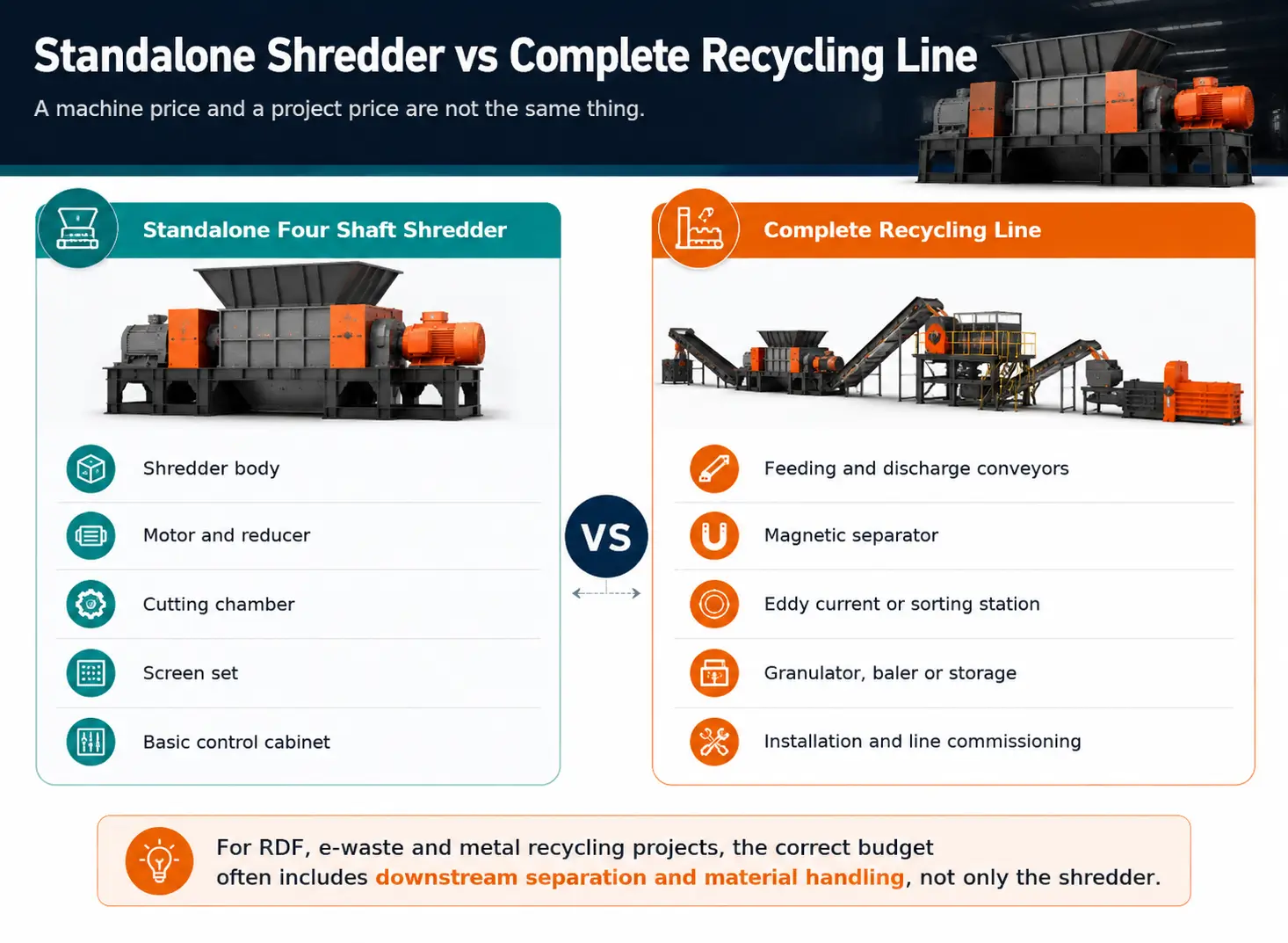
8. Standalone Machine or Complete Recycling Line
A standalone four shaft shredder price covers the shredder itself. A complete recycling line may include feeding conveyors, discharge conveyors, magnetic separator, eddy current separator, sorting station, granulator, baler, dust control and installation support. These are different budgets and should not be compared as the same quotation.